
Discharge in a cat during pregnancy
The period when a cat is carrying a litter is a very stressful time for its owner. A pregnant cat requires special care and constant monitoring of her health. One important indicator is the cat's discharge during pregnancy. Owners should understand what is considered normal and what is a sign of pregnancy complications requiring veterinary attention.
Content
What is vaginal discharge?
Vaginal discharge in female mammals is a thick, colorless or slightly whitish fluid with no odor. It consists of secretions from the glands of the cervix, the Bartholin glands located in the vestibule of the vagina, dead epithelial cells lining the vaginal walls, natural microflora, and transudate (physiological fluid). Vaginal discharge in cats lubricates the vagina, protecting it from drying out, irritation, and the penetration of pathogenic microorganisms.
Changes in the composition of a cat's vaginal discharge can provide insight into the state of her reproductive system, including the presence and nature of any disorders. This allows for the timely diagnosis of infectious or inflammatory diseases, the prevention of miscarriage or premature birth, and the prevention of the death of kittens in the womb.
Important! Cats are very clean animals. If your pet's fur around the ring becomes matted and dirty during pregnancy, this is a clear sign that she's not feeling well and should be seen by a doctor immediately.
Discharge in a cat at different stages of pregnancy
Cats carry their kittens for nine weeks. This period is conventionally divided into three equal periods:
- By the end of the third week, the fertilized egg migrates to the uterus and implants, and the cervix closes with a thick mucus plug. The cat's vaginal discharge may have a pinkish tint and a thick, viscous consistency, but it is usually scant and not always noticeable.
- In the second period of pregnancy (from 3 to 6 weeks) there is usually no discharge; in some cases, excess amniotic fluid from the uterus may be released through the vagina.
- At the end of the third trimester of pregnancy, at 9 weeks, vaginal discharge may change due to the onset of labor. A day before labor, the mucus plug, which closes the entrance to the uterus, is shed. This thick, slippery mass consists of epithelial tissue from the mucous membranes, leukocytes that provide protection, and collagen fibers that give the plug its necessary density. Then, with the onset of contractions, the cat may experience more liquid, transparent discharge with a brown color and bloody inclusions.
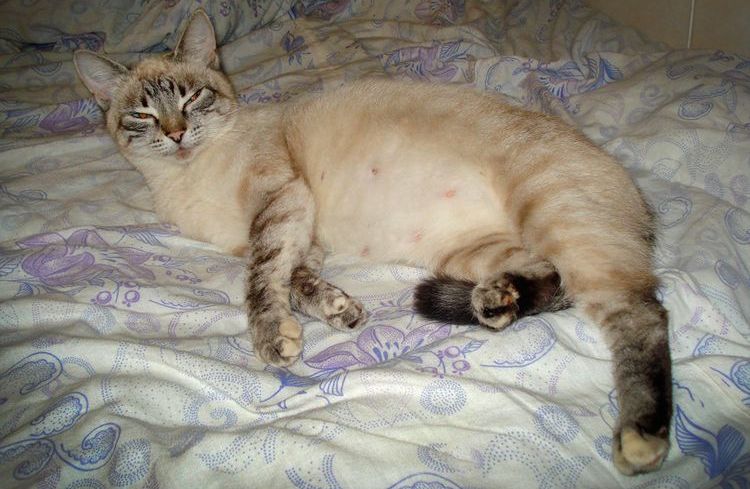
A cat may experience pinkish discharge during the period when she would normally be in heat if she hadn't become pregnant. This is not considered a medical condition and poses no danger. However, during a normal heat cycle (estrus), a cat should not have bloody or thick, whitish discharge; such discharge indicates the development of an inflammatory process.
Causes of changes in vaginal secretions
The following may be the reasons why a cat may have excessively heavy or abnormal-looking and odorous discharge during pregnancy:
- Inevitable physiological changes in the body during pregnancy include a shift in hormone levels and, as a consequence, an increase in the production of secretory fluid by the glands.
- Inflammatory processes developing in the uterine cavity. Purulent discharge, even if observed in small amounts, is very dangerous and requires immediate veterinary attention.
Thus, purulent exudate forms when endometritis is advanced and progresses to a life-threatening condition called pyometra (purulent inflammation of the uterine lining). Pyometra is usually accompanied by fever, general weakness, and loss of appetite. Without proper treatment, the cat will die from general intoxication. Depending on the examination results and the gestational age, the cat may be prescribed a course of antibiotics and, if necessary, an induced abortion.
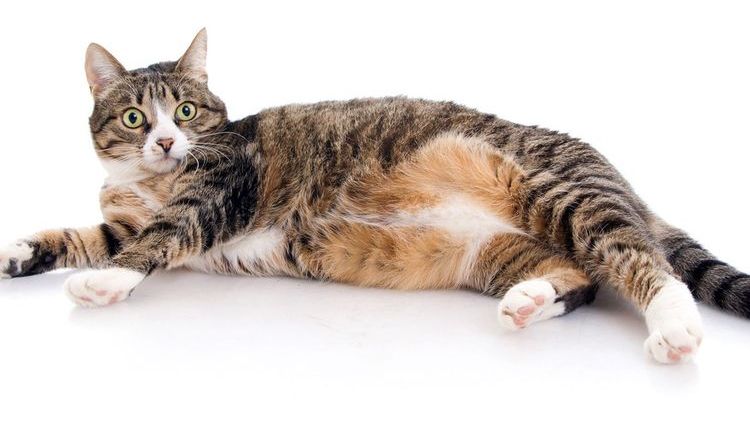
- The mucus plug is released. It appears as a small greenish or yellowish lump. This is a normal physiological phenomenon, indicating the onset of labor..
- Placental abruption or other abnormalities. With partial placental abruption, a cat's chances of carrying her kittens to term and having a successful birth are quite high if she receives proper care, ongoing monitoring, and the necessary medical attention.
- Intrauterine death of kittens. Greenish, foul-smelling discharge is one of the typical signs of kitten death in the womb. The decomposition of dead fetuses releases powerful toxins that poison the cat's body and can cause kidney failure. The solution may be inducing labor or surgically removing the dead fetuses. The surgery is performed in a hospital setting, after which the animal is prescribed a course of intensive restorative therapy and kept under observation during the recovery period.
- Uterine rupture. The main symptom of this dangerous pathology, common in pregnant cats, is extensive bleeding. Uterine rupture is most often caused by a sudden increase in uterine muscle tone or excessive stretching during multiple pregnancies. In any case, pregnancy following uterine rupture is terminated. If the rupture of the cervix or uterine body is too large to repair, the cat's reproductive organ, the uterus, is amputated.
Caution: If a pregnant cat's discharge is light red, bleeding continues for more than 10-15 minutes, and the volume of blood exceeds 2 tablespoons, seek immediate veterinary attention, otherwise your pet will die from blood loss.
Cats are usually very meticulous about keeping their external genitalia clean. If a cat's vulva (the opening at the bottom of the perineum) is always clean and dry, owners shouldn't worry about detecting any vaginal discharge. This means your pet's pregnancy is progressing normally, and it's important to take her to the veterinarian for a checkup on time.
Discharge in a pregnant cat: A veterinarian's comments
Read also:
- How long does it take for a cat to give birth?
- Bleeding in a pregnant cat: what to do
- How to tell if a cat is giving birth: key signs


Add a comment