
Everything you need to know about dirofilariasis
Have you noticed that with the onset of cold weather, your dog seems tired, unwilling to play, and is breathing heavily? Often, owners assume their pet is simply lacking vitamins: switching their dog to a nutrient-rich food will resolve the issue. Unfortunately, this isn't always the case. Weakness and lethargy can be symptoms of a dangerous disease called heartworm disease.
Content
What is dirofilariasis?
This is a helminthic disease that causes irreversible damage to the lungs and heart of animals. The word "dirofilariasis" is Latin for "evil thread." The worms are only 1.3 mm in diameter, but can reach lengths of up to 40 cm. A dog's body can harbor up to 250 of them at once.
How can a dog become infected with heartworm disease?
Mosquitoes are the primary carriers of the disease. When a mosquito bites, it infects the animal with worm larvae. These larvae enter the dog's body and remain in the skin and muscles for 2-3 months, where they develop to a certain stage. The mature larvae then travel through the bloodstream and reach the heart, where they become adults.
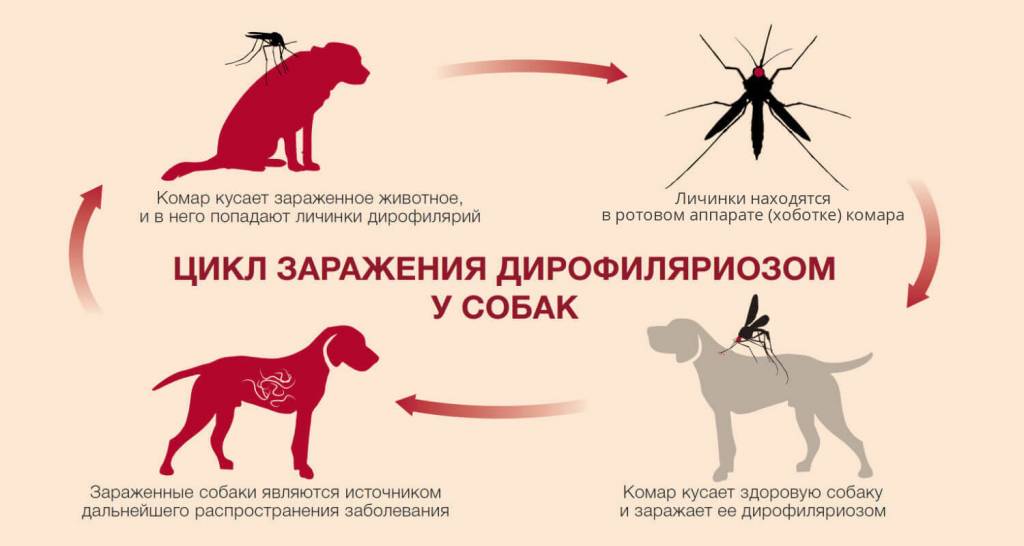
Why are dirofilaria dangerous?
Adults heartworm in dogs and cats They can fill blood vessels and cause blockages, which can be fatal for the animal. Adult worms can only be removed surgically or with powerful medications, which poses a serious threat to the dog's health and life.
What are the signs that a dog is infected with heartworm?
It's important for dog owners to know that there are two forms of dirofilariasis: subcutaneous and cardiopulmonary. The main symptoms of the subcutaneous form are itching and subcutaneous nodules, which usually cause no discomfort to the animal. Because this symptom can be confused with other diseases, owners and veterinarians may unfortunately fail to provide timely treatment.
Signs of the cardiopulmonary form are easier to notice:
- fatigue after games or running;
- lethargy;
- heavy breathing;
- dyspnea;
- cough;
- fainting;
- an increase in abdominal volume due to the accumulation of fluid in it.
These symptoms are associated with cardiovascular dysfunction, possibly due to the presence of a large number of parasites. In this case, the animal should be examined by a veterinarian immediately.
A dog may not show any signs of illness for a long time, but still be a source of spreading dirofilariasis!

How to prevent and treat the disease?
The American Heartworm Society has created a Guide to the Diagnosis, Prevention, and Treatment of Heartworm Disease, which uses moxidectin-based medications, for example, available in Russia under the trade name Advocate®.
The drug is produced by Bayer (Germany), an international company with expertise in healthcare, agriculture, and veterinary medicine. Advocate® targets heartworm larvae, stopping their development into adult parasites.
Protect your dog's heart! There are contraindications. Read the instructions.
Read also:


Add a comment