
A dog's age in human years
Calculating the age ratio of a dog to a human is difficult because it fluctuates constantly. The average value is seven, but this figure also changes as the animal ages. When trying to determine the approximate age and developmental stage of a pet, owners should understand that a dog's lifespan depends largely on its living conditions.
Content
Life expectancy of a dog
A dog's age in human terms is determined by its physiological and intellectual development. On average, a year of a pet's life is equivalent to seven years for its owner. However, veterinarians emphasize that a seven-year-old child and a one-year-old dog have completely different developmental levels. A one-year-old animal is an independent, mature creature capable of fully controlling its actions, which is not the case with a child.

That is why, for children under two years of age, scientists suggest the following coefficients:
- 1 to 12 for small breeds;
- 1 to 10 for medium breeds;
- 1 to 9 for large dogs.
Thus, when an animal turns one year old, in human years, this is equivalent to adolescence, 10-13 years old. This explains the adult behavior and abundance of skills of a pet.
However, it's important not only to know a dog's age in human years but also to do everything possible to prolong its lifespan. According to veterinary statistics, the average lifespan of a dog is 12 years. However, records do exist. For example, a shepherd dog named Blue from the USA lived 29.5 years, which is considered an absolute record. Cynologists claim that by the age of 20, an animal reaches the developmental level of a centenarian. Of course, not all pets live to such an advanced age.
Read also about a cat's age in human years on our website.
What can a caring owner do to maximize the lifespan of their pet?
- Choose only high-quality food with a high content of vitamins and minerals for him.
- Keep dogs up to date with all age-appropriate vaccinations. The vaccination schedule, which is usually given to all owners when they buy a puppy, states that vaccinations should be given annually, as well as at 3 and 6 months, to maintain the immune system.
- An animal aged 7-9 years should always be in motion, since physical activity ensures the development of all muscles and maintaining bone tone.
- Veterinarians also recommend maintaining a proper feeding schedule. Ideally, the animal should be fed 2-3 times a day, without overfeeding or starving it.
These basic tips will help extend your pet's lifespan. However, the most important thing a dog needs is love. These animals are incredibly attached to their people, and if a pet lives with a family that provides impeccable care, their lifespan will be long.
Dog to Human Age Ratio: Table
Since the 1:7 ratio is an average, veterinarians recommend always having a detailed chart on hand to determine a dog's age in human years.

Below is a table showing a dog's age in human years, as well as a description of the coefficients relevant for a particular period of the animal's development.
|
Age of the dog |
Coefficient |
Human age |
|
Two months. |
7 |
14 months |
|
Six months. |
10 |
5 years |
|
One year |
10.12.17 |
10-12 years |
|
Three years |
10 |
30 years old |
|
Five years |
8 |
40 years old |
|
Seven years |
7 |
49 years old |
|
Eight years |
7 |
56 years old |
|
Ten years |
6.5 |
65 years old |
|
Twelve years |
6.3 |
75 years old |
|
Fifteen years old |
5.8 |
87 years old |
|
Sixteen years old |
5.6 |
89 years old |
|
Twenty years |
4.8 |
96 years old |
When analyzing an animal's age, much depends on the breed, as well as the presence of congenital diseases. However, veterinarians are accustomed to distinguishing four stages of canine development:
- up to six months a dog is considered a puppy;
- From six months to one and a half years, a dog is considered a teenager;
- from two years to seven years old, the animal is considered an adult dog;
- After seven years, the period of old age begins.
Interestingly, small dogs have the longest lifespans. For example, with proper care, toy terriers can live up to 25 years. Boxers, however, rarely surpass 10 years. The average lifespan of a husky or golden retriever is 12-14 years.

The dog's breed directly influences the coefficient. It is believed that large dog breeds develop more slowly than small dogs. This is why Labrador At 10 months, a lapdog is still a puppy, but during this same period, it can begin to show itself as a fully-fledged adult pet.
Determining Your Dog's Age: Key Points
How can you determine a dog's age without access to its veterinary passport? This is within the power of not only an experienced veterinarian but also any pet owner. What factors should you consider when determining age?
- Presence of baby teethIf they haven't appeared yet, the puppy is less than a month old. If the teeth have fully erupted, the puppy is between 5 and 8 weeks old. Baby teeth begin to fall out at around 4 months and are completely replaced by 8 months.
- Dental condition of an adult dog.If they aren't worn down, it means the dog is an adult under two years old. If only the lower jaw is worn down, the pet is between four and six years old. If the front teeth are worn down and yellowed, the animal is around seven years old. After seven years, teeth begin to fall out completely.
- Coat condition.A young dog's coat is soft and pleasant to the touch, with no graying. Around six years of age, the coat loses its softness, and graying appears here and there.
- Eye condition.A young pet's eyes are bright and clear. As they age, their eyes lose their clarity, become dull, and develop regular discharge.
- Animal activity. A dog under six years of age is constantly on the move. If your pet refuses to run and jump, it's probably too old.
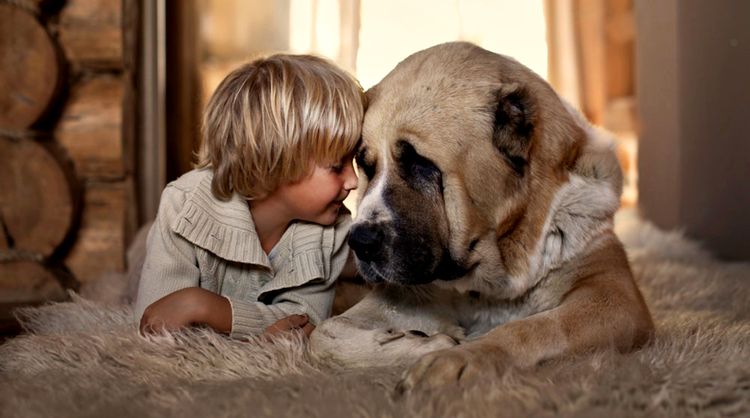
Knowing your dog's age in human years is important and useful, as it makes it easier for owners to understand the changes occurring in their pet. However, regardless of age or health, a dog always remains man's most loyal friend.
Read also:


Add a comment