
East European Shepherd (VEO)
The East European Shepherd was developed in the Soviet Union. The breed is not recognized by the FCI, so it is little known and unpopular outside its homeland. In appearance and character, the East European Shepherd resembles its closest relative, the German Shepherd.
Content
History of origin
The East European Shepherd was developed from the breed German shepherd In the 1920s and 1930s, special attention was paid to strength and endurance, which are crucial factors when selecting dogs for military and police service. Despite the name "shepherd", the dog was never used for herding.
In 1904, German Shepherds began to be imported to Russia, where they were used as ambulance dogs in the Russo-Japanese War. Later, around 1907, they began to be used in police service. After World War I, attitudes toward all things German simmered. The Soviet Union needed dogs with German Shepherd traits, but the knowledge to develop its own breed was insufficient, and the existing population was degenerating as a result of incompetent breeding. Only in 1924 did more or less targeted breeding of "Easterners" begin, following the establishment of public service dog breeding organizations, departmental schools, and service kennels. Unfortunately, there was little to work with; the population was very small and was not renewed due to the inability to purchase dogs from other countries for foreign currency. Many VEOs were lost during the war.
The East European Shepherd is a Soviet line of German Shepherds that were infused with Laika, Mastiff, and some other breeds.
An influx of new bloodlines and population restoration began after 1945, thanks to the import of trophy dogs from Germany. Under the influence of climatic conditions and through targeted selection, a distinct type emerged. Army General G.P. Medvedev, who headed the Council of Cynologists, called the East European Shepherd a "patriotic dog" and proposed that clubs in large cities legitimize the name "East European Shepherd." In 1964, the type was approved by the Federation of Service Dogs, and in 1976, the East European Shepherd was officially recognized as a separate breed with its own standard. Active breed improvement efforts continued until 1990.
Purpose
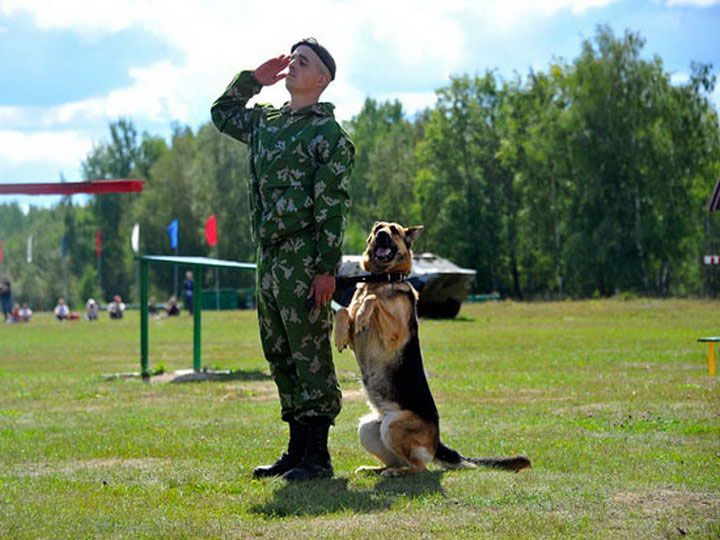
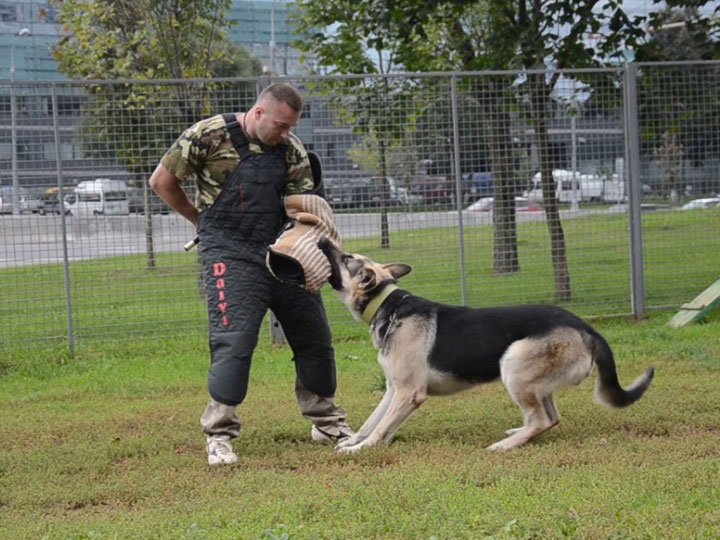
The East European Shepherd is successfully used for security, police investigations, search and rescue, and border guard duties. Members of the breed have proven themselves in the military and police departments. East European Shepherds are sometimes used as guide dogs. They also make excellent friends and companions. Their high intelligence, docile nature, strength, and extreme endurance make them versatile.
Video review of the East European Shepherd dog breed
What should an East European Shepherd look like according to the standard?
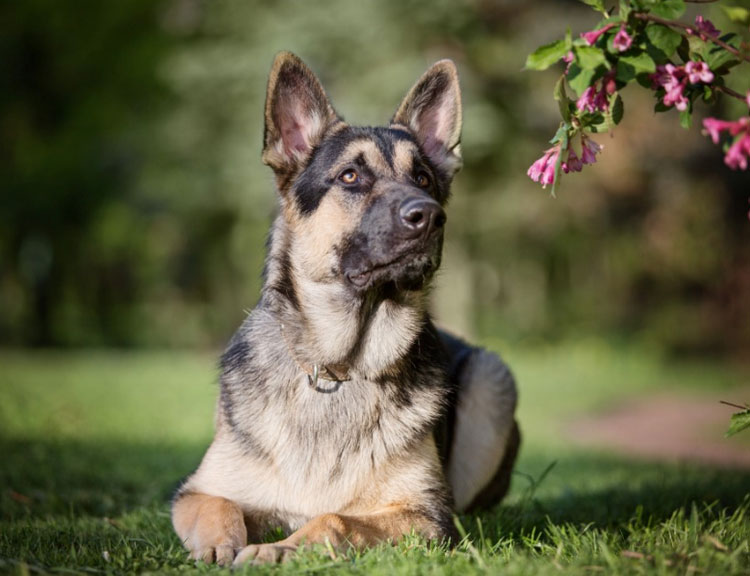
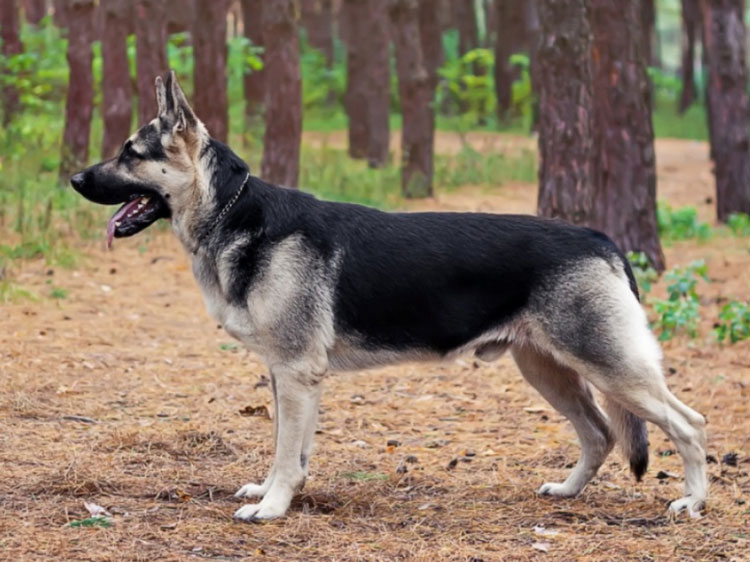
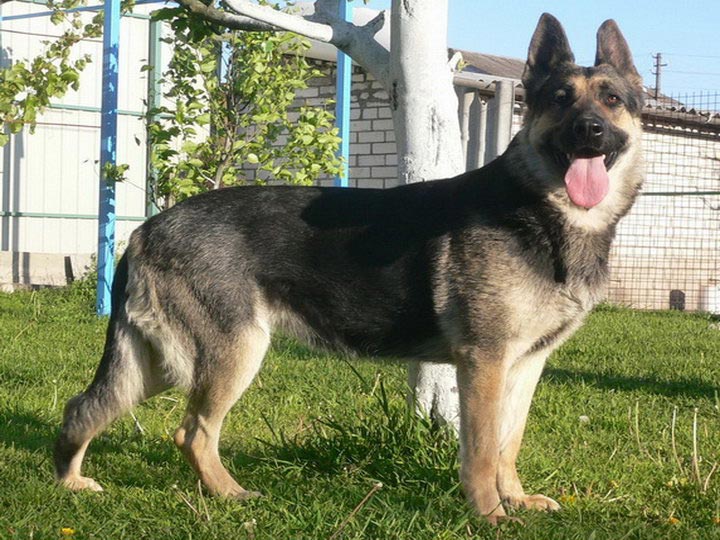
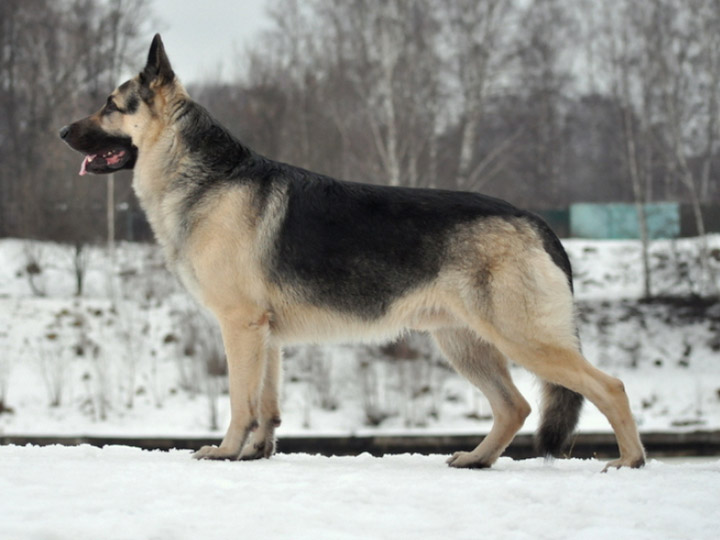
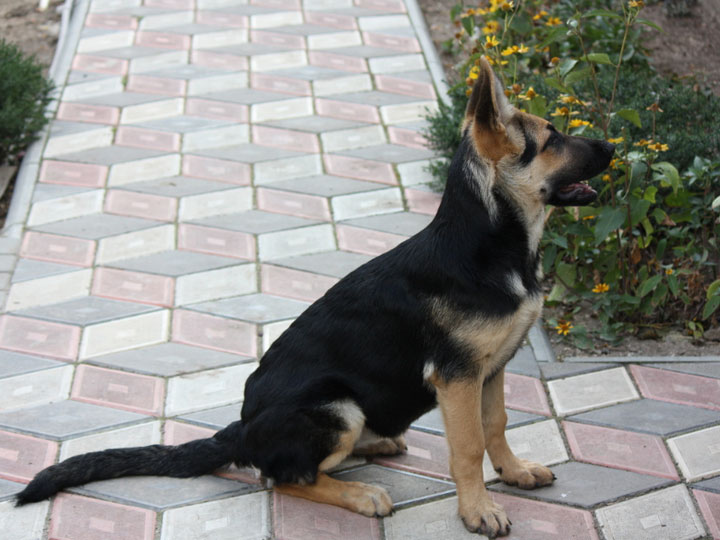
The East European Shepherd is a moderately elongated dog, above medium to large in stature, with a strong build and well-developed muscles. Sexual dimorphism is pronounced. The preferred height for males is 66-76 cm, and for females, 62-72 cm.
The head is proportional, massive, and shaped like a slightly pointed wedge. The length of the head is 40% of the height. The skull is flat with a slightly noticeable longitudinal furrow. The forehead is rounded. The stop is noticeable but not sharp. The muzzle is wedge-shaped. The bridge of the nose is straight or with a slight hump. The lips are dry and fit tightly. The nose is black and large. The bite is correct, and the teeth are complete. The eyes are medium-sized, oval, set obliquely, and dark in color. The eyelids are dry and close-fitting. The ears are isosceles triangle-shaped, erect, medium in size, and pointed.
The neck is moderately long, angled at 45° to the horizontal. The withers are well defined. The body length is 10-17% longer than the height. The back is strong and broad. The loin is slightly arched and short. The croup is rounded and slightly sloping.Unlike the German Shepherd, the Eastern Shepherd does not have such a pronounced slope of the top line.The chest is broad, long, and oval. The depth of the chest is 47-50% of the height. The belly is moderately tucked up. The saber-shaped tail reaches to the hocks or slightly below. When relaxed, it is carried low; when excited, the last third is curved upward. The forelimbs are straight and parallel. The length of the foreleg to the elbow is 50-53% of the height. The hind legs are set moderately at arm's length and parallel when viewed from the rear. The thighs are long, wide, and set at an angle. The paws are oval, with dark pads. Dewclaws should be removed.
The coat is dense, thick, and medium-length, consisting of straight, coarse hair and a well-developed, shorter undercoat. On the back of the thighs and shoulders, the guard hairs form moderate feathering. Shorter hair covers the head, ears, and front of the legs.
Several colors are allowed:
- Saddle-breasted with a mask on a light background (from silver-gray to rich fawn);
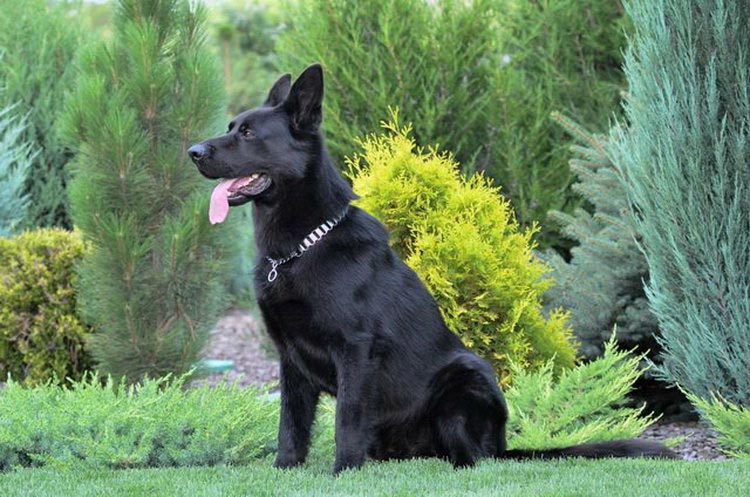
- Solid black;
- Strongly pronounced zonal-gray and zonal-red colors are allowed, but not desirable.
Character
East European Shepherds are very courageous and brave dogs, virtually devoid of fear and cowardice. Their incredibly strong-willed and bold nature gives them self-confidence. East European Shepherds are loyal friends and companions, demonstrating devotion and respect for their owners from an early age and maintaining it throughout their lives. With proper training, they get along well with other animals in the house and are friendly with children. They can be tireless playmates and travel companions, or reliable workmates. They are energetic and curious, yet quiet and discreet when needed.
The VEO has a very good character and a loyal heart. These dogs are even-tempered, self-confident, and wary of strangers, with a pronounced defensive instinct.
Veterinary Otterhounds have an innate protective instinct and a well-developed sense of territoriality. Furthermore, these dogs are capable of thinking and making decisions independently in the absence of their owner. Entering the territory they guard will be difficult. In reviews of the breed, owners repeatedly emphasize the high intelligence and loyalty of East European Shepherds, as well as their unpretentiousness and ease of training in any direction.
Content Features
Their endurance and adaptability make the East European Shepherd suitable for any environment, whether a private yard, a kennel, or an apartment, but they should always have close human contact. When keeping East European Shepherds in an apartment, they must be provided with sufficient exercise and outdoor walks. It's also important to remember that puppies are very active and constantly chew, especially during teething, so they should have plenty of toys. It's important to provide the East European Shepherd with a well-balanced diet. This can include either natural food or prepared foods of a premium quality.
The coat structure changes depending on the season. In winter, a thick undercoat grows, and in summer, it is shed. Spring shedding is heaviest, so a de-icer can be helpful during this period. Dogs that live in apartments experience less seasonal shedding.
Exercise is essential for proper development and good health. East European Shepherd training can be divided into two parts: general physical training and specialized training. General training involves strengthening and improving the body's health. This primarily involves trotting, swimming, and long walks. Some dogs have weak hind limb extensor muscles, resulting in a weak drive and short stride. To correct this, specialized training is used, such as towing or uphill running. The intensity of training should be increased gradually. Exercises and the number of cycles are selected individually.
Education and training
East European Shepherds are highly trainable. Their exceptional intelligence allows them to make independent decisions in complex and unexpected situations. The East European Shepherd is intelligent and disciplined, eager to learn and eager to work, but when bored with training, they will become lazy and fail to follow familiar commands.
Even an inexperienced dog breeder can handle the upbringing and training of a VEO.
When training an East European Shepherd, the key is to cultivate restraint and tolerance, which will allow it to remain calm around other dogs and felines. It's also important to manage its wariness of others and territorial instincts.
Care
The East European Shepherd has a very thick coat that requires proper weekly grooming. Only thorough combing will ensure its glossy shine and beauty. During the off-season, the dog is brushed daily. The ears are cleaned as needed—once a week for some dogs, less often for others. The nails wear down on their own with sufficient exercise and walks on asphalt.
Health and life expectancy
German Shepherds have been plagued by a host of health problems in the Eastern European Shepherd, a problem exacerbated by the incompetent breeding practices of inexperienced Soviet dog breeders. Modern breeders are making every effort to prevent dogs with health problems from being bred, but some problems and hereditary diseases cannot be completely eliminated:
- Elbow and hip dysplasia;
- Tendency to gastric torsion;
- Diabetes mellitus;
- Intervertebral disc diseases;
- Dermatological diseases;
- Aortic stenosis;
- Hormonal dwarfism;
- Eye diseases;
- VEO are susceptible to intestinal equatorial infections.
Puppies under 6 months of age are susceptible to infectious diseases and must be vaccinated. Annual vaccinations for adult dogs are recommended. They are also regularly treated for external and internal parasites. With proper care and maintenance, the VEO's lifespan is typically 10-12 years.
Choosing a puppy
The East European Shepherd is a very common and popular breed. On the one hand, this is very convenient, as potential owners have a huge selection of puppies of various colors and origins. However, on the other hand, breeding, or rather reproduction, is often carried out by people with little or no background in cynology, much less breeding. The East European Shepherd's character and working qualities are difficult to ruin with the wrong pairing, but health problems are easy to develop. From the above, a simple conclusion follows: it's best to buy a puppy from a kennel or a reputable breeder through breed clubs.
A working trial certificate will guarantee that the dog has a balanced psyche and good working qualities; without this certificate, the VEO is not allowed to breed.
Price of a VEO puppy
The price of an East European Shepherd is greatly influenced by the breeder's geography and the breeder's track record. Pedigree dogs can cost between 7,000 and 30,000 rubles. Undocumented puppies typically cost up to 5,000 rubles.
Photos
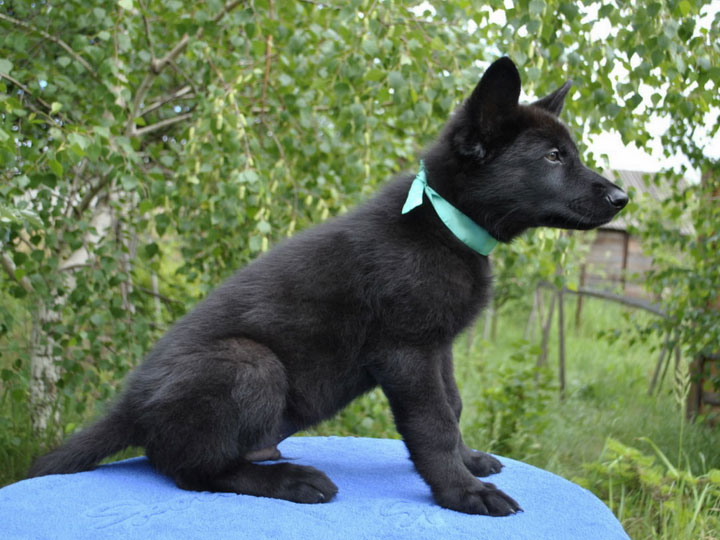
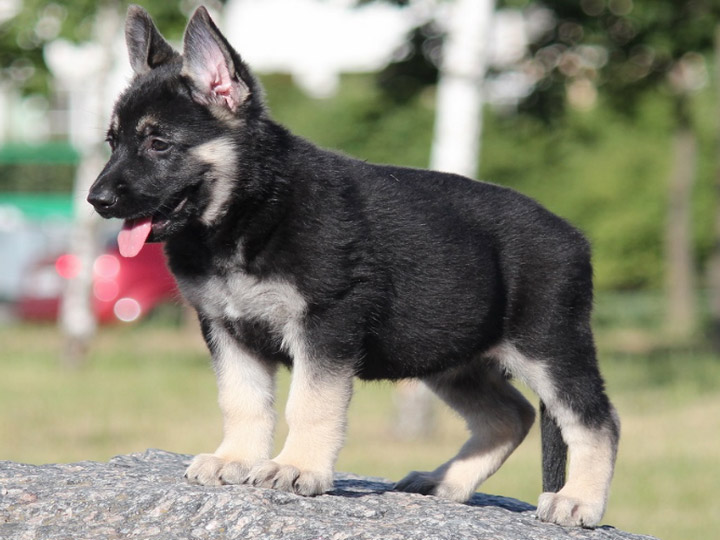
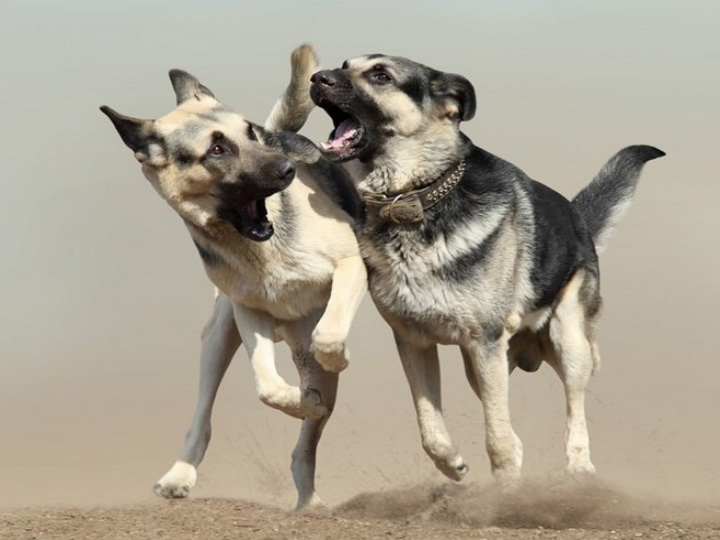
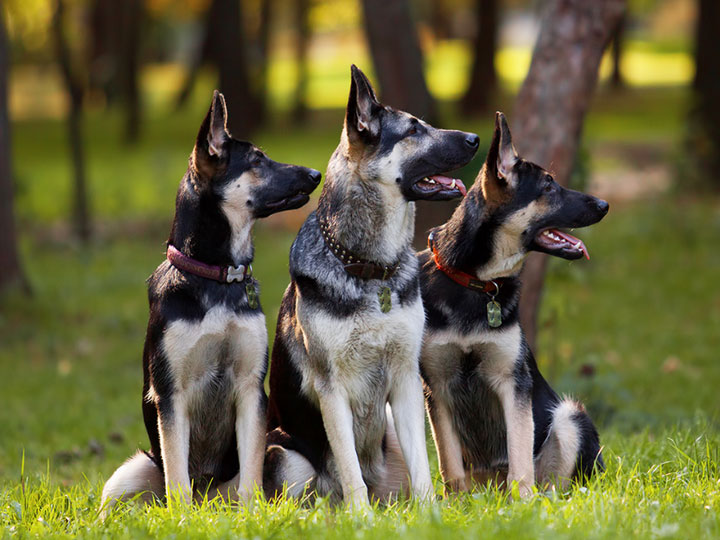
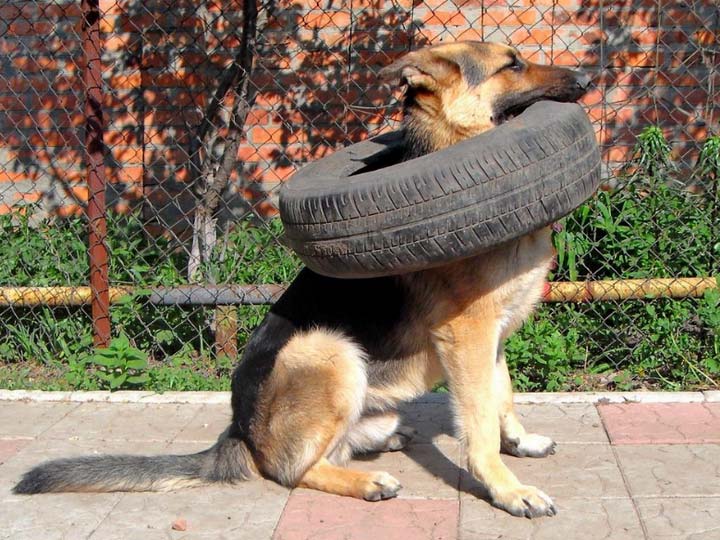
Photos of East European Shepherd puppies and adult dogs. The photos clearly show what East European Shepherds look like at different ages, genders, and colors.
Read also:
- White Swiss Shepherd (American-Canadian Shepherd)
- East Siberian Laika (VSL)
- Bukovinian Shepherd (Southeastern European Shepherd)


Add a comment