
Dog recovery after sterilization
Spaying is a surgical procedure performed to terminate reproductive function and involves ligating the fallopian tubes in females or the vas deferens in males. This procedure does not stop the production of sex hormones, and the animal's behavior remains unchanged.
When sterilizing male dogs, a small incision is made in the scrotum, then a surgical thread is placed over the vas deferens. In females, this procedure is more complex: access to the fallopian tubes requires an incision in the abdomen. Veterinarians often refer to spaying as castration in females, where all reproductive organs are removed during the procedure. However, in any case, the recovery process for females is longer and more difficult than for males.
Properly organized care for a dog that has undergone sterilization surgery eases its condition during the recovery period and reduces the risk of complications.
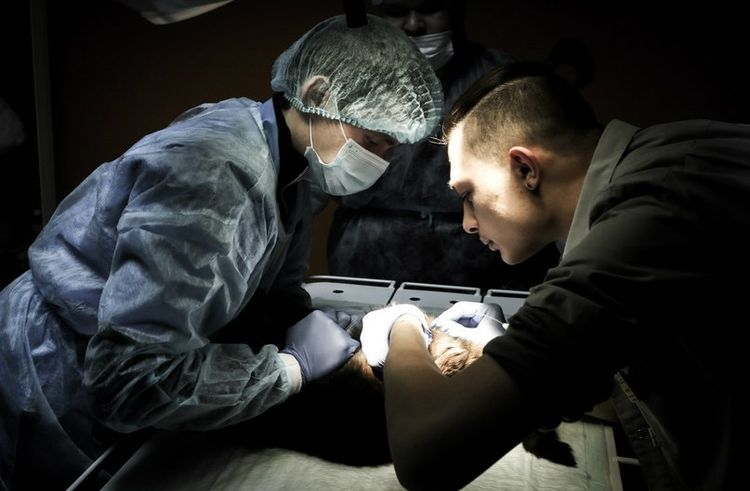
The first day after surgery
Upon arrival home, it's best to place the dog on a flat surface with bedding (preferably the floor, to prevent it from falling off while moving) and cover it with a blanket. Periodically, moisten the oral mucosa with a few drops of water. Urination may occur during recovery from anesthesia, so be prepared to change the bedding.
The animal may regain consciousness almost immediately or after several hours, depending on its body composition and the anesthetic dose. The first sign that the dog is about to wake up will be a reaction to stimulation—twitching of the paws or ears. Since motor reflexes don't return immediately, the animal may feel weak and helpless for a while, but this is short-lived.
Important! As soon as the dog is fully awake, offer it water or wet its nose and tongue with water. Do not feed the animal for the first 24 hours after surgery, as vomiting may occur as a reaction to the food.
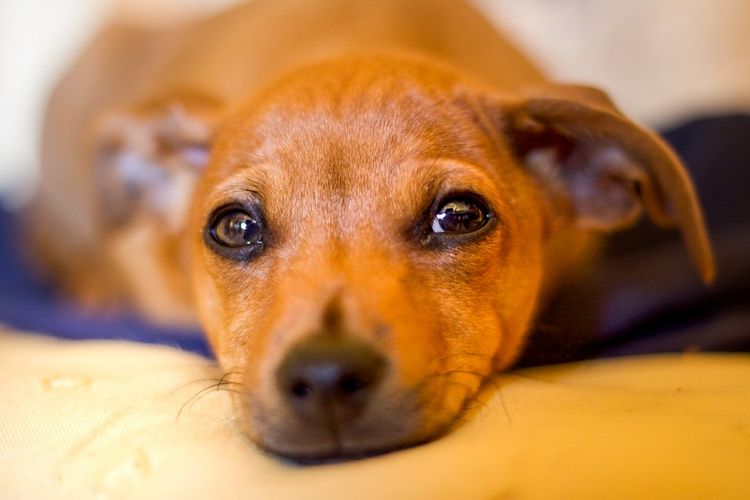
While the dog is under anesthesia, it's advisable to monitor it closely. If everything is normal, breathing and heart rate should be regular. A slight increase in temperature is normal, and brief, intermittent muscle twitching or tremors may be observed.
Symptoms that signal danger
The following are considered dangerous signs in the postoperative period:
- heavy, uneven breathing;
- uneven or rapid pulse;
- muscle tremors or twitching that lasts more than half an hour;
- blood impurities in urine;
- suppuration of the suture;
- absence of urine for more than 24 hours;
- significant increase in temperature.
These symptoms may indicate developing complications, such as cardiac dysfunction, pulmonary edema, or the development of a purulent infection. The detection of any of the above signs should prompt immediate medical attention.
Rehabilitation period
To prevent the development of a bacterial infection, antibiotic injections are prescribed from the first day after surgery: Oxacillin, Amoxicillin, Ceftriaxone or Cefazolin. The standard course of antibiotic therapy is 5-7 days. If the dog is in pain, whining, avoiding sudden movements, or trying to reach the scar, it's worth giving analgesics for several days, as severe pain can slow the healing process.
The sutures should be treated with an antiseptic (chlorhexidine or hydrogen peroxide) twice a day for at least a week. Wetting the wound is strictly prohibited. You can also use the following for suture care:
- Levomekol ointment (apply 1-2 times a day, covering with a gauze napkin);
- Terramycin Spray (seam processing held every 3 days);
- Aluminum spray (a product that forms a thin film that prevents contamination of the seam; it should be applied once a day).
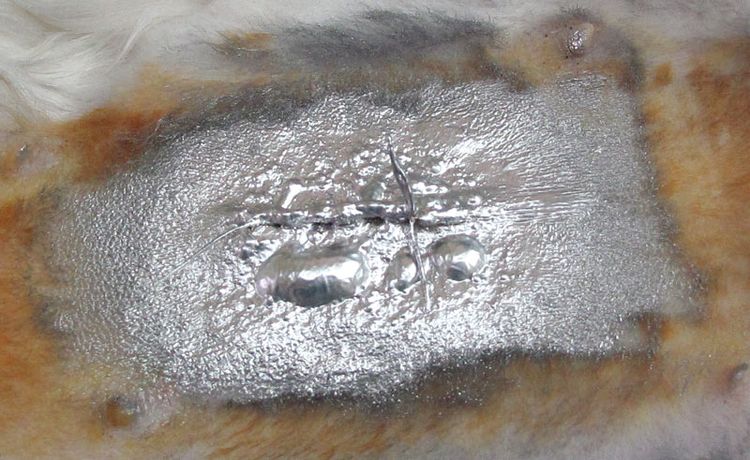
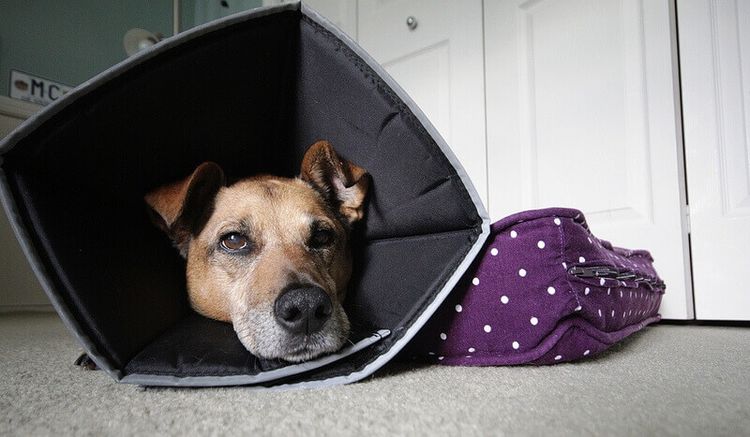
The sutures are removed after 1.5 to 2 weeks. Most modern veterinary clinics use absorbable sutures during surgery, so these sutures don't need to be removed. To prevent the dog from licking or scratching the wound, a small apron is placed on the wound (it's best to have several of these so you can change them as they become soiled). If necessary, a special, rigid, funnel-shaped collar can be purchased—this will prevent the dog from biting the itchy incision.
You can begin feeding your pet 24 hours after the surgery. Food should be given in small portions, and for the first few days, it should be soft and easily digestible: pates, ground meat, or baby formula. A delay in bowel movements for up to three days is not dangerous, as the animal's stomach was empty before sterilization, and intestinal motility is slower after anesthesia. If the dog does not recover for more than three days, you can give it one or two tablespoons of Vaseline oil.
Helpful information: A dog's recovery after spaying takes about two weeks. It's recommended to transition the dog to a low-calorie diet, as spayed animals are often prone to weight gain.
Products Limited, Agras Delic, Purina, and Bosch Tiernahrung produce lines of prepared food designed for neutered and spayed animals. If you prepare your pet's food at home, it's best to choose lean meats and add fiber-rich vegetables.
You can also ask our website's staff veterinarian a question, who will answer them as quickly as possible in the comments box below.
Video advice from a veterinarian about postoperative care:
Read also:


26 comments
marina
Hello. Could you please tell me? I spayed my 5-year-old female dog from the shelter so I could live with my unneutered male. We're keeping them in separate rooms for now, and the male is anxious. When and if it's possible for the male to lose interest and live together peacefully? Thank you.
Daria is a veterinarian
Hello! This sounds more like territorial behavior. The dog is worried about his territory. He's not neutered, so his hormones are raging. He's asserting his dominance. Try playing together outside to somehow engage them in shared activities in territory that doesn't belong to either of them. You might need to consult a dog trainer to help you correct your pets' behavior. A good dog trainer works with the owner, not the animals themselves, and teaches them to react and correct their behavior independently in the future.
Tatiana
Please tell me, my dog is a toy terrier, the stitches were removed after 14 days, how much longer should I wear a blanket?
Daria is a veterinarian
Hello! If the stitches have already been removed, everything should have healed by now. Check the stitch area; if they're well-healed, remove the blanket. Keep an eye on them; usually, it's not needed afterwards. However, some particularly nervous and sensitive pets may start licking themselves (the stitches itch while they're healing). It's important to remember that once you remove the blanket, don't apply any other treatment to them, so your pet doesn't lick the medication off.
Nastya
Hello! My dog was spayed 5 days ago. She's taking antibiotics, including Previcox at the prescribed dose, and her stool is normal. But today, the 5th day after the surgery, is over, and she's even more lethargic than before. She sleeps a lot, her eyes are sad, her legs are drawn up, and the blanket irritates her. When we clean the incision, we let her run around a bit while the blanket dries, but she's still not as playful and constantly squats as if she's on her feet. She's a Jack Russell, and she's a hurricane. She mostly lies there like a rag.
Please tell me, is this normal? Should I take her to the doctor?
Daria is a veterinarian
Hello! This is not normal! By the third day, animals are living a completely normal life. Their pain threshold is higher than ours, because in the wild, animals are prone to injuries and bites, so they tolerate these things better. If the animal is lethargic and feeling unwell, you need to go to the vet. An ultrasound should be performed, a complete blood count should be done, and an inflammation should be ruled out. Check the sutures for any dehiscence, suppuration, or bleeding. Additional antibiotics and anti-inflammatory medications will likely be needed.
Natalia
Good afternoon! Please tell me if it is possible to treat the seam with brilliant green after sterilization.
Daria is a veterinarian
Hello! Yes, but only on the edges of the wound. Be very careful, though, as it can cause a burn. There are gentler products that don't burn tissue. Brilliant green can also dry out the skin, causing it to crack and become even more inflamed. So, don't overdo it.
Tatiana
Hello. My
My 8-year-old dog was spayed. She has never been mated before, and has had 14 regular heat cycles. However, with the third heat cycle, after two months, she always had a false pregnancy. I had to spay her, but after a day, she started showing signs of a spoon pregnancy, which has been going on for four days now. What should I do? She doesn't sleep at all at night, what's wrong?
Daria is a veterinarian
Hello! Was your pet spayed a long time ago or was it just recently done? It sounds like your dog had been having false pregnancies regularly for almost eight years, and you just recently spayed her. If that's the case, then the spay was most likely done just when her hormones had already developed and she was almost ready for pregnancy. Removing the ovaries and uterus won't immediately solve the problem. It can take two weeks (and sometimes more) for her hormonal balance to return. I'd love to get an ultrasound now to check everything. It's strange, though, why wasn't the uterus removed during the surgery? It's important to rule out pyometra (a purulent inflammation of the uterus). So don't delay!
Julia
Hello. My dog had a gastroscopy, and on the fourth day after the surgery, symptoms similar to those of a false pregnancy began (anxiety, dragging soft toys, burrowing). What is the cause of this behavior? Surely this shouldn't happen after a gastroscopy?
Daria is a veterinarian
Hello! You didn't specify the animal's age or the number of heats/pregnancies. Were the ovaries removed along with the uterus? When were the reproductive organs removed? Perhaps the dog had just recently been in heat, or was she pregnant at the time of the surgery? Hormonal imbalances haven't yet recovered due to heat (sexual activity), which could be causing behavioral changes. Were there any ovarian cysts? Hormonal imbalances can also change. Were there any false pregnancies before the surgeries? Was an ultrasound performed before the OGE? There may have been abnormalities.
Mark
Good afternoon! My dog was spayed this morning at 11:00 AM, and we sent her home at 4:00 PM (she's started to recover from the anesthesia and start moving around on her own). She refuses to eat or drink at home, but she's already vomited three times, less than once an hour. Is this normal? Could the vomiting be caused by a medication allergy? Can I give her Polysorb solution?
Daria is a veterinarian
Hello! Did anyone explain to you how to care for an animal after anesthesia? They shouldn't be fed until the next morning (or late evening at the latest). They can only be given water once they start moving confidently, without staggering. Vomiting can be a reaction to coming out of anesthesia (a sort of "withdrawal"). Every animal is different. Some are running around after a couple of hours, others lie flat out until the morning, and still others vomit or drool for a long time. You don't need to do anything. Just keep an eye on the animal and don't let it climb high up on chairs or sofas.
Xenia
Good day
On the 10th day, my dog developed pink, odorless discharge from her vagina. She started peeing outside more often. We're going to the vet tomorrow—the stitches haven't been removed yet. What could this be and how serious is it?
Daria is a veterinarian
Hello! I need an ultrasound. It could be either a medical condition or hormonal changes due to the sterilization. Have you seen the doctor yet? What did they say?
Evgeny
We spayed the dog, three days passed, and she started hiding from us.
Dasha is a veterinarian
Hello! And? It's hiding, what other symptoms are there? Fever? Shivering? Vomiting? Refusal to eat? Lethargy? A bad incision? Hiding isn't a symptom.
Alina
Good afternoon! Yesterday our dog was spayed, given cosmetic stitches, put on a blanket, and the doctor told us to remove the blanket after a week, saying the stitches don't need to be treated. This is confusing to me; how can someone wear a blanket for a week without ever having to treat the stitches or even change the blanket? Please tell me what we should do? And is it possible to give the dog pain medication for the first 2-3 days? Our doctor told us, "You can give it if you want, but it will still hurt." I don't want her to suffer, and I want to alleviate her pain even a little.
Dasha is a veterinarian
Hello! Absolutely not. The stitches, even if cosmetic, still need to be inspected and treated. Wounds heal better "in the open air," so it's not recommended to keep your dog in a blanket all the time. Firstly, the blanket itself becomes soaked with secretions, which can accumulate bacteria. Secondly, it can create a "greenhouse effect"—the heat isn't released, which can cause the wound to ooze. However, walking around without a blanket is absolutely necessary, otherwise the dog will start scratching or licking the stitches. Remove the blanket for treatment, and do this for a few minutes under your supervision. Ideally, buy a bottle of Chemi-spray. It's excellent for treating wounds (the spray is purple, so be careful when spraying it to avoid getting your hands dirty).
Alexey
Hello, today is the 3rd day after surgery. I have rapid breathing and trembling. My tongue is red. I ate a little. I was urinating. My temperature is 38.4. Please tell me if this is normal.
Dasha is a veterinarian
Hello! Your pet's body temperature is within normal limits. However, the fact that it's been three days since the surgery and you're still shaking isn't good. Tremors are normal during the first day, when the animal is recovering from anesthesia. However, on the third day, this isn't a good sign. Take your pet to the veterinarian for an examination to rule out complications. Ideally, an ultrasound would be performed to assess the animal's overall condition.
Svetlana
Good afternoon,
We spayed our dog on March 1st. The first day, she was lethargic and didn't eat anything. That's understandable. Then she got better—she eats and plays. We didn't let her run around much, but she still tried to run because of her temperament. On Sunday, she became lethargic, barely plays, and walks outside without running. Yesterday, we took her temperature, which was 39.3°C (102.4°F)—everything seemed normal. She ate until today, but today she didn't want to eat. Have you ever had this happen in your practice? Could this be due to the blanket?
Dasha is a veterinarian
Hello! I haven't had any such reactions to the blanket. My advice: take your pet to the veterinarian (or the same one who performed the surgery). It's important to make sure there are no post-operative complications. Have them examine her, feel her, and maybe test for blood. It's important to rule out an inflammatory process; perhaps a hernia has popped out (internal stitches have come apart). What do the stitches look like on the skin? Are they dry? Are they oozing? Are they red? Are they painless? Take your little girl to the vet. It's best to rule out any health issues.
Olga
Twelve days after the OGE surgery, my dog began having a discharge from her vagina. It was scant, odorless, pink, and mucous. Doctors' opinions differ on what this could be. They say it can last no more than 10 days, that it's completely impossible, and that it could last for 1-1.5 months. Various theories include the body's reaction to the suture material, hormonal changes, and post-surgery cleansing. An ultrasound and blood tests were performed. Everything is normal. What could this be? And should any action be taken? The doctors say to wait and observe the dog. There are no signs of illness. Temperature, appetite, stool, and urine are all normal.
Dasha is a veterinarian
Hello! You've had both an ultrasound and blood tests, and the results have concluded that no abnormalities were found. Furthermore, you haven't noticed any other symptoms. This means all that remains is to monitor your pet. Your pet's ovaries (the glands that produce hormones, after all) have been removed. Now the body is having to adjust. The older the pet, the longer this process takes. The most important thing is to watch for any cloudy, dirty-colored, unpleasant-smelling, or even purulent discharge, a fever, or vomiting. If you notice anything suspicious, rush to the vet. But remember, you'll still need to see a veterinarian after the surgery (an ultrasound will be required in a month, and then as needed).
Add a comment