
Volpino Italiano (Italian Spitz)
The Volpino Italiano (Italian Spitz) is a small breed of dog with long hair and a sharp, fox-like muzzle. Despite their doll-like appearance, Volpinos are vigilant watchdogs, determined, courageous, and wary of strangers. They are friendly and affectionate with family, good with children, and playful and cheerful. They require regular but simple grooming.

Content
History of origin
The Volpino Italiano's ancestor is the European Spitz, which, according to cynologists, lived in Central Europe as early as the Bronze Age. Many other modern breeds also descend from it. In Italy, these small white dogs were bred primarily in Florence. One such dog is depicted in Vittore Carpaccio's painting "The Vision of St. Augustine" (1502). Spitz dogs were kept by both nobility and commoners. According to some sources, Michelangelo even owned an Italian Volpino.
The name of the breed comes from the word volpino, which means “fox” in Italian.
The first Volpino Italiano dogs were entered into the stud book in 1901. A breed standard was developed in 1913. In 1956, the Volpino Italiano was officially recognized by the Fédération Cynologique Internationale (FCI).
After World War II, many breeds fell into disrepair, and the Volpino was no exception. In 1965, only five purebred dogs were registered. Only the program to preserve Italy's indigenous breeds, initiated in 1984, made it possible to restore the population through careful selection and culling of the strong and healthy dogs remaining in rural areas.
Video about the Volpino Italiano (Italian Spitz) dog breed:
Appearance
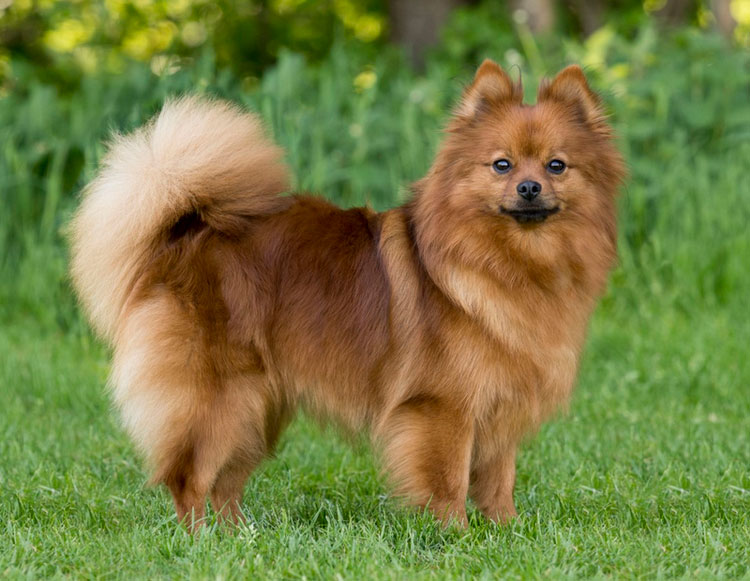
The Volpino Italiano is a small-sized Spitz with a harmonious build and long, raised coat. Sexual dimorphism is moderate. The height at the withers for males is 27-30 cm, and for females, 25-28 cm.
The head is wedge-shaped, the length is 4/10 of the body length. The skull is ovoid. The upper lines of the skull and muzzle converge. The forehead is convex. The stop is quite noticeable. The muzzle noticeably narrows, the bridge of the nose is straight. The nose leather with well-opened nostrils is located on the same line as the upper line of the muzzle, does not protrude beyond the front line of the lips. The lips are black, not pendulous. A scissor bite is allowed, a straight bite is allowed. The eyes are open, medium in size, and rounded. The eyelids are black. The color of the eyes is dark ocher. The ears are triangular in shape, erect, short, directed forward, set high and located close to each other, the length of the ears is approximately equal to half the length of the head.
The neck is erect and equal in length to the head. The body is square. The back is straight. The withers stand out above the topline. The loin is slightly arched. The croup slopes approximately 10 degrees to the horizontal. The chest is long and lets down to the elbows. The ribs are well sprung. The belly is moderately tucked up. The tail is an extension of the croup, curled over the back, its length is slightly shorter than the height at the withers. The legs are vertical and parallel. The paws are oval with well-knit toes; the nails and pads are black.
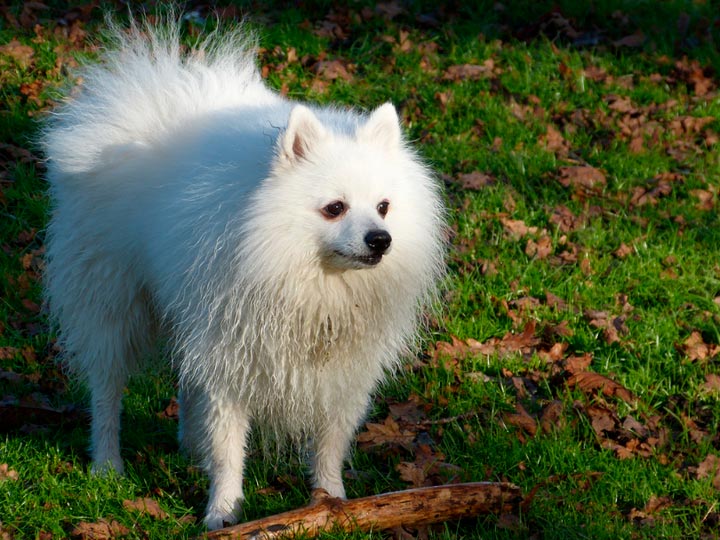
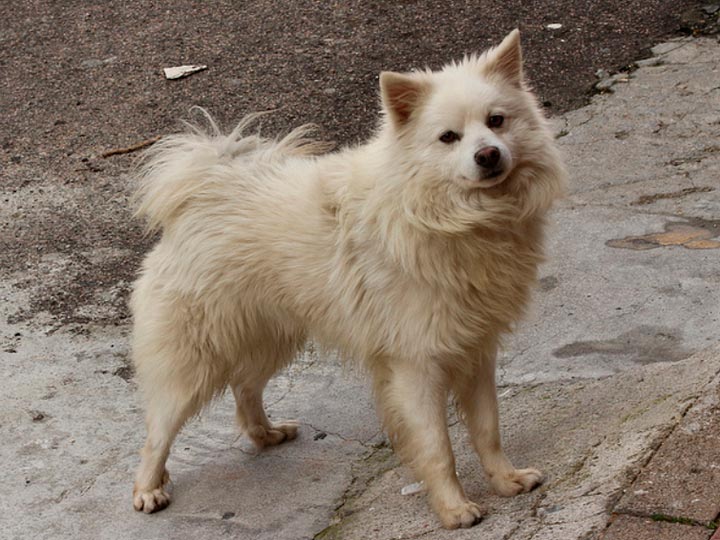
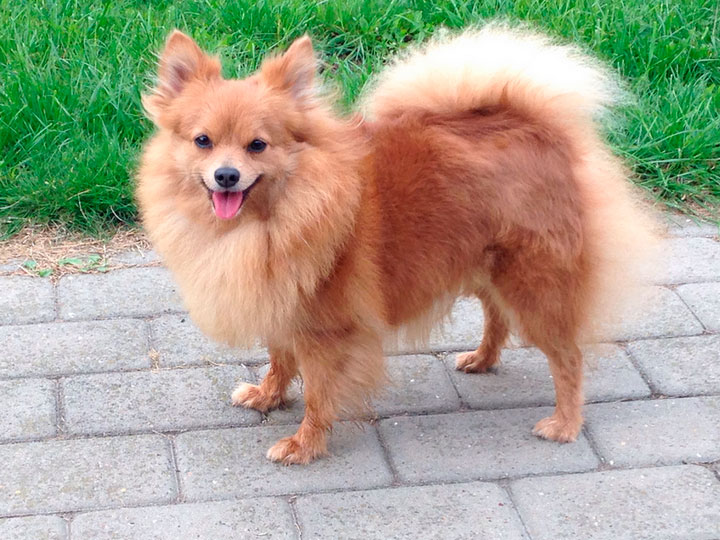
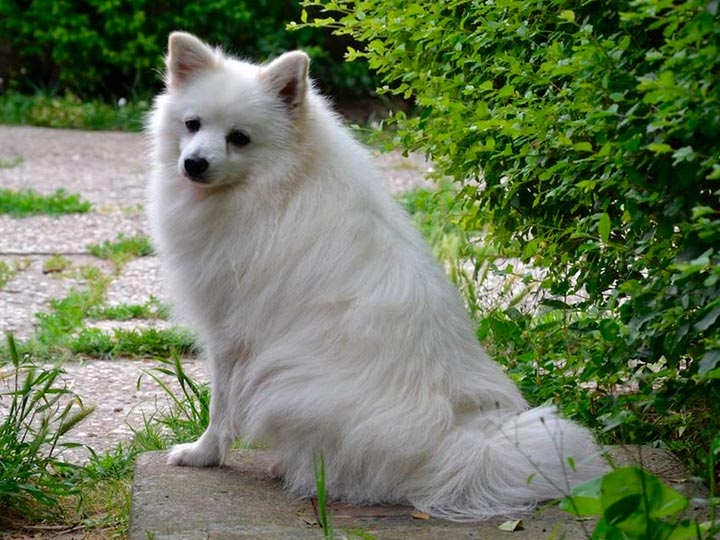
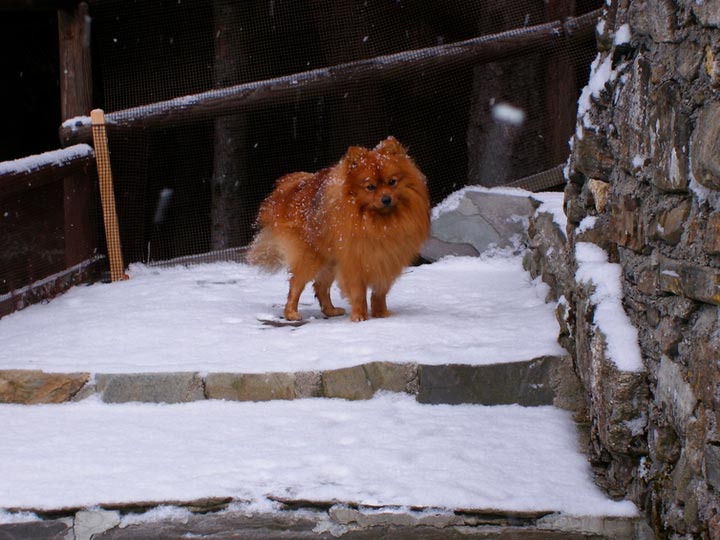
The coat is very thick, dense, long, straight, and erect. The texture is strong. The topcoat is coarse. There is a profuse collar around the neck. The skull is covered with semi-long hair, which conceals the base of the ears. The hair on the muzzle is short. The ears are very soft and close-lying. There are featherings on the back of the legs. The tail is covered with very long hair. Colors: white or red. Champagne is allowed, but not desirable.
The Volpino Italiano is often confused with other breeds: American Eskimo Dog, Japanese Spitz, Mittelspitz (Small German Spitz), Pomeranian Spitz.
Character and behavior
The Volpino Italiano is a small, cheerful, friendly, determined dog with a balanced character. It is loyal, loving, intelligent, and patient. Volpinos usually wait for their owners to return from work without hysterics, and they love attention without being overly clingy. These small dogs are very energetic and playful, and they remain so into old age.
An interesting characteristic of Volpinos is that they bark when excited. For example, during play, while waiting for a ball, and, if the dog is participating in agility, during a jump or before an obstacle.
The Italian Spitz is a good watchdog, always alerting its owner to any noise or the arrival of guests. It quickly learns to distinguish between background noises that genuinely require its owner's attention. Without proper training, it barks a lot for no apparent reason. It can be wary of strangers, but is friendly with those it knows. It prefers to avoid close contact with strangers, but does not exhibit aggression or nervousness in everyday life.
With early socialization, the Italian Spitz is docile and obedient, making it suitable for both young and old people, as well as families with children. It's best if these children are older and understand how to handle the animal and avoid inadvertently harming it. The Volpino gets along well with other pets, especially if raised with them.
Education and training
The Volpino Italiano is intelligent, quick-witted, and responsive enough to be recommended as a first dog. He responds well to basic training and quickly learns commands, but achieving a high level of obedience requires patience, consistency, and persistence. Italian Spitz can be stubborn and self-assured at a young age. Training begins early, literally from the first days of arrival in a new home, incorporating most basic commands into daily life and gently demanding their obedience.
The Volpino Italiano can be found competing in agility and other similar sports.

Content Features
Volpino Italianos are well-suited to apartment or home life. In their native land, these dogs are often called upon to live outdoors, sleeping in separate buildings or kennels. Volpinos adapt well to all weather conditions; their outer coat repels water, and their dense undercoat protects them from low temperatures. Volpinos also adapt well to heat. They shed heavily seasonally and moderately during the rest of the year.
A daily walk of at least 30 minutes will help the dog burn off the energy pent up during the day. Italian Spitz don't require much exercise and adapt well to their owner's lifestyle. They always enjoy active playtime, various intellectual challenges, or sports, but they may also be content with just walks in the park. Many Volpinos enjoy swimming, and a dip in the warmer months can be a very beneficial activity.
Care
The Volpino Italiano requires regular grooming. Hygiene procedures include:
- Comb the coat with a comb 1-2 times a week. This procedure removes dead hair and reduces the amount of hair loss in the house, as well as prevents tangles from forming.
- Bathing is recommended every 10 days. Some breeders claim that foxes should be washed no more than once every 3 months. Before bathing, make sure the fur is tangle-free. In addition to regular shampoo, use a conditioner to facilitate combing;
- Claws are trimmed as needed, usually every 2-3 weeks;
- The hair between the toes and pads is trimmed once a month or less;
- It is necessary to clean teeth and ears weekly;
- It's important to keep your eyes clean and dry. They're typically wiped morning and evening. If this isn't enough to prevent tear ducts from turning reddish-brown, special whitening products can also be used.
The Volpino Italiano doesn't require regular grooming. At shows, the dog is shown in its most natural state. Only the hair between the toes and pads is trimmed to give the paw a rounded, neat appearance. The hair on the collar, feathering, and body is only lightly thinned.
Nutrition
Volpinos require high-quality, nutritious nutrition. This can be homemade food or commercially available super-premium or holistic foods. Dry or wet food is selected based on the dog's size and age. Homemade food should consist of one-third meat and meat products, with beef being preferred. The remainder can be grains (rice, buckwheat), vegetables, fruits, and fermented milk products, depending on tolerance.
Health and life expectancy
In general, the Volpino is considered a healthy breed. The dog's life expectancy is 13-16 years. The list of observed genetic problems includes:
- primary lens dislocation;
- patellar dislocation;
- Addison's disease;
- cryptorchidism.
Like any other dog, the Volpino Italiano requires vaccinations and regular treatment for external and internal parasites. Breeding animals are recommended to be screened for the above-mentioned diseases, for which genetic testing is available.
Choosing a Volpino Italiano Puppy
The majority of these dogs are concentrated in their homeland, Italy, but there are also other breeders in Europe. In Russia, only a few breeders breed Italian Foxhounds, so ads for sale are rare, and puppies often have to be reserved in advance.
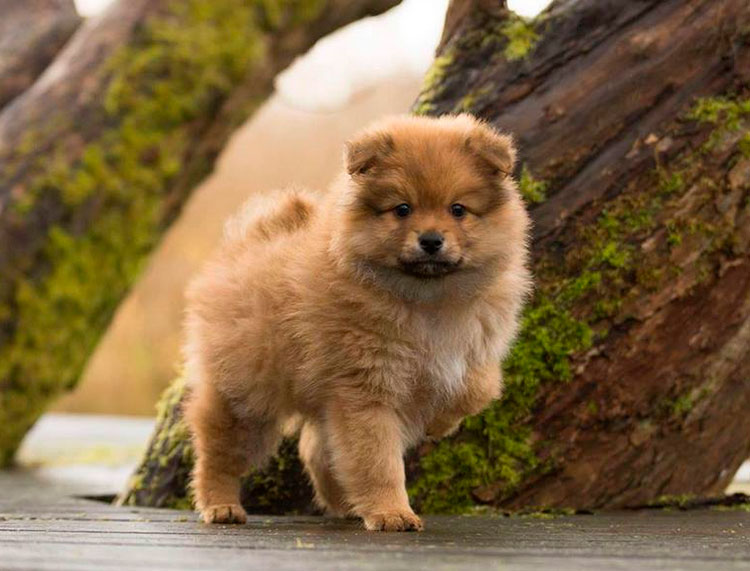
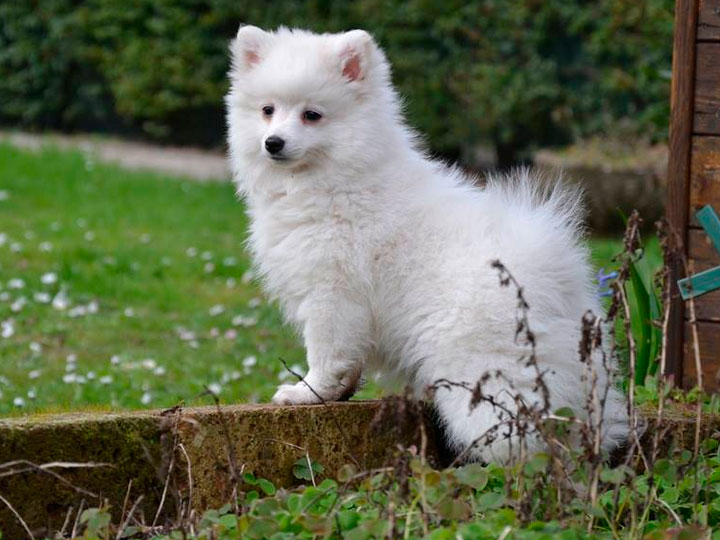
The Volpino Italiano puppy's coat is much shorter than that of adult dogs. The medium-length, upright fur gives it a plush appearance. The muzzle and back of the ears are very short. The legs should be strong, with rounded paws. The pigmentation of the eyelids, lips, and nose is important. The eyes should be dark, like small beads, with virtually no whites visible. There should be no excessive discharge from the eyes, crust around the nose, other dirt, or bald spots. The tail is curled over the back. The ears are small and erect. In puppies, they appear slightly larger in proportion to the head than in adult dogs, and they curl forward until 2-2.5 months of age. The demeanor is lively and friendly.
At the time of sale, puppies must have a brand, a puppy card, and a veterinary passport with vaccination records.
Price
Volpino Italiano puppies from breeders typically cost from 50,000 rubles. The parents' achievements, gender, and prospects for the puppy are all important factors. In Europe, the average price for a Volpino Italiano is 1,500 euros. Since the breed is not commercial, advertisements for puppies without papers are rare; they are usually immediately noticeable by the low price of 10,000-20,000 rubles. However, these advertisements can also be scams selling ordinary white mongrels under colorful names.
Photos
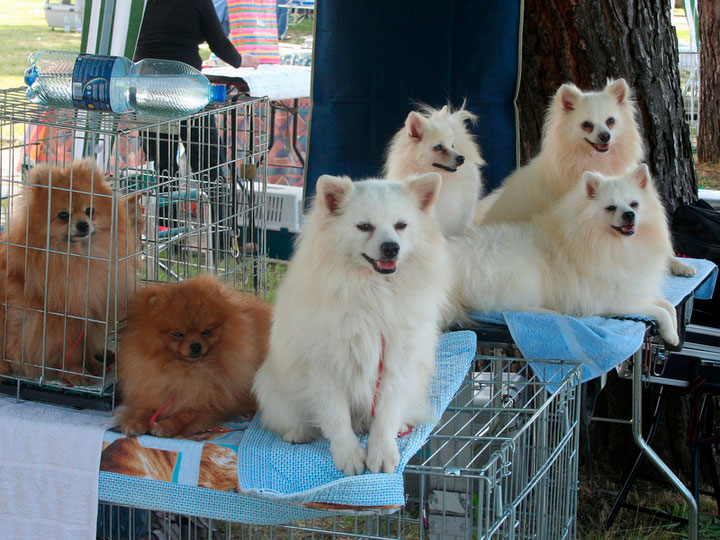
In the gallery you can see photos of adult dogs and puppies of the Volpino Italiano (Italian Spitz) breed.






Read also:
Read also:


Add a comment