
Lice in cats: symptoms, signs and treatment
Cats often suffer from diseases caused by parasitic organisms living inside or on the surface of their bodies. These parasites are called ectoparasites (from the Greek "ektos" meaning external and "parasitos" meaning parasite). In addition to the well-known ticks and fleas, feline ectoparasites include lice. It's very easy to become infected—it's enough for your cat to interact with another cat or catch a rodent carrying lice. These parasitic insects cause a lot of suffering for animals, so owners should know how to identify lice in their cats and how to get rid of them.
Content
What are lice and why are they dangerous?
The lice is a non-bloodsucking insect of the Trichodectes family. It has a translucent, wingless, light-colored, segmented body no more than 2 mm long. The photo clearly shows its large head, equipped with powerful jaws and small antennae for tactile sensation. On the upper part of the body are six legs with claws, which the lice use to firmly grip a cat's fur.
The ectoparasite feeds on keratinous scales of hair and epidermis, as well as particles of dried blood that appear on the animal's skin after scratching. Lice reproduce very rapidly: a single clutch can contain up to a hundred eggs. The female attaches them to hairs, coating them with a glue-like secretion. After a few days, the larvae hatch. About a month later, after molting three times, the insects emerge as adults, ready to continue the reproductive cycle.
Important to know. There's no need to worry about humans being infected with the endoparasite Trichodectes. Lice are heat-loving and therefore cannot survive outdoors for long periods. If an insect comes into contact with skin without thick hair, it dies from the cold within a few hours.
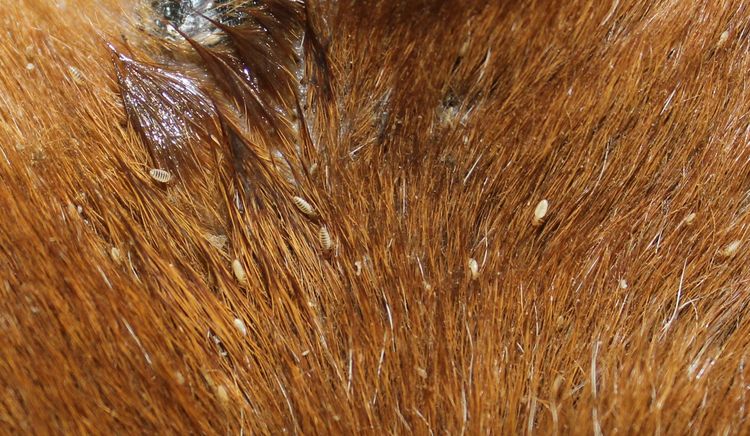
Lice are the causative agent of a disease called trichodectes, which attacks the epidermis and causes hair loss. Young animals are more susceptible to this disease and experience a more severe illness. Trichodectes is also dangerous because the endoparasite Trichodectes transmits other dangerous parasites, such as tapeworms and Rickettsia bartonella, and can also exacerbate existing chronic diseases in cats. Furthermore, inflamed, scratched skin is a prime location for mites and fungi.
Signs of the disease
Signs of a lice infestation include persistent, intense itching, dandruff-like flaking, and hair loss in certain areas of the body (most commonly around the ears, neck, crown, thighs, or tail). The skin in the affected areas becomes rough, inflamed, and swollen. This is what a cat with advanced trichodectes looks like in this photo.
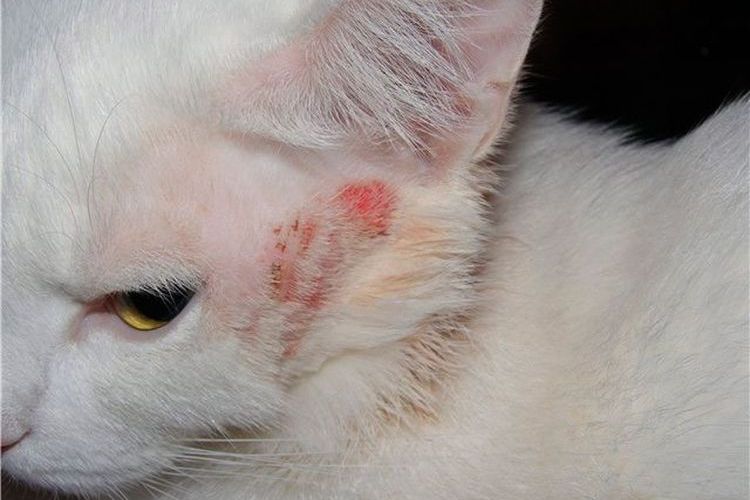
Having a large number of these ectoparasites in a cat causes genuine suffering: the animal scratches its skin until it bleeds, tries to bite out the lice, becomes restless and irritable, and loses its appetite and sleep. Due to their microscopic size, it's difficult to get a good look at the parasites, although it's clear that some insects are crawling around in the fur.
Note! You can distinguish lice from fleas or scabies mites by their attraction to heat. If you place a cat under a lamp or near a fireplace, within a few minutes the lice will rush to the tips of its hairs to warm up. Other parasitic insects will not respond to heat.
How to get rid of lice
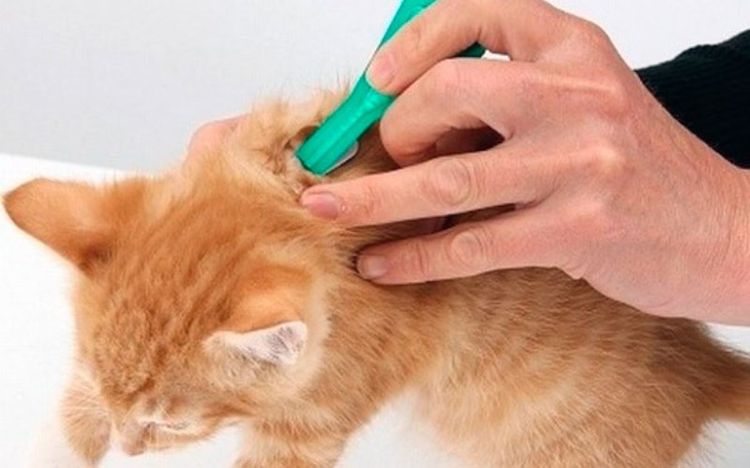
To kill lice in cats, specialized insecticides are used. These can be purchased at veterinary pharmacies or specialty stores. To completely rid a cat of lice, most insecticides must be applied multiple times; some products are fully effective after a single application.
Caution! Antiparasitic medications are quite toxic, so when using the medication, be careful not to let it come into contact with the cat's eyes, nose, or mouth.
A veterinarian can help you choose the right endoparasite treatment for your cat, based on the severity of the infestation, the relative safety of the insecticide, and the animal's overall health. Veterinary antiparasitic medications are available in various forms.
Drops
These medications are applied to the cat's skin in areas inaccessible to licking (most often on the withers or along the spine). The pet's protection against endoparasites lasts for a month, after which the treatment should be repeated. Popular lice drops include:
- German company "Bayer" (brand "Advantage-40«);
- Russian "Agrovetzashchita" (brand "Leopard«);
- American Pfizer (brand name "Stronghold«);
- Polish "3PIP" (brand "Fiprex").
Emulsions
This form of veterinary medication is intended for the preparation of aqueous solutions, which are used in the same way as drops. The resulting liquid, diluted with water, is then rubbed into the cat's skin. Insecticide emulsions for cats are offered by domestic companies such as Agrovetzashchita, Impex, and Bionix, as well as by foreign companies such as Bayer (Germany), Pfizer (USA), and Merial (France).
Sprays
Aerosol sprays are considered the best emergency treatment for cats in the event of a lice infestation. Spray the solution from the bottle over the animal's entire body, avoiding contact with the mouth, nose, or eyes. Bathe the cat after a few hours. If necessary, repeat the treatment after a week. A drawback of this type of insecticide is that while it remains on the animal's fur, care must be taken to prevent the cat from licking it. Insectoacaracid sprays that provide immediate effects are produced by Rosagroservice (brand "Dobrokhim FOS"), Bayer (brand "Bolfo"), and Greenfort (brand "Green Fort Neo Bio Spray").
Shampoos
Shampoos are convenient and safe to use for treating lice. They have a moisturizing and anti-inflammatory effect, effectively relieve itching, are hypoallergenic, and provide proper care for the coat and skin. However, shampoos are inferior in effectiveness and duration of action to other insecticidal treatments, so it is not always possible to cure severe cases of trichodectosis with shampoo.
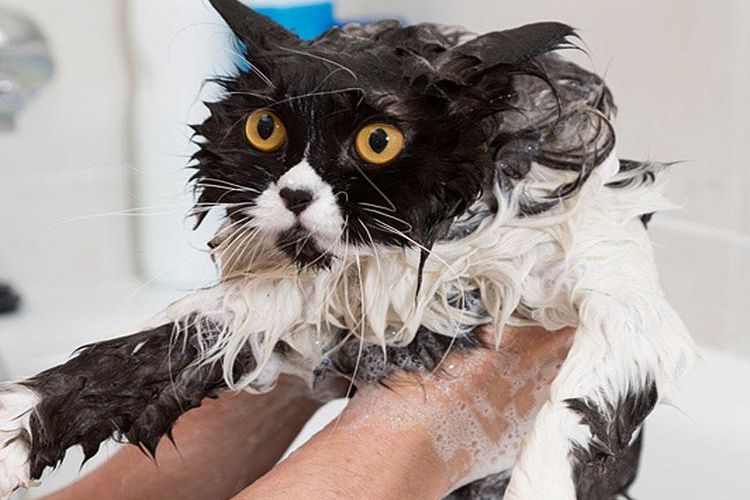
Experts recommend domestic insectoacaricide shampoos for cats:
- "Lugovoi" (Agrovetzashita company);
- "Fitoelita" (OOO Veda);
- "Lapushka" (Veda LLC);
- "BioVax" (Biosphere);
- "Rolf Club" (ZAO Ecoprom);
- "Celandine" (ZAO Ecoprom).
The shampoos “BIO-GROOM” (manufactured by Bioderm, USA) and “Ms Kiss” (manufactured by Swiss Laboratory Defense, Switzerland) have also earned good reviews from veterinarians.
Folk remedies
Small kittens, as well as cats with particularly sensitive skin or allergies, can be treated by bathing them several times in a decoction of wormwood, string, wild garlic, or chamomile. The essential substances contained in these plants inhibit the parasites' activity, forcing them to quickly "evacuate" the animal's body. However, this treatment is only appropriate in the early stages of the disease; it will not cure advanced trichodectosis.
Preventive measures
To prevent primary infestation of your cat with lice and other parasitic insects on the body and fur, it is recommended to follow these measures:
- Prevent the cat from coming into contact with sick animals.
- Buy a pet insecticidal collar, protecting against fleas and lice, or periodically, about once a month, use the antiparasitic agents described above.
- Visit your veterinarian for regular preventative examinations.
If your cat has had lice and has recovered from them, you should take steps to prevent recurrence. Thoroughly vacuum the cat's bedding, wash all food dishes, and, if possible, treat the area where your cat spends most of its time with an insecticide.
Read also:


Add a comment