
Viral papillomatosis in dogs: symptoms and treatment
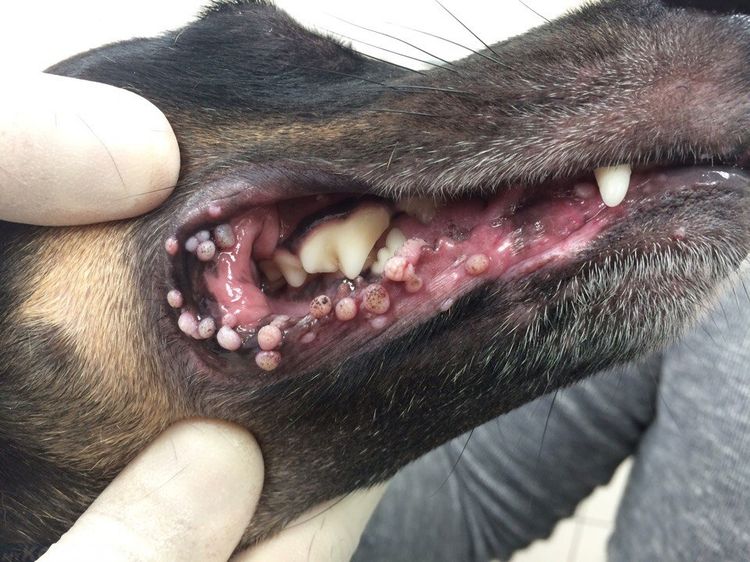
Papillomas are benign growths that form on the skin or mucous membranes. The disease is caused by a DNA-containing virus of the Papovaviridae family. In dogs, viral papillomatosis is usually diagnosed in children under 3 years of age or over 8 years of age. This is due to the weaker immune system of adolescent and older animals. Rottweilers, Labradors, German Shepherds, Terriers, and Cocker Spaniels are genetically predisposed to the disease.
Content
Routes of infection and mechanism of development
A dog can become infected with papillomatosis through direct contact with a carrier of the virus (during walks or training), as well as through grooming items, clothing, or the hands of a person who has previously handled an infected animal. There are over a dozen types of Papovaviridae, some infecting only animals, while others infect only humans. Therefore, humans cannot become infected with the disease from dogs.
The virus enters a dog's body through skin lesions, such as microcracks or scratches. Once it penetrates the cell nucleus, it may remain dormant for a period of time, remaining dormant for one to several months. Causes that trigger the development of the disease include a weakened immune system due to stress, a previous illness, or the use of corticosteroids, which suppress the immune system. These factors trigger the process of viral replication (multiplication).
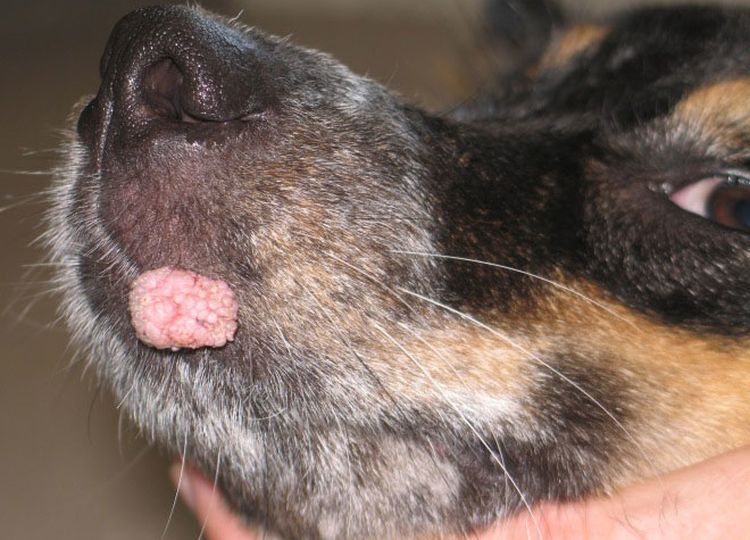
Cells whose DNA the foreign agent has embedded with its "program" begin to divide uncontrollably, resulting in wart-like growths appearing on the skin or mucous membranes, resembling clusters of papillae or cauliflower florets. These growths are benign, but with frequent trauma, they can become malignant.
Forms and symptoms of papillomatosis
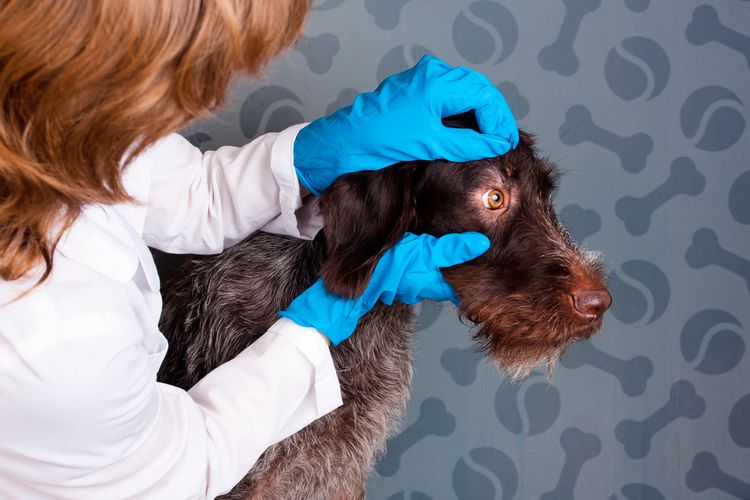
There are six distinct forms of the disease, each differing in appearance and clinical presentation. Depending on the location of the warts, papillomatosis can be:
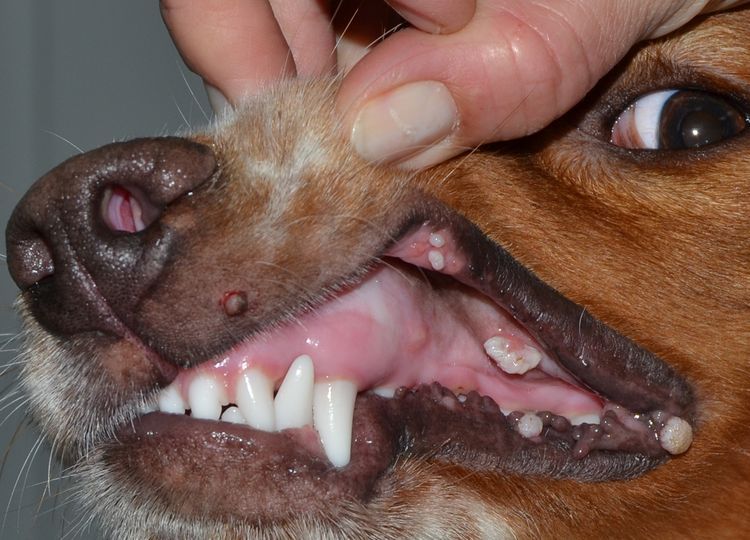
- Oral. Develops on the mucous membranes of the lips, gums, and tongue. Initially, the growths appear as light-colored plaques, later transforming into papillary papillomas, and usually resolve and disappear within 1-2 months. Clinical symptoms may include difficulty eating and salivation.
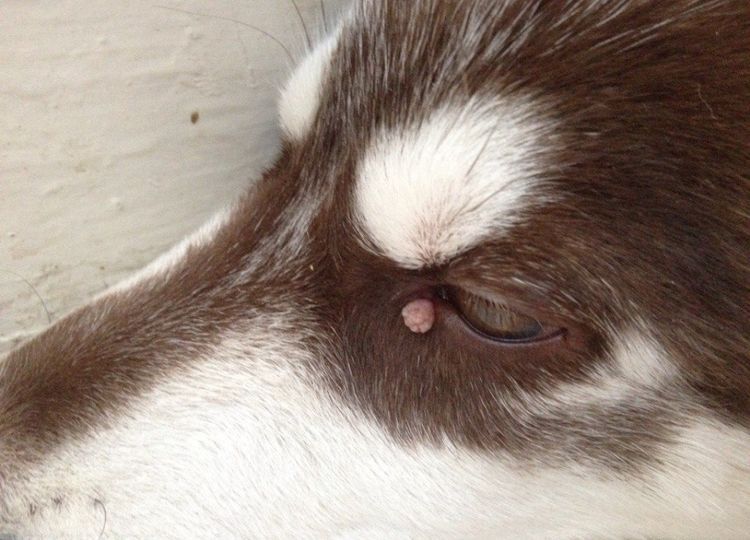
- Cutaneous exophytic. Affected areas include the extremities and head (most commonly the eyelids). These epithelial tumors appear as small, smooth, round, pedunculated lesions, colorless or pigmented. They usually cause no discomfort to dogs; in rare cases, conjunctivitis may develop.
- Inverted cutaneous papillomas. These papillomas appear as raised, cup-shaped lesions with a depressed center. They can be single or multiple, and are typically located on the abdomen, groin, and armpits.
- Pigmented. Developing on the lower torso, papillomas appear as round plaques 1-2 cm in size, pink or brown in color.
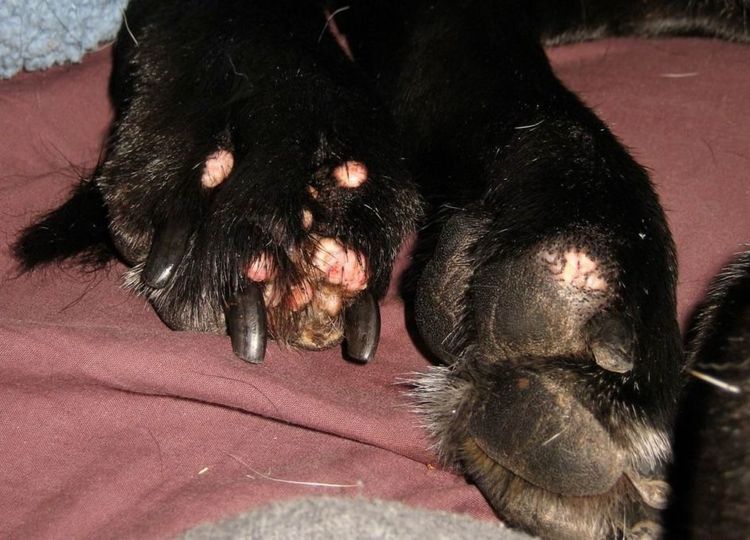
- Paw pad papillomatosis. These warts are dry, hard, keratinous growths, sometimes horn-shaped. Their development can cause lameness in dogs, and if damaged, a secondary bacterial infection can occur.
- Genital (venereal). The lesions appear as slightly raised, flat plaques and are localized on the genitals—the penis in male dogs or the penis and vagina in female dogs.
 Oral papillomatosis
Diagnostics
The diagnosis is based on clinical symptoms detected during examination and laboratory test results. The following diagnostic methods may be used:
- Biopsy microscopy is a histological examination of the structure of altered epithelial cells in the analyzed sample.
- Immunohistochemical analysis is the detection of proteins in a tissue sample that are specific to a particular type of tumor.
- PCR method. The sample for analysis can be a mucous swab or blood. The polymerase chain reaction allows us to identify the pathogen type and its quantity.
Bacteriological methods for examining biopsy samples for Papovaviridae are ineffective, since this virus does not replicate in cell cultures.
Caution! Many serious and dangerous skin diseases have symptoms similar to papillomatosis. Therefore, any suspicious growth on your pet's body should prompt a visit to the veterinarian.
Treatment
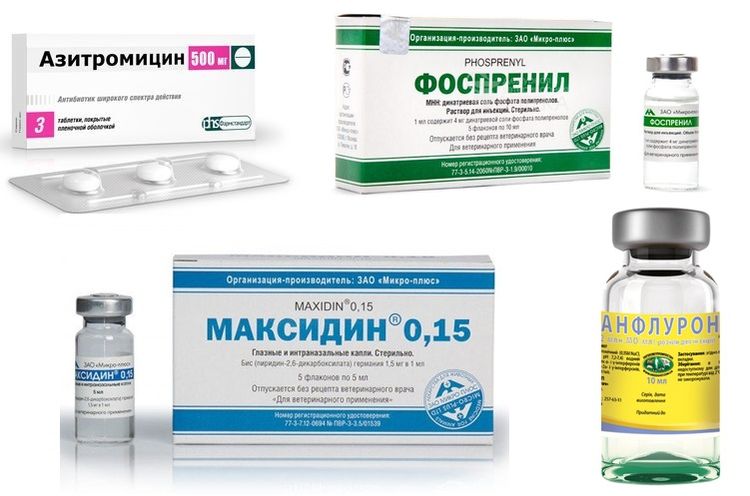
In many cases of papillomatosis in dogs, spontaneous healing occurs. However, if the warts cause discomfort, interfere with eating, cause lameness, or are located in areas prone to injury and bleeding, the dog is prescribed a course of antimicrobial treatment. Azithromycin, a macrolide antibiotic, is commonly used. Immunostimulants may also be prescribed. Fosprenil, Anfluron or Maxidin.
Surgical treatment of papillomatosis is indicated if therapy for 3-5 months is ineffective. Papillomas can be removed under local anesthesia with a scalpel. More modern, less painful, and minimally invasive wart removal methods include:
- Cryodestruction is the freezing of neoplasms with liquid nitrogen;
- Radiosurgery is a method of non-invasive surgery and radiation therapy based on the impact on neoplasms with a narrow beam of powerful ionizing radiation (the so-called gamma knife);
- Laser vaporization is the destruction of growths using electromagnetic rays of the light range;
- Diathermocoagulation is the destruction of neoplasm tissue by cauterization with high-frequency alternating currents;
Important to know! After papillomatosis is cured or warts disappear on their own, dogs develop immunity that prevents recurrence of the disease. However, since some viral DNA remains in the animal's cells, the dog remains a dangerous carrier of the infection for a long time.
Prevention
There is no 100% reliable method for preventing papillomatosis. Many veterinarians recommend vaccinations for their dogs, which can provide some protection. The vaccine is a serum obtained from papillomatous tissue. The serum is administered subcutaneously, 2-3 times, with a week's interval.
The standard preventative measure for any infectious disease is maintaining a strong immune system: even if a dog is infected with the papilloma virus, it won't become ill if its resistance is strong enough. It's also important to remember that animals with warts should be kept separate from healthy dogs.
Why do papillomas appear in dogs? video
Read also:
- Chlamydia in dogs: symptoms and treatment
- Inflammation of the glands in dogs: symptoms and treatment
- Lymphoma in dogs: symptoms and treatment


Add a comment