
Can cats see in the dark and how?
To understand whether cats can see in the dark, it's enough to know some of their visual characteristics. This interest stems from the fact that domestic pets can move freely at night and even hunt. What enables this ability, you'll learn below.
Content
Myth or reality
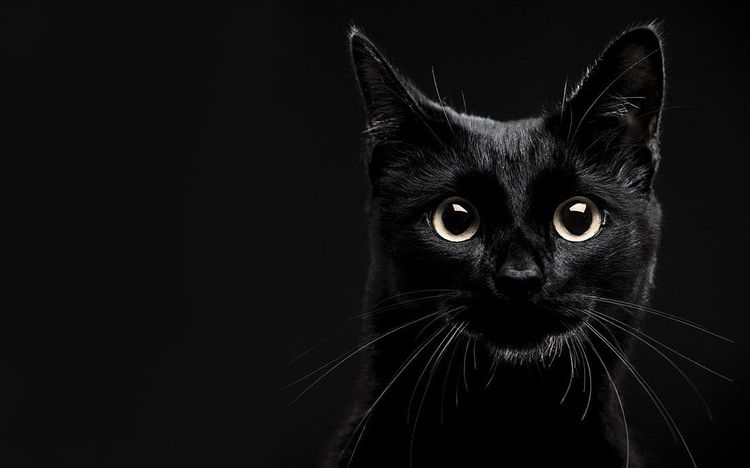
It's believed that cats can see in pitch darkness, but this isn't entirely true. The fact is, cats see well even in low light. They require only 10% of the light a human requires. This is enough for a cat to move and hunt. They distinguish silhouettes and details well, so they don't experience discomfort. A human wouldn't be able to see even at arm's length in these conditions.
Important! In the absence of a light source, such as indoors, cats cannot see, but they can feel comfortable in the twilight.
Animals are naturally endowed with this ability. They are nocturnal hunters, so the ability to see at night is essential for survival. This applies not only to domestic pets but also to wild members of the Felidae family—tigers, leopards, lions, panthers, and others.
Some owners may object, claiming that their pet can easily navigate a dark hallway or other enclosed space, lacking even the slightest natural light. In this case, other factors influence the animal's abilities. First, cats are good at remembering the surroundings of a room. Second, they have an incredible sense of smell, which helps them navigate. Third, they have specialized tactile organs (whiskers or vibrissae). These serve a tactile function, allowing them to sense the location of objects from a distance and avoid obstacles while moving without touching them.
Features of the visual organs
To understand how cats see in the dark, it is important to know the features the structure of their eyes:
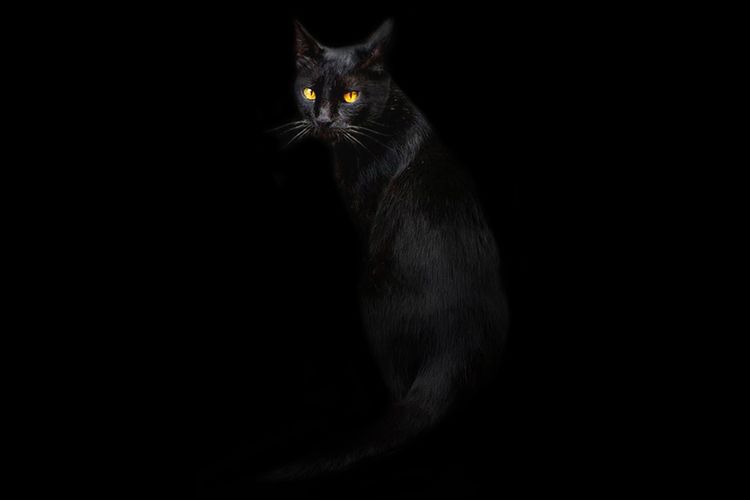
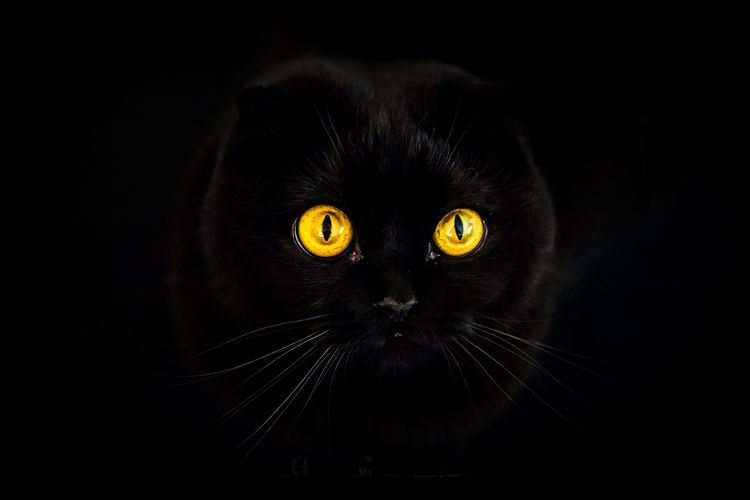
- The pupils of these animals are unlike those of other animals. They can be a large circle (up to 1 cm in diameter) or a narrow slit. This helps the animals regulate the amount of light reaching the retina. In low light, the pupils dilate to their maximum, so even the slightest reflection is enough to clearly distinguish moving and stationary objects.
- Cats' eyes have a different ratio of rods to cones than humans. They have many times more rods—the elements that are sensitive to light—but significantly fewer cones, which are responsible for image clarity. This explains why they easily detect weak direct or reflected light.
- Cats' eyes contain a special vascular layer (the tapetum lucidum), which serves several functions. The tapetum protects the eyeball from external factors and prevents the mucous membrane from drying out. For this reason, cats don't blink, as they don't need to constantly moisturize their eyes like humans. It also functions as a mirror, reflecting light elements that haven't interacted with the retinal receptors onto the retina.
Interesting! The "eye glow" in cats in the dark is also caused by the presence of the tapetum lucidum. Due to the peculiarities of its action, it creates a visual effect as if the cat's eyes glow yellow or green.
UV vision abilities
A cat's lens transmits ultraviolet rays. This means cats see the world in shades of the UV spectrum—the pigments of some plants and traces of the urine of small animals become more visible at night.
Age-related changes
Cats are born with a pale, even red, glow in their eyes—the tapetum develops around 3 months of age, along with the pigmentation of the iris. The light in the eyes depends on the pigmentation; for example, blue-eyed cats may have poorer night vision and a dimmer glow.
Comparison with other animals
The tapetum in cats is denser and more efficient than in many other predators, making their night vision particularly sensitive. However, in bright light, this layer reduces sharpness—cats see less clearly during the day than humans.
Movement vs. statics
Cats are excellent at detecting fast-moving objects—up to 160 frames per second. However, they can perceive a stationary object as just background noise. This is why they respond so well to cat toys with string or lasers.
Do cats see colors?
It was previously believed that cats see the world in black and white. They are capable of distinguishing several dozen shades of gray. It was even suggested that these animals are not naturally equipped to see bright colors for several reasons. They are nocturnal hunters, so they have no need to recognize bright colors. Furthermore, the rodents they hunt are gray. Scientists were later able to disprove this myth.
For distinction flowers The pigments found on the cones are responsible. Humans have only three such pigments: blue, red, and yellow. These colors make up all the shades humans see. Cats have only two pigments: blue and yellow. For this reason, they perceive the world as colorful, but not as vibrant as humans.
An important point
Even knowing why cats see in the dark, some owners conduct incredible experiments on their pets. They place them in a windowless room, such as a pantry, or place the litter box in a dark corner. In such situations, the animal's cones and pupils are unable to help, as even the slightest source of light is absent.
Animals in such situations often experience anxiety. This isn't due to the pet seeing the other world (as some people believe), but to natural instincts. If the litter box is placed in a dark corner, the animal will likely find a safer spot—on the carpet in the middle of the room, in the owner's shoes in a well-lit hallway, etc. Whether the pet should be blamed for the misbehavior in such cases is debatable.
Table: comparative characteristics
| Characteristic | Cat vision | Human vision |
|---|---|---|
| Sensitivity in the dark | ≈ ×6–8 better (tapetum energy) | — |
| Color perception | Blue, green; red is not perceived | Full spectrum |
| UV range | Present, allows you to see UV marks | Absent |
| Visual acuity | ≤ 20 feet perceptible, beyond that - blur | Long-distance clarity |
| Field of view | ≈ 200° | ≈ 180° |
| Reaction to movement | Focused attention on movement | Focus on details and statics |
Practical tips for owners
-
A night light in the house: soft light will help your cat move safely at night and reduce the risk of injury.
-
Toys in blue-green tones: these colors are easier for pets to see even at dusk.
-
Watch for age-related changes: if night vision deteriorates, eye disease is possible – it’s worth visiting a veterinarian.
-
Considering eye glow: If your eyes glow unnaturally brightly, are an irregular color, or only one color, this may indicate a problem and requires examination by a specialist.
Evolutionary and ecological context
-
Cats are crepuscular predators. Their ancestors hunted at dawn and dusk, which forced them to develop vision optimally adapted to this period of the day.
-
Tapetum and the increased number of rods are the result of evolutionary changes over millions of years, encoded in DNA.
-
UV vision helps detect animal markings because many components of their prints are only visible under ultraviolet light.
Conclusion
Cats do see better in the dark than we do, but not in total darkness: they require at least some light. Their vision is a combination of anatomy, physiology, and evolutionary adaptation. The combination of tapetum, estimative sensitivity, UV capabilities, and a bias toward static objects makes them ideal nocturnal hunters. Owners can improve their cats' quality of life by adding soft lighting and adapting their furnishings to their visual abilities.
Added facts make the article significantly deeper and more informative, giving it a high chance of taking a leading position in search results.
How cats see in the dark: video
Read also:


Add a comment