
Wetterhoun (Dutch Water Spaniel)
The Wetterhoun (Dutch Water Spaniel) is a breed of hunting dog developed in Friesland in the 17th century. One of its distinguishing characteristics is its coat: short, straight hair covers the head and legs, while on the rest of the body it is long and forms tight curls. Today, Wetterhouns are used for hunting ducks and small game, as guard dogs, and as companions. They are rarely found outside the Netherlands.
Content
History of origin
The Wetterhoun originates from Friesland. These curly-coated dogs were especially popular among farmers and workers in the Frisian Lake region. Hunters selected the most suitable specimens for hunting otters. These dogs were expected to be strong, vicious, capable of engaging game alone, and excellent swimmers and divers. They were also used to guard property, and less commonly as herding dogs for driving livestock. They likely share a common ancestor with the English Water Spaniel.
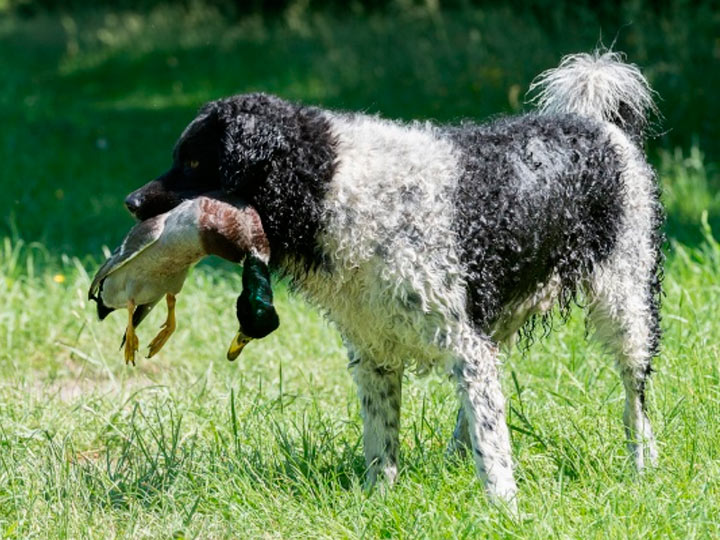
Over time, otter hunting became rare, and Wetterhunds were retrained for duck hunting, for which they are well suited. They work in a spaniel-type manner. Less frequently, they are used to hunt small fur-bearing animals. In the Netherlands, the breed is also known as the Friesian Curly-Coated Otterhund.
Despite its ancient origins, the Wetterhoun (Dutch: Wetterhoun) was only registered by the Dutch Kennel Club in 1942. Five years later, the first breed club was founded in Holland. In 1959, the breed was officially recognized by the FCI.
Appearance
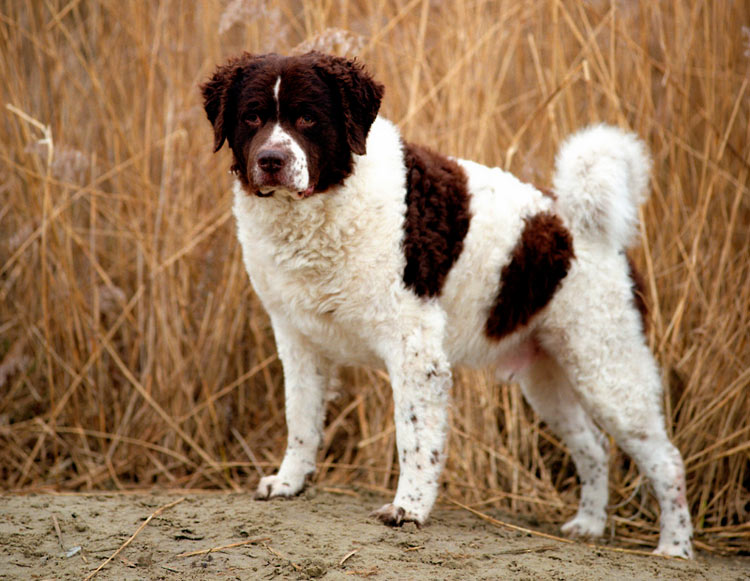
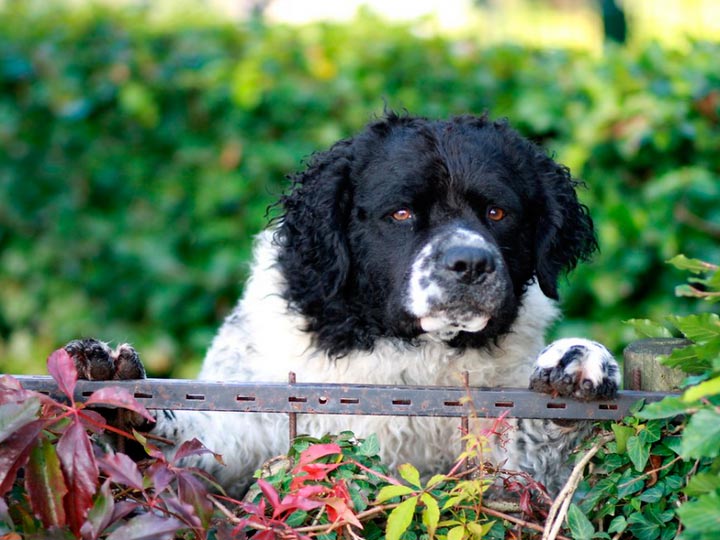
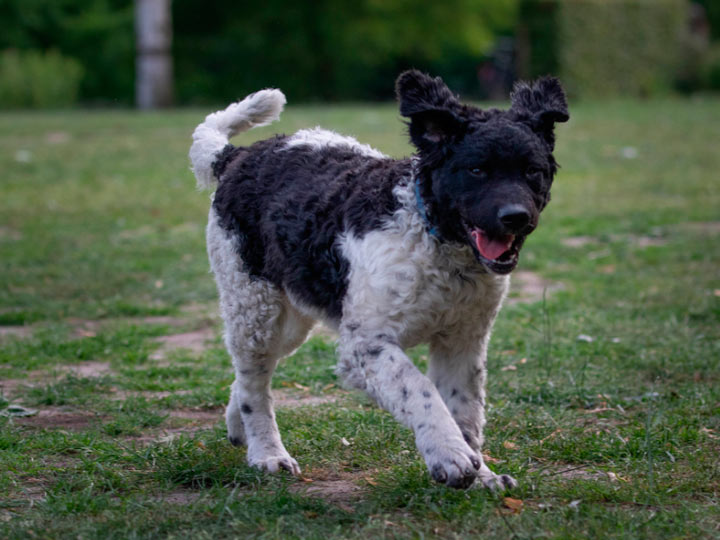
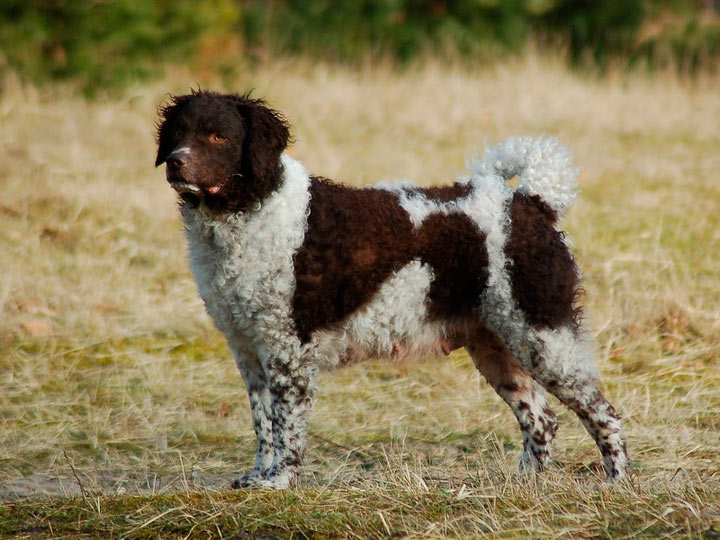
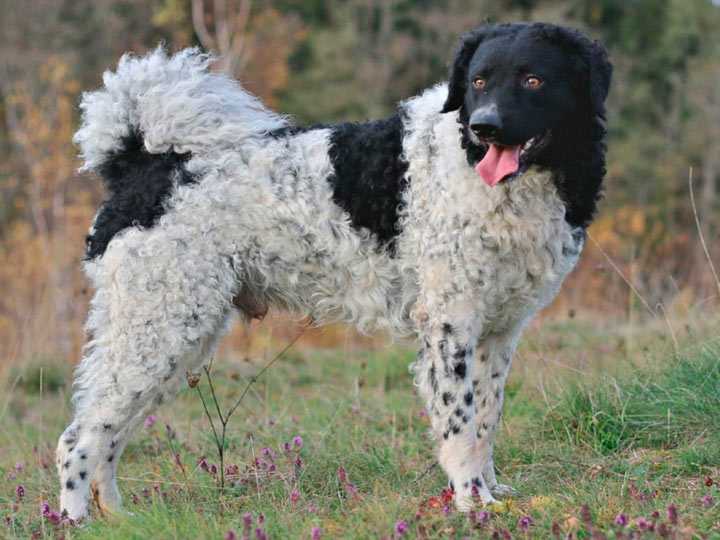
The Wetterhoun is a compact, medium-sized dog with a strong, but not heavy build. It is one of the few breeds with a curly coat. Sexual dimorphism is well-defined.
- Height at withers: 55-59 cm;
- Weight: 25-35 kg.
The head is dry and powerful. The skull and muzzle are of equal length. The stop is gradual. The muzzle is strong, tapering slightly toward the nose. The nose leather is wide with open nostrils. The lips are developed, but not excessively so. The bite is scissor-shaped. The eyes are medium-sized, oval, slightly slanted, and dark brown. The ears are set low and triangular in shape. The neck is short and powerful.
The Wetterhoun is active and curious, but always appears sad due to the position and structure of the eyes.
The body is strong and powerful. The chest is broad and rounded, not reaching below the elbows. The back is straight, short, and powerful. The belly is moderately tucked up. The tail is long, set moderately high, and curled. The legs are strong, with well-developed bone and muscles.
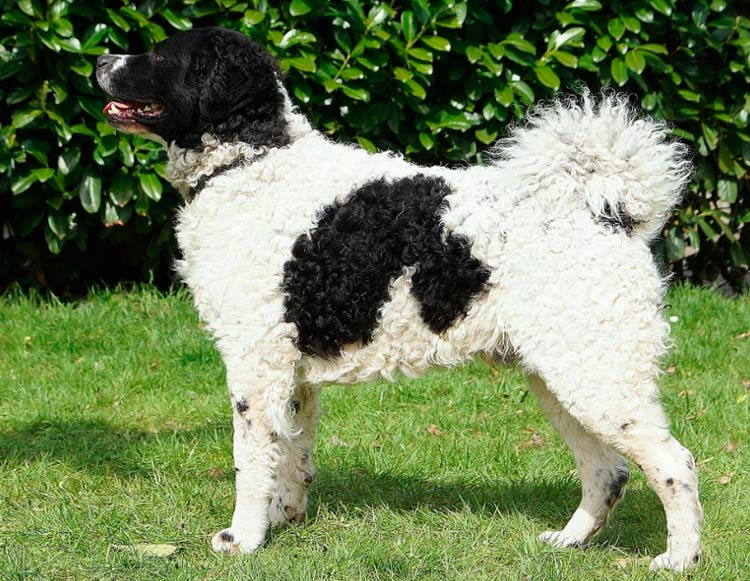
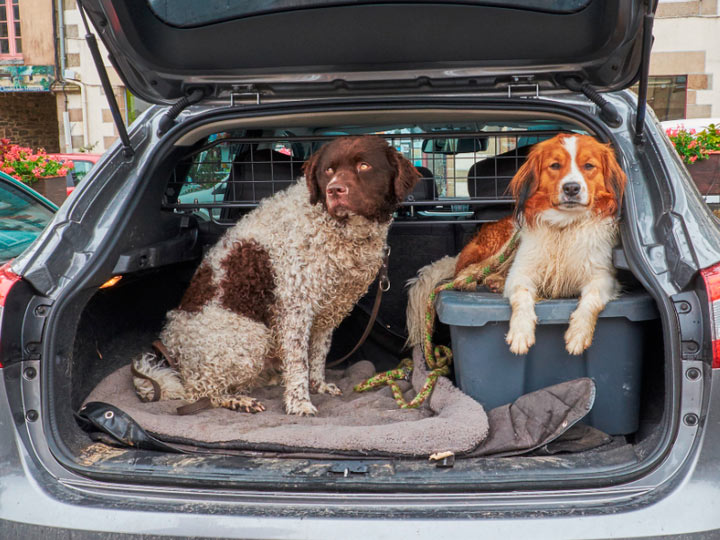
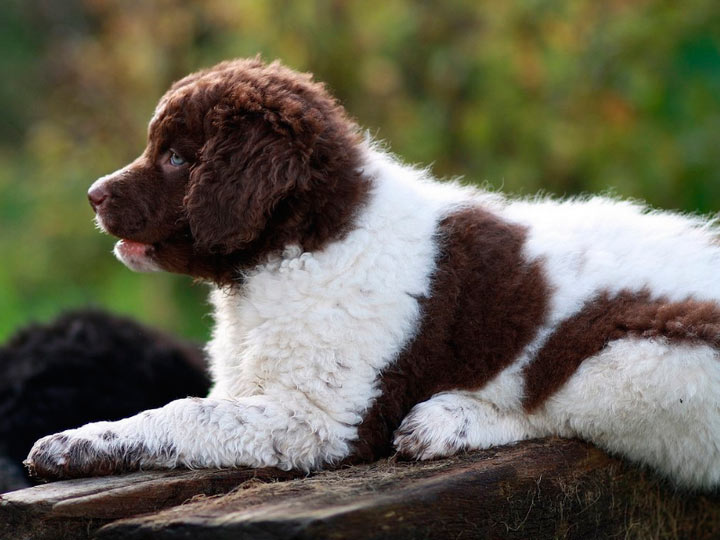
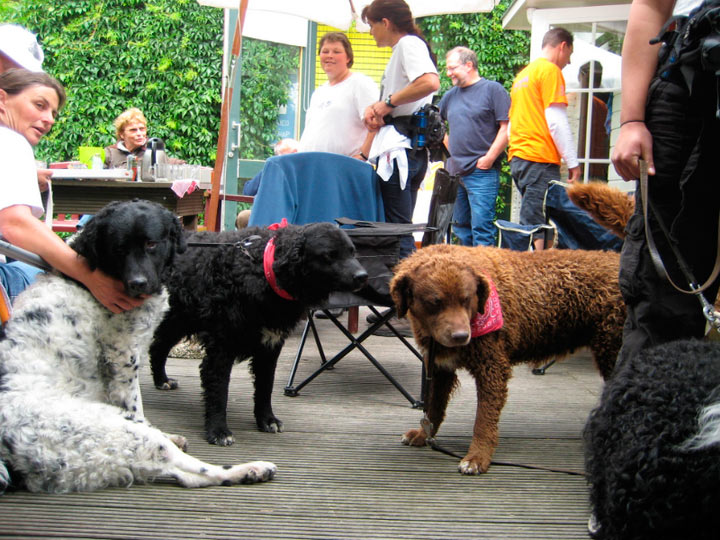
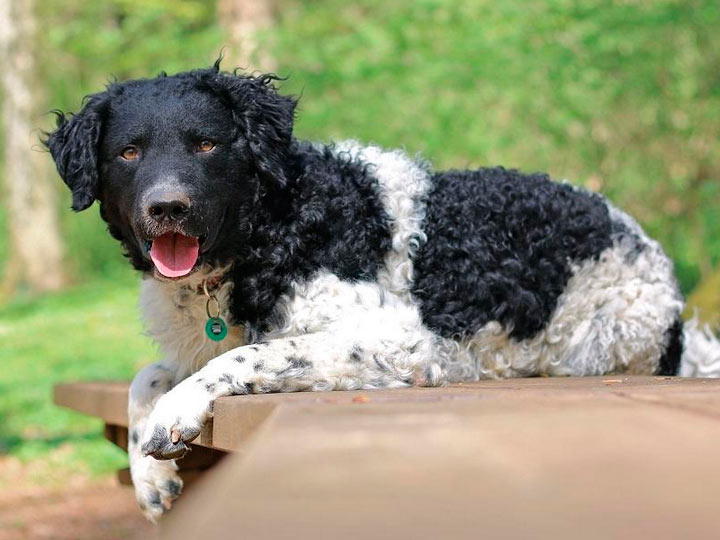
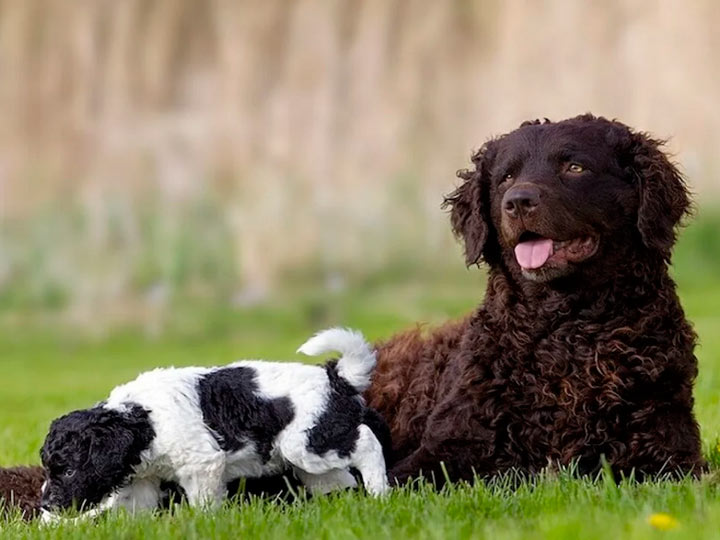
The coat curls and forms a tight curl. It is straight and short on the head and limbs. It feels rather coarse and slightly greasy to the touch. There are four standard colors:
- brown;
- brown and white;
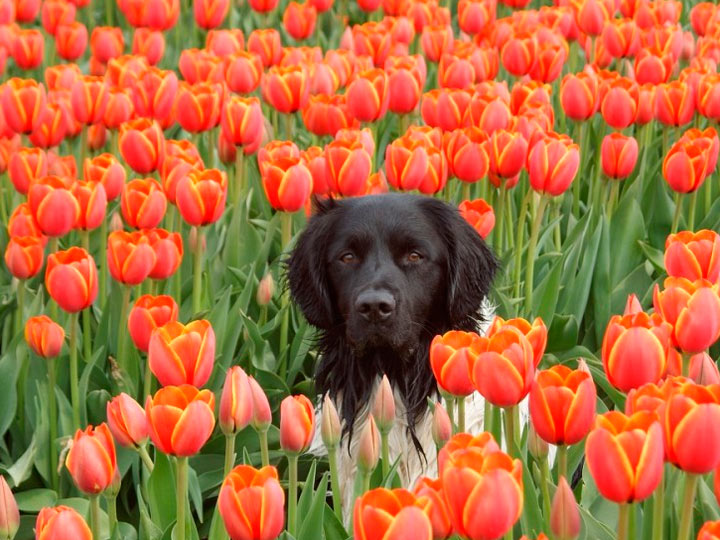
- black;
- black and white.
Character and behavior
The Wetterhoun is calm, patient, and reliable. It makes an excellent hunting dog. Effective in both water and land work, it possesses strong willpower and is a watchdog and guard dog, yet is not overly aggressive. It is strong-willed, but not stubborn or willfully disobedient. It is independent and persistent in its decisions. With proper upbringing and training, it is very responsive and obedient. It gets along well with children.
The standard describes the Wetterhoun as a calm dog with an independent and resourceful character, distrustful of strangers, but not aggressive.
The Wetterhoun is alert, attentive, brave, and cautious, not one to rush into trouble and judiciously assessing his own strengths. He is suspicious of strangers, but friendly with friends and acquaintances.
When hunting, the Wetterhoun is passionate and fearless. He works with total dedication and is very owner-oriented. He is easy to train, but requires a consistent and attentive approach. The Wetterhoun quickly becomes bored with repetition and thrives on games and tasks such as searching or retrieving.
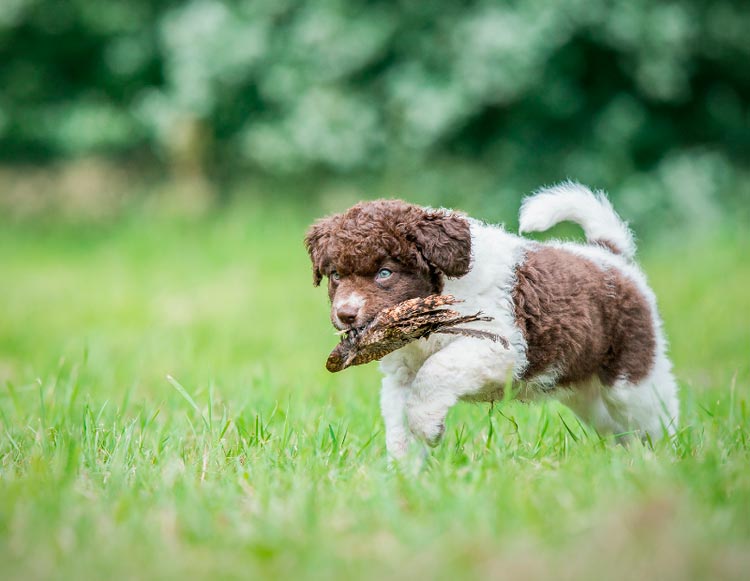
From an early age, a puppy needs good socialization and discipline training, without which it can grow up difficult to manage and potentially aggressive.
Maintenance and care
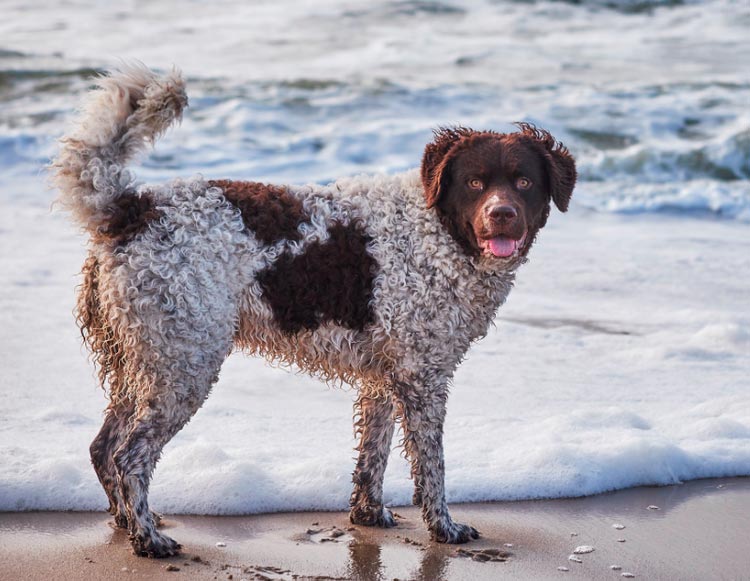
The Wetterhoun is suitable for both indoor and outdoor living. It can be a good companion for an active person, especially a hunter. A Wetterhoun requires space, long daily walks, and the opportunity to swim during warmer months. This, combined with its strong hunting instincts, makes it ill-suited for urban living. However, it's worth noting that the Wetterhoun is not prone to escape and, even in the forest, tries to keep its owner in sight.
Wetterhouns don't require extensive grooming. They shed seasonally twice a year. Owners only need to brush their pet occasionally and check their eyes, ears, and teeth. They bathe as needed, usually several times a year.
Health and life expectancy
Breed clubs continue to conduct research on Wetterhoun health. Statistics are primarily based on data provided by breeders and owners. The following hereditary diseases are known to be common in the breed:
- hip and elbow dysplasia;
- cryptorchidism;
- entropy;
- heart problems;
- dermatological diseases;
- oncological diseases;
- cerebral dysfunction;
Life expectancy is 10-12 years.
Buying a Wetterhoun puppy
The Wetterhoun is a rare breed, virtually unheard of outside the Netherlands. Those looking to buy a puppy can learn about breeders and planned litters at breed clubs. Most of them specialize in both the Wetterhoun and the stabihun.
Price
In the Netherlands, the average price of a purebred puppy from a kennel is 700 euros.
Photos and videos
The gallery contains more photos of Wetterhoun (Dutch Water Spaniel) dogs.
Video about the Wetterhoun dog breed
Read also:


Add a comment