
Veterinary passport for a cat
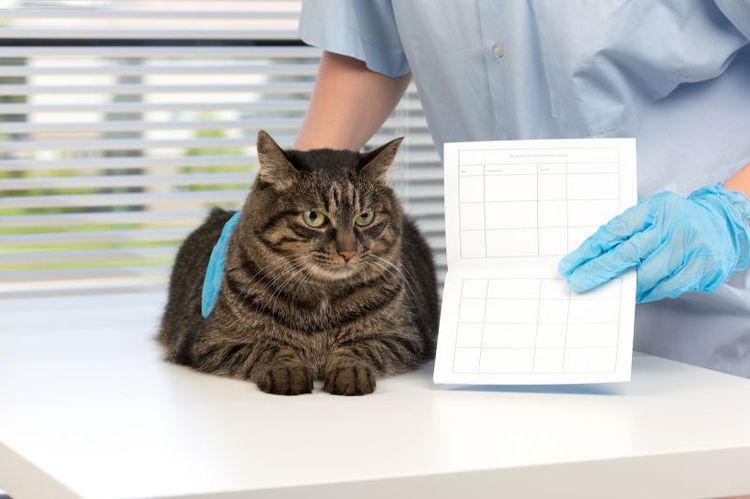
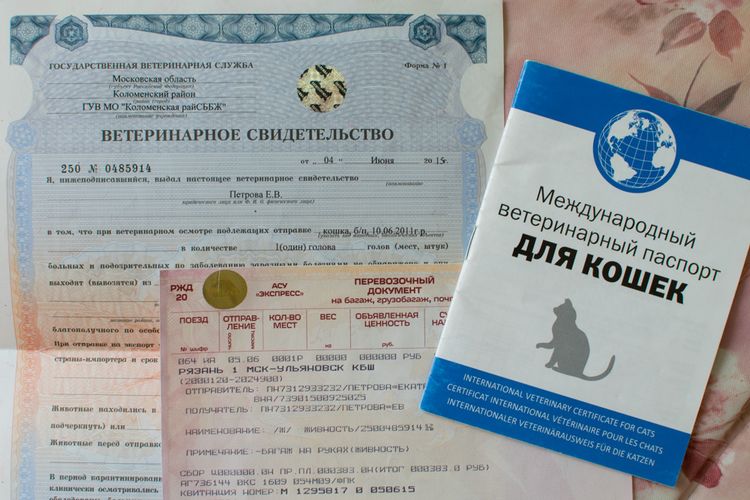
A veterinary passport for a cat is a special document that can be considered a kind of "human" medical record. It contains information not only about the animal and its health, but also about the owner, allowing for easy identification if necessary. Before applying for the document, it's helpful to understand what it is and how to properly obtain it to avoid problems in the future, especially if you need to cross international borders.
Content
What is it?
A veterinary passport is a booklet containing detailed information about a cat throughout its life. It is necessary not only for international transportation, participation in shows, and breeding, but also for timely vaccinations and parasite treatment. Its information can also help a veterinarian make the right decisions when treating the animal.
Important! It's important to distinguish between a veterinary passport and documents confirming a cat's breed (pedigree, birth certificate). Unscrupulous breeders often offer pets with "documents" that turn out to be veterinary passports. However, a veterinary passport in no way guarantees purebred origin, even if it lists the breed name.
There's no standardized veterinary passport template in Russia, so its appearance may vary. Veterinary services in individual cities and districts may establish specific requirements for the document, which are reflected in the relevant order. It's important to note that these templates aren't always suitable for traveling abroad with your pet, so it's recommended to obtain an international veterinary passport for your cat. All veterinary clinics are now offering this option. However, some may offer "old stock" templates, so be aware of these. It differs from its Russian counterpart only in the inclusion of a special space for a photo of the cat and the duplication of the column headings in several languages: Russian, English, French, and German.
What information is contained in the passport?
The passport form contains numerous fields related to information about the pet. While the owner can enter general information, medical information is completed only by a veterinarian. For example, let's look at a sample of an international veterinary passport.
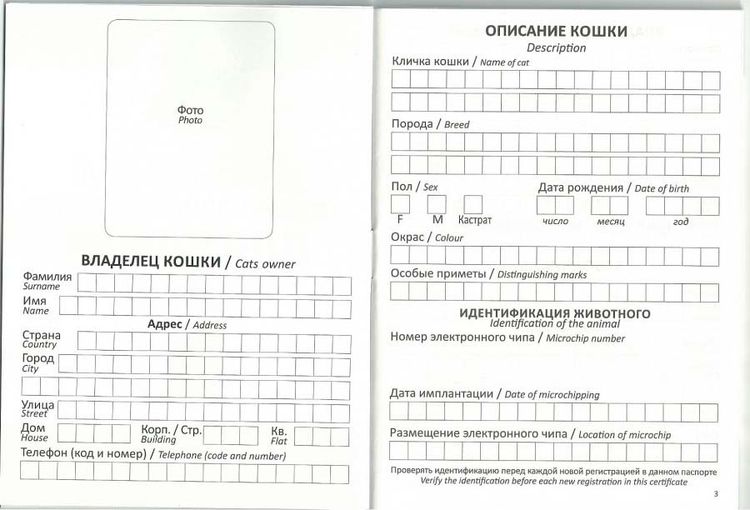
Please note! The passport's appearance may vary slightly depending on where it was purchased (issued): the fields may be arranged vertically or horizontally. The main thing is to fill them out correctly.
To fill it out yourself, you just need to know how the information should be presented. First, it must be written by hand using a pen with blue or black ink. Second, the passport information must be duplicated in both Cyrillic and Latin script. For the latter, you can use free online transliteration services. In addition to personal information, the cat owner can fill out the following fields themselves:
- Pet photo. This section is optional for the owner (unless traveling abroad) and the photo is included in the passport without any stamps. You can take this photo yourself, but it is recommended that two conditions be met: the cat must be 1 year or older, and its appearance in the photo must reflect its distinctive features (if any).
- Cat's name. It should be capitalized. For purebred cats, fill in the name according to the information on the birth certificate/card obtained from the cattery; for all other cats, fill in the name at your discretion.
- Breed. Birth information is also included here, and for non-pedigree pets, "mixed breed" is written.
- Date of birth. If the exact date is unknown, an approximate date can be entered.
- Gender / Sex. If the form specifies Male/Female, simply mark or underline the appropriate value. Otherwise, you should manually enter "Female" for a female cat or "Male" for a male cat. Gender cannot be indicated in the passport using the words "female," "male," "female," "male," etc.
- Color. If you don't have a birth certificate, it's recommended to consult color charts. Black and white colors can be entered as is, but more complex shades and spotting patterns should be clarified.
- Distinguishing marks. These may include coloring, structure, or other distinguishing features of a particular pet (different eye colors, scars, curvature of the tail vertebra, etc.).
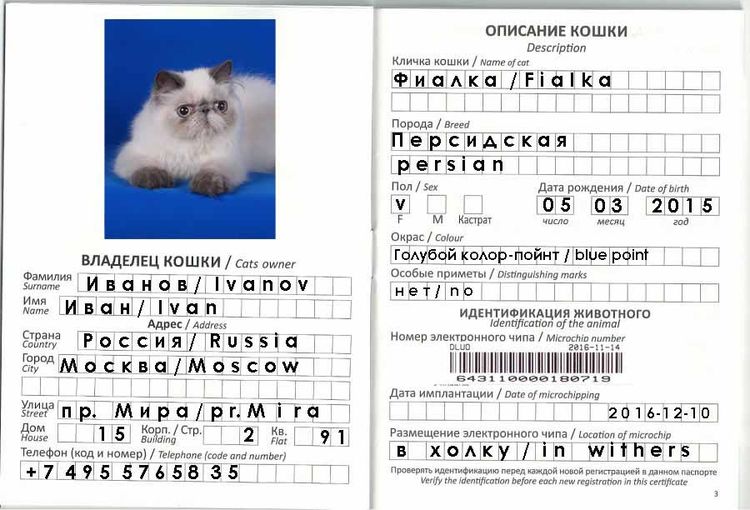
This concludes the owner's pet information entry. The animal identification fields are completed by a veterinarian for animals that have been microchipped.
Medical data
The veterinarian completes the cat's registration form at the clinic and the procedures performed. This includes the following fields, including the dates of the procedures and other details:
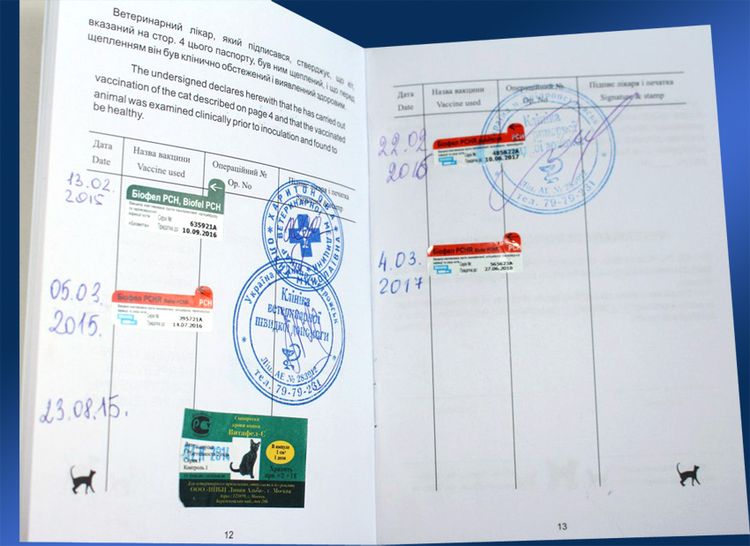
- Vaccination information includes the name and serial number of the vaccine, a special sticker from the ampoule containing the drug, which must be stamped and signed by a veterinarian.
- About prevention or treatment of helminthic infestations.
- About treatment against ticks and fleas.
- About surgical interventions.
- About reproductive indicators (estrus, matings, births with indication of the number of offspring born).
- About the diagnostic tests carried out
- About the microchipping procedure (if performed): date of implantation, serial number, and location of implantation on the animal’s body.
Important! If an owner administers injections or vaccinations to their cat themselves, such vaccinations are considered invalid. Vaccination records must be certified only by authorized institutions.
How to do it
A veterinary passport can usually be obtained during your cat's first vaccination at a veterinary clinic, whether private or public. In breeders, the breeder often handles this process. It's also possible to obtain one for an adult animal if, for some reason, this hasn't been done yet. Simply visit the clinic with your cat and documentation of previous vaccinations and other procedures.
Additionally, some facilities offer a home visit service. This option is especially helpful for pets who experience significant stress from visiting unfamiliar places or long public transportation trips.
Important! A document that does not meet the required formatting may be considered invalid. This applies to missing vaccination dates, missing stickers and signatures, and vaccinations certified with seals and signatures from unauthorized individuals or organizations (kennels, clubs), especially in regard to rabies vaccines.
How much does the registration cost?
The cost of a veterinary passport for a cat is influenced by the following factors:
- conditions of registration: calling a veterinarian to your home or visiting a clinic (private or public);
- urgency of production;
- carried out to formalize the procedure.
The form itself can be purchased at almost any pet store or veterinary clinic for between 35 and 100 rubles. The actual cost of obtaining a veterinary passport is the same as the cost of vaccinations for your pet, but if an urgent procedure is required, this cost may increase significantly.
What to do if lost
If a veterinary passport is lost, it can be restored in most cases. To do this, simply contact the veterinary clinic where your cat received its last vaccination. All visits must be recorded in the registration and control log, so finding the history of visits and medical procedures performed on your pet is easy. Furthermore, Russian veterinary legislation requires clinics licensed to provide quarterly reports on their activities to the State Veterinary Supervision Authority, which stores the reports for 10 years from the date of registration. For microchipped pets, the process of restoring a veterinary passport is significantly simplified, as all necessary information about the animal is encrypted in the chip.
Read also:
- How to start breeding cats
- Scottish Fold catteries in Moscow and St. Petersburg
- When and what vaccinations should kittens receive?


Add a comment