
Scottish Fold cat weight by month: table
Owners are concerned about the weight of an adult Scottish Fold cat for good reason. This breed is prone to obesity, which can lead to heart, joint, and respiratory problems. These illnesses can later trigger behavioral changes, making the pet's life difficult.
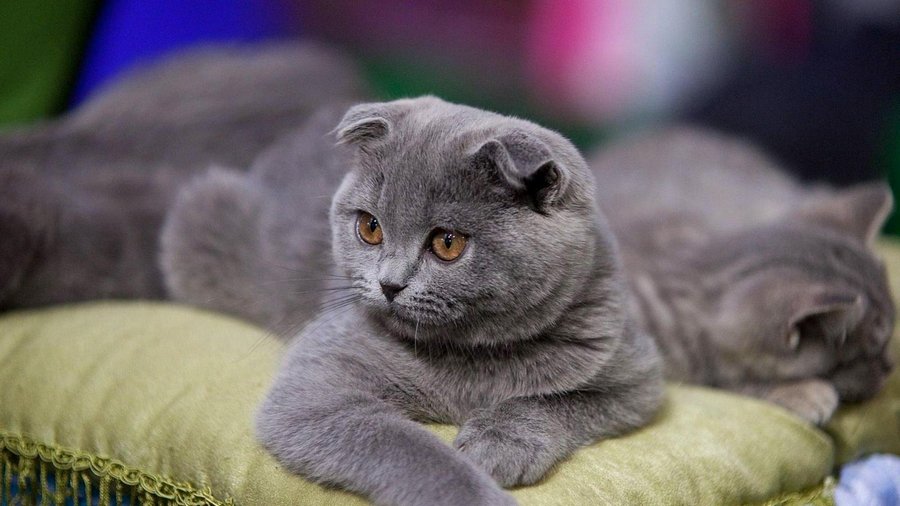
To avoid having to look for "good homes" for it, it is necessary to monitor the animal's weight throughout its life, regardless of age, and a chart by month can help with this.
Content
How much should a purebred cat weigh?
The following types of cats belong to the Scottish Fold:
- Scottish Fold - lop-eared, with medium-length hair;
- Scottish Straight - straight-eared, with short plush fur;
- Highland Fold - fluffy, with small, pressed ears;
- Highland Straight - straight-eared individuals with semi-long hair.
All representatives of the elite breed have a strong, muscular body with slightly shortened, thick legs, a large, round head with prominent cheeks, a short neck, and a moderately long tail. Due to its compact build, a Scottish Fold cat weighs more at one year than a Siamese, Persian, or standard cat. Of course, it is inferior. Maine Coon or semi-wild savannah, but it also has its own weight limits. But the boundaries are vague—the denser the bones and the more impressive the size, the greater the animal's mass.
|
Breed |
Small, kg |
Average, kg |
Large, kg |
|
Scottish Fold |
4-4.8 |
5.2-6 |
6-7.5 |
|
British Straight |
2.8-4.8 |
5-6 |
6.2-7 |
Even with the same build and height, females are always lighter than males. The difference can be as much as 500–900 g.
Weight of a lop-eared kitten by month
Size is primarily influenced by genetics. There are adult miniature cats with fine bones, and large animals that are above normal weight but not obese. Additional factors that influence the appearance of a purebred Scottish Fold include diet and living conditions.
Owners should monitor calorie intake, adjusting the diet based on the pet's age, and reducing the caloric content of portions from 4-5 years of age. It's important to keep in mind that the older the pet, the less active it will be.
A chart with weight by week and month will help you understand how your lop-eared kitten is developing.
|
Age of the animal |
Female, g |
Male, g |
|
Immediately after birth |
60-140 |
70-150 |
|
One week |
110-250 |
180-280 |
|
Two weeks |
140-370 |
320-420 |
|
Three weeks |
200-420 |
280-630 |
|
Monthly |
240-600 |
380-750 |
|
Two months |
400-800 |
700-1600 |
|
Three months old |
900-1500 |
1400-2500 |
|
4 months |
1500-2400 |
2000-3500 |
|
6 months |
2200-3000 |
2700-5000 |
Using the table to estimate the weight of a Scottish Fold kitten at 2 and 3 months, you can see that the difference between the female and male quickly increases. However, this difference doesn't necessarily persist. If the diet is higher in calories, kittens in different hands may grow larger or smaller.
Purebred animals have poor appetite control. Therefore, avoid accustoming them to large portions. Even if their weight is within the recommended range, their appearance should be a more important guide. If your pet's activity level has decreased and their ribs are no longer palpable, the risk of obesity increases.
In this case, don't be complacent and look at the chart to see how much a Scottish Fold kitten should weigh at 2 months. Behavior is more important. The kitten should be very active and sleep no more than 18 hours a day.
Kitten development
The more kittens a cat has, the smaller they are. But this doesn't mean they'll be smaller than their peers born in pairs or triplets. The difference decreases with age.
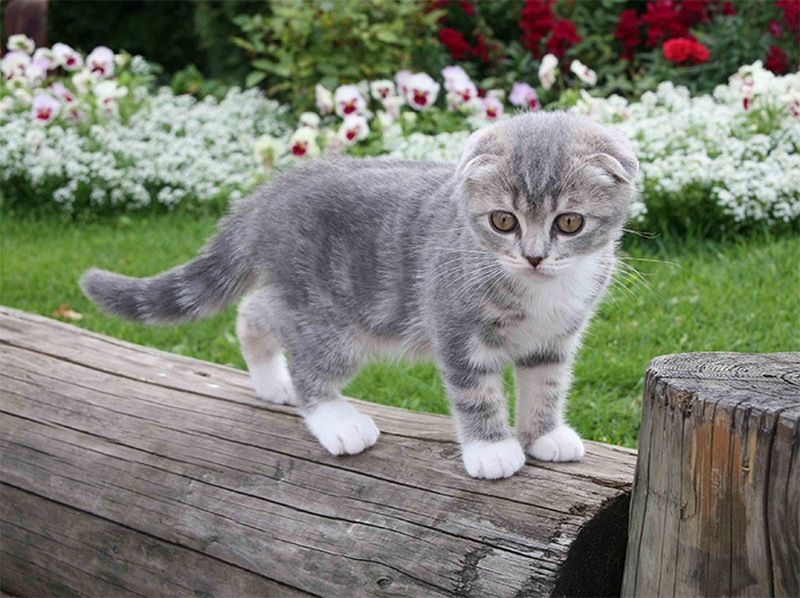
Scottish Fold kittens gain weight unevenly over the course of the month. Up until four weeks, they gain 10-20 grams per day, reaching 200-300 grams during this time. From three weeks on, weight gain increases as solid foods are introduced. These must contain vitamins E, A, and PP, as well as macronutrients such as potassium, calcium, and phosphorus.
This breed has a problematic area—the skeletal system. As they grow older, male cats often suffer from arthritis. Therefore, completely weaning kittens from their mother while they are nursing is not advisable. Supplementary food should comprise no more than 20% of their daily diet.
If you are raising kittens for a show, it is better to introduce them to premium food, and for yourself, switch them to natural food.
Ninety days after birth, weight gain slows. At the same time, the growth rate also slows. The bulging belly disappears, and the cub enters adolescence.
A deviation of 100-200 g from the table value for weight is allowed, taking into account height.
It's a good idea to take your Scottish Fold kitten to the vet at six months to check its weight and development. At this age, males and females from the same litter already differ significantly in appearance—healthy "boys" are 1-1.5 kg heavier than "girls."
Intensive growth in female cats continues until 8 months, and in male cats until 1 year. Their heads enlarge, and their muscles harden. With proper nutrition, cats gain 500-800 g.
|
Age, months |
Female, kg |
Male, kg |
|
8 |
2.4-4.3 |
3.5-6 |
|
10 |
2.5-4.6 |
4.1-6.6 |
|
1 |
2.7-4.8 |
4-7 |
A Scottish Fold cat's weight at one year is the expected weight throughout its life. Periodic weight gains or losses of 200-500 grams (0.7-1.9 lbs) are not cause for concern. A veterinarian should be consulted if there is rapid weight gain (up to 800 grams (0.7-1.8 lbs) in a month) or a sudden weight loss (up to 1.5 kg (3.3 lbs) in 3-4 weeks. If the cat is healthy, a special diet with increased calories is prescribed.
Sizes of purebred animals
The average body length of an adult cat at two years old is 55 cm, and the height at the withers is 30 cm. A Scottish Fold cat, with normal development at this age, weighs 2.5-5.8 kg, while a male Scottish Fold weighs 4.4-8 kg. However, if the pet is competing in shows, the "exterior" will be examined.
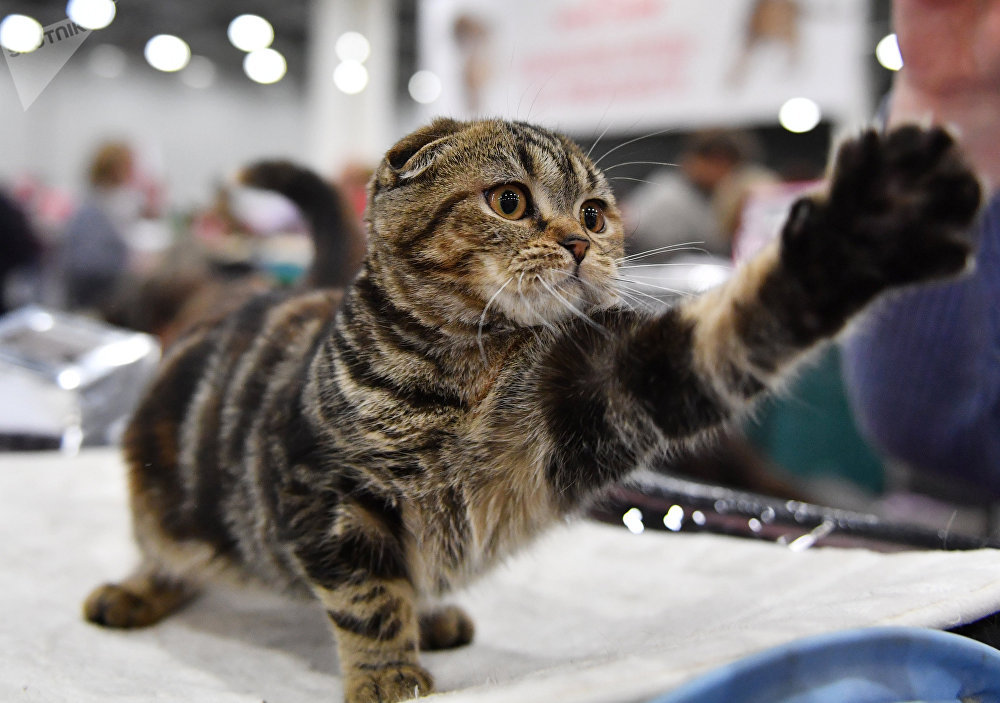
Appearance features:
- Legs not too short, proportionate in size to the body.
- Round eyes.
- Coat lying close to the body.
- A "correct" tail. Its length should extend from the base to the shoulder blades.
Characteristic signs of obesity include low activity, sluggishness, shortness of breath, and fatty deposits on the flanks. These can be seen by a distinctive fold under the belly. Even if a pet fully meets show standards, excess weight will hinder recognition from the judges.
A Scottish Fold cat's weight by month can be one indicator of its health during its first year of life. Subsequently, animals are assessed not only by weight but also by body shape.
Read also:




Add a comment