
Kitten weight by month: table
It's important to closely monitor a cat's weight during its early years. During this period, a kitten's weight allows you to assess its development. Any deviation from the monthly weight norms may indicate malnutrition, illness, or other issues. Failure to gain weight is a warning sign, so in this case, you should immediately consult a veterinarian. It's important to remember that during the first weeks of life, a pet is very vulnerable, and any abnormalities require immediate attention.
Content
Kitten weight by month: table
Weight depends on many factors, including breed, gender, size of parents, individual characteristics, etc. At birth, a kitten can weigh from 80 to 150 g. For example, Maine Coons, on average, give birth to 130-gram kittens, British Shorthairs - 100-gram ones, and mongrel cats weigh about 90 g at birth (by the way, read about how much mongrel cats live here).
So, how much should typical kittens weigh by week and month? The table below shows average animal weights depending on age and breed:
|
Age |
Maine Coon |
British shorthair cat |
Sphinx |
Mongrel |
|
1 week |
180-250 g |
110-230 g |
100-220 g |
100-250 g |
|
Week 2 |
280-350 g |
150-300 g |
130-300 g |
150-300 g |
|
Week 3 |
420-570 g |
210-500 g |
200-430 g |
200-500 g |
|
1 month |
560-730 g |
250-650 g |
230-590 g |
250-650 g |
|
2 months |
1.1-1.5 kg |
450-900g |
420-800 g |
400-1 kg |
|
3 months |
1.7-2.2 kg |
1-2.5 kg |
900-2 kg |
1-2 kg |
|
4 months |
2.7-3.7 kg |
1.7-3.5 kg |
1.3-2.7 kg |
1.5-2.5 kg |
|
5 months |
2.9-5.3 kg |
2.2-4 kg |
2.1-3.9 kg |
2-3 kg |
|
6 months |
3.2-6 kg |
2.3-4.5 kg |
2.2-4.3 kg |
2.5-4 kg |
|
7 months |
3.5-6.5 kg |
2.4-5 kg |
2.3-4.6 kg |
2.5-4.5 kg |
|
8 months |
3.8-6.7 kg |
2.5-5.5 kg |
2.4-4.9 kg |
2.5-5 kg |
|
9 months |
4.1-7 kg |
2.5-5.9 kg |
2.5-5.3 kg |
2.5-5.5 kg |
|
10 months |
4.3-7.7 kg |
2.6-6.4 kg |
2.6-5.8 kg |
2.6-6 kg |
|
11 months |
4.4 -8 kg |
2.7-6.8 kg |
2.7-6.4 kg |
2.8-6.5 kg |
|
1 year |
4.6-9 kg |
3-7 kg |
3-7 kg |
3-7 kg |
Weight gain in the first month
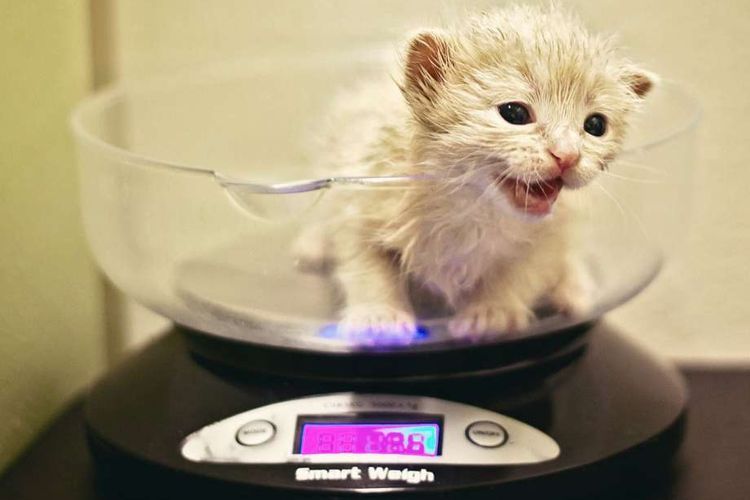
The first four weeks of life are characterized by the most rapid growth. A kitten's weight in the first month can increase by up to 15 grams per day. By the end of this period, it can be two or even three times its birth weight. This rapid growth is noticeable to the naked eye. If you notice insignificant weight gain at this age, you should consult a veterinarian for diagnosis and treatment.
During the first month, a kitten requires intensive care and good nutrition. The optimal diet is provided by its mother's breast milk. However, a cat may not be able to nurse her kittens for various reasons. In this case, the role of "mother" falls to the pet's owner. The best substitute for mother's milk is a special commercial formula, whose composition closely replicates natural ingredients. The dosage and frequency of feeding depend on the age and size of the animal. During the first week, it should be fed approximately 4 ml every 2-4 hours, and during the second week, 5 ml every 4-6 hours. With proper nutrition, by the end of the fourth week, the kitten will weigh 300-400 g, its first teeth will have grown, and other foods can be introduced.
In addition to rapid growth, signs of your pet's health in the first four weeks of life will include:
- ability to stand on paws (somewhat unsurely);
- active behavior;
- healthy sleep;
- regular bowel movements.
Kitten weight at 2-3 months
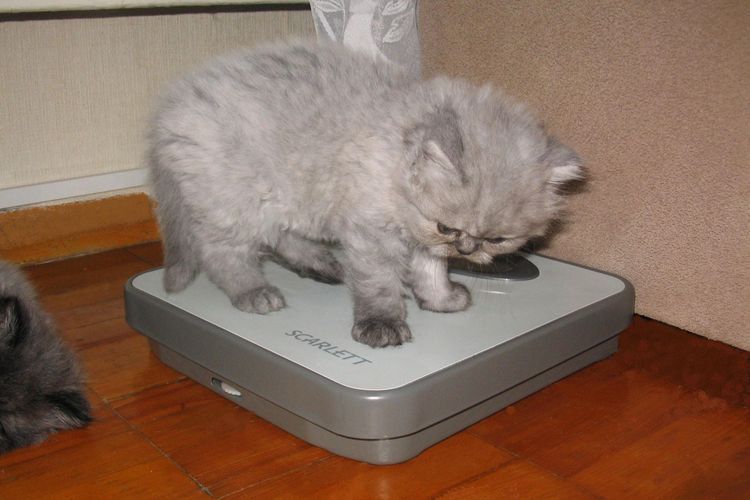
During this period, intensive weight gain continues, although not as rapidly as before. Every 30 days, the kitten nearly doubles in size, and by the end of the third month, it will weigh approximately 1.5-2 kg. It can now eat soft food, so its diet should be varied and water should be provided. Special kitten food is available in stores, and it may come in the form of pâté or soft pieces in sauce. Since the little pet is already actively exploring, it's necessary to limit its access to adult food, which will be too much for it.
Norm at 4-5 months
At this age, a kitten's average weight is 1.5-3 kg. The period of intensive growth has ended, but the pet is still gaining weight. By the end of the fifth month, males can reach 4 kg.
Your pet still needs to eat "kitten" food frequently, up to five times a day. Diets should be high in protein, which is essential for the normal development of a growing predator. Commercially produced foods are labeled "For kittens." However, it's important to carefully examine the ingredients to ensure you choose high-quality food.
Kitten weight at 6-7 months
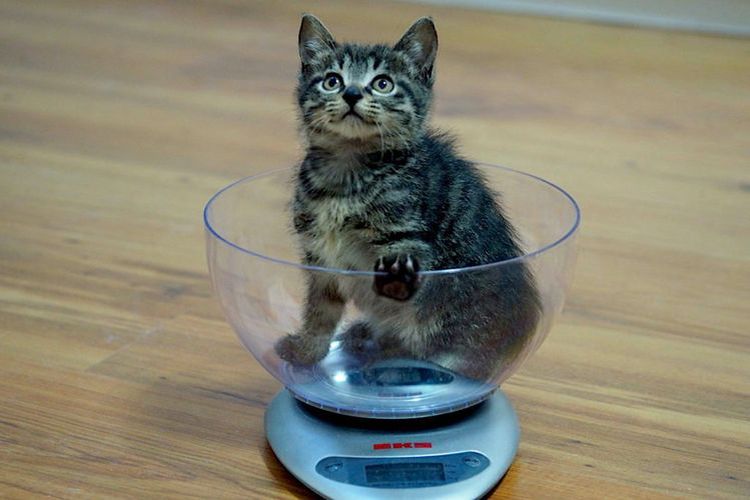
At this age, the animal reaches adult size. If growth continues, it is no longer as active. The pet can reach approximately 2-4 kg. Females usually stop growing, while males may continue to gain muscle mass. The increase in size can also be due to fat gain, so it is important to monitor the pet's diet. The animal is then fed three times a day. The diet continues to be high in protein.
Weight of a cat at 8-12 months
By the age of one, a cat is considered an adult. Its size remains virtually unchanged, weighing on average 4-6 kg, depending on breed and sex. By the age of one, feeding should be reduced to two times a day and balanced. It's important to feed a good quality food with a protein content of over 30% (for commercially produced food). A high-quality, balanced diet will ensure the cat's normal functioning and prevent obesity.
Weighing procedure
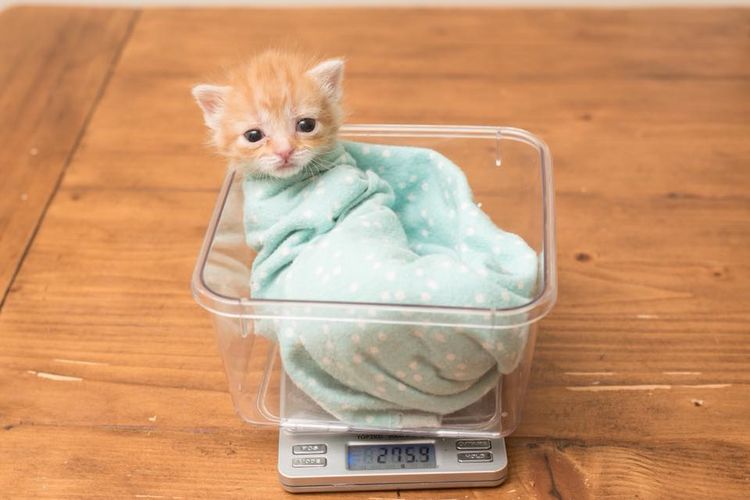
To determine a kitten's weight, you can use a kitchen scale during the first few months. A small pet will fit comfortably in a bowl or cup. Later, you can use a canteen scale, placing the animal in a bag with two handles or a basket. Subtract the weight of the bag from the resulting weight to obtain a reliable measurement. You can also use the subtraction method to weigh the pet using a floor scale, where the owner first stands on it and then with the pet.
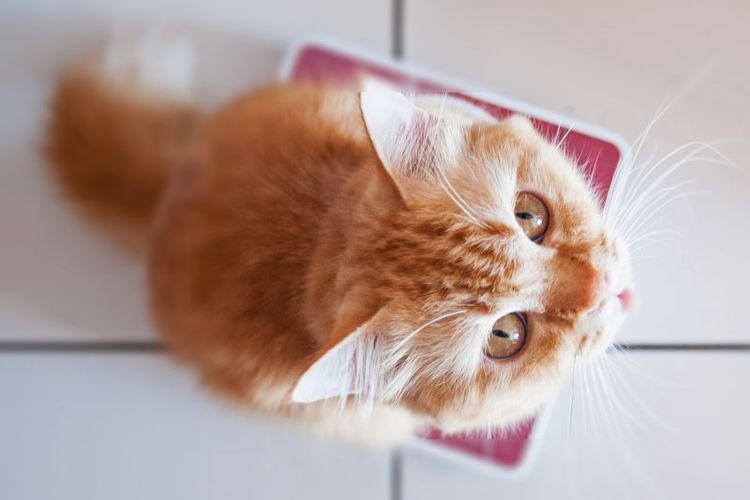
Weighing an animal may be required in the following cases:
- artificial feeding;
- birth defects;
- suspicion of disease development;
- development control.
Read also:
- What to feed a 1-month-old kitten
- How to feed a kitten without a mother
- Can I feed my kitten cat food?


Add a comment