
Veracol for cats
Verakol is a homeopathic medicine used in cats for gastrointestinal disorders. The formula for this effective yet safe medication was developed by the Helvet Group, a company specializing in homeopathic products for pets.
Content
Release form and general information
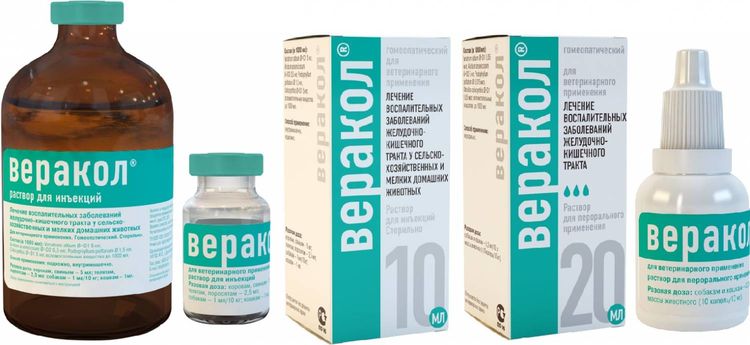
Among the advantages of Verakol, it can be noted that the drug is produced in three forms:
- Solution for injection. This dosage form is most often used to treat cats and other pets. The main advantage of injections is that the active ingredients immediately enter the bloodstream and are carried throughout the body, quickly reaching the site of the problem. The clear, colorless liquid is packaged in glass vials. Containers come in various sizes, from 10 to 100 ml, but smaller vials are recommended for cats.
- Drops for internal use. These are ideal for those owners who are unsure or afraid of administering injections to their pets. The manufacturer uses polymer bottles for packaging. They are equipped with a built-in dropper, making it easy to measure out the required amount of medication.
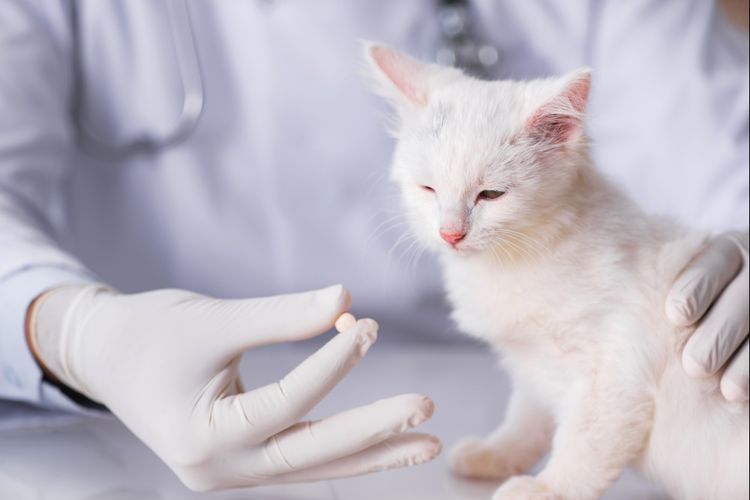
- Pills. Small white tablets are packaged in plastic jars containing 50 tablets. Like drops, they can be an alternative to injections, but are much less common in pharmacies.
Composition and action
The pharmacological properties are due to the homeopathic components that make up its composition:
- White arsenic. This highly toxic substance has medicinal properties in trace amounts. Arsenic can destroy pathogenic microflora and also increases resistance to adverse environmental factors and muscular endurance.
- Bitter gourd. It has a pronounced antispasmodic and analgesic effect. Furthermore, the plant contains substances (glycosides) that form a film on the intestinal surface, protecting it from toxins and irritants.
- Shield-leaved rhinoceros. It normalizes the digestive system and helps treat chronic diarrhea. The plant also has a healing effect on ulcers.
- White hellebore. It has an antispasmodic effect, and also relieves nausea, eliminates vomiting, and reduces the production of saliva when it is excessive.
Verakol effectively relieves pain and eliminates diarrhea, vomiting, and other symptoms indicating digestive problems. It promotes the restoration of the intestinal mucosa and destroys pathogenic bacteria. Moreover, the medication's components are non-irritating. The medication is non-addictive, so it can be used for long-term treatment.
Indications for use
Regardless of the dosage form, Verakol is prescribed to cats according to the instructions in the following cases:
- at gastritis;
- for colic and spasms;
- with gastroenteritis;
- for dyspepsia;
- at poisonings.
Some of the components of this homeopathic remedy have a laxative effect, but the drug is successfully used to treat diarrhea, including chronic diarrhea. The medicine is also used for nausea and vomiting, as well as gastrointestinal pain, regardless of its origin.
How much does it cost and where to buy it?
The price of Verakol is quite affordable for most cat owners. It depends on the dosage form:
- injection solution 10 ml – 280-300 rubles;
- tablets 50 pcs. – 140-170 rub.;
- drops for oral administration – 245-270 rubles.
Injectable solutions are available in almost all veterinary pharmacies, but drops or tablets can be harder to find, especially in small provincial towns. An alternative is to purchase the medication online.
Features of application
According to the instructions for use, Verakol injections can be administered to cats either intramuscularly or subcutaneously. The latter option is often used when owners administer the injections themselves at home. To administer the injection, pull back the skin at the withers, prick the skin with a syringe, and inject the medication. Injections of this homeopathic remedy are not painful, so animals usually tolerate them well. Exceptions may occur if a cat is afraid of syringes.
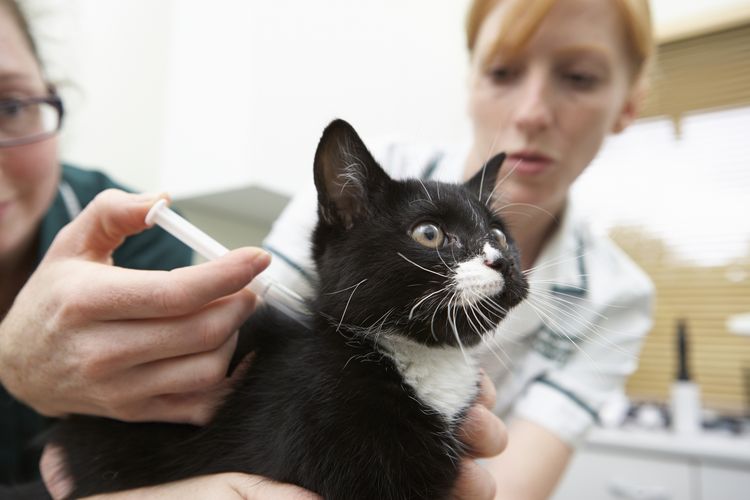
The injection dosage is calculated simply: 0.1 ml per 1 kg of body weight. The minimum dose should be at least 0.5 ml. In some cases, the single dose can be increased to 1.5 ml, but this should be done in consultation with a veterinarian.
Verakol drops are given to cats with a small amount of food or force-fed. The solution can be applied to the back of the tongue or cheek area. It's important to prevent the animal from spitting the medication out. A single dose is calculated as follows: one drop per 1 kg of body weight. Tablets can also be mixed with food or force-fed. A single dose is one tablet per animal, regardless of weight. For small kittens, the dose can be reduced to half a tablet.
Please note! Homeopathic remedies can be used in combination with other medications, including antibiotics, painkillers, and symptomatic medications.
Application schemes
The duration of treatment and frequency of administration depend on the disease. The following treatment regimens are commonly used:
- For gastritis and gastroenteritisFor acute cases, the medication is administered 2-3 times daily. Treatment duration is usually 5 days. In some cases, it can be extended to 7 days.
- For chronic gastroenteritis and gastritis, Verakol is taken 1-2 times daily, depending on the severity of the disease and symptoms. Duration of treatment is 2 to 4 weeks. To enhance its effectiveness, it is combined with another homeopathic remedy, Liarsin.
- For intestinal colic and flatulence, the medication is also combined with Liarsin. The drug is administered 2-3 times daily for 5 days.
- If an animal is poisoned, the homeopathic remedy is taken 1-3 times a day until the symptoms of the pathology completely disappear.
- For dyspepsia, the medication is taken up to three times a day until the animal's condition stabilizes.
Contraindications and side effects
Verakol can be used on cats of any age, regardless of breed. It has no contraindications and can be used on young kittens, older animals, and weak pets with various chronic illnesses.
The homeopathic ingredients in the medication are contained in small quantities, so they do not cause side effects. In rare cases, an allergic reaction may occur due to intolerance to the substances contained in the medication. If a rash, itching, or other symptoms occur, discontinue the homeopathic remedy. The animal is given anti-allergy medication.
Advantages and disadvantages
Compared to “conventional” drugs, homeopathic remedies have many advantages:
- has no contraindications;
- does not cause negative reactions in the body when used;
- acts quickly and effectively (improvements are noticeable after the first day of treatment);
- compatible with other drugs;
- suitable for the smallest pets;
- sold in different dosage forms.
Verakol has no significant drawbacks. For chronic diseases, it requires long-term use, and treatment procedures, including medication administration, can be stressful for the animal. Injections are often necessary, as drops and tablets are not readily available in pharmacies, which can cause some difficulties for owners.
Owner reviews
Antonina, owner of a 6-year-old cat:
"After a course of antibiotic therapy, our cat began having serious bowel problems. He would vomit 20-30 minutes after eating. We tried giving him a medicated food, but it didn't help. We consulted the vet. He prescribed vitamins and Veracol. We administered the medication subcutaneously. By the second day, the vomiting and nausea had completely subsided, and his appetite had returned. We continued the injections for five days. It's a good and safe medication."
Marina, owner of a British cat:
"Our cat is a mischievous one; he loves to rummage through the trash. And although we try to hide the trash can, one day he ate something and got poisoned. When Tom refused to eat and stopped running around the house like crazy, I knew it was time for treatment. We used Verakol for the older cat, so I remembered that. This time, we combined it with Liarsin. Within two days, the cat recovered, and there was no trace of the poisoning left."
Veterinarian Reviews
Tamara, a veterinarian with 7 years of experience:
"I'm not only a veterinarian but also a volunteer, often taking in 'rescued' animals. These animals, especially small kittens, inevitably have stomach and intestinal problems. And every time, Verakol comes to my rescue. This homeopathic remedy acts quickly and can be used even on very small animals. In most cases, a few injections are enough to eliminate gastrointestinal problems."
Vasily, a veterinarian with 15 years of experience:
"During my long career as a veterinarian, I've encountered a variety of animal medications. Initially, I was wary of homeopathy, but over time, I've changed my mind. Verakol is an effective and affordable remedy, providing immediate relief for both adult and small animals with gastrointestinal issues. I've been using this medication in my practice for several years and have never had a single complaint. There are no side effects, and results are usually visible after 2-3 doses."
Read also:


Add a comment