
Hungarian Vizsla (Hungarian Shorthaired Pointing Dog)
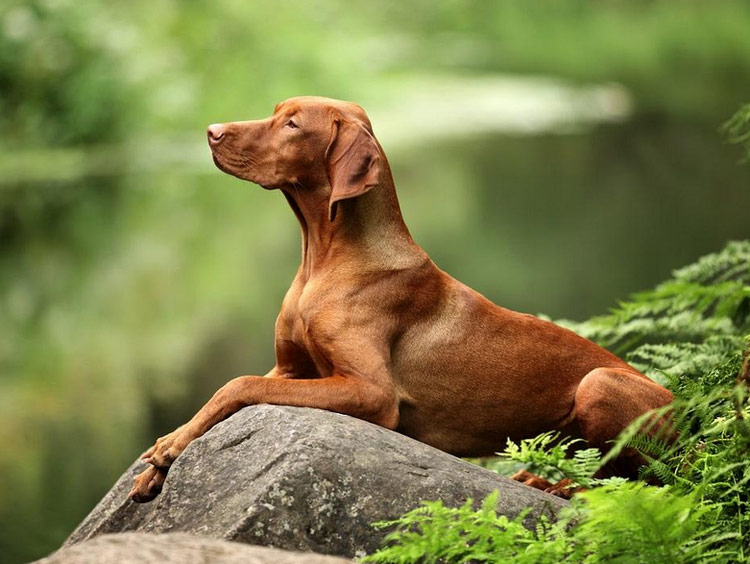
The Hungarian Vizsla belongs to the group of gundogs used for hunting game birds. In other words, it's a pointer. The Vizsla is an unrivaled hunter, blessed by nature with a keen sense of smell, keen eyesight, a strong stand, and a devoted heart. Recently, it has become increasingly popular as a family dog and companion. Another name for the breed is the Hungarian Shorthaired Pointer.
Content
History of origin
The first mention of Hungarian hunting dogs, the ancestors of the modern Vizsla, dates back to the 10th century. It appears in the Vienna Chronicle, published in 1375 during the reign of King Louis the Great. The document states that the red dogs were excellent at hunting game, large hares, and other small animals that inhabited the fertile fields and vast plains of the state.
The Hungarian Vizsla is a versatile gundog, designed to work in fields, forests, and water. It has a strong stance, an excellent sense of smell, a love of water, and an innate desire to retrieve game.
For centuries, these dogs were kept exclusively by the Hungarian elite, which allowed their working qualities to be preserved and enhanced. A stud book, containing all pedigrees and standards, has been maintained since 1825. Around the same time, the breed was declared the official pointing dog of Hungary.
Without a doubt, the breed won the respect and hearts of the Hungarian people. Until the late 19th century, the government strongly discouraged the export of purebred Vizslas to other countries. After World War I, hunting dogs were very few in number, and the breed was on the brink of extinction. This was the first and, to date, only time it was threatened. Even in the 1940s, despite the ruins and divisions of Europe, the Hungarian pointer population remained stable. The Hungarian Vizsla carries the blood of various hunting dogs, including German and English. Many believe that the Arabian greyhound, the Sloughi, was also involved in the breeding process.
Video review of the Hungarian Vizsla dog breed:
What does a Hungarian Vizsla dog look like?
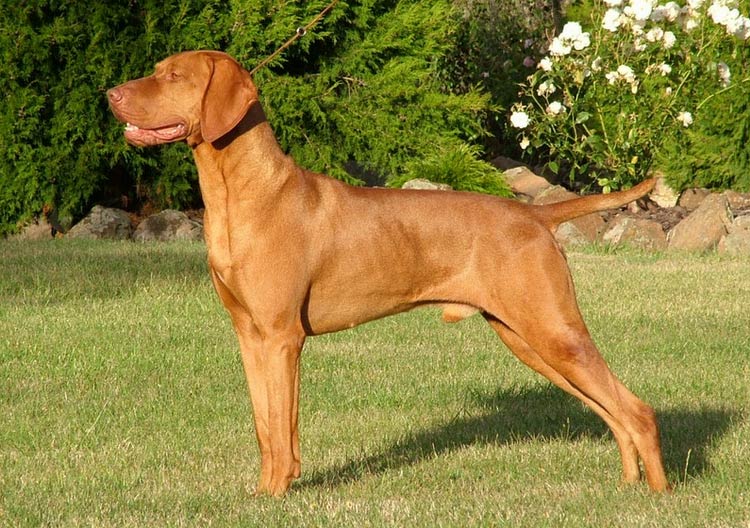
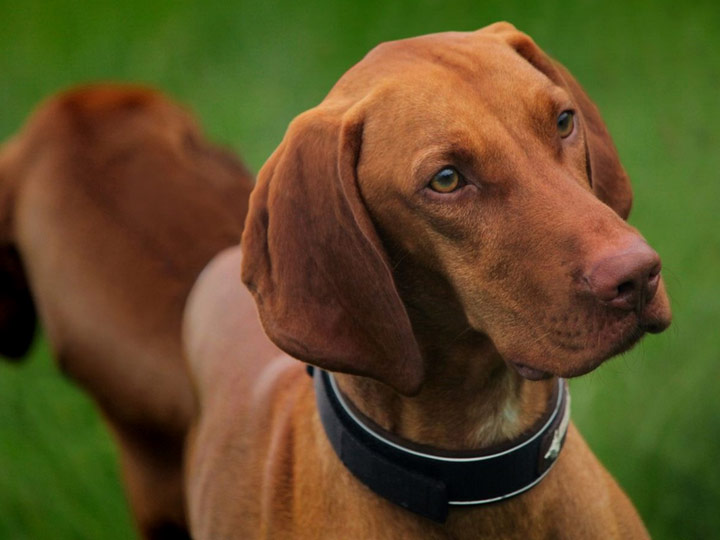
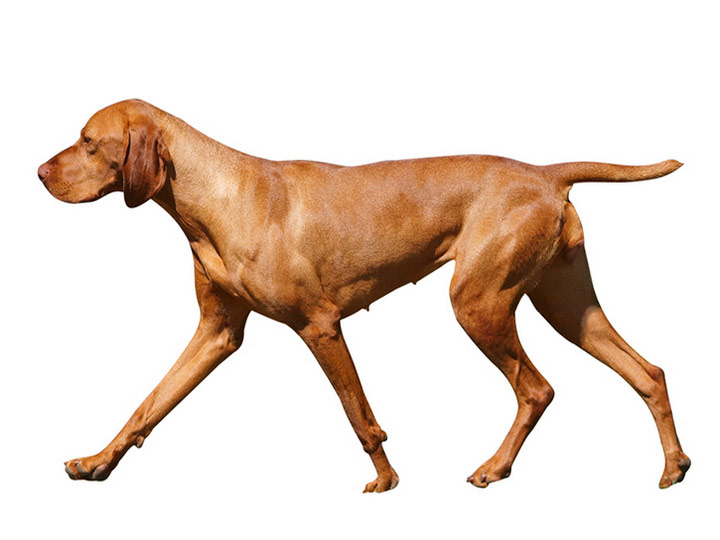
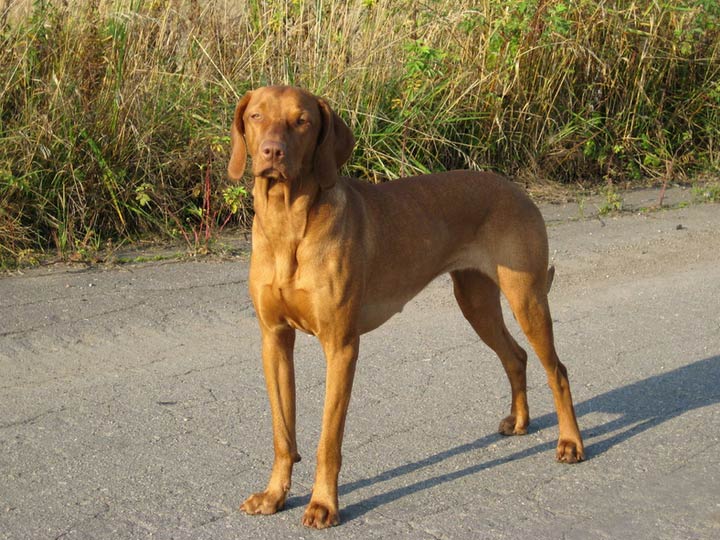
The Hungarian Vizsla is an elegant gundog with a noble appearance and a golden-red coat that emphasizes the harmony of strength and beauty. Height at the withers is 54-64 cm. weight – 22-30 kg. In addition to the smooth-haired Hungarian Pointer (FCI standard No. 57), there is a wire-haired variety, which is recognized by the FCI as a separate breed with its own standard (No. 239).
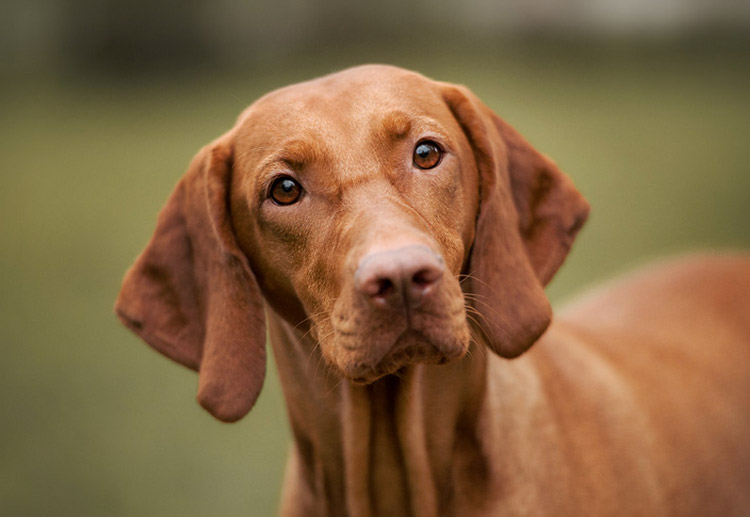
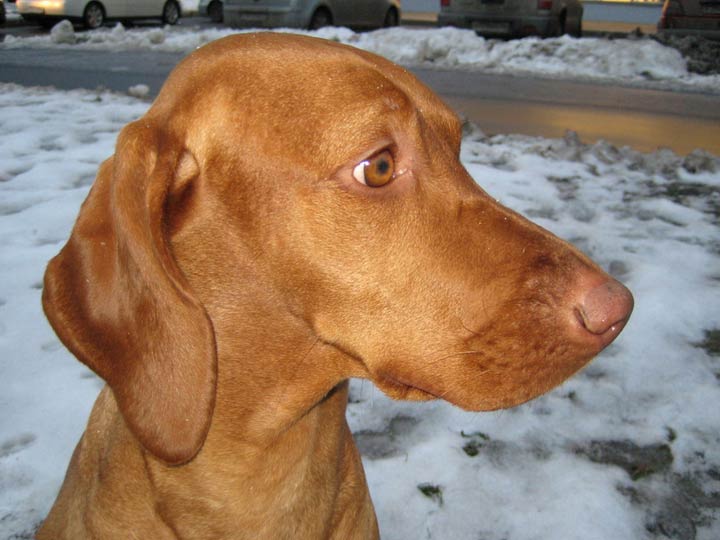
The head is dry and proportionate to the body. The skull is slightly domed and moderately wide. A longitudinal furrow extends from the moderately pronounced occipital protuberance to the gradual stop. The nose is wide and large, with well-developed, mobile nostrils. The color is light brown, as should the eyelids and lips. According to the standard, the nose leather should not be black or brown. The muzzle is blunt. The bridge of the nose is straight. The jaws are well developed. The lips are tight. The bite is scissor-shaped and tight. The eyes are medium in size, set slightly slanted. Dark brown is the preferred color. The ears are set low, wide at the base, but taper toward the tip. The length of the ear is 1/3 of the total head.
The body is almost square: the height at the withers is only slightly shorter than the length. The depth of the chest is slightly less than the height. The withers are well defined and flow into a strong, straight back. The spine should be concealed by a layer of muscle. The chest is deep and wide, with moderately sprung ribs. The underline has a slight tuck. The tail is set fairly low at the base and thick. It can be docked to 1/4 of its length. Undocked, it reaches to the hocks. When moving, the Vizsla carries it horizontally or sickle-like at the level of the back. Both the fore and hind legs are straight, parallel, with well-developed lean muscles and strong ligaments.
Dense, short fur covers the entire body. It feels coarse and harsh. There is no undercoat. The hair on the ears and head is slightly shorter and softer. The fur on the underside of the tail is slightly longer, and on the belly it is sparser than on the rest of the body. The coat color ranges from wheat to reddish-golden in various shades. The fur on the ears may be slightly darker. A white spot on the chest no more than 5 cm in diameter is permitted, as are markings on the toes.
What is the Hungarian Vizsla often confused with?
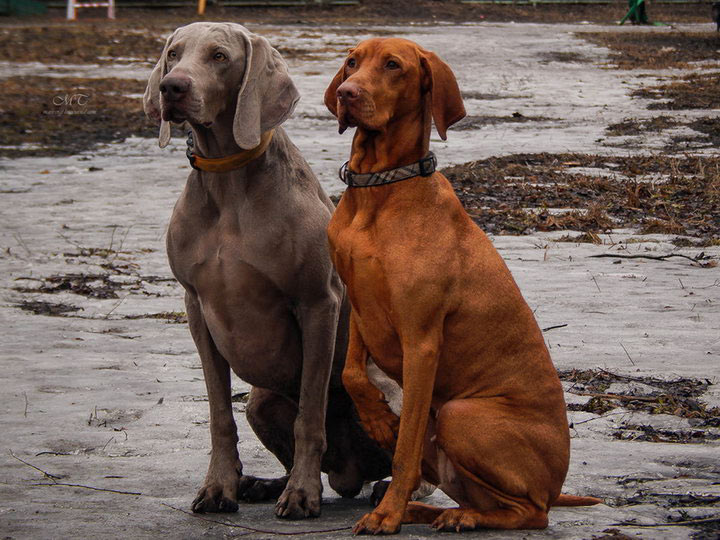
The Hungarian Vizsla looks a bit like Rhodesian RidgebackIn some photos, the breeds can be easily confused. Also, breeders are often asked: when will they have gray puppies? There is no such thing as a gray Hungarian Vizsla. The standard only allows one color: golden red. But Weimaraner, which has some similarities with the Hungarian Pointer, can be gray, and only gray.
Character
The Hungarian Vizsla has a balanced temperament. These dogs are cheerful and friendly, easily trained, and eager to be with their owner at all times. They are a true clingy dog, and you'll have to get used to them nuzzling their red, wet nose into any family activity. The Hungarian Vizsla is very affectionate, quickly forming bonds with family members and being fiercely loyal. However, they typically only recognize one true owner.
The Hungarian Vizsla is a true bundle of energy that requires daily, long walks, regular training and attention.
If a dog doesn't receive this at the proper level, it becomes problematic in terms of behavior and obedience. When a Vizsla spends too much time alone in the yard, it develops bad habits, such as barking without reason and digging holes. The Vizsla is very intelligent and can use cunning to get what it wants, but it almost never puts its own interests above those of its owner. At the same time, it is very sensitive and does not tolerate rough handling.
How does a Vizsla behave when hunting?
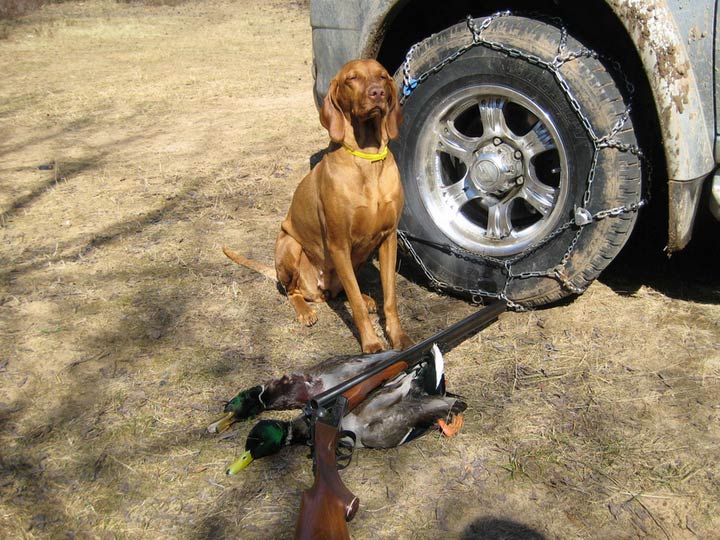
The Hungarian Vizsla stays close to its owner. It's important for it to be within sight of its owner at all times. Its hunting pace is relaxed, allowing it to conserve energy for a longer chase. The Vizsla is ideal for those who prefer a more leisurely hunt.
When hunting, the dog behaves carefully and quietly, making sure not to scare off the prey. If pointer While a dog might rush past game in the heat of the moment, that won't happen with a Vizsla. A more suitable dog for hunting birds in swampy thickets or dense forests would be hard to find. Vizslas are sometimes used for hare hunting.
Those planning to hunt with a survivor should take into account that already in mid-autumn it can be cold (in the temperate climate zone); there is no need to talk about winter and frosts.
The Hungarian Pointer has proven itself to be an excellent pointer and skilled retriever. Even if game gets lost in dense undergrowth, it will readily retrieve it. The dog will leap into cold water without hesitation, but active waterfowl hunting in cold weather can be extreme for this short-haired dog.
Hungarian Vizsla at work (video):
Features of maintenance and care
The Vizsla is primarily a hunter, but that doesn't mean only people who share this passion can own one. Recently, Vizslas are increasingly living in apartments as companion dogs. Most are quite happy in this role, provided they are walked regularly, of course. Their coat is short and has no undercoat, but this doesn't prevent hair from getting into the house. The short, coarse hairs scatter across the floor and cling to upholstered furniture and clothing. With proper care, the dog's odor is virtually nonexistent.
The Vizsla is only suitable for hunters or active people. It's worth noting that she gets along well with children, but due to her agility, she may accidentally nudge or bite a child during play. If necessary, the dog will defend her family, and the fact that the Vizsla was bred for long work makes her an ideal partner for walks or long-distance running. Outdoors, the Hungarian Vizsla can't contain her hunting instincts and will constantly chase pigeons, stalk hedgehogs, or chase cats.
Care
Easy grooming is one reason why people often choose the Hungarian Vizsla as a companion. The smooth, short coat requires weekly brushing. Bathing is recommended every three months or as needed. In between baths, the coat is typically wiped with a damp towel or rinsed in the shower. The ears are regularly inspected and cleaned.
Diet
The Hungarian Vizsla eats little, is picky and very demanding about the quality of food. If it's a natural diet, the dog may pick out pieces of meat and not even touch the porridge. It may look at treats from the owner's table as if it hasn't been fed for a week. Prepared karma should also be selected based on the dog's taste preferences. There's no need to change the diet unless absolutely necessary.
Health and life expectancy
The Hungarian Vizsla is strong and resilient. Its excellent health and good genetics are the result of the hard work of breeders, a diverse gene pool, and careful selection, overseen for centuries by Hungarian nobility. The advent of various tests has made it even easier to prevent dogs with health problems from being bred. Their average lifespan is 12-13 years.
Choosing a puppy price
In Russia and the CIS, kennels primarily offer dogs for shows or as pets. Finding a puppy from qualified working parents with certificates is much more difficult. In Hungary or Slovakia, the opposite is true.
It's best to buy a puppy from a breeder. It's worth finding out in advance whether the breeder breeds and trains working dogs for hunting or whether they primarily treat them as companions. Genetics and the parents' talents often play a key role in shaping the puppies' personalities.
The breed is quite rare, so good show puppies cost around 50,000 rubles. This also applies to puppies from working dogs, which excel in hunting. At the bird market, dogs without papers usually cost no more than 20,000 rubles.
Photos
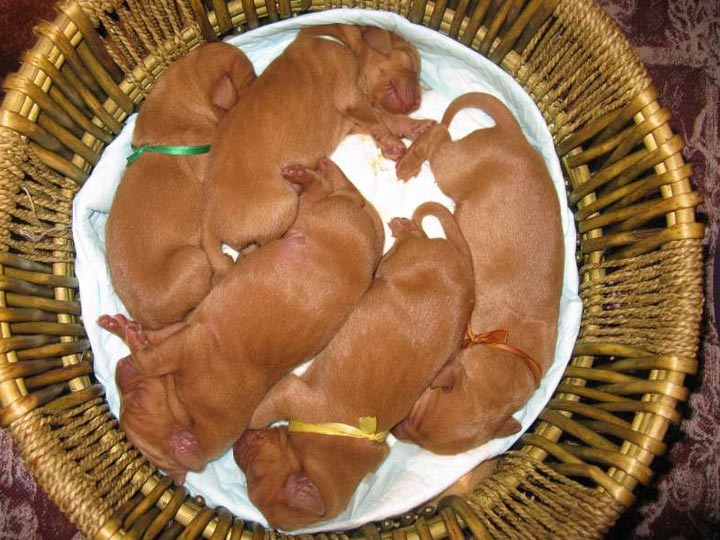
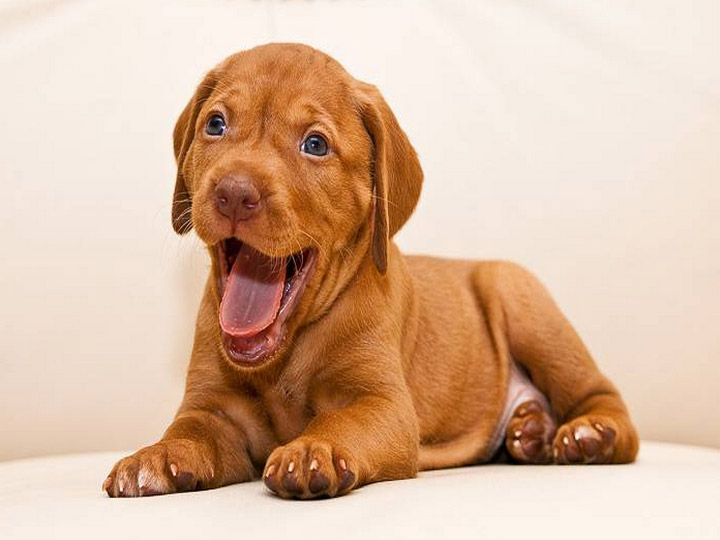
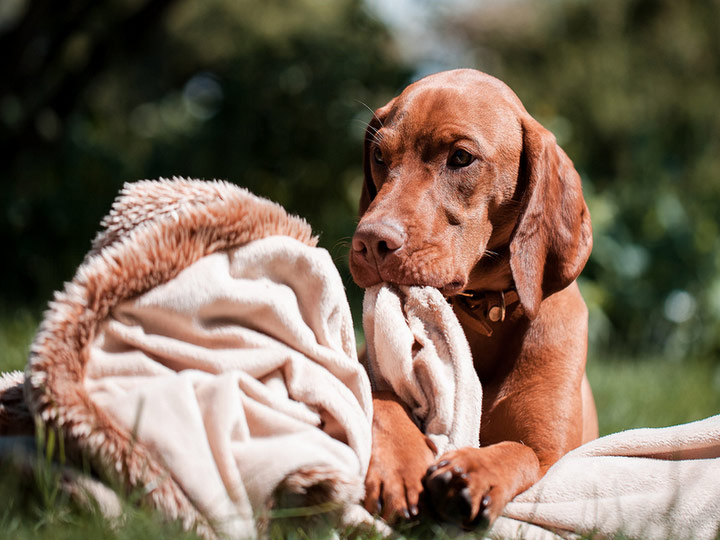
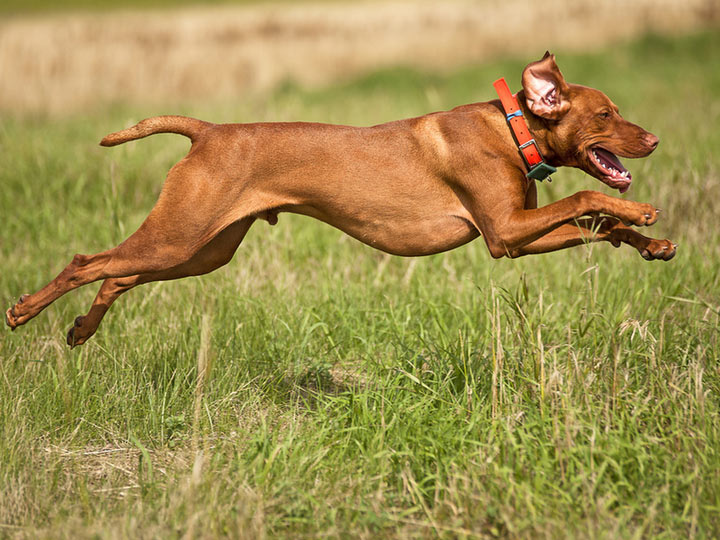
In the gallery you can see photos of puppies and adult dogs of the Hungarian Vizsla (Hungarian Shorthaired Pointer) breed.
Read also:


Add a comment