
Hungarian Greyhound (Magyar agar)
The Hungarian Greyhound (Magyar Agar) is an ancient dog breed that developed in what is now Hungary and Transylvania. It is used for baiting hares, foxes, and deer. It has proven itself as a guard dog and companion. In English-speaking countries, it is known as the Hungarian Greyhound.
Content
History of origin
Dog skulls found during excavations have led scientists to hypothesize that the ancestors of this sighthound inhabited the Pannonian Plain since the first millennium CE. Whether they lived there long before humans or migrated with them is unknown, but by the 10th century they were already widespread and used by humans. In subsequent centuries, they greatly influenced hunting traditions in many areas.
For a long time, Hungarian greyhounds were kept only by the nobility. They were used to hunt hare and deer in open spaces and forest edges. The dog's job was to chase the animal toward a mounted hunter. A day's travel required them to cover 30 to 50 km. Peasants kept smaller, sighthound-like dogs. They were successful in hunting hare. This breed is now completely extinct.
For centuries, the Magyar Agar's image remained unchanged until the 19th century, when greyhound and other breeds were infused into it to increase its running speed. In 1963, the breed was recognized by the Fédération Cynologique Internationale.
Usage
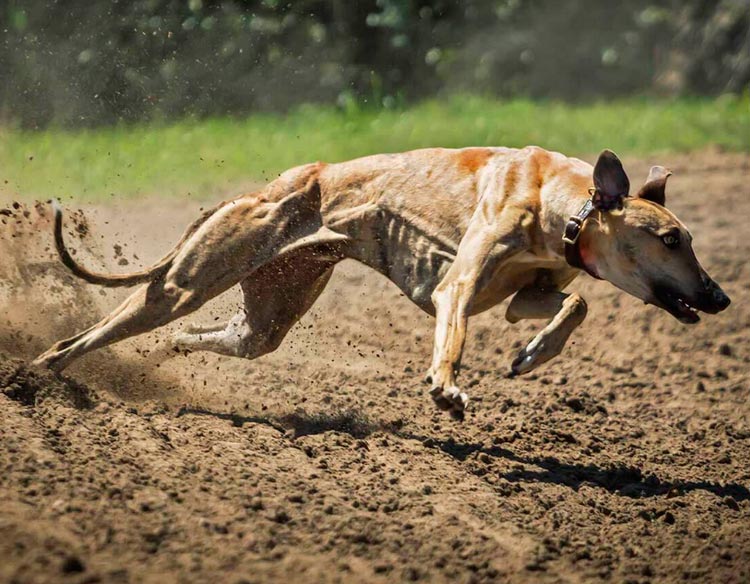
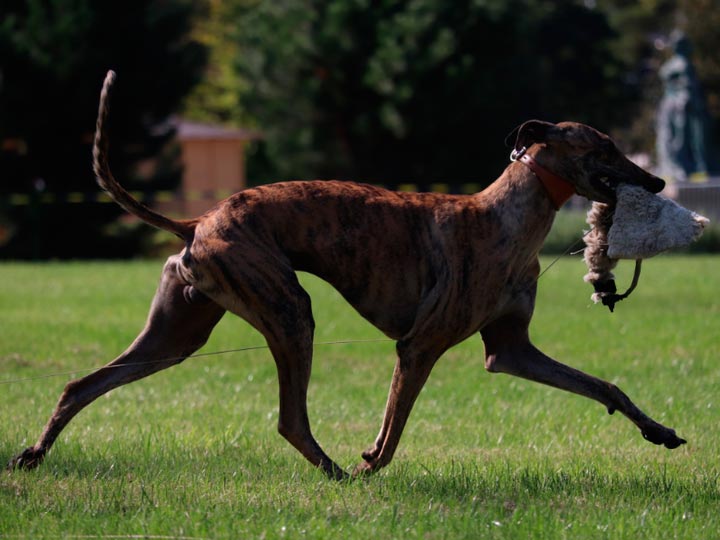
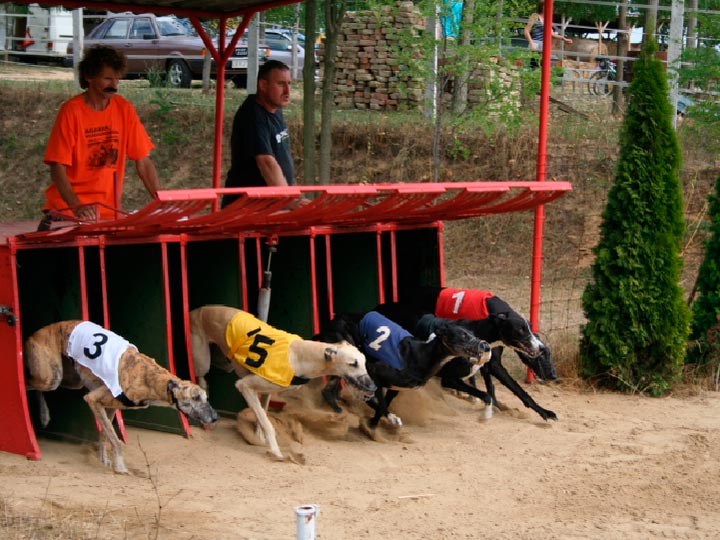
The Hungarian Greyhound hunts by sight. It is used to hunt hare and fox, and less commonly deer. When hunting, it can display all its talents: amazing endurance, persistence, excellent scenting, speed, and catching power. Today, few Hungarian Greyhounds are used for traditional unarmed hunting; dogs are primarily used. in coursing (running after a mechanical hare, dog racing or kept as companions and guards.
A well-trained Hungarian greyhound can reach speeds of up to 55 km/h and ranks a respectable third, behind the greyhound and whippet.
The appearance of the Hungarian Greyhound
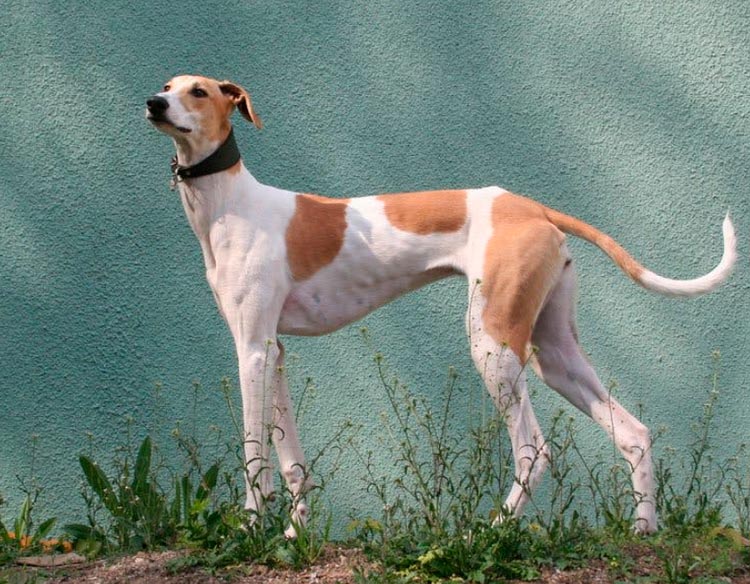
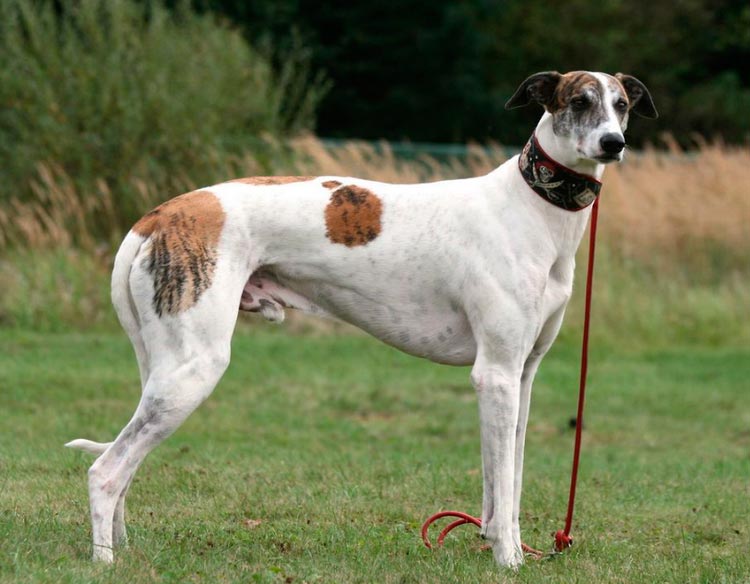
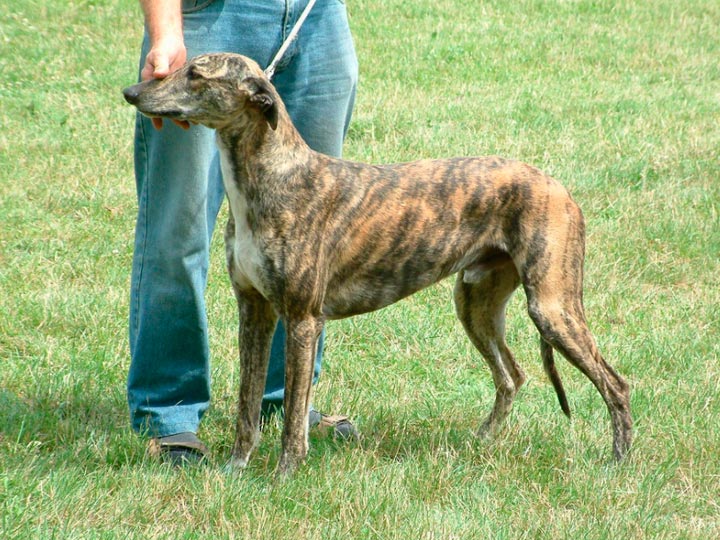
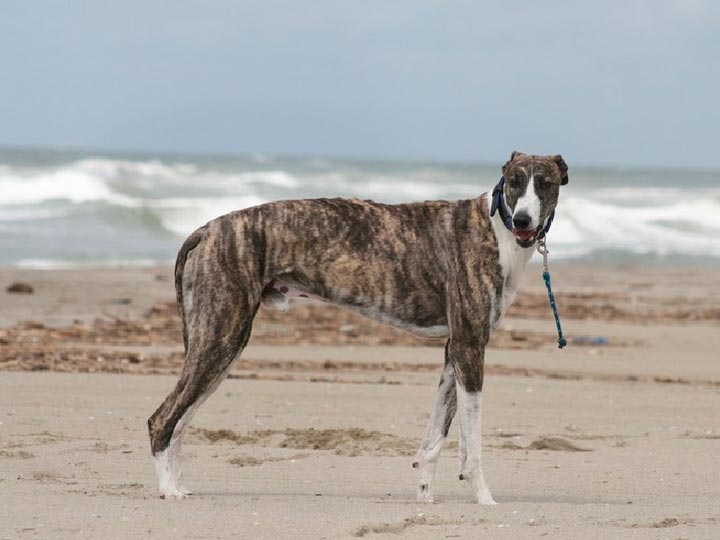
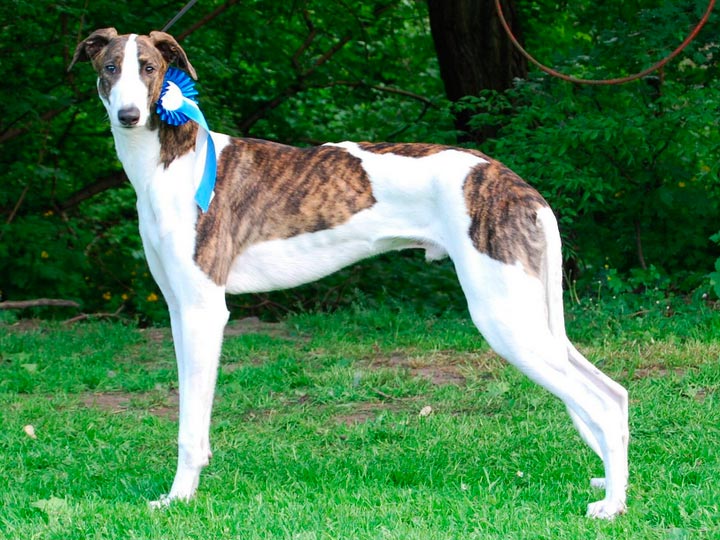
The Hungarian Greyhound is a slender, elegant dog that in many ways resembles greyhoundProportionately built, with strong bones and well-developed muscles. Breeders distinguish two types of Magyar Agars. The older type is characterized by stronger and wider bones. Modern dogs are refined and lightweight, allowing them to reach greater speeds. Sexual dimorphism is pronounced.
- Height at withers: 62-70 cm.
- Weight: 22-30 kg
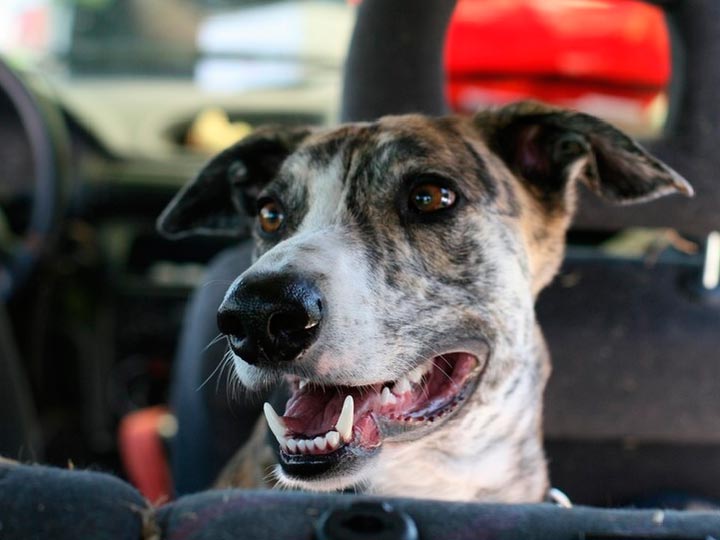
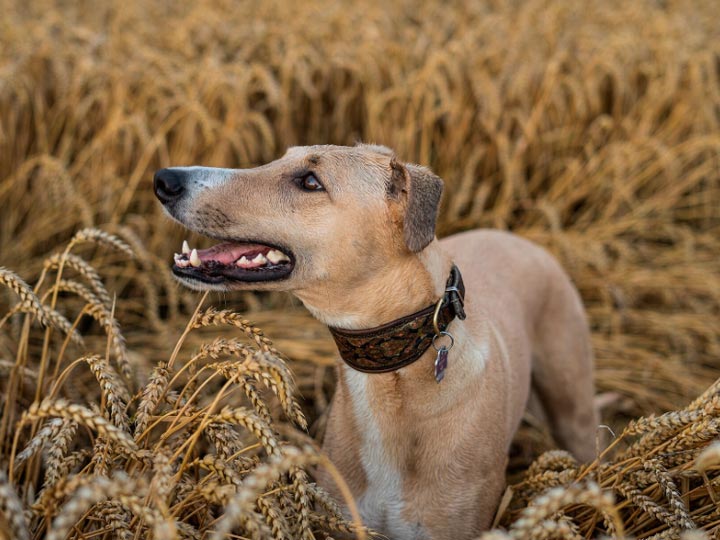
The head resembles an elongated triangle. The skull is relatively broad. The muzzle is quite broad for a sighthound, with strong jaws. The eyes are dark brown and oval. The ears are medium in size, set high, not very thin, and semi-drooping.
The body is muscular and long. The chest is broad and deep. The back is strong and straight. The loin is slightly arched. The croup is slightly sloping and wide. The belly is tucked up. The limbs are long, slender, with distinct angles, and very strong. The tail is long, not very thin, and slightly curved at the end.
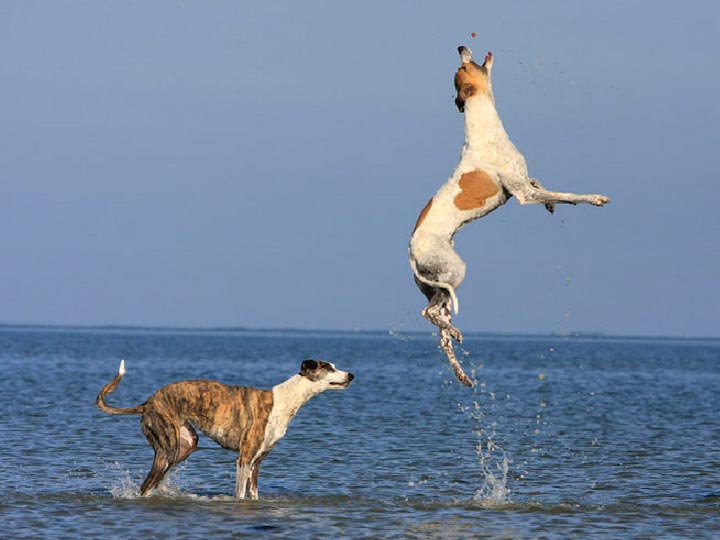
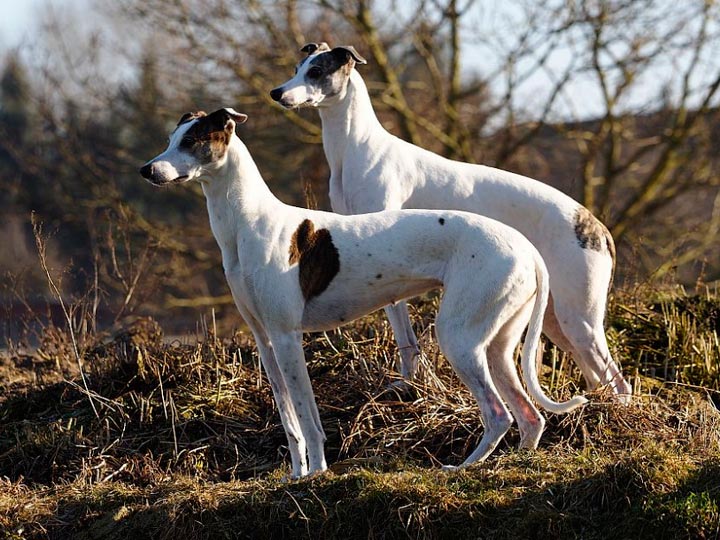
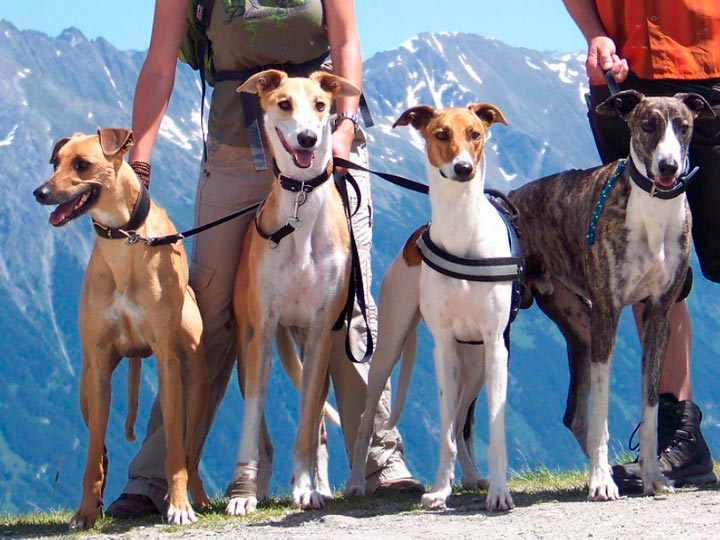
The coat lies close to the body, short, and not very fine. It becomes thicker in winter. The coat can be any color: solid, spotted, or brindle.
Character and behavior
The Hungarian Greyhound has a calm, even temperament. It is an incredibly loyal dog, fiercely protective of its home and owner. It is very attached to its family. It is suspicious and distrustful of strangers. When properly trained, it gets along well with children.
She gets along well with the animals she grew up with. On walks, she may show a hunting interest in neighboring cats or small dogs. This behavior requires early intervention.
The Hungarian Agar is not aggressive, but has a strong guard instinct, which is not typical for greyhounds.
The Hungarian Greyhound is easy to train, quickly learning commands and rules of behavior. With early socialization and proper training, it grows up obedient and sensitive, but can sometimes display stubbornness and a strong character. It is not as independent as other sighthounds. It is recommended to take the puppy through a training course. OKD and further reinforce the skills. Some owners go through this with their agars ZKS course.
Content Features
The Hungarian Greyhound is well-suited to indoor life; it is neat, clean, and enjoys company and comfort. It can be kept outdoors in a spacious enclosure with a well-insulated kennel or in a separate room. Regular exercise is essential to maintain the greyhound's vitality, mental health, and physical well-being. Owners should ensure the greyhound has ample opportunity to run freely in the open air. Hungarian Greyhounds do not require extensive grooming.
Health and life expectancy
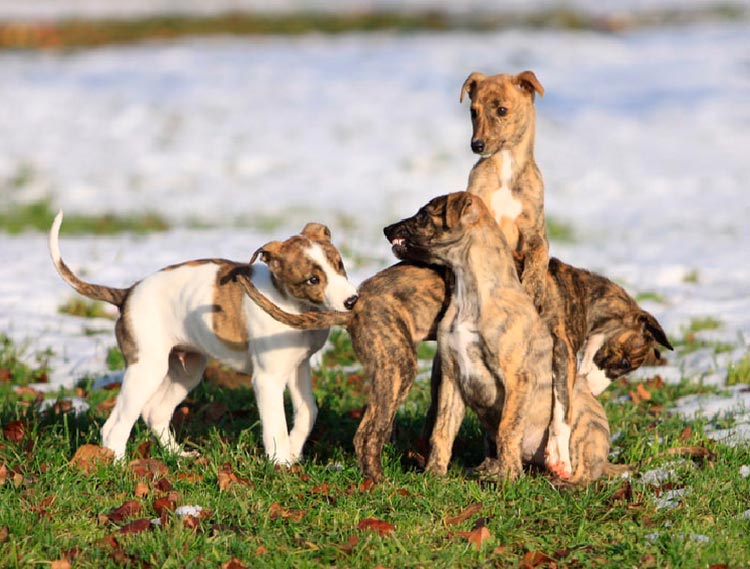
The Hungarian Greyhound is hardy and robust. The key to a long and healthy life is proper breeding, adequate exercise, and a balanced diet. Life expectancy is 12-14 years.Identified hereditary diseases include epilepsy, thyroid disease, cataracts, and progressive retinal atrophy. A small percentage of dogs suffer from hip and elbow dysplasia.
Buying a puppy, price
These dogs are very popular in their native Hungary, but are rare outside the country. The average price of a Magyar Agar puppy from a breeder in Europe is 800 euros. There is no price data available in Russia.
Photos and videos
You can see more photos of Hungarian Greyhounds (Magyar Agar) in the gallery.
Video about the Hungarian Greyhound (Magyar Agar) dog breed
Read also:


Add a comment