
Welsh Terrier
The Welsh Terrier is a compact, gundog-type hunting dog that still retains strong working instincts and is often used for its intended purpose. The breed has a vibrant and independent personality, but with consistent training, the Welsh becomes a reliable companion and devoted friend.
Content
History of origin
The breed originated in England, where similar dogs had been known for a long time, but systematic breeding only began in the second half of the 19th century. The first Welsh Terrier standard was developed in 1885 and officially approved a year later, in 1886. Wales is considered the breed's homeland, which is why Welsh Terriers are sometimes called Welsh Terriers. Originally, they were strong, courageous, and quite aggressive dogs, bred to hunt rodents and small predators. They were actively used for burrow hunting, including fox and badgers, where endurance, persistence, and fearlessness were particularly prized.
The formation of the Welsh Terrier phenotype involved fox terriers, Irish Terriers, and Lakeland Terriers. Welsh Terriers, in turn, were used by German breeders to develop the Jagdterrier.
Modern Welsh Terriers are divided into two types: working and show. In some countries, their breeding is conducted separately, while in others, the lines regularly cross. The working type is distinguished by its stronger bone structure and harsh coat, and is used as a working dog for hunting burrowing animals. Welsh Shepherds can sometimes be seen at customs. Their keen sense of smell helps service dogs sniff out drugs and explosives. The show type is distinguished by its softer coat, lighter bone structure, and head carriage.
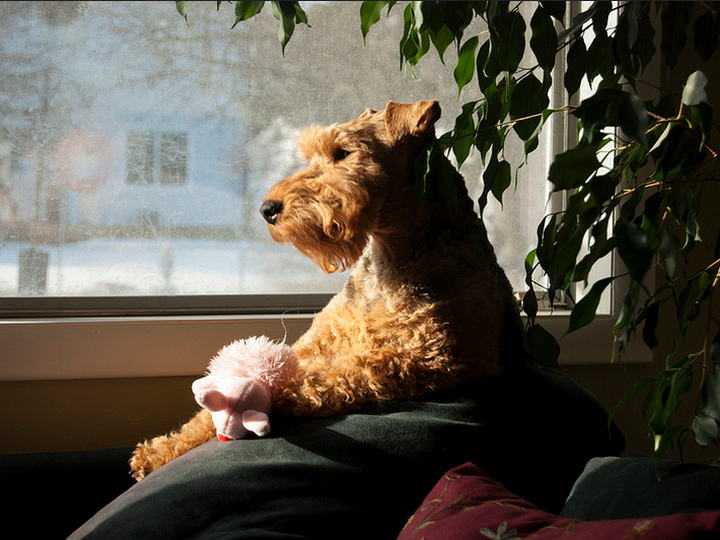
Video review of the Welsh Terrier dog breed
What should a Welsh Terrier look like according to the standard?
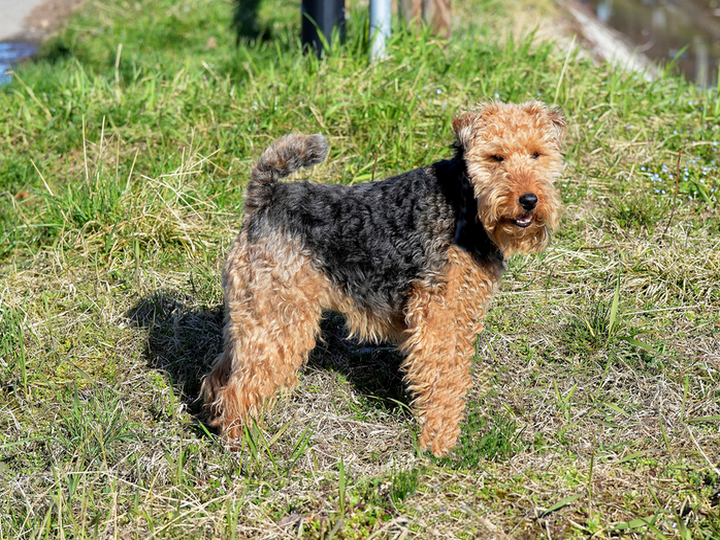
The Welsh Terrier is a small, compact, well-built dog whose appearance emphasizes good working qualities and a lively temperament. The height at the withers should not exceed 39.5 cm, and the weight ranges from 9 to 9.5 kg.
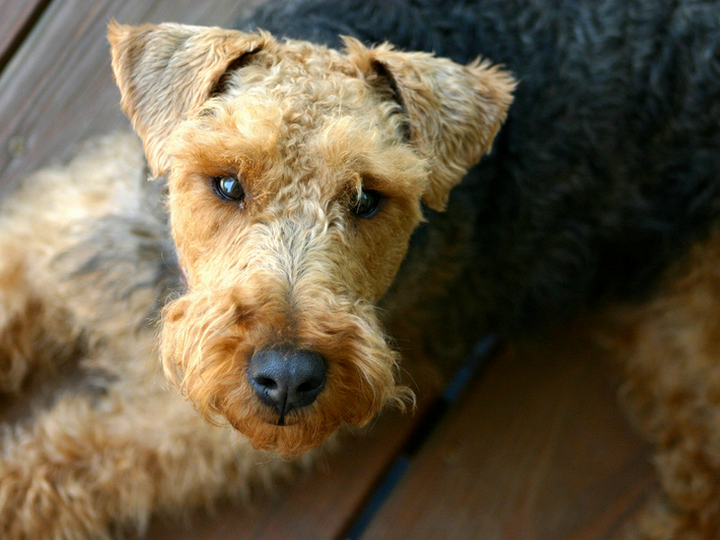
The skull is flat, moderately wide between the ears. The stop is poorly defined. The muzzle is of medium length with strong, well-defined jaws that meet in a tight scissor bite. The nose is black. The eyes are small, dark, and slightly sunken. The ears are pendant, triangular in shape, small, not too thin, set fairly high and close to the cheekbones, and pointed forward.
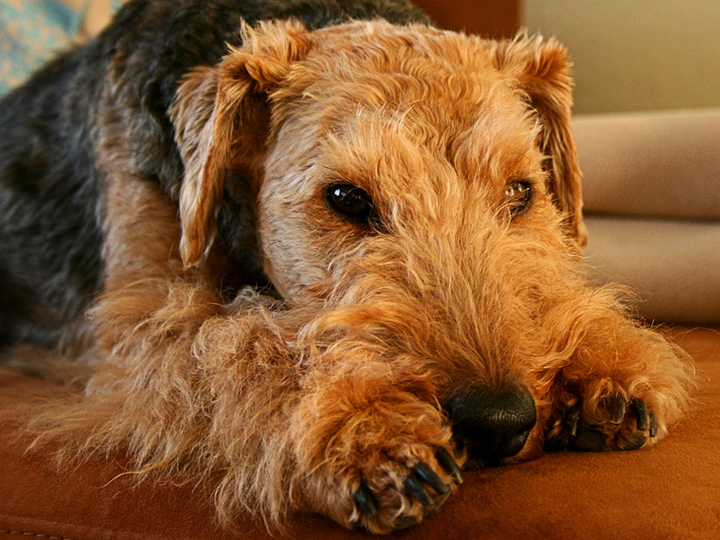
The neck is of medium length, moderately thick, slightly arched, and blends smoothly into the shoulders. The back is short. The loin is strong. The chest is moderately broad and of good depth. The ribs are well sprung. The tail may be docked. In its natural state, it is moderately long, thick, and tapering to a point. The forelegs are straight, well-muscled, and have substantial bone structure. The hind legs are strong, muscular, and of good length, with short metatarsus and well-bent hocks. The paws are small and round.
The dog's color will completely change by the age of 2 years, provided that it is properly trimmed.
The coat is very harsh, dense, and thick. It feels wiry to the touch. A single coat is undesirable. The color may be reddish-brown with black, or with black and gray. The black should not extend below the hocks.
Character
The Welsh Terrier is a cheerful, slightly flighty, and energetic companion. He is highly intelligent and obedient, easily managed in everyday life. He is playful and fearless, but never aggressive. He tries to avoid conflict, but when necessary, he will stand up for himself.
Welsh Terriers are kindly cunning, stubborn, and resourceful. They will use any means possible or impossible to achieve what they want.
Living with other animals is difficult to predict. They rarely get along with dogs of other breeds. They don't get along well with cats, and small animals and birds are viewed as potential prey.
The Welsh Terrier is truly devoted to its owner and adores all family members. It is wary or indifferent toward strangers. It possesses remarkable courage and is capable of defending its owner and property.
Welsh Terriers generally get along well with children and readily engage in any active games. They're happy to run for hours, fetch a ball or stick, play tag, and spend time actively with their young owners. However, any interactions between dogs and children should be supervised, especially with younger children. Welsh Terriers can be too energetic and assertive for very young children, so it's best to bring a pet to a family with older children.
In addition to its distinct hunting abilities, the Welsh Terrier possesses excellent watchdog abilities. It is an attentive and wary dog, typically reserved and non-aggressive toward strangers. However, at the slightest hint of danger to its owner or family members, the dog instantly changes its demeanor, demonstrating courage and a willingness to protect its loved ones to the bitter end.
Without proper training, the breed's natural instincts can create certain difficulties in everyday life. Although Welsh Terriers are considered among the most even-tempered terriers, their hunting instincts can manifest themselves in chasing cats and rodents, chasing after interesting scents, digging holes in the yard, or attempting to dominate other dogs. For this reason, it is not recommended to keep small rodents in the same home with a Welsh Terrier, and it is best to introduce them to cats and other dogs from an early age. With timely socialization, consistent training, and a confident, authoritative owner, a Welsh Terrier becomes a manageable, balanced, and comfortable companion.
Education and training
Welsh Terriers are highly trainable; they are inquisitive and active. They perceive any attention from their owner as a call to play, so training sessions should be playful. Maintaining a puppy's interest in training will lead to good results. Welsh Terriers generally listen only to those they recognize as their owner.
You can't allow a Welsh Terrier to grow up to be a capricious and spoiled dog.
During training, it's important to be an authority figure for your dog, but at the same time, maintain a trusting relationship. Using physical force and unfair, harsh management can embitter and harden the dog, turning it into an uncontrollable house monster.
Maintenance and care
The ideal environment for a Welsh Terrier is a kennel, provided the dog gets plenty of exercise and is given hunting practice. If a Welsh Terrier is kept as a companion, an apartment is more appropriate. At home, Welsh Terriers are calm, clean, and unobtrusive, preferring secluded spots. When a leash appears, their boundless energy surfaces, manifesting itself in jumping, yelping, and joyful barking. Welsh Terriers are not afraid of severe frosts and tolerate heat well.
You can feed your Welsh Terrier with prepared or natural food. During intense physical activity, portion sizes and calorie intake should be increased. Clean drinking water should always be readily available.
Welsh Terriers are highly active and require regular, active walks. Simply walking on a leash isn't enough—they need active play, a change of scenery, and the opportunity to burn off energy. A Welsh Terrier will enthusiastically chase toys, engage in active play with its owner, swim, or learn new commands. Only by combining physical activity and mental stimulation will a pet remain balanced and happy.
Without enough exercise and interaction, a dog quickly becomes bored, which often affects its behavior. Even living in a private home doesn't solve the problem: independent runs around the yard are no substitute for a proper walk. Welsh terriers require daily walks outside the yard for at least an hour and a half to two hours. This breed is suitable for people willing to spend active time with their pet, while those who don't have this opportunity should consider calmer dogs.
Care
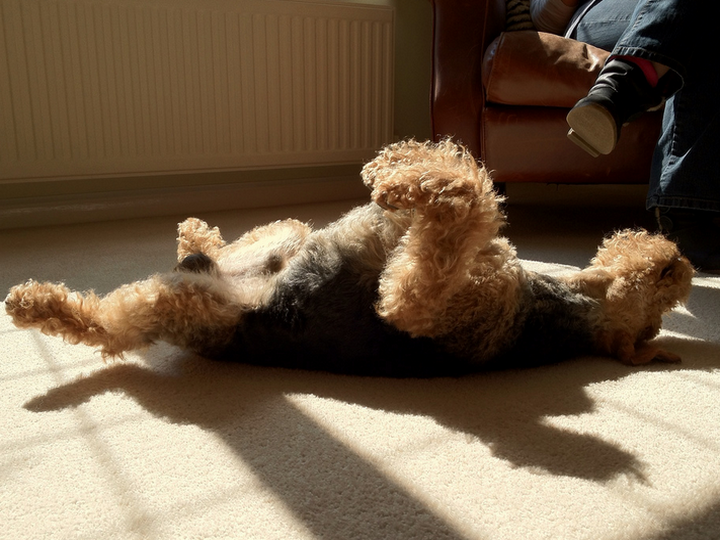
Welsh Terriers, like many other wire-haired dogs, require trimming, which involves plucking the mature coat by hand or with a tool. Trimming begins at 2.5 to 3 months of age. At this age, the coat is plucked all over the body, except for the whiskers and beard. As the puppy matures, the trimming pattern changes. Dog shows are prepared according to the exhibition scheme. Pets are trimmed 2-4 times a year. If the terrier is a working dog, the hair is plucked at intervals that allow it to grow back in time for training, competitions, or hunting. The hair growth period is 1.5-2.5 months.
Bathe your dog every 3-4 weeks. Use shampoo and conditioner appropriate for their coat type. Dogs kept in kennels should only be given drops during the summer; in winter, brushing their coat with snow is helpful. Other hygiene procedures include weekly ear cleaning, nail trimming as needed, and regular teeth brushing.
Health and life expectancy
Welsh Terriers are hardy dogs with robust health and favorable genetics. The breed is susceptible to only a few hereditary health problems:
- Ophthalmological diseases (cataract, lens dislocation, glaucoma);
- Allergy;
- Thyroid dysfunction (hypo- or hyperthyroidism);
- Dermatological diseases;
- Epilepsy.
Key to maintaining a Welsh Terrier's health are a proper, balanced diet and timely veterinary preventative care, including annual vaccinations, regular treatment for external and internal parasites, and routine medical examinations. Their lifespan is 14-16 years.
Welsh Terrier Nutrition
The Welsh Terrier is an active and spirited breed, so a well-balanced diet directly impacts the dog's health, stamina, and appearance. First and foremost, owners must choose a feeding format: commercially prepared foods or a diet made from natural ingredients.
A natural diet requires a serious approach and careful planning. Developing the right menu on your own is extremely difficult without specialized knowledge, so it's recommended to consult a veterinary nutritionist. A specialist will calculate the daily calorie intake, determine the optimal ratio of proteins, fats, and carbohydrates, and advise on the appropriate foods for a particular breed, taking into account its age, activity level, and health. Typically, a natural diet includes boiled lean meat, fermented milk products, grains such as rice and buckwheat, vegetable oils, and appropriate vegetables and fruits.
When feeding natural food, special attention should be paid to vitamin and mineral supplements. Self-prescribing them is not recommended: incorrect dosage can lead to both deficiencies and excesses of certain elements, which often cause skin and coat problems or allergic reactions. Supplement selection should also be made by a veterinarian, who will take into account all the dog's specific needs.
Choosing a puppy
Before choosing a puppy, you need to decide what you want the Welsh Terrier to do. Will it be a hunting companion, a sportsman, or a companion? If your knowledge of the breed is limited to online articles and photos, it's a good idea to meet the dog in person. Whether you choose to buy a puppy from a kennel or from someone else is a personal decision, but it's important to remember that a dog without papers will never have a show career and should not be bred. It's advisable to meet the parents and evaluate their intelligence, character, health, and appearance. Reputable breeders avoid breeding dogs with mental health issues, hereditary illnesses, or poor conformation, but such dogs are perfectly acceptable to breed in the hands of amateurs.
When choosing a puppy, pay attention to its soundness. The puppy should be active, curious, non-aggressive, and appear healthy and well-fed. By 2-3 months of age, it should be dewormed and have had its first vaccinations, which are noted in the veterinary passport. Purebred dogs have a birth certificate (puppy papers), which are exchanged for a pedigree.
Price
Pet-class Welsh Terrier puppies cost 10,000-20,000 rubles. Promising puppies start at 25,000 rubles. Used Welsh Terrier puppies cost 5,000-10,000 rubles. Working dogs may cost more.
Photos
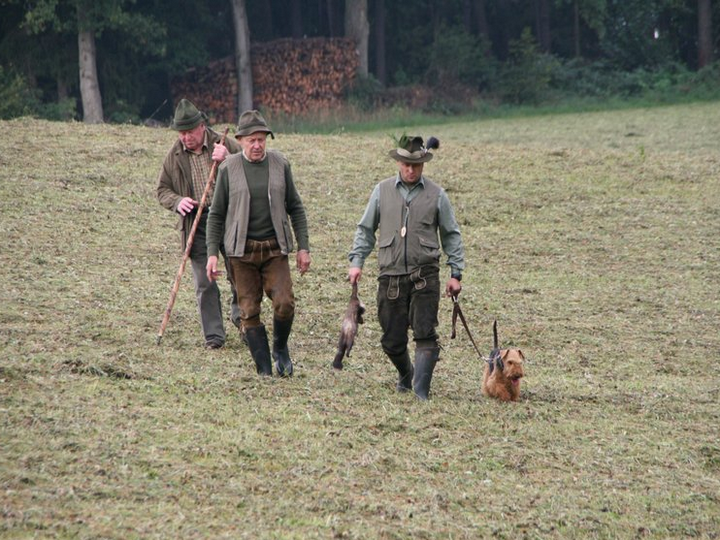
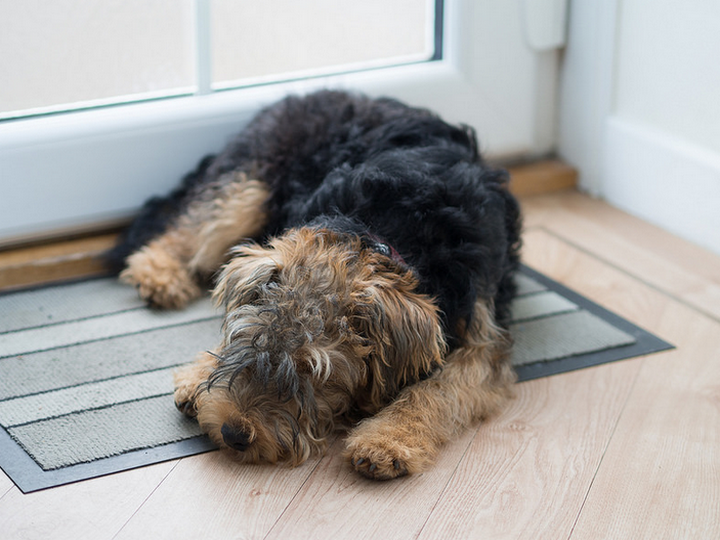
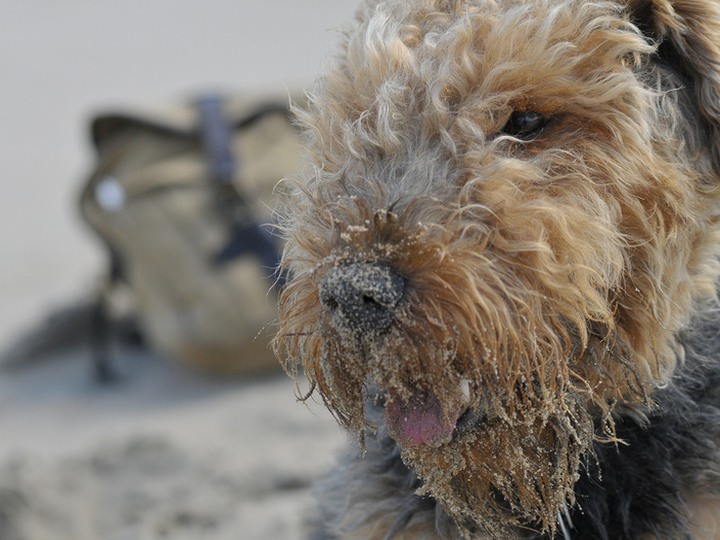
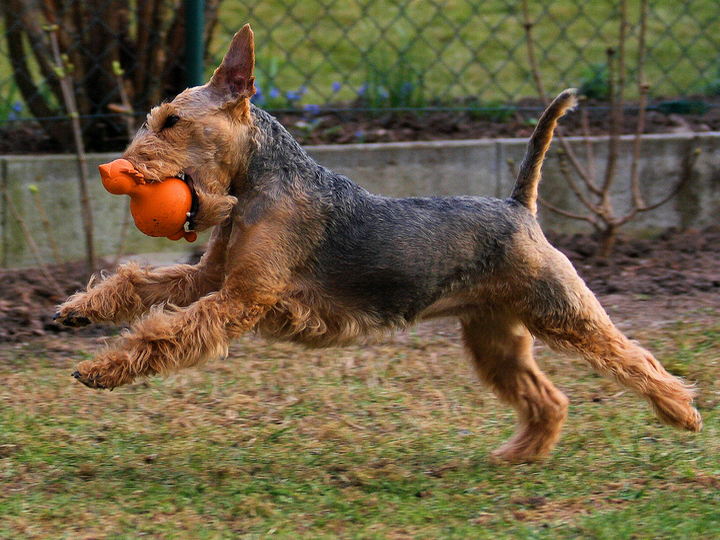
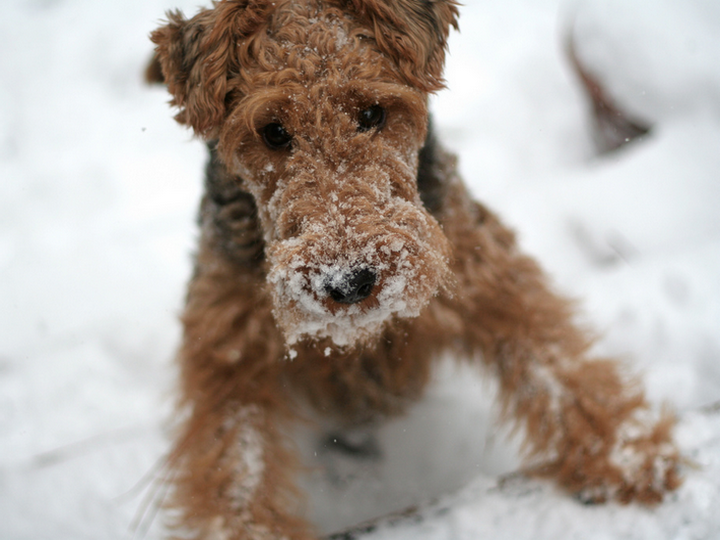
Photos of Welsh Terrier puppies and adult dogs. The gallery contains photos of Welsh Terriers hunting, at home, and on walks.
Read also:


Add a comment