
Welsh Springer Spaniel
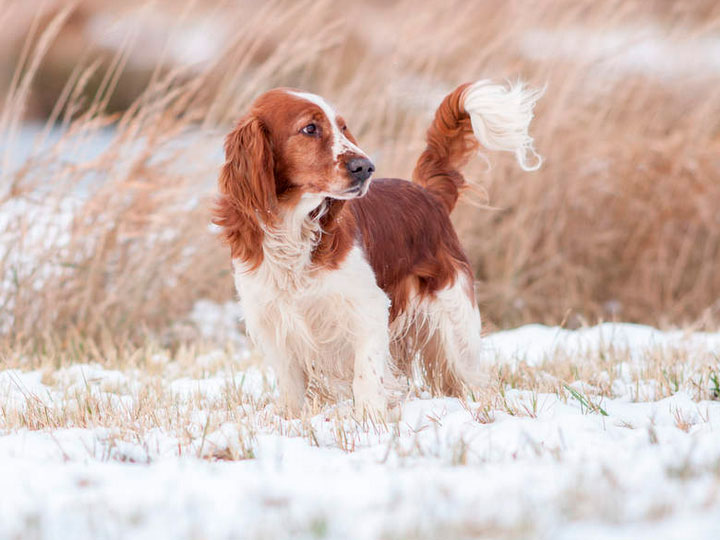
The Welsh Springer Spaniel is considered one of the oldest Welsh breeds. It makes a good hunting dog, family dog, and companion for active people. The Welsh Springer is intelligent, obedient, energetic, and friendly. The breed's characteristic coat color is red and white.
Content
 History of origin
It's difficult to say when the first ancestors of the Welsh Springer Spaniel appeared. Images of similar dogs appear in ancient paintings and engravings from the 15th and 16th centuries. They were known as Land Spaniels and are likely direct descendants of the first spaniels that arrived from Spain to the British Isles with the Romans. Later, they were known as Welsh Starters. In Wales, these dogs were used for spring hunting with falcons. Some cynologists believe the story is much simpler and that the Welsh Springer Spaniel was the result of crossbreeding. Clumber Spaniel And English Springer.
In the 19th century, spaniels from Wales were often called Welsh Cockers. They remained little known until the early 20th century. Everything changed when a pack of dogs owned by Mr. A.T. Williams won a hunting competition held by the Spaniel Club. Soon after, the breed was recognized by the English Kennel Club under the name Welsh Springer Spaniel. The UK breed club was founded in 1923. In the 1920s and 1930s, breeders developed the type of dog that exists to this day.
The breed remains small in number and unpopular. In 2000, only 424 puppies were registered with the English Kennel Club. By comparison, there are approximately 12,000 English Springer Spaniels and 13,500 English Cockers. In 2009, the breed was finally recognized by the International Cynological Association, but this did not have a positive impact on its popularity. In 2016, the number of newborn puppies dropped to 300 per year, and since then, the Kennel Club has included the Welsh Springer Spaniel on its list of vulnerable aboriginal breeds.
Appearance
The Welsh Springer Spaniel is a typical working spaniel: symmetrical, moderately heavy, compact, energetic, and quick. The height at the withers for males is 46-48 cm; for females, 43-46 cm.
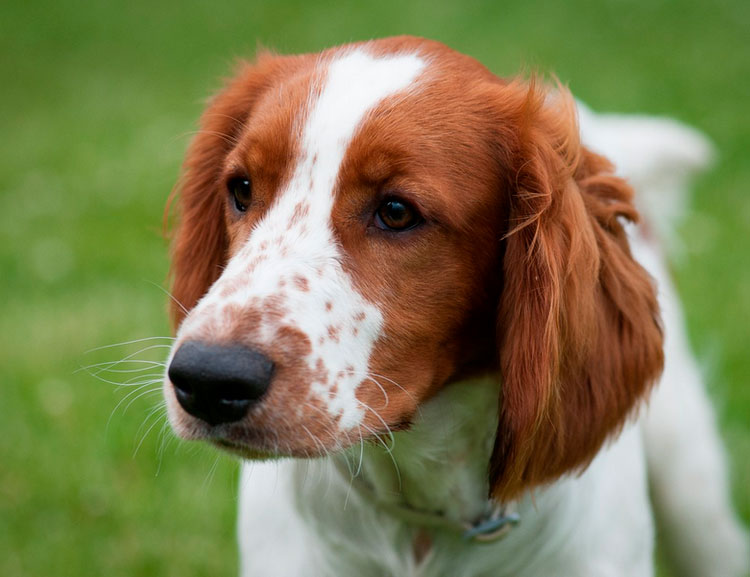
The skull is slightly domed, well elongated under the eyes. The stop is defined. The muzzle is of medium length with a straight nasal bridge. The nose leather has well-developed nostrils and is dark in color. The jaws are strong, with a scissor bite. The eyes are medium in size, light or dark brown. The ears are pendant, set low, close to the cheeks, relatively small, with rounded tips.
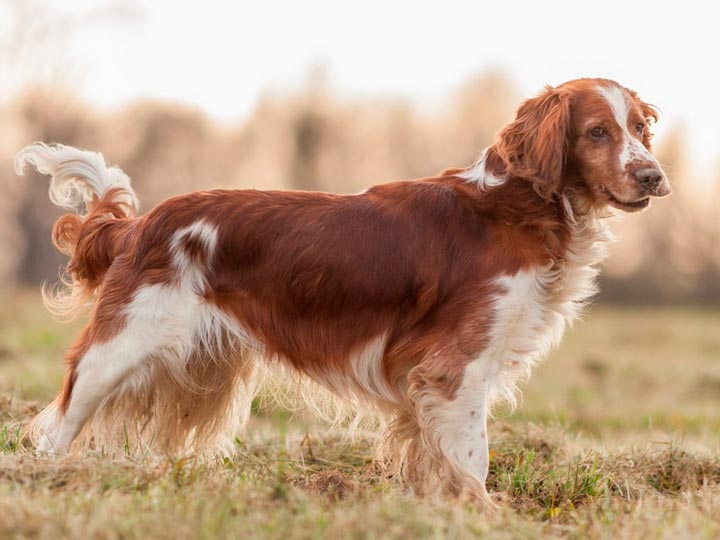
The neck is long. The body is slightly elongated, muscular, and strong, its length proportional to the length of the legs. The loin is slightly arched. The chest is deep. The tail is a natural extension of the topline, shaped like a saber. In the past, the tail was traditionally docked. The legs are medium length, well boned, and straight. The paws are thick, cat-like, and rounded.
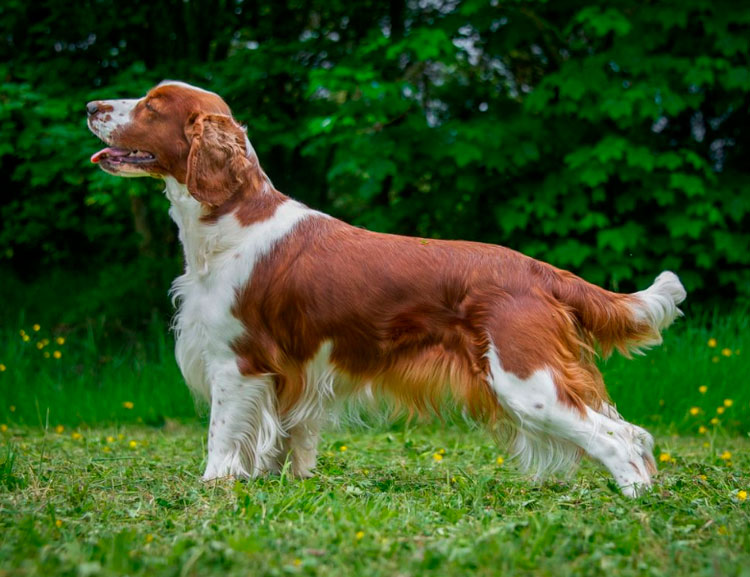
The coat is straight, silky, and dense. The ears and tail are well-furred, and the backs of the legs are feathered. Color: white with bright red spots.
Character and behavior
Welsh Springer Spaniels have a docile, friendly temperament. They are generally even-tempered dogs with a passion for hunting. They have a keen sense of smell, a keen desire to chase birds, and a talent for retrieving. They are very eager and tenacious in their work, hardy and energetic. Moderately calm in everyday life, they are playful and curious on walks. They form strong bonds with their owners and are very affectionate with all family members. They are good with children, especially if they were raised with children and were properly socialized.
The Welsh Springer Spaniel is not as trusting as the English Springer or Cocker Spaniel. It is somewhat reserved with strangers. It greets intruders on its territory with barking, but that's all it takes. If pressed too hard, the dog will retreat.
The Welsh Springer Spaniel makes a good companion for a hunter or an active person who chooses the breed for sport, but it is not suitable for the role of a calm family dog, let alone a guard dog.
The Welsh Springer Spaniel is people-oriented, eager to be around others, and adores attention. It is full of life-loving spirit, optimism, and enthusiasm. While it can be impulsive or even stubborn at times, it is much less independent than other hunting breeds.
Education and training
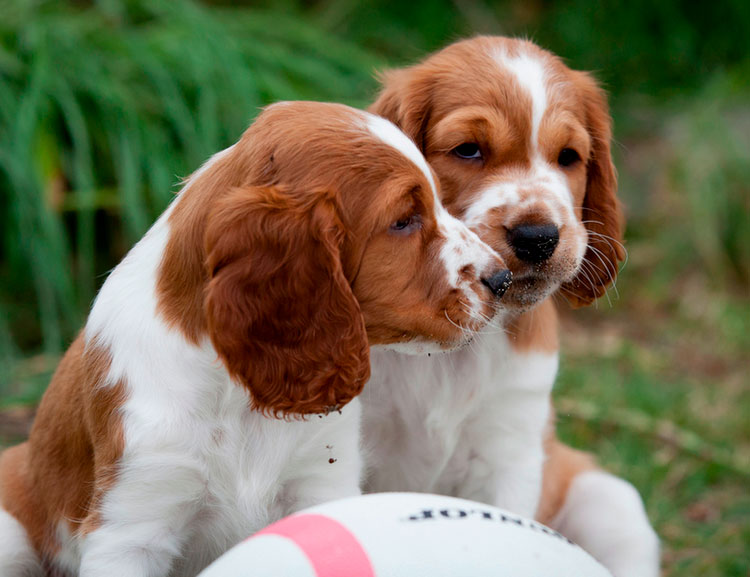
Early socialization and basic obedience training are essential for Welsh Springers. Most puppies quickly learn commands, master house rules without much difficulty, and learn to respect other animals living with them, but their urge to chase birds and small animals on walks is ineradicable. Springers have a gentle nature and do not respond well to harsh training methods. At a young age, they are slow to obey, so training them requires patience and gentle persistence.
The Welsh Springer Spaniel is considered one of the most trainable of all spaniels. With proper training, the dog grows up obedient and eager to please its owner.
Content Features
The Welsh Springer Spaniel is suitable for apartment living, provided it receives ample exercise. A private home with family and plenty of time in the yard is ideal. A second dog with a suitable temperament for playtime is welcome. Outdoor play is possible in a well-fenced yard, but not on a leash. Confining them to a kennel for long periods is not recommended.
The Welsh Springer Spaniel is a very hardy and energetic dog that was bred for long periods of work in the fields.
Without adequate physical and mental stimulation, they can become nervous and destructive. It's best to keep a Springer on a leash when out in the city; in the wild, only let them out if you're confident they'll return on command.
Care
To maintain a well-groomed appearance, brushing the Welsh Shepherd once a week is sufficient. A soft, natural bristle brush is best. A metal comb is used to gently detangle any mats that begin to form. Nails should be trimmed every 3-4 weeks. A full bath is recommended once a month. Use a shampoo for soft coats with a neutral pH. Regularly inspect the ears and clean the ears if necessary, drying thoroughly after bathing. Regular teeth brushing is recommended. for the purposes of stone prevention and other dental problems.
Health and life expectancy
Welsh Springer Spaniels are generally healthy dogs. Responsible breeders screen their breeding stock for major genetic diseases and do not breed affected dogs. Hereditary diseases reported in the breed include:
- elbow and hip dysplasia;
- autoimmune thyroiditis;
- eye diseases.
Particular attention should be paid to the dog's ears, which are prone to otitis due to poor ventilation. Regular vaccinations and parasite treatment will help keep your Springer healthy for many years. Life expectancy is 12-13 years.
Where to buy a Welsh Springer Spaniel puppy
Welsh Springers are relatively rare even in their homeland, but the overall population remains more or less stable. Breeders are found in most European countries, the United States, and Canada. Large kennels exist in Finland and Latvia. In Russia, there are no more than a dozen Welsh Springers. Puppies are rare, and there are often a significant waiting list.
Those who need a good working Welsh Springer Spaniel that meets the standard for appearance, character, and health should consider buying a puppy abroad.
Price
In Europe, the price of a Welsh Springer Spaniel typically ranges from 1,200 to 3,500 euros. There is no data for Russia and the CIS countries.
Photos and videos
The gallery contains photos of Welsh Springer Spaniel (Welsh Cocker) dogs.
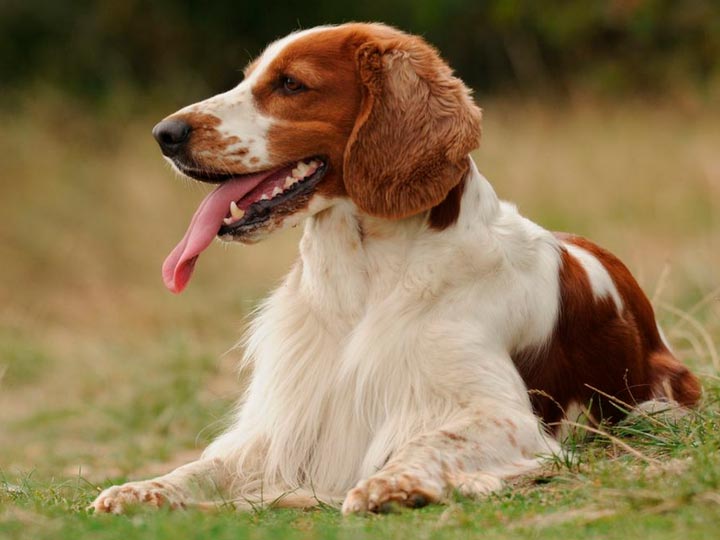
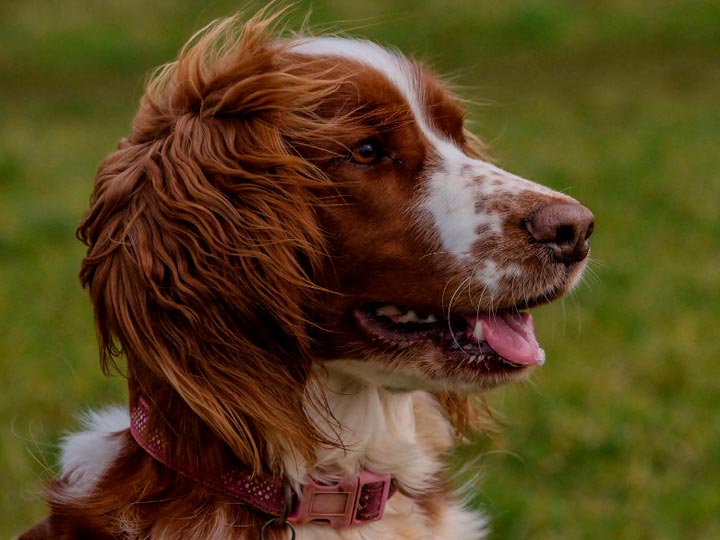
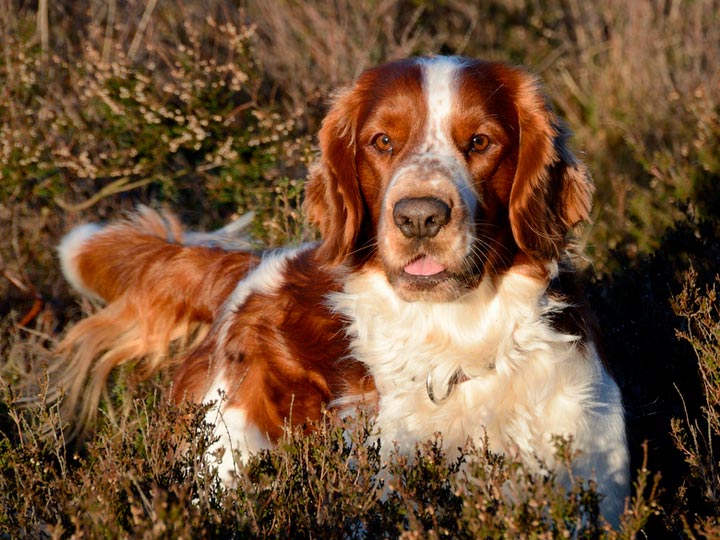
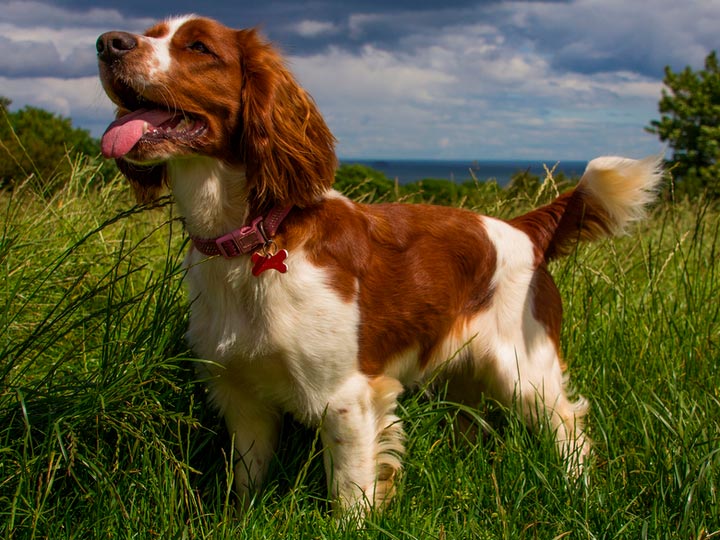
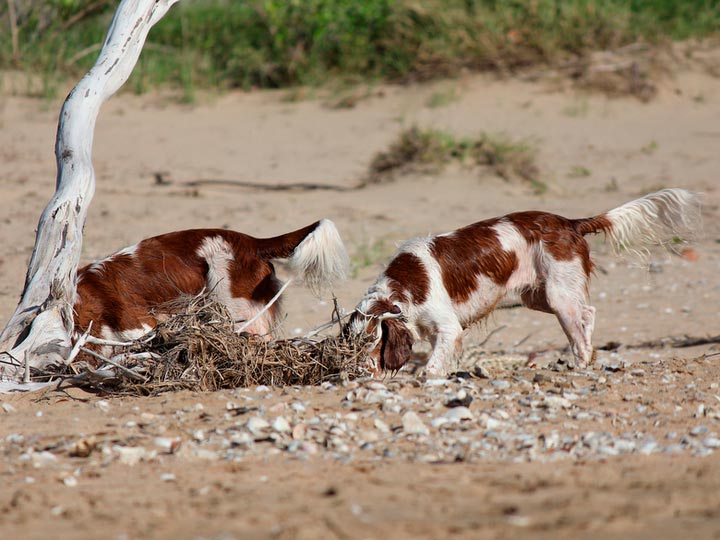
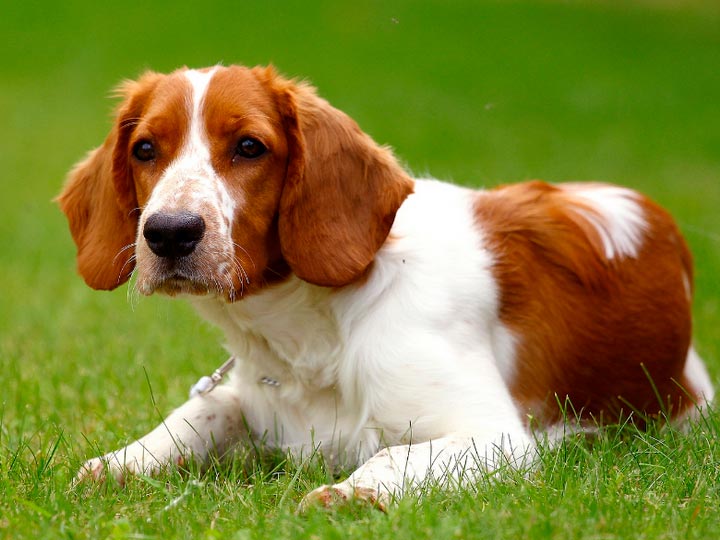
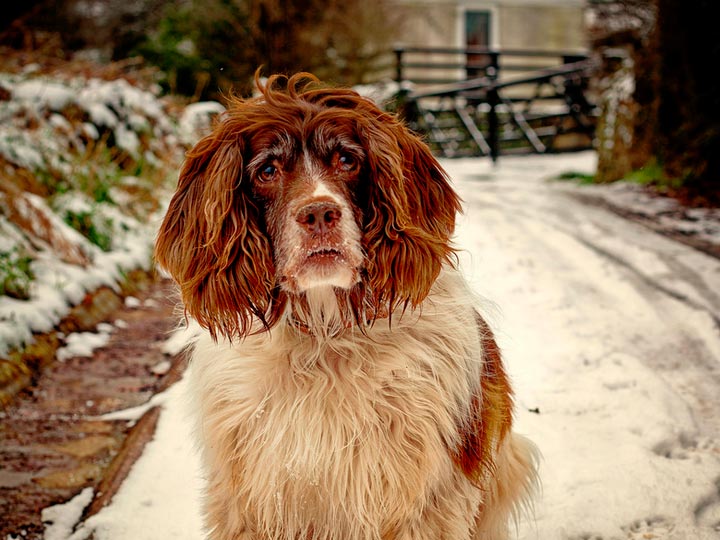
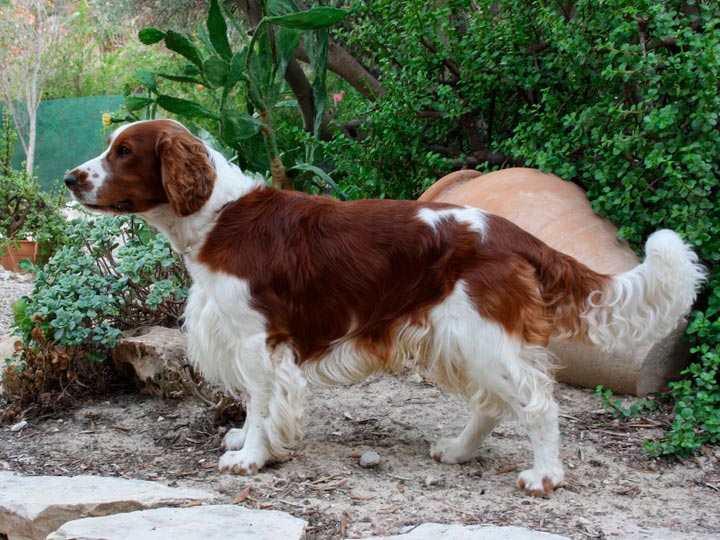
Video about the Welsh Springer Spaniel breed
Read also:


Add a comment