
Vaseline oil for cats
Constipation is just as common in pets as it is in humans. The situation is further complicated by hair getting into the pet's stomach: as it accumulates, it creates additional problems with bowel movements. Vaseline oil is an emergency treatment for cats with constipation issues.
Content
General description
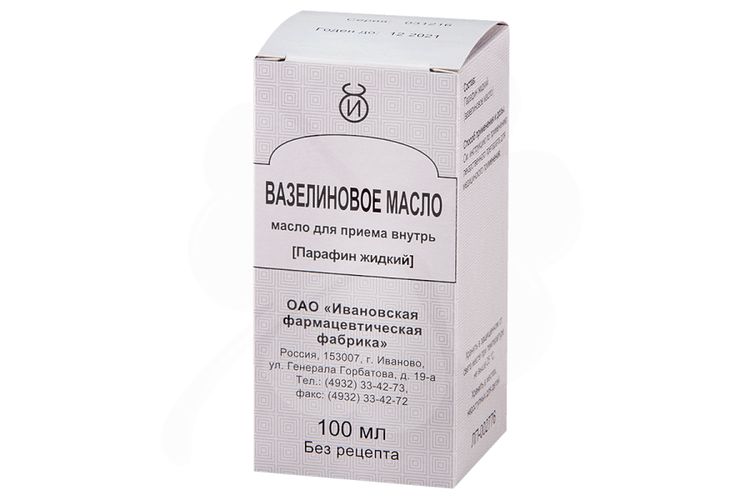
Vaseline oil is a laxative with an oily consistency. It is available in liquid form and is intended for oral or topical use. Topical use includes catheter lubrication or enemas used in emergency catheter care.
The oil is colorless, odorless, and tasteless. It contains no carcinogens, mutagens, or components that could trigger an allergic reaction. The active ingredient is liquid paraffin. It relieves constipation, is completely eliminated from the body, and is completely safe when used strictly as directed.
Operating principle
Healthy pets have regular bowel movements—1-2 times per day. A lack of bowel movements for 2-3 days is the first sign of difficulty defecating. Large, loose stools or feces in the form of dry pellets are also considered constipation and a sign to give your cat Vaseline.
Large quantities of liquid feces indicate intestinal atony (emptying only after fullness), while small quantities of dry feces indicate peristaltic disorders.
The longer waste remains undetected, the more fluid is absorbed into the mucous membranes. This damages the mucous membranes, causes congestion, and poisons the body.
Intoxication can cause harm to an animal:
- disorders of the liver, kidneys, and heart;
- allergic reactions;
- deterioration of the coat condition.
Dull fur, itching, and skin rashes are the first signs owners can visually identify internal problems. Chronic constipation can also lead to other serious complications, so giving your cat Vaseline oil should be done at the first sign of the symptoms described above.
It has a coating effect, acting as a lubricant for the intestinal walls. This improves intestinal peristalsis and softens accumulated fecal matter. The preparation mechanically stimulates intestinal contractions and the removal of feces, toxins, and other waste products from the body. Accumulated waste is eliminated gently, without pain, injury, or stress for the animal.
Price
The medication is available in liquid form, packaged in 25-100 ml glass containers. It can be purchased at pharmacies or pet stores.
The price of the medication depends on the volume. 25 ml costs about 26 rubles, 100 ml costs 70-90 rubles. Read on to find out where to buy it.
Indications for use
The product is recommended as an emergency measure. help with constipation in cats, but it should not be abused so as not to cause addiction in the animal.
Vaseline oil is sometimes prescribed as a laxative After administering deworming medications and removing hairballs and debris. In this case, the dosage is calculated by the veterinarian based on the pet's weight and height.
Your doctor may recommend an enema to quickly cleanse your bowels. An enema is prescribed:
- in studies of the gastrointestinal tract of cats;
- before planned operations;
- for severe constipation;
- to prevent the formation of fecal stones, and if they are present, to gently break them down and ensure painless removal.
Method of use in veterinary medicine
Vaseline oil is administered to a cat on an empty stomach, preferably in the morning. How can you ensure the medication gets through? It's easiest to do this with two people—the owner and a helper.
The medication is drawn up in advance into a disposable syringe without a needle. A thin syringe is preferable, as it's easier to insert into the oral cavity.
The owner should calm the animal by petting it. Meanwhile, the assistant should stabilize the animal's head and open its jaw slightly enough to insert a syringe into the side gap between its teeth.
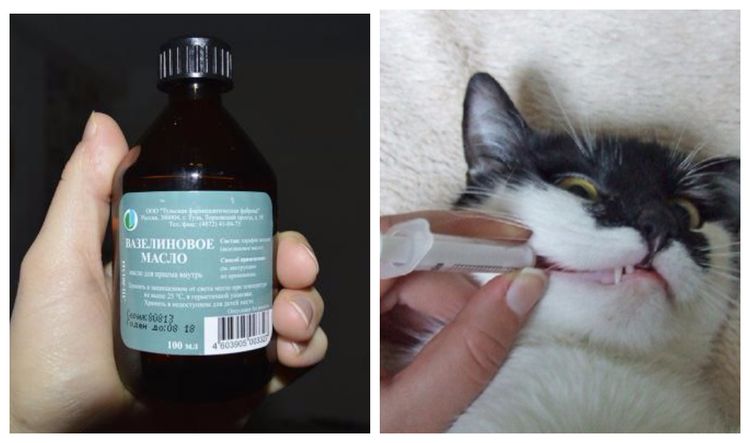
The contents are inserted directly onto the back of the tongue to ensure the pet swallows them rather than spits them out. This should be done quickly, without stopping petting the cat.
The dosage of Vaseline oil for constipation depends on the purpose, method of administration, weight and age of the cat and is indicated in the instructions for use:
- For prophylactic purposes, 0.5 ml of the drug is administered per kg of weight.
- For medicinal purposes – 1 ml per kg of weight.
- For kittens weighing less than 1 kg, the product is applied to the withers at a rate of 1-3 drops.
How much Vaseline oil should you give your cat, and how long does it take for it to work? Typically, veterinary clinics prescribe 5-10 ml of the medication per dose. Results should be seen within 4-5 hours after administering the oil. If there is no effect, repeat the treatment with 5 ml. The maximum daily dose for an adult cat is 20 ml.
Kittens should not be given additional doses. If the enema or oil alone is ineffective, consult a veterinarian immediately.
Many specialists pay attention to the individual response of each animal, so there are no standardized regimens for using Vaseline oil. In some cases, it may promote bowel movement from the first dose; in others, 2-3 doses over 15-18 hours are required before fecal passage begins.
In any case, it should not be exceeded to avoid side effects and adverse reactions. Laxatives will not work if constipation is caused by serious conditions such as volvulus or their impassabilityThese pathologies are treated surgically, and other medications are prescribed during the recovery period.
Side effects
Side effects are rare if the medication is used as directed and infrequently. Overuse of the medication, exceeding the recommended dose, or failure to follow the prescribed dosage regimen may result in:
- formation of nodes in the intestines;
- spontaneous release of oily fecal fluid from the anus of an animal;
- dehydration;
- lack of fat-soluble vitamins.
The owner should monitor their pet's well-being after taking the medication. If vomiting, lethargy, refusal to eat, or other behavioral changes occur, consult a veterinarian. It's possible that the cat is intolerant to the medication.
Contraindications
Contraindications to taking Vaseline oil are:
- pregnancy;
- intestinal bleeding, intestinal volvulus;
- infectious pathologies of internal organs;
- febrile conditions;
- high temperature;
- stomach ulcer;
- pregnancy;
- individual intolerance.
Frequent use is also a contraindication, as it reduces intestinal tone and makes it difficult for cats to pass stool on their own.
Owner reviews
Irina, the owner of a 5-year-old cat:
"We treated our cat with this medication. We administered it strictly according to the instructions—two syringes of 5 cc each the first time. The product is clear—this wasn't noticeable in the dark bottle. There's no odor, so the cat responded surprisingly well. Four and a half hours passed, and I saw no results. We administered another 5 ml. And literally a couple of hours later, some kind of liquid started coming out of the cat. Another hour or two later, the first stool appeared—very hard, in small quantities. And that night, the rest finally came out. So the oil is working."
Agatha, owner of a three-year-old Sphynx cat:
"Our cat has sensitive digestion; if any component in his food doesn't work, constipation is guaranteed. We've already used this medication a couple of times, on the vet's recommendation. We administer 2 ml down his throat with a syringe, in two doses. After 4-5 hours, he's able to defecate normally in his litter box."
Veterinarian Reviews
Oleg, veterinarian, 6 years of practice
"A swallowed foreign body caused constipation. After an examination and the necessary tests, I recommended Vaseline oil because it's one of the few non-absorbable oils, doesn't harm the liver, and stimulates intestinal motility. We administered 10 ml twice daily. The foreign body passed after two days. The cat is healthy, with no side effects."
Evgenia Valerievna, veterinarian at Zoovet
"Our clients' cat has chronic renal failure, periodically vomiting, and occasional constipation. Duphalac is the preferred treatment for this condition, but during our observation period, we also prescribed Vaseline oil—5-7 ml 2-3 times a day. The effect was felt within 24 hours. As a doctor, I understand the potential consequences, so I don't advise owners to self-medicate. First, a blood chemistry test should be performed, the results assessed, and medications chosen to avoid harm."
Read also:


2 comments
Oga
Yeah
Salavat
OK!
Add a comment