
Valencian rater (ratonero)
The Valencian Rater (Ratonero) is a small, short-haired dog breed native to Spain. Despite their size, they are not considered to be toy dogs. They are bold, energetic, and hardy ratters, capable of hunting rodents. They are courageous and vigilant guard dogs, extremely wary of strangers, but not aggressive. They are very devoted to their owners, undemanding, and require little grooming. The breed is not recognized by the FCI and is rarely found outside of Spain.
Content
History of origin
The Valencian Ratter is a very ancient, indigenous breed. In Spain, their ancestors were known as tavern ratters. These small dogs weren't associated with any particular breed; they could vary greatly in color, size, and coat type, but they all shared a common ability to fight the hordes of rats that infested ports, stables, factories, and taverns. They served the same role as terriers in England.
In the Middle Ages, black and white was considered the ideal color for such a dog. The back had to be white, easily visible in the dark, and the head, conversely, black, so that the rat wouldn't immediately notice the dog in its hole.
The breed was finally established in the late 19th century. The breeding program involved terriers that arrived in the ports of southern Spain on numerous English trading ships.
In 1994, 23 dogs were shown in Valencia under the name "Tavern Pied Piper." In 2004, the breed was recognized by the Spanish Kennel Club. Much debate ensued over the official name. It was even suggested to retain the medieval variant "Rat Poison," but ultimately, breeders settled on "Valencian Ratter" (Spanish: Perro ratonero valenciano).
The Valencian Ratter is not recognized by the Fédération Cynologique Internationale, but this could happen as early as 2020.
Purpose
Traditionally, the Valencian Ratter's ancestors were used to catch rats and mice in farmland and homes. The dogs were an integral part of stables and taverns. In coastal villages, they were used to hunt water voles, which provided meat for the population. Hunting took place from September to February. The dog's job was to locate and lure the water voles, and the hunter would kill them with a special spear-like device. The Valencian Ratter was also used to hunt hares, thrushes, and moles. Modern Valencian Ratters have also proven themselves as family dogs, sporting dogs, guard dogs, and companion dogs.
Appearance
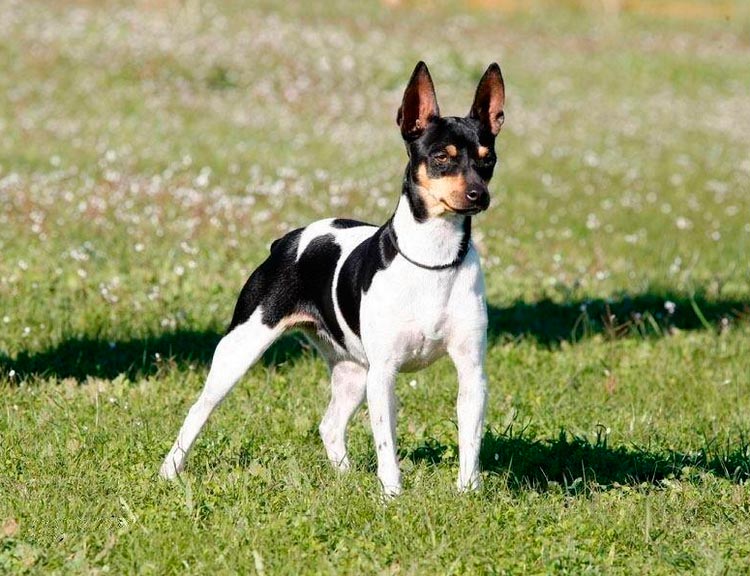
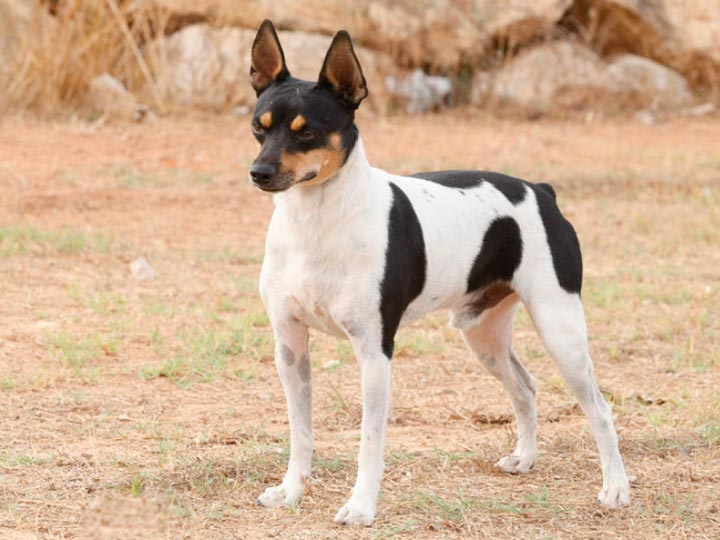
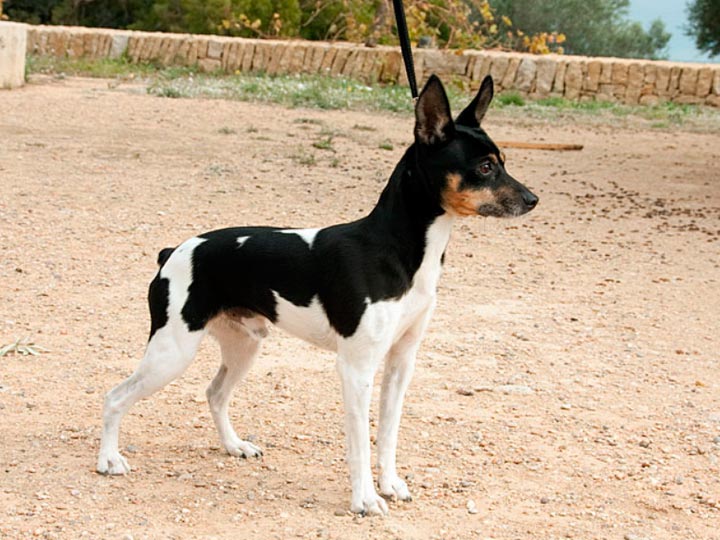
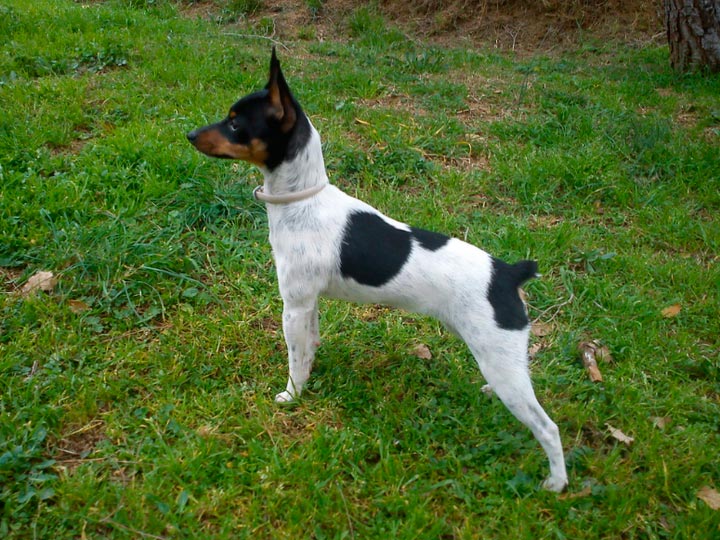
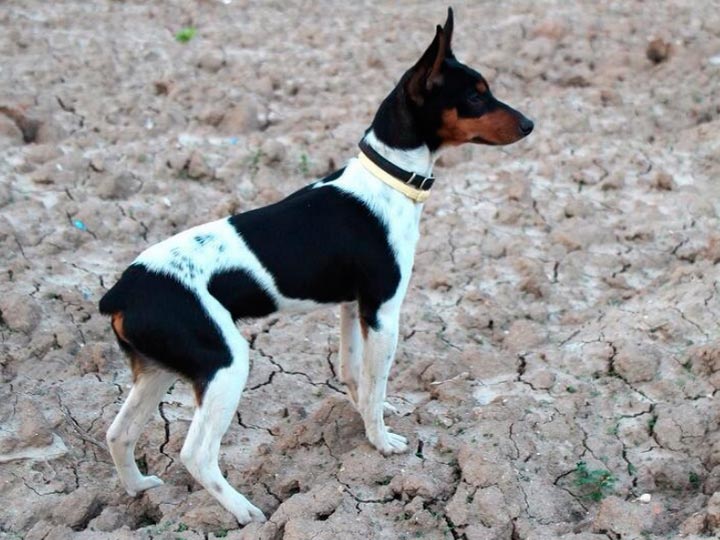
The Valencian Ratter is a small, smooth-coated dog, typically tricolor. Its build is proportional, with well-developed, defined muscles. Dimorphism is moderate. Its appearance resembles that of the English Ratter. rat terrier.
- Height at withers: 29-40 cm;
- Weight: 4-8 kg.
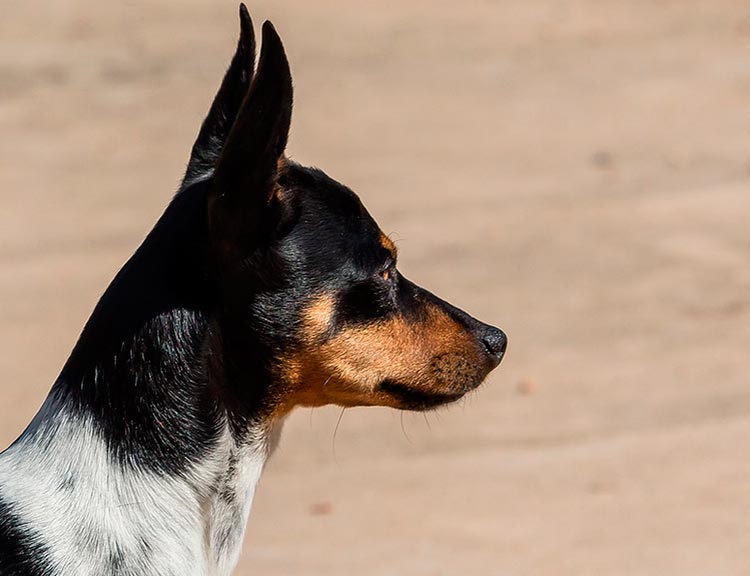
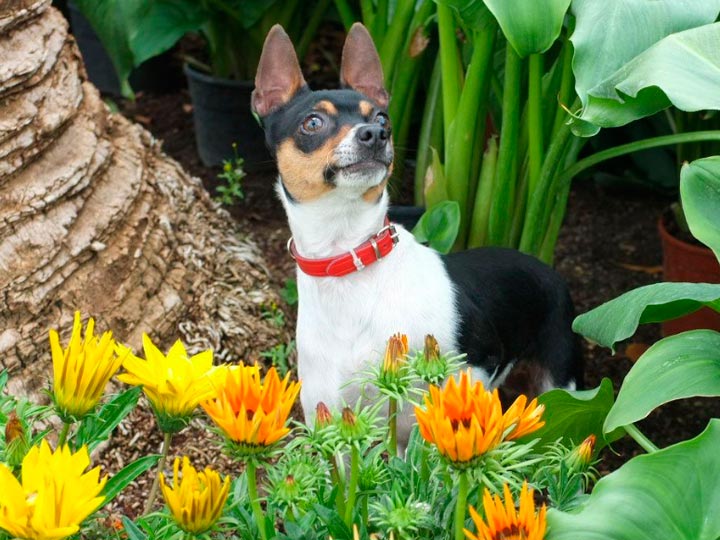
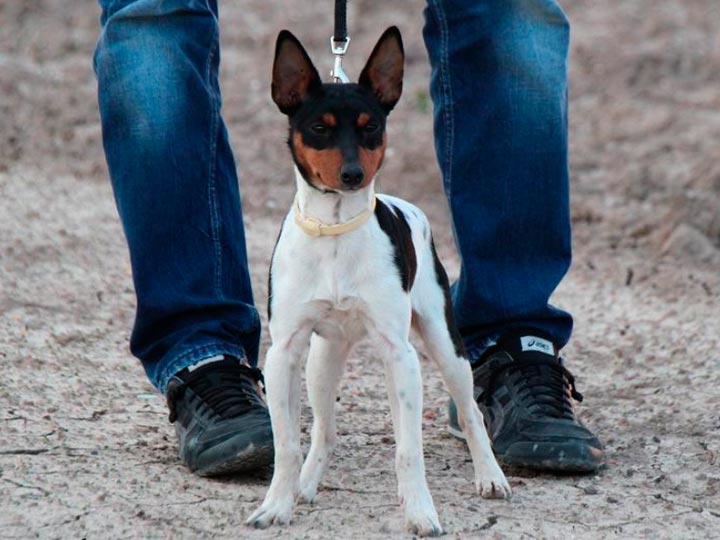
The skull and muzzle are parallel. The stop is marked. The muzzle tapers toward the tip of the earlobe. The earlobe is small and black. The lips are thin. The teeth are complete and white, with a scissor bite. The eyes are oval, medium-sized, slightly convex, and brown. The ears are medium-sized, triangular, and erect. The neck is cylindrical, mobile, and has well-developed muscles.
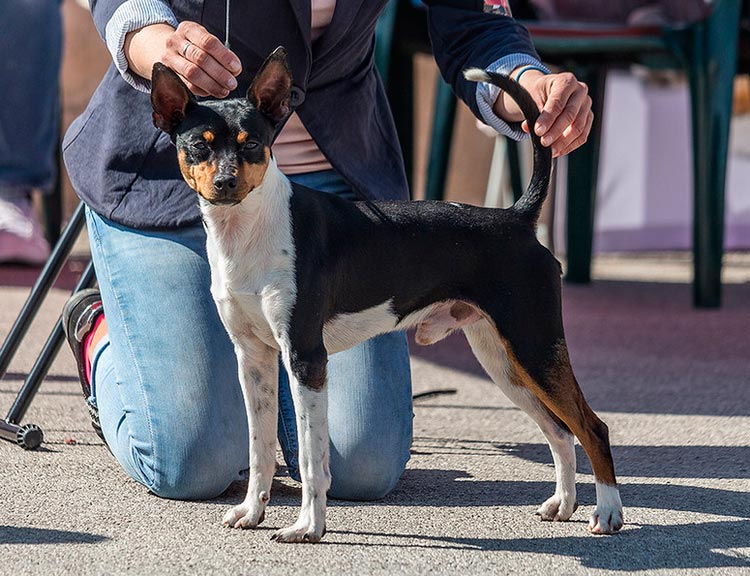
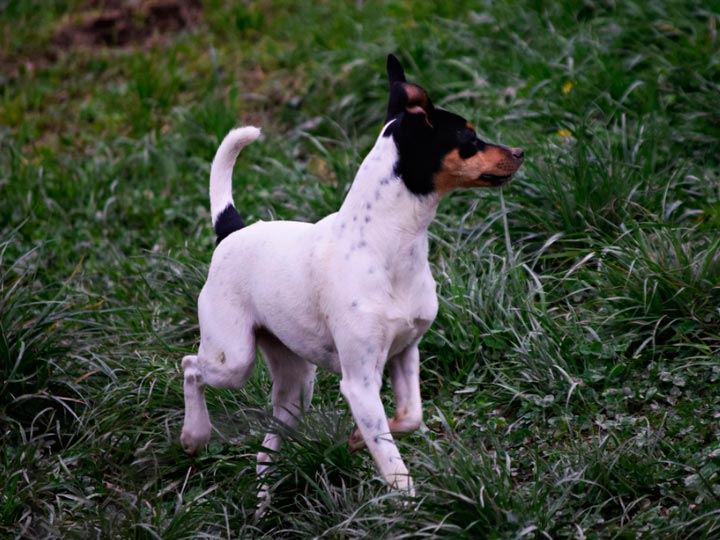
The body is square, with strong, well-defined muscles. The topline is straight from the back to the loin. The croup is slightly sloping. The chest is broad. The ribs are arched. The belly is tucked up. The tail is usually docked completely or one vertebra remains. The natural tail is medium length, sabre-shaped or curled into a semicircle. The forelimbs are straight and parallel. The hindquarters are well balanced, very powerful, and have sharp angulations. The paws are oval with strong pads and claws. The front legs are usually furred. dewclaws, on the back they are absent.
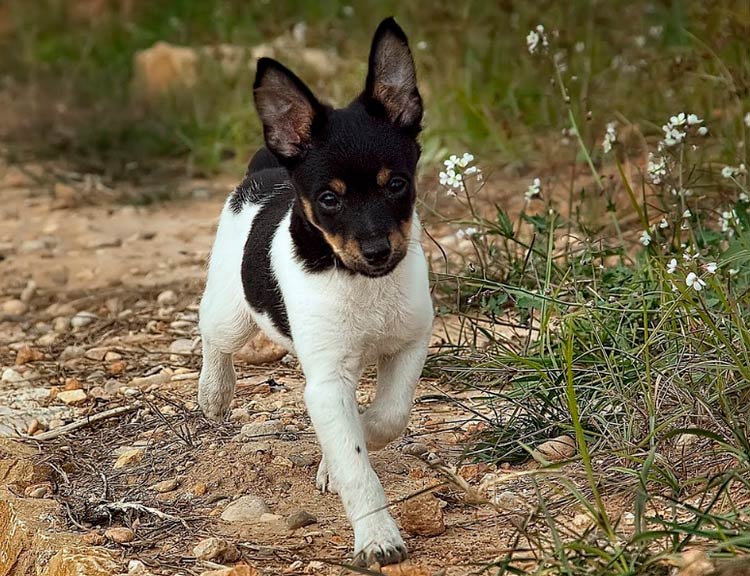
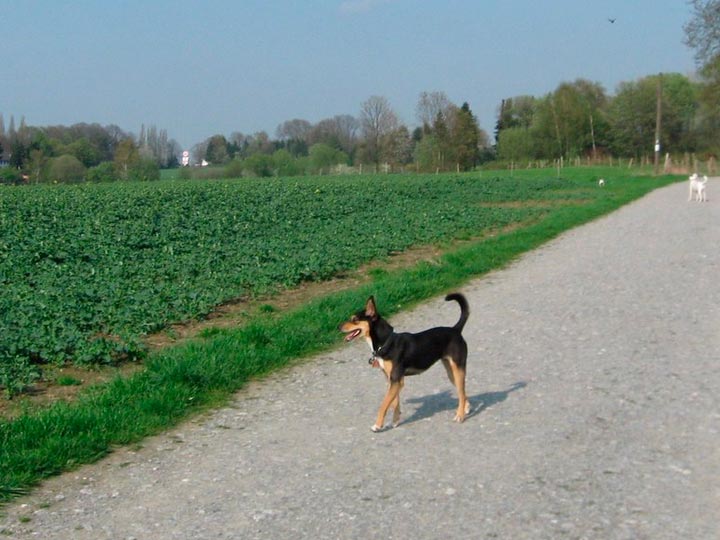
The skin is thin. The coat is close-lying, fine, and short (no more than 2 cm). The most common color is tricolor (brown and black with white spots). Less common are bicolors (brown and black, black and white, brown and white, chocolate-fire, and chocolate and white). Solid colors (brown and black) are quite rare.
Character and behavior
The Valencian Ratter is an energetic dog with a lively nervous system. It is easily excited and reacts vividly to its surroundings. It is very curious and intelligent. Despite its size, it is very courageous, agile, and tenacious. It has a pronounced aversion to small game. The Valencian Ratter has an excellent sense of smell and is highly trainable. It is still used in traditional thrush and quail hunting, where it serves as a gatherer, similar to a retriever or spaniel.
Since the practice of rodent control is not so popular today, Valencian Ratters have adapted to the role of family dogs and companions, but they still cannot be called decorative sissies.
The Valencian Ratter is wary of strangers and extremely devoted to its family. Alert and courageous, it performs guard duties. Its bark can be used to recognize whether a family friend or stranger has arrived. It has a strong territorial instinct and is not afraid of people or animals much larger than itself. However, it's worth noting that in everyday life, especially in the city, this behavior can cause a number of difficulties and requires early socialization and training.
These dogs truly possess extraordinary intelligence and will never miss a chance to demonstrate their intellect in achieving their goals. Among family members, the Ratter is a gentle and affectionate creature who will happily play with children.
The Valencian Ratter's energy, sociability, and trainability make it suitable for various dog sports, such as agility and frisbee. They are also amenable to trick training.
Maintenance and care
The Valencian Ratter is not suited for year-round outdoor living. It thrives only in warm climates. When temperatures drop below 15°C (59°F), ratters begin to feel cold, especially if they are not active. As cold weather sets in, they should wear appropriate clothing and footwear.
The Valencian Ratter requires an active owner who can provide the dog with regular, long walks. Walks should be daily, with occasional trips to the forest or field, where the ratter can run freely and satisfy its hunting instincts.
It doesn't require complex grooming. The owner only needs to perform basic hygiene routines regularly: cleaning ears and teeth, trimming nails, brushing, and bathing as needed.
Health and life expectancy
Valencian Ratters are marketed as robust and hardy dogs. However, their health and genetics remain poorly understood. The following hereditary diseases are known:
- hip and elbow dysplasia;
- von Willebrand disease;
- hypothyroidism.
Life expectancy is 12-14 years.
Price
Valencian Ratters are virtually unheard of outside of Spain. In their homeland, puppy prices vary widely. Many dogs are available for sale, but not all of them have pedigrees. The term "ratter" is often used to describe all small dogs, including mixed-breeds. The price of a purebred puppy from show-winning parents typically ranges from $500 to $800.
There are three breeds of Ratters in Spain: Valencian, Andalusian and Majorcan.Photos and videos
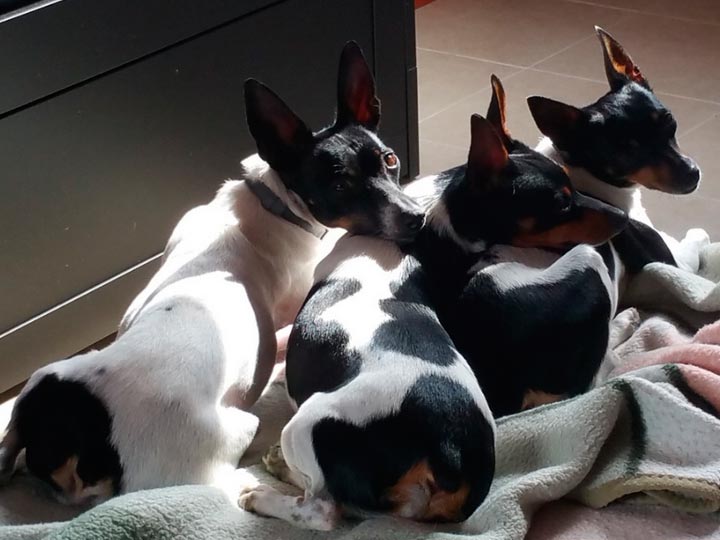
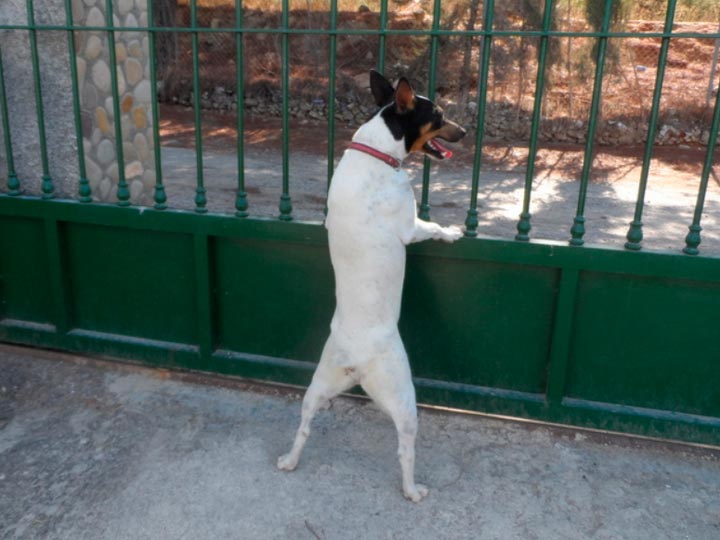
The gallery contains photographs of Valencian Ratter dogs.

Video about the Valencian Ratter dog breed
Read also:


Add a comment