
Rabifel vaccine for cats
Rabifel is an inactivated vaccine intended for the prevention of rabies in catsIt is produced by the Moscow-based company Vetbiokhim. The drug has successfully passed clinical trials and is approved for use in the Russian Federation.
Content
General description
Rabifel is based on the ERA-CB20M strain. This strain is highly immunogenic: vaccinated animals develop immunity to all rabies viruses found in Russia and the CIS.
ERA-CB-20M was grown using BHK-21 cells and the Swiss adjuvant AbISCOR. The vaccine is a liquid, ranging in color from clear to pink. A slight sediment at the bottom is normal; it dissolves after shaking the vaccine vial.
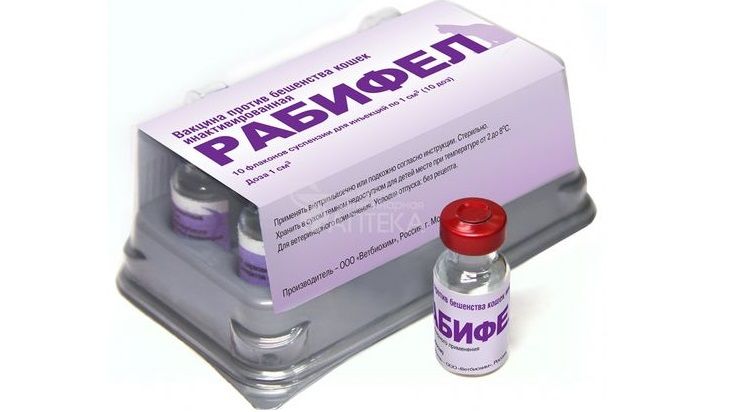
Rabifel is available in sterile glass vials or ampoules, hermetically sealed or sealed with rubber stoppers. Each ampoule contains a 1 cm3 dose of the drug.3The rabies virus content in it is not less than 1 IU.
The drug is available in plastic or cardboard packaging, each containing 10 ampoules. Instructions for using Rabifel for cats are included inside each box.
The manufacturer imposes strict requirements for storage of the drug:
- temperature from 2 to 8 degrees Celsius;
- dry, dark place;
- no more than 18 months from the date of manufacture - this is indicated on the packaging.
Once opened, the vaccine should be used within 3 hours. After this time, it is no longer suitable for use. Do not administer the vaccine if it has been frozen, if the seal is broken, if the liquid has changed color, or if the sediment does not dissolve when shaking the vial.
Operating principle
The AbISCOR-100 adjuvant used in vaccine production is considered a next-generation substance. It does not contain aluminum salts or their compounds. The main danger of these compounds is the risk of developing sarcoma in cats after vaccination. Rabifel does not contain this adjuvant.
The instructions state that immunity to rabies develops in animals 14-21 days after vaccination. This immunity lasts for 1-3 years. The AbISCOR adjuvant is responsible for the production of specific antibodies that neutralize rabies viruses, as well as for activating the immune system at the cellular level.
Research results
The drug was tested in veterinary clinics in the Moscow region. The results confirmed the safety of the Rabifel vaccine. The substance was administered to kittens aged 2-3 months in normal and increased doses.
Studies have shown, in particular, that when a dose of 5 cm is administered3 (This is five times the norm) subcutaneously and intramuscularly, no developmental abnormalities or deterioration in the kittens' health were observed. Booster vaccinations administered 21 days apart did not cause any allergic or other adverse reactions.
To ensure experimental integrity, 170 cats of various ages, starting at two months of age, participated in the clinical trials. Cats previously unvaccinated against rabies were administered the vaccine twice, three weeks apart. Previously vaccinated cats received a single dose.
Veterinarians monitored the animals' reactions for a month. All cats participating in the testing were in good health. They maintained a normal appetite, activity level, and appropriate behavioral responses.
After the control period, blood samples were randomly collected from 80 cats for testing. Analysis using the FAVN method showed that the antibody titers in vaccinated animals were almost 10 times higher than those required to provide significant protection against the deadly virus.
Indications for use
Rabifel is intended for prophylactic vaccination of cats from 8-12 weeks of age, as well as for revaccination of adult cats.
Price
The rabies vaccine is sold in packs and individual ampoules. It costs 55-70 rubles per dose (one ampoule or vial) or 550-700 rubles per pack.
Directions for use
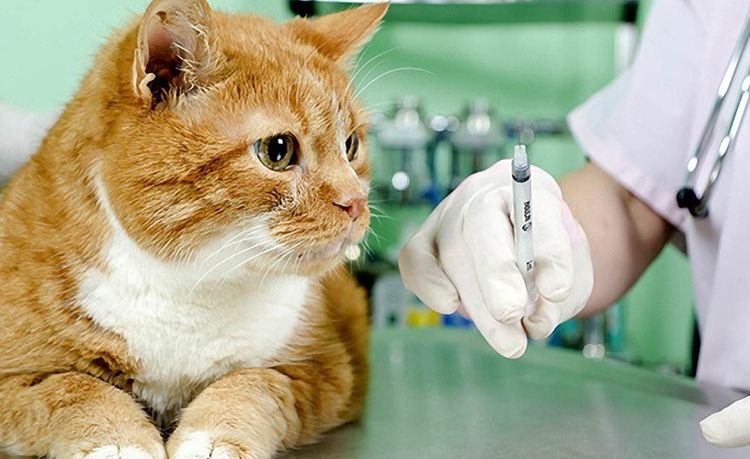
Animals can be vaccinated against rabies with Rabifel:
- subcutaneously - into the area between the shoulder blades;
- intramuscularly - in the thigh.
Dose - 1 cm3.
The manufacturer allows the use of Rabifel simultaneously with Leominor and Multifelom-4However, vaccinating cats with vaccines other than those listed is prohibited for 21 days after the last Rabifel vaccination.
Regarding the timing, a cat receiving its first vaccination receives the drug twice. The second dose should be administered no sooner than 21 days later.
Revaccination of cats is carried out no more than once a year and no less than once every 3 years. In this case injection It's done once. Leading veterinarians recommend the procedure once a year.
Special conditions
If the epizootic situation worsens, the frequency of rabies vaccinations for animals may be increased. This decision is made at the legislative level and is regulated by relevant regulations.
When administering the drug, the veterinarian must observe hygiene rules and use antiseptics. Swelling may occur at the injection site; this will quickly resolve and is not considered a medical condition.
Vaccine overdose does not lead to rabies or other serious health problems. At least, no such cases have been reported.
The absence of side effects from an overdose is not a reason to violate the vaccination schedule or dosage. Animals must receive rabies vaccinations strictly within the timeframes specified above; otherwise, the vaccine's effectiveness and its immunoprophylactic effect will be reduced.
It's possible that an owner may miss the scheduled Rabifel booster dose for a variety of reasons. In this situation, it's important to take the animal to a veterinary clinic for immunization as soon as possible.
The monovalent vaccine is administered in a separate syringe. The manufacturer does not recommend mixing it with other medicinal or biological agents.
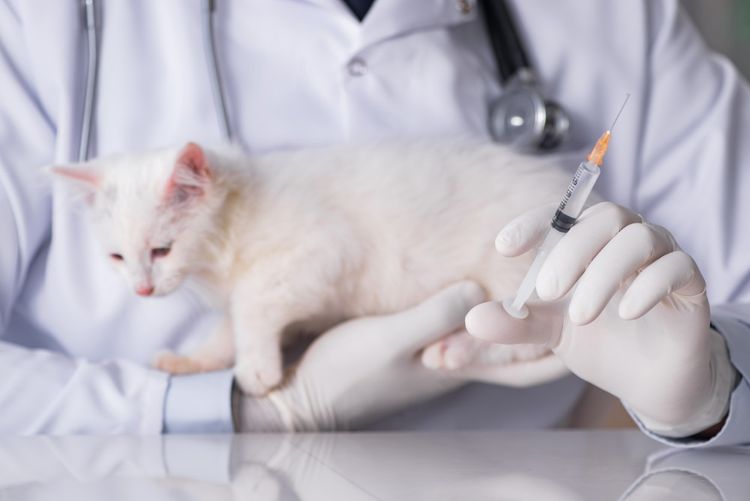
Contraindications
The main contraindications to the vaccine are:
- clinical disease of an animal;
- weakness and lethargy;
- vaccination with other drugs if the period specified by the manufacturer has not passed;
- individual intolerance to the drug.
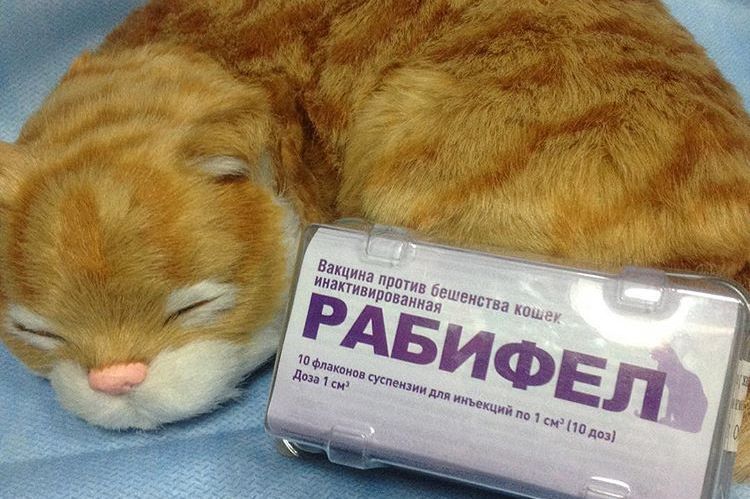
In rare cases, Rabifel may cause an allergic reaction in cats. If characteristic symptoms appear, contact your nearest veterinary clinic, where your pet will be given antihistamines.
Owner reviews
Elena, owner of a Scottish Fold:
"We've given foreign vaccines several times. We recently learned our cat is a carrier of the virus, so foreign medications are contraindicated. The vet said we should give domestically produced Rabifel and Multifel. I read owner reviews and decided to give it a try. We give Rabifel once a year – everything is fine, no allergies or other adverse reactions."
Olga, owner of the mini-shelter:
"I have over 10 cats at home, so when it comes to rabies vaccinations, the price-quality ratio is important to me. I'm completely satisfied with the domestically produced Rabifel. We've vaccinated pets of various ages and with varying immunity levels, and they're both happy."
Veterinarian Reviews
Alexey, a veterinarian with 7 years of experience:
"I'd like to emphasize that animals tolerate primary, booster, and re-vaccination with Rabifel well. No symptoms of rabies have been observed in vaccinated cats. Occasionally, owners complain of subcutaneous swelling at the injection site—this happens, but it resolves within 5-10 days. I've never had any allergic reactions to the drug."
Irma, a veterinarian with 5 years of experience:
"The owner of a one-year-old Maine Coon recently contacted me complaining of a lack of appetite. She reported that the cat was hiding in dark places, sitting motionless, not letting herself be handled, and had hot paws. After talking with the woman, it became clear that she had vaccinated the cat with Rabifel.
Later, test results revealed that the Maine Coon's fever and unusual behavior were caused by an allergic reaction to the vaccine. The animal was given antihistamines and soon recovered.
Read also:


26 comments
Maria
I vaccinated my cat with Rabifel for the first time. Before that, she'd only had Nabivac. In 14 years, she's never had any side effects from vaccinations. After the Rabifel, my cat hasn't eaten for three days, can barely walk, and is completely ill.
Daria is a veterinarian
Hello! Lethargy, apathy, refusal to eat, and a slight fever are normal for three days. However, this usually resolves within a day or two. For an elderly cat, a new vaccine is an unfamiliar antigen. While the immune system has already become accustomed to the components of Nobivac, Rabifel is a new "cocktail." This could be the cause of this reaction. What exactly do you mean by "feeling sick"? If other signs of illness appear in addition to lethargy, then consult a veterinarian.
Alistair
Hello!
We gave our cat the Rabifel vaccine after deworming him two weeks earlier. This is his first vaccination. We plan to give him a second Rabifel vaccine in three weeks. We were considering giving him Multifel-4, but we saw that the schedule calls for Multifel first, followed by Rabifel after the second Multifel dose. Is it possible to change the schedule?
Should I administer Multifel followed by a second injection of Rabifel? So, the following regimen: Rabifel, then after 3 weeks, Rabifel + Multifel, then after another 3 weeks, Multifel?
Daria is a veterinarian
Hello! Apparently, you're doing the vaccinations yourself, not at a clinic. Otherwise, they would have told you right away that they vaccinate against viral infections first (Multifel or similar), and then rabies. It's too late to change anything. If you started with rabies, finish it already. Combining it with a viral vaccine is fine, but it's still better to give the immune system a proper response to rabies and not get distracted by another vaccine. Two weeks after Rabifel, you can give another vaccine (twice, as prescribed). There's no need to repeat Rabifel after that! The rabies vaccine has already been administered. Only a combined vaccine against viruses and rabies is needed at yearly intervals. Then a single annual booster dose is required.
Anastasia
Good afternoon
On Saturday, March 16th, I gave my 2-year-old cat a Rabifel rabies shot. (She was given a Multifel-4 injection two weeks prior, and dewormed 10 days prior.) The following evening, lameness and loss of appetite and stool were observed. She was growling and unwilling to be picked up. I managed to pick her up and felt a swelling on her inner thigh. This was the thigh where the medication had been injected. She stopped using that paw altogether, refused to let anyone touch the swelling, and screamed. We took her to the veterinary clinic, where they said a lymph node was swollen. They prescribed laser heat treatment to the injection site and recommended observing the cat for a couple of days.
Could you please tell me if this kind of deterioration is possible after the vaccination? Should I be concerned about something serious?
Daria is a veterinarian
Hello! The rabies vaccine (regardless of manufacturer) is almost always difficult for animals (both pets and people). It is very "dense" and difficult to administer. When it enters a muscle, it can form a lump that takes a long time to "resolve" (reduce) and cause discomfort to the animal (often painful to walk, as this dense "lump" presses on the nerve endings). A slight fever may occur, appetite may decrease, the animal may become lethargic, and may protect the paw where the injection was given (refusing to stand on it or resting on the very tips of its toes). This side effect usually resolves within a week. However, the lymph node issue is questionable. Only if the infection was introduced with the needle or the animal was initially unhealthy at the time of vaccination. Perhaps the injection was simply too deep (almost all the way through the thigh)? Feel the lump. Is it hot? Does it move under your fingers? Does the animal feel anxious when you touch it?
Anastasia
Daria, good afternoon.
Five days have passed since the vaccination. The lump has shrunk, almost completely gone, but a tense, hard muscle remains. The cat has started walking and playing occasionally. She doesn't feel as much pain when picked up (I assume because she's stopped screaming), but she's still having some issues with her appetite and drinking, even though she was given a saline drip at the vet. We're feeding her Golosi Indoor food. Should I switch to a higher-fat food at this time?
Daria is a veterinarian
Hello! Well, the muscle tension may persist for a few more days. Appetite will also return within a week. Changing the food isn't a good idea, as in addition to the paw issues, digestive problems will also develop. Firstly, a sudden change in diet always negatively impacts the gastrointestinal tract. Secondly, the animal hasn't been eating well for several days, and enzymes have been practically nonexistent. And you're suddenly giving it fat. The liver and pancreas won't be able to cope. Expect vomiting and loose stools. Wait a little longer. The animal eats exactly as much as it wants. Remember how you felt after an illness or cold. Do you want to eat a lot? Wouldn't fatty foods make you sick? Animals are just like people.
Anastasia
Daria, thank you so much for your consultation. We look forward to your full recovery.
Daria is a veterinarian
You're welcome =) Don't worry, he'll definitely recover. This isn't the first time I've heard pets complain about their health after this vaccine. And within a week, everything usually clears up, and the pet makes a full recovery.
Sergey
Good evening.
Thank you, Daria, for your consultation.
58 hours have passed since the vaccination, i.e. almost 2.5 days.
Over the last 24 hours (or at least the last 20 hours) the cat has been drinking a lot, about 250 milliliters.
He no longer lies down, he walks and wanders, but his mobility is still low.
I may have given too much Suprastin, but I wrote about the reason above. I read somewhere on medical websites that Suprastin doesn't accumulate and is easily eliminated.
Regarding the food... Thanks for the advice on Royal. I thought the production standards were the same in all countries. I'll definitely check with the store. Previously, when my cat was a kitten, I bought Royal kitten food in factory-sealed bags. If I recall correctly, it was imported from Poland (I live in Minsk). The salesperson also mentioned something about the quality. But she didn't specify where the loose food in the large bags was made.
In general, it is really troublesome to keep an animal CORRECTLY; you have to be on guard and not do things “as they happen” (this is to say that if I hadn’t forgotten my cat’s passport back then, I wouldn’t have these problems now).
Please explain how to properly give glucose and vitamin C?
There are vitamins at the pet store. (I recently bought some on the advice of a salesperson and gave them one a day for about two weeks. Again, I don't remember what kind they were, but I do remember they weren't the "pink hearts" kind.)
Daria is a veterinarian
Hello! This is a terrible, terrible, and not a medical website. But for the future: not all human medications can be given to cats. Some, even in extremely small doses, can kill an animal. Which clinic recommended such a high dose? Minsk has a good network of clinics (SAS, Doctor Vet, Alpha Vet), they are full of highly specialized specialists, and we go together for advanced training. Glucose and vitamin C are intravenous; you can't simply administer them properly. And tablets are a pittance. The vitamins degrade quickly if stored improperly. I prefer injectables (administer complex medications every 7-10 days). As for food, be sure to find out who the manufacturer is.
Sergey
Good evening, Daria.
For ethical reasons, I do not want to name the clinic that recommended giving the cat half a tablet of suprastin twice a day after the Rabifel vaccination.
(The clinic is good; a year and a half ago, a cat was literally saved in this clinic when I picked her up. But this time, it was some kind of obsession.)
Thank you for your advice. I wish I had known all this "before" and not "after."
A week has passed. The cat is already running around. Her behavior has changed. She's become a bit restless, I think.
Gets tired quickly.
And there's some weirdness with my diet. I started eating little by little, but often. Although overall, over the past five days, I ate the same amount as usual (Immediately after the vaccination, I barely ate for a day and a half).
And also, the tips of my fur have become lighter, almost gray. Is this from the Rabifel, Suprastin, or stress?
Now I try to give her more water, of course I don’t force her to drink with a syringe anymore, but I put a bowl of water in each room, and from time to time I poke her muzzle into these bowls.
I understand that a week has already passed, but still, if there was an overdose of suprastin, what should I give her to drink or feed her?
Now I have already read that I should have given a quarter of a tablet, but at an interval of 10 hours I gave her 3/4 of a tablet (1/2 + 1/4).
I also read that an overdose of soprastin can cause the back legs to stop working. When does this occur?
Daria is a veterinarian
Hello! Don't worry about limb paralysis. It usually happens right away, but certainly not after a week. You don't need to worry about feeding and watering either. A week has passed, after all, and the medication has long since cleared out of the urine. So there's no need for any special feeding approach. The hair lightening could have been due to stress (a kind of graying) or an unbalanced diet (a lack of vitamins and minerals). Rabifel couldn't have contributed to this, and Suprastin doesn't have these properties either. There's no need to force-feed or water. The animal knows when to eat and drink. Any unnecessary "force" is just stress for the little whisker.
Sergey
Good evening, Daria.
Once again I want to thank you for your advice and moral support.
Having read horror stories about suprastin overdoses last night, I took my cat to the clinic this morning without waiting for your reply.
At the clinic, they also said that since she's running, there's no need to worry. Although it's hard to stay completely calm—she used to "fly" from her seat onto a dresser that was over a meter high, but now she doesn't do that.
When we were talking about Suprastin, this time the doctor said "either half or a quarter." Back then, after the shot, she definitely recommended half. Then I called back twice, and both times they clarified it was half.
Today I was recommended to take the Biorhythm vitamin (morning-evening). I bought it. Is it good?
Regarding the gray hair... The clinic also said it was due to stress, and that the gray hair might stay. They recommended Omega seaweed supplements. But they didn't have any for cats themselves. I haven't checked at the pharmacy yet. Is it a good one?
Today I was buying food for the week. I checked – Royal Canin – French and Austrian.
Daria is a veterinarian
Hello! It's good that you took me to the clinic for a checkup. Regarding vitamins, check the ingredients, find out what's included, and in what dosage. There's such a huge list of vitamin brands these days that it's dizzying. Every clinic has its own list in their pharmacy. I prefer injectables. Omega-3 and 6 come in a wide variety; look for similar options (especially since Minsk is full of veterinary pharmacies, offering a choice for every taste, color, and budget). It's good that they carry original, European food; then you can feed it. And it's doubly nice that the recommendations and my assumptions matched those of the veterinarians who saw my pet in person =) It's always scary to give advice remotely, as there's a risk that something the owner didn't say could lead to a mistake.
Sergey
Hello, Daria.
The cat has been active for several days now: running, playing.
She doesn't jump on the dresser yet, though, and I haven't seen her climb onto the top shelf of the closet like she used to.
In addition to food, I give vitamins: in the morning and in the evening.
Thank you, good doctor!
Daria is a veterinarian
Hello! The paw may still hurt a little. The vaccine is very dense and can compress the nerve endings. Then there's just a psychological barrier—fear—the animal is protecting itself. It wears off within 2-3 weeks. The main thing is that everything stays well. Stay healthy.
Sergey
Got vaccinated with Rabifel
The cat's temperature rose to -40.2 degrees.
The cat is lethargic, lies down, and even has difficulty jumping onto the sofa.
When you pick him up, he tries to scratch
For the second day he has not eaten or drunk
I drink water through a syringe without a needle.
The vet said to give half a tablet of suprastin twice a day.
After taking suprastin, the temperature went down after about two hours.
The cat ate for the first time in a day and a half.
Daria is a veterinarian
Hello! The rabies vaccine itself is poorly tolerated by both animals and humans. Muscle cramps, chills, and swelling are common. And the weaker the immune system, the more severe this is. Imported vaccines are slightly better tolerated than domestic ones. However, no matter how difficult it is, a booster shot is essential (if this was the first injection, then the second one should be given with the same vaccine). Suprastin alleviates allergic reactions, but it cannot reduce fever—it doesn't have that property (and half a tablet is too much for a cat; 1/2 a tablet is the dose for a child! A child under 14!), and it should not be given for more than three days in a row.
Sergey
Thank you for your consultation.
The veterinarian at the clinic told me to give him half a suprastin tablet. I checked again over the phone, and she confirmed that half a tablet was needed.
But the second time (at night) he gave a quarter.
After the injection, the cat became weak but aggressive. She won't let me handle her, scratching and hissing. It's very difficult to get her to drink. She doesn't want to drink from her bowl at all, and when I give her a syringe, she breaks away and hisses. I think she needs to be given water, otherwise how will all these "chemicals" be eliminated from her system?
I messed up with the Rabifel, of course, really badly. Although, maybe it's just my cat's reaction.
Last year (December 2017, 1 year and 2 months ago), she was vaccinated with Rabizin. There were no behavioral changes at all; she was lively and active.
This time I took him for a vaccination; the clinic was having a special offer, a Rabifel shot. It also so happened that I forgot the cat's passport and only discovered it at the clinic. I didn't go back, and I couldn't remember the name of the clinic; all I remembered was the French one. I couldn't even imagine such a wide range of reactions.
Next time (in a year), we'll need to discuss everything in detail with the veterinarian, because it's unclear now what the reaction to Rabizin will be after Rabifel...
Daria is a veterinarian
Prepare your pet for vaccination in advance. Give it vitamins (ideally those with vitamin B12) and minerals a month in advance. Be sure to deworm it. Make sure your pet is completely healthy before vaccination. There shouldn't be any problems. I'm generally not a fan of mixing vaccines. I recommend using the same one (provided there are no allergic reactions to it; individual intolerances are possible), including the same adjuvant, even if it's Swedish.
As for suprastin, it's really a lot. I'll give you an example: my son had a severe allergic reaction with swelling, rash, and itching, so he was prescribed 1/2 tablet twice a day for his 22 kg body weight. But that's 22 kg of body weight! I take 1 tablet for an acute attack for my 70 kg (I'm allergic to guinea pigs, and they also come to the doctor, fortunately not very often, so I always have an emergency tablet on hand). But it's unlikely your cat is that big =))) Don't give it to him anymore, spare his kidneys. You can administer saline solutions subcutaneously (like glucose or Ringer's syndrome). You can give him not only water, but also special saline solutions (Rehydron, available over the counter at human pharmacies) – often, but in small portions.
Sergey
Another thing I'd like to add is that I feed my cat Royal Canin. The seller makes her a mix of four or five types of dry food, checking her behavior and appetite each time. I also regularly buy sprouted "grass" in plastic cups. Sometimes, for variety, I give her Royal Canin pâté. This means she's on a balanced diet, and I think she shouldn't have any problems with her immune system.
Daria is a veterinarian
Feeding doesn't guarantee a perfect immune system. Maintaining it is crucial. But don't forget about helminths, bacteria, and viruses surrounding your pet (you can't vaccinate against everything). Grass helps cleanse the intestines and stomach of hair, or it provides fiber to normalize bowel movements. But what vitamins does it contain if it's grown in a jar without sunlight? Is Royal Russian-made? Then I'm sorry to disappoint you—it's essentially little better than Whiskas and Kitekat (the same manufacturer). Besides, mixing several types... I hope you meant flavors, not different lines (especially medicinal ones). Each line has its own ratio of proteins, fats, carbohydrates, and microelements. And mixing different ones (for example, for sterilized cats, for gastrointestinal or kidney problems, or for obesity) doesn't guarantee balance.
Sergey
And one more question, how much suprastin should I give?
(Reference:
1. 35 hours have passed since the vaccination
2. I didn't give the cat any medication for the first 26 hours after the vaccination. Then my wife said the cat was feeling really bad. I took her temperature—40.2 degrees.
3. The first time (26 hours after the vaccination), I dissolved half a Suprasin tablet in 3 milliliters of water and gave the cat a drink with a syringe. I immediately gave the cat about 10 milliliters of water with the syringe.
4. The temperature dropped 2 hours after taking the medicine (28 hours after the vaccination), I didn’t measure it again with a thermometer, I just touched the ears, they weren’t hot.
5. The second time (33 hours after the vaccination), I gave the cat an undissolved quarter of a Suprastin tablet and gave her water through a syringe. I had touched her ears beforehand—they were hot. It was already before bedtime, so I decided not to wait until morning.
6. Now (35 hours after the vaccination, 2 hours after taking a quarter of suprastin) the cat’s ears are warm)
Maybe I should give something else instead of suprastin???
Daria is a veterinarian
You were giving suprastin too often! It's given every 12 hours, and you didn't even give it a whole 10 hours. 40.2 isn't hyperthermia! It's like a slight rise in temperature after a vaccination (up to 37.5-38) and is considered a normal reaction for up to 3 days, because the body is fighting and recognizing the antigen. Analgin and meloxicam are both suitable antipyretics (1/6-1/5 of a tablet, maximum 1/4 after meals). NO PARACETAMOL OR ACETYLSALICYLIC ACID, EVEN ONCE - YOU WILL KILL YOUR KIDNEYS!!! Meloxicam is a non-steroidal anti-inflammatory drug, you can find it in human pharmacies. And drink more fluids. Try glucose with ascorbic acid, vitamin C would also be good. Get well soon.
Add a comment