
Rabies vaccine for cats
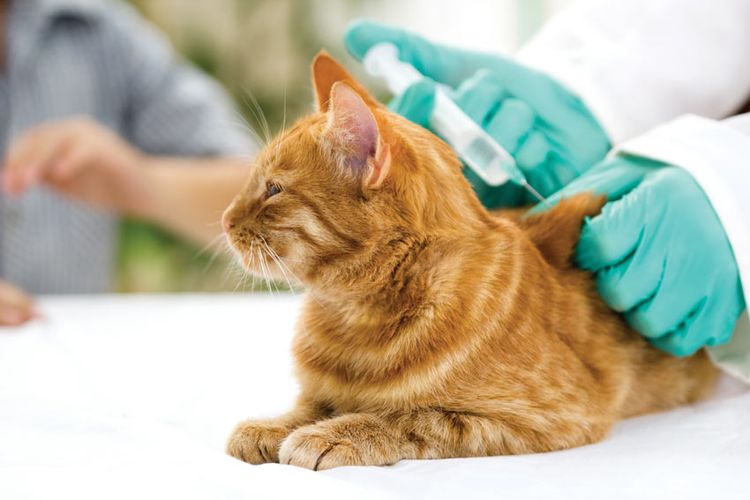
Rabies is an infectious disease that affects the central nervous system. It is caused by the rhabdovirus Neuroryctes rabid. Rabies is virtually incurable and fatal in 80% of cases. Vaccination is the only method of protection. Since the disease is also dangerous to humans, rabies vaccination for cats is mandatory in the Russian Federation. Unvaccinated cats cannot be shown or bred.
Content
What you need to know about the disease
The Neuroryctes rabid virus is resistant to low temperatures and can survive for several months at sub-zero temperatures, but is instantly killed at 100°C. Ultraviolet rays and many disinfectants also have a detrimental effect on the rhabdovirus.
Rabies is transmitted by rodents, carnivores, and, among urban animals, cats and dogs. Infection occurs through direct contact; a cat can become infected if its skin or mucous membranes come into contact with the saliva, urine, or eye secretions of an infected animal, or if it catches an infected mouse or rat.
Once it enters the body of a human or animal, the virus multiplies quite rapidly, with a latent period of only about a week. By attacking nerve fibers, the rhabdovirus causes irreversible pathological changes in the brain and spinal cord. This results in loss of motor coordination, increased salivation, hydrophobia, intolerance to loud sounds and bright light, and aggression. Complete paralysis and death then follow. According to statistics, the number of animals killed by rabies annually reaches millions.
Important to know! A person bitten by a cat suspected of being infected with the Neuroryctes rabid virus should be vaccinated against rabies as soon as possible. Seek medical attention no later than two weeks after the bite.
Types of vaccines
A drug designed to create immunity to the rhabdovirus Neuroryctes rabid was created in 1885 by Louis Pasteur. This vaccine saved thousands of people from this terrible disease.
All rabies vaccines are classified as live or inactivated. Live vaccines act faster, require two doses, and provide lasting immunity in cats, but are more likely to cause side effects. Inactivated vaccines are safer in terms of complications, but require more time to develop a protective response after administration. Inactivated vaccines come in single-dose and multi-dose forms. Multi-dose forms are designed to protect against multiple pathogens.
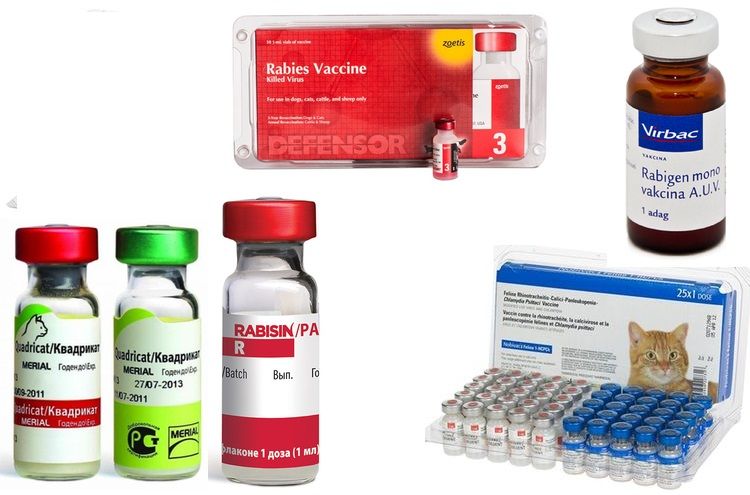
Several types of anti-rabies vaccines are used in veterinary medicine. The Russian one is in good demand among veterinarians. Rabifel rabies vaccine for catsThis is an inactivated monovalent vaccine; immunity to rabies develops 2-3 weeks after vaccination. Rabifel is manufactured by Moscow-based Vetbiokhim LLC and is available in 1.0 cm3 ampoules or vials.3The cost of 1 dose is 50-70 rubles.
Among imported drugs, the following are very popular:
- Dutch vaccine Nobivac Rabies (Nobivac Rabies). Nobivac, an inactivated monovalent vaccine for cats, provides immunity after a single dose and takes effect within 21 days. It is available as an injectable suspension that can be administered to cats intramuscularly or subcutaneously. The cost per dose is approximately rubles.
- French polyvalent vaccine QuadricatVaccination for cats against calicivirus, panleukopenia, herpes, and rabies. Available in lyophilized and liquid components for the preparation of an injectable emulsion. It takes effect within 14-21 days. The cost per package is approximately 500 rubles.
Inactivated monovalent vaccines are also popular:
- Virbac Rabigen Mono (manufacturer "Virbac", France);
- Rabizin (manufacturer "Merial", France);
- Defensor 3 (manufacturer Zoetis, USA).
Prices for such imported rabies vaccines for cats range from 130 to 150 rubles.
Important! Rabies vaccines are preventative measures. They induce immunity in animals to the Neuroryctes rabid virus; these drugs have no therapeutic properties.
Vaccination rules
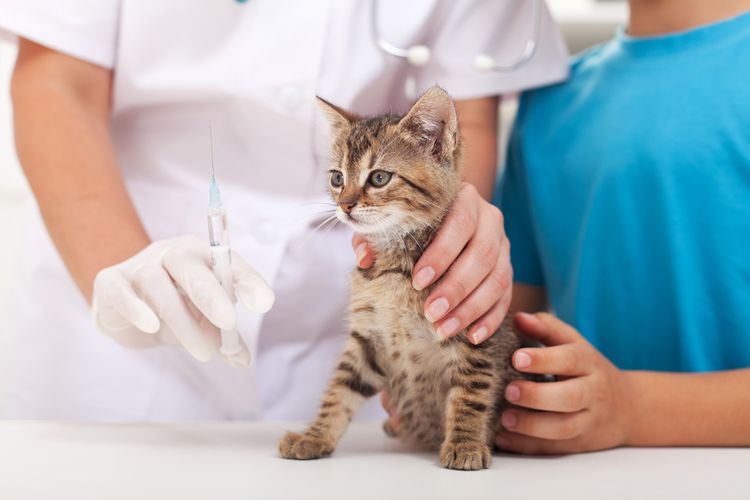
Kittens are first vaccinated against rabies between the ages of 3 and 12 months. Adult cats are usually given a booster shot annually, but there are vaccines that provide immunity against the rabies virus for three years.
According to Russian law, rabies vaccinations for animals are free at state veterinary clinics. Fees are available for vaccinations at private veterinary clinics. The cost of a rabies vaccination for a cat depends on the clinic's location and the scope of additional services. In Moscow, the price of a rabies vaccination for a cat ranges from 250 to 1,000 rubles, and the following services are included:
- examination of the animal,
- selection of vaccination material (domestic or imported serum, live or inactivated, mono- or polyvalent),
- an antihistamine that prevents the development of an allergic reaction to the vaccine,
- consumables,
- issuance and registration of a veterinary passport.
The Neuroryctes rabid rhabdovirus vaccination, like all other preventative vaccinations, is only administered to healthy animals. Pregnant and lactating cats should not receive the vaccine. Two weeks prior to the vaccination, the animal should be treated for parasites, and antibiotics should be discontinued.
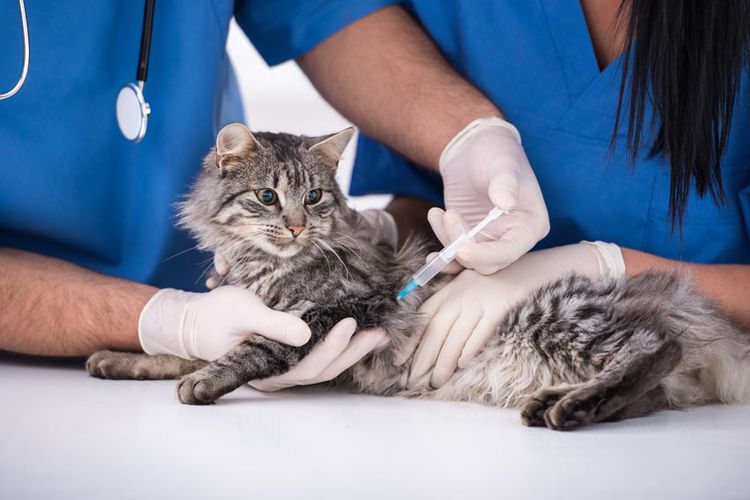
Any scheduled surgeries, including castration or sterilization, are not recommended for two weeks before and two weeks after vaccinations. It is also recommended to avoid any activities that could cause stress to your cat, such as visiting exhibitions, long-distance travel, etc., several days before vaccinations.
Possible complications
In most cases, animals tolerate the Neuroryctes rabid vaccine without any significant adverse effects. However, sometimes during the first 24 hours, a cat may be apathetic, sleepy, or refuse to drink or eat. This is a normal reaction to the immunobiological product containing a live or inactivated virus.
Important! If your pet doesn't return to normal for more than 24 hours (sleeping constantly, refusing to eat or drink, or, conversely, showing restlessness, diarrhea, vomiting, or a fever), consult a veterinarian. Side effects of the rabies vaccine in cats can also include allergies (skin itching, rash). Antihistamines should only be given to your pet as prescribed by your veterinarian.
The quarantine period after rabies vaccination lasts two weeks. It is recommended to keep your cat in a warm, clean room and provide water and high-quality food. Avoid bathing or letting it outside, and limit its contact with other pets. By following these simple measures, any adverse effects from the vaccination can be completely avoided or minimized.
Should a cat be vaccinated? video
Read also:


Add a comment