
Black plaque in my cat's ears: causes and treatment
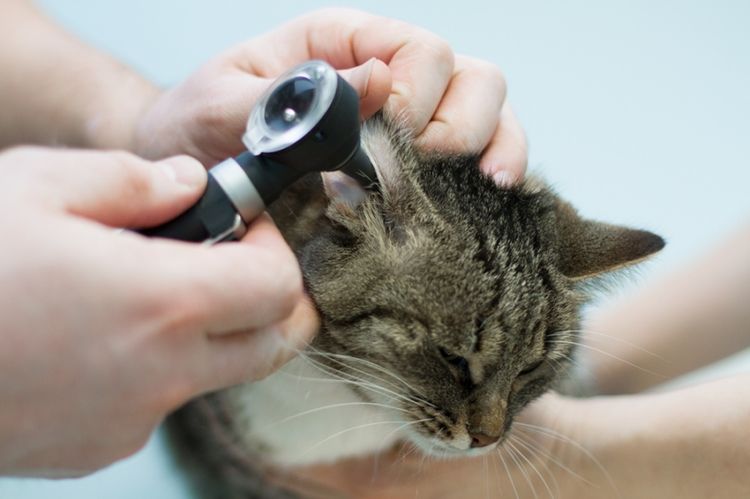
When owners notice black deposits (black spots) in their cat's ears, they typically don't pay much attention at first. Sometimes, they simply try standard hygiene procedures, cleaning the ears with cotton swabs. However, often, they're dealing not with ordinary dust and dirt, but with a rather serious condition— otodectosis, caused by ear mites. The causes and treatments for ear mites (also known as ear mites) will be discussed below.
Content
What is an ear mite and where does it live?
The primary habitats for ear mites are the ear canal, the tympanic membrane, and the outer surface of the auricle. Earwax is a breeding ground for the parasites and their larvae. In rare cases, mites can be found directly on the animal's head.
Cats with weakened immune systems, especially those kept in overcrowded conditions, and kittens under one year of age are particularly at risk. The disease is considered highly contagious and can be transmitted to other pets, although this is quite rare.
Otodectosis can also be transmitted by humans, who bring the parasite's larvae home on the soles of their shoes or clothing. Another possible route of infection is contact with contaminated rugs, litter trays, dishes, and other everyday items. Flies and fleas can also transmit the disease.
The tick is impossible to see with the naked eye due to its extremely small size. It can only be seen under a magnifying glass or microscope by taking a swab from the affected area. The insect averages 0.2-0.7 mm in length, with a short, pale yellow body and elongated limbs.
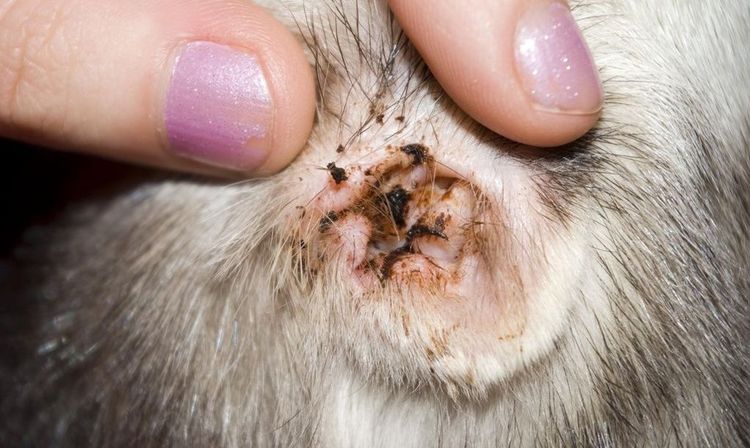
It feeds on sulfur, also "dumping" its biochemical secretions and blood left behind after its bites. This results in a dark, grainy coating forming on the ear surface, which serves as an initial diagnostic tool for the presence of the parasite.
Possible complications
If left untreated or inadequately treated, otodectosis can develop various complications. For example:
- Inflammation of the middle ear
- Meningitis
- Rupture of the tympanic septum
- Necrosis of the auricle
Characteristic symptoms
Unable to verbally express what's bothering them, the animal displays its discomfort through various behavioral actions. In the case of ticks, these symptoms include:
- The cat begins to behave very restlessly, constantly jerking its head, as if trying to shake off parasites.
- He tries to get into the ear canal with his paws, gets nervous when he can’t get deeper, and scratches the ears until they bleed.
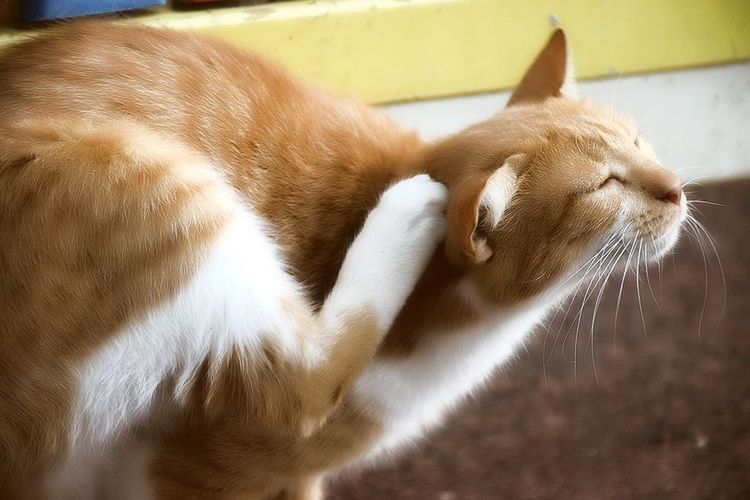
- In an attempt to relieve the constant itching, the cat seeks out hard, stable pieces of furniture to rub its head against, or “sticks” itself to doorframes, corners, and steps.
- A dark brown or brownish fluid oozes from the scratched ears. An unpleasant odor develops. The hairs on the underside of the ear tufts become stuck together.
- Partial or complete loss of hearing is observed.
- The body temperature rises slightly.
Important: To avoid misinterpreting the clinical picture, it is recommended to avoid any hygiene procedures before visiting the veterinarian. You should also avoid administering drops or applying any ointments.
Treatment methods
Insecticides are effective in controlling ear mites. The only thing to keep in mind is that they target live mites but are completely ineffective against the larvae. Since the incubation period for ear mites is 21 days, a course of treatment should last at least three weeks, covering the entire life cycle of the mite.
- Drops. The most commonly prescribed medications are Tresaderm, Ivomek, Bars, Amitrazin Plus, Otoferonol Gold, and Tsipam. The advantage of using Tresaderm is that its antibiotic targets not only adult ticks but also their eggs, while also combating fungi and other infectious inflammations. Ivomek can be administered as an injection several times a month. The other drops from the above list also have an effect on worms, if present.
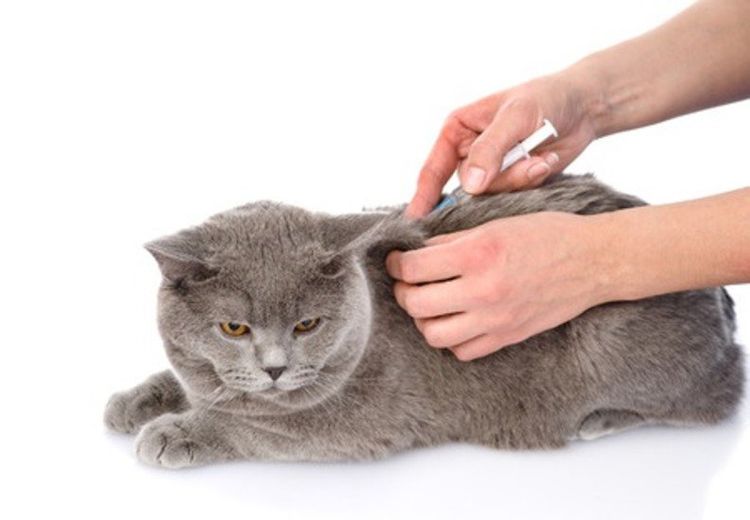
Important: To ensure the cat is not nervous during the instillation process, the liquid must be slightly warmed.
- Ointments (aerosols). Aversectin ointment, applied to the ear with a spatula and absorbed into the skin as it's rubbed in, has proven effective in practice. Amit ointment, made with amitraz and prednisolone, has a similar acaricidal effect. The ears are disinfected twice daily for 5 days. A cotton swab is lubricated with the creamy substance and then gently rubbed into the skin. A spray is effective against otodectosis. Acaromectin, sprayed onto the inner surface of the ear according to the enclosed instructions.
The doctor may also prescribe Stronghold, Frontline or Oridermil, however, these medications are contraindicated for self-medication and should only be used on the recommendation of a veterinarian. For preventative purposes, Revolution for Cats is often prescribed. It is applied to the withers as a drop. Once absorbed into the skin, the active ingredient acts simultaneously on ticks and fleas, if present.
Rules for the use of medicines
The sequence of actions during therapy should be as follows:
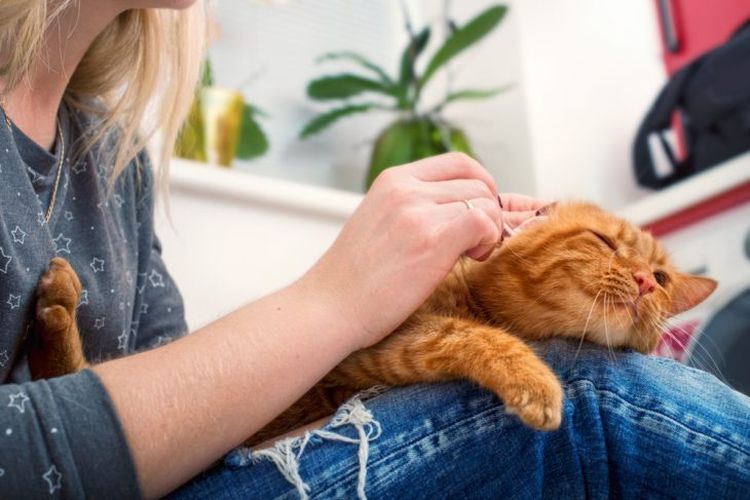
- Before applying the ointment or drops, clean the ear surface of all dirt, blackness, crust, and purulent discharge. This can be done with a cotton swab soaked in camphor alcohol (2%) or hydrogen peroxide. Alternatively, you can use other disinfectant lotions designed for ear treatment.
- Once all the dirt has softened and "comes off" the skin, it can be easily removed with a cotton swab. Cats often "shake" all the dirt out of their ears with their paws.
- To ensure the medication reaches deep into the ear canal and is well absorbed, lightly massage the base of the ear.
- The dosage of the medicine must strictly comply with the instructions or doctor's orders.
- If another cat or other animals live in the house, it is recommended to ventilate the living spaces more frequently and perform wet cleaning during treatment. This reduces the risk of reinfection and the risk of infection of healthy pets.
Folk remedies
If your cat has black spots inside their ears, but for some objective reason, a visit to the doctor is temporarily impossible, then folk remedies can help. How to completely cure otodectosis herbs and lotions are unlikely to be effective, but they can certainly alleviate the animal’s suffering until it reaches the veterinary clinic.
- Green tea drops. Add a tablespoon of dried leaves to a glass of water and steep for 5-10 minutes. After cooling to a lukewarm temperature, draw the solution into a pipette and place a few drops in each ear.
- Garlic has powerful antiseptic properties. To treat ear mites, it is infused in oil for 24 hours, then the resulting solution is used in ear drops once a day. Olive, flaxseed, sunflower, almond, and other oils are used as a base for the tincture.
- Celandine juice is instilled into the ears morning and evening, two drops per ear. Freshly picked celandine is ground in a meat grinder and then pressed through cheesecloth to prevent any remaining leaves or stems from contaminating the juice.
And the last thing you shouldn't forget is to try to give your cat as much attention and care as possible, not only to ease its suffering, but also to speed up the recovery process.
Read also:


Add a comment