
Features of ultrasound for cats and dogs
Animal ultrasound is a modern technique based on the ability of high-frequency waves to penetrate the soft tissues of an animal's body, including cats and dogs, and return a two-dimensional image to the scanner screen.
It's hard to imagine a modern veterinary clinic without ultrasound equipment. This type of examination allows the doctor not only to confirm the diagnosis but also to determine the extent of pathological processes in organs such as the kidneys, liver, bladder, or uterus.
Using ultrasound, veterinarians now have the ability to visually assess specific organs. When performing an ultrasound on an animal, the veterinarian sees a high-resolution image of the organ on the scanner screen. This allows them to examine the organ's morphometric parameters and, based on the data obtained, provide a conclusion about its condition.
Content
Preparing an animal for an ultrasound
As mentioned earlier, ultrasound provides a valuable diagnostic tool for practicing veterinarians. Ultrasound makes it possible to quickly confirm or refute a preliminary diagnosis. However, to ensure the ultrasound is as informative as possible, it is highly recommended that pet owners prepare their pet for the procedure in advance.
A few days before the ultrasound, all foods that increase gas formation should be excluded from the animal’s diet, and a few hours before the ultrasound examination, feeding should be stopped completely.
This requirement is dictated by the property of air to shield ultrasound waves, and undigested food in the animal's stomach can distort the resulting image. For example, if the stomach is full, the image of a tumor in this organ is blurred, making it simply impossible to make an accurate diagnosis.
Of course, in veterinary practice, ultrasound is used as a reliable method for confirming a previously established diagnosis. However, there are situations where ultrasound is the primary diagnostic method. These primarily concern obstetrics, andrological and gynecological pathologies, the detection of tumors and hematomas, urolithiasis, cholelithiasis, and inflammatory bowel disease.
Ultrasound for cats and dogs with urolithiasis (urolithiasis)
Ultrasound allows veterinarians not only to confirm the presence of a disease but also to assess the extent of organ damage caused by the pathological process. By accurately assessing the nature and extent of structural changes, an experienced diagnostician can detect hepatitis, liver cirrhosis, nephritis, or nephrosclerosis even before laboratory results are available. This allows for the prompt and effective treatment of a sick animal.
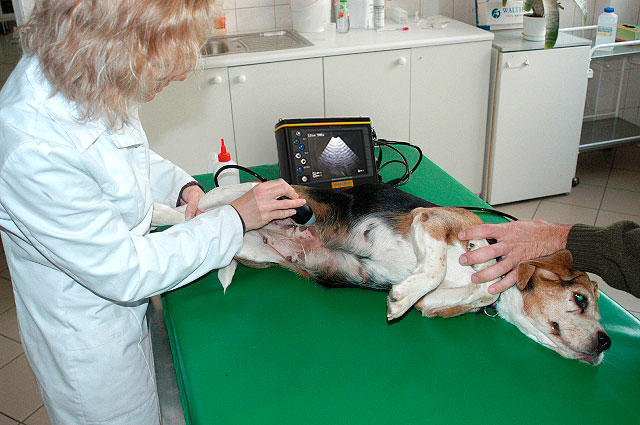
The scourge of many pets is urolithiasis, the occurrence of which is associated with an unbalanced diet.
An owner may suspect this condition in their pet based on difficulty urinating and blood in the urine. Over time, the pet's general condition worsens, and the pain intensifies, as kidney stones are mobile and can move both through the urethra and within the bladder. The most effective and rapid method for detecting this condition is an ultrasound, which allows for immediate treatment, significantly reducing the pet's suffering.
It's difficult to overestimate the potential of ultrasound imaging in animals with severe and multiple injuries, such as a fall from a great height or being struck by a car. In these cases, ultrasound will be an essential component of emergency veterinary care.
Ultrasound for pregnant dogs and cats
Many veterinarians recommend ultrasound for dogs and cats during pregnancy. This allows for monitoring of fetal development. Importantly, ultrasound is safe at any stage of pregnancy. This allows for early detection of any disease and the appropriate measures to preserve the fetus.
Modern animal ultrasound techniques allow us to diagnose pathologies not only of the abdominal organs but also of the vision or musculoskeletal system. Complex veterinary procedures such as punctures and biopsies are performed under ultrasound guidance, thus avoiding unnecessary risks.
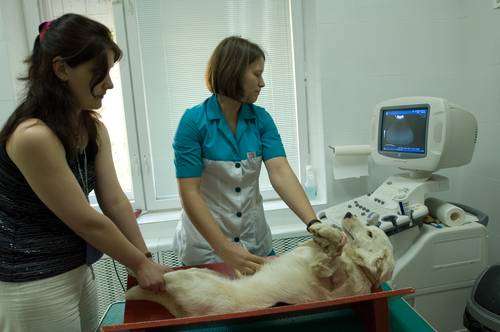
Are there any reasons why ultrasound should not be used?
Sometimes a pet owner refuses to have their pet undergo an ultrasound examination because they are not very knowledgeable about the matter and are unsure about the safety of the procedure.
Veterinary practice worldwide, as well as numerous studies, convincingly demonstrate that ultrasound is not only completely harmless to animals but also causes no pain or discomfort. For this reason, ultrasound can be performed repeatedly.
A veterinarian explains ultrasound examinations of cats and dogs in a video.




Add a comment