
Ultrasound for cats: why is it done and how much does it cost?
Ultrasound (ultrasound examination) for animals – why is it performed on cats, when is it really necessary, and how much does the procedure cost in veterinary clinics in Russia.
Content
Ultrasound diagnostics in veterinary medicine
Diagnostics is a crucial step toward a correct diagnosis and effective treatment, because unlike humans, animals cannot tell the doctor in detail what exactly is troubling them.
Ultrasound (ultrasound) is an informative and completely painless diagnostic method based on echolocation. As sound waves pass through the body, they reflect differently off organs depending on tissue density, creating a specific image that allows one to assess the size, location, geometry, and density of individual internal organs.
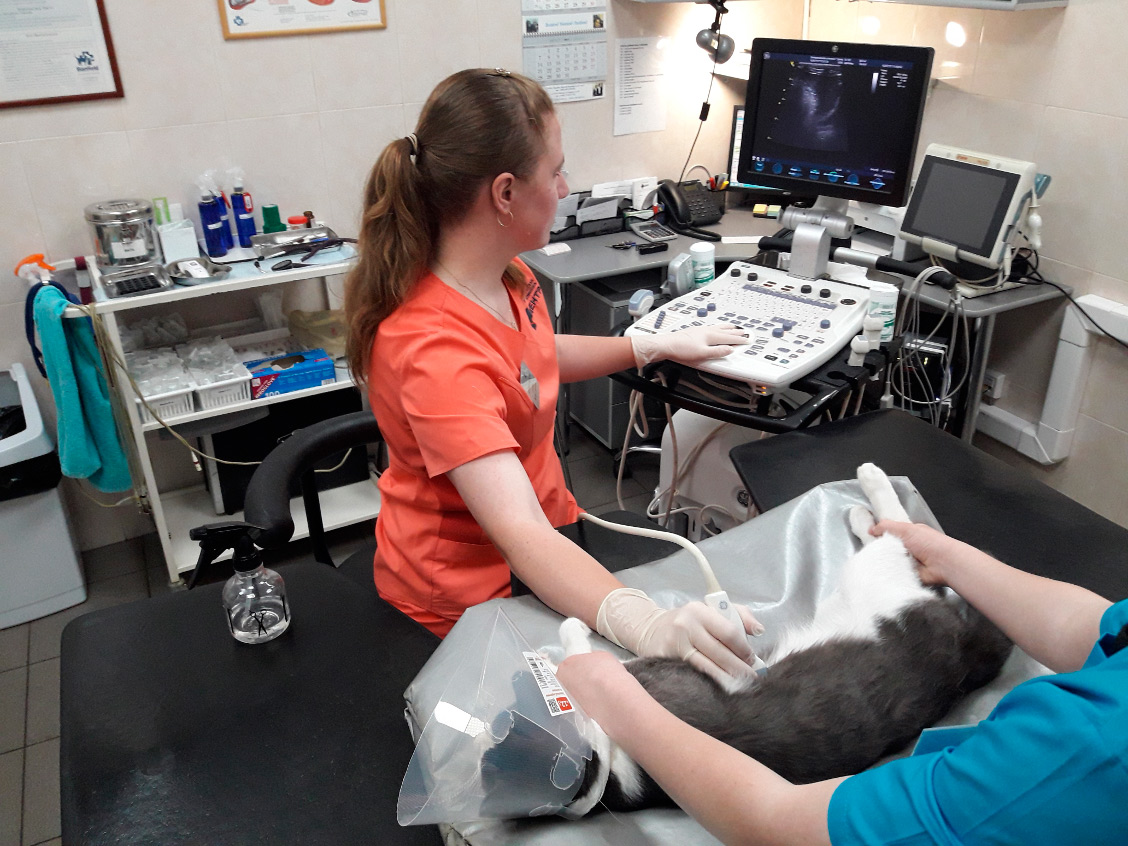
A modern ultrasound machine allows you to analyze the condition of:
- heart and circulatory system;
- stomach and intestines;
- pancreas;
- liver;
- spleen;
- kidneys;
- bladder;
- thyroid gland;
- reproductive organs;
- bones, ligaments, joints.
Indications for ultrasound
Ultrasound diagnostics are typically used to confirm or clarify a diagnosis. A veterinarian may recommend an ultrasound for a cat in various cases:
- In case of injuries, the cat undergoes an ultrasound of the abdominal cavity to detect internal damage;
- if tumor processes are suspected, the study allows for the precise determination of the location of the neoplasm, its size and density;
- The technique allows for 100% confirmation of pregnancy in the early stages,
- An ultrasound of a pregnant cat before giving birth is performed to determine the number of fetuses and their location;
- An ultrasound of the abdominal cavity is also recommended for cats with symptoms of hormonal imbalances for the timely detection of cystic endometrial hyperplasia, which can lead to the development of pyometra (purulent inflammation);
- An ultrasound of the cat's heart is recommended in case of problems with the cardiovascular system, as well as before planned procedures under general anesthesia to assess the risk;
- Ultrasound of joints or the spine is recommended for cats as an alternative to the expensive MRI method.
Features of the procedure
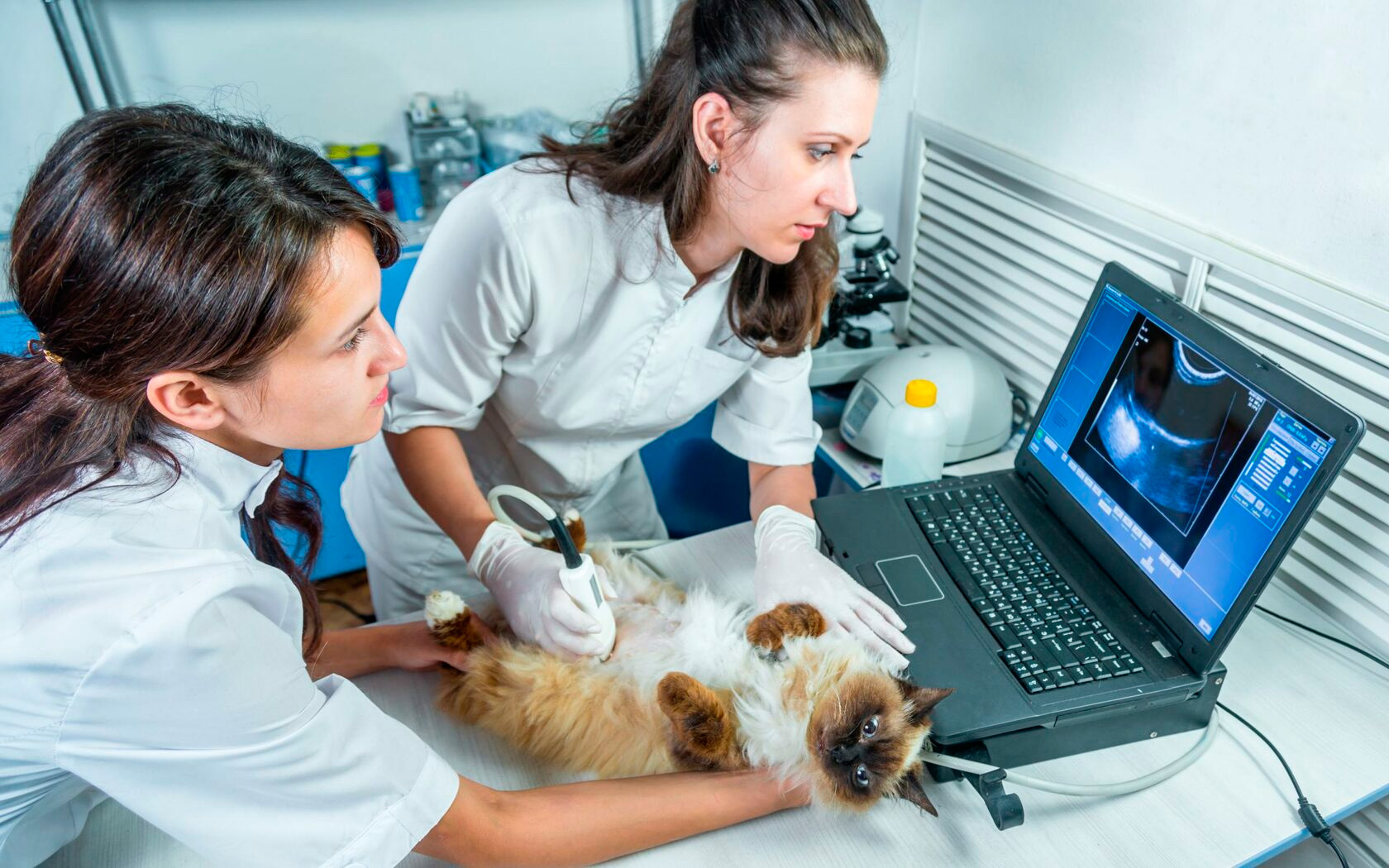
Although the procedure itself is completely painless, not all animals willingly agree to lie quietly in the required position for the required period. If the cat is nervous, struggling, or aggressive, the doctor will be unable to properly capture the image and examine the internal organ. Typically, at most clinics, specialists try to find a way to approach the animal.
If neither the owner's presence nor the staff's attempts to calm the frightened cat are effective, and an examination is truly necessary, sedation is the only option. Sedatives are selected based on the animal's age, weight, and health.
Important! Sedation is not general anesthesia. The ultrasound procedure is painless for cats and dogs and takes an average of 15-30 minutes, so there's no need to put your pet into deep sleep; the use of relaxants or sedatives is sufficient.
If your pet reacts extremely negatively to a change of environment, you can find a clinic that will perform an ultrasound at home. Naturally, when making this decision, you should be prepared for the fact that the cost of the ultrasound for cats will be higher.
Patient preparation
To obtain a clear image, the device's sensor must be in direct contact with the skin, so it's necessary to shave the hair on a specific area of the body before the procedure. This can be done by the owner or a veterinarian immediately before the procedure. However, the former option is preferable, as the hair removal procedure can be just as unpleasant for the cat as the ultrasound itself.
Where to shave?
|
Procedure |
Hair removal area |
|
Ultrasound of the abdominal cavity of a cat (any internal organs) |
stomach |
|
Heart ultrasound |
chest (armpit area on the heart side) |
|
Ultrasound of joints or bones |
in the research area |
At the owner's request, the procedure can be performed without shaving the contact area but with a larger amount of gel (for example, if the animal is being prepared for a show). However, in this case, there is a high probability that the doctor will not be able to examine the organ in detail and will miss something important, since the image on the screen will be unclear or distorted.
Your veterinarian will be able to provide you with more detailed information on how to prepare your cat for an ultrasound, as specific recommendations vary depending on the organ being imaged on the veterinary ultrasound machine. Here's a general list:
|
The organ under study |
Preparation |
|
Gastrointestinal tract |
Do not feed for 8-12 hours, minimize the amount of gas and feces in the intestines by giving Espumisan and stimulating defecation with medications several hours before the procedure |
|
Bladder |
try to bring the cat with a full bladder |
When performing ultrasound examination of other organs, cats do not require any special preparation.
How much does it cost to have an ultrasound done on a cat?
In Moscow, the cost of the procedure in a clinic will be as follows:
|
Service |
Price |
|
Detailing of one system with description |
1,500 ₽ |
|
General ultrasound of the abdominal cavity |
2,000 ₽ |
|
Abdominal ultrasound with a description of each system |
2,500 ₽ |
|
Ultrasound for the presence of free fluid |
700 ₽ |
|
Repeat ultrasound (within a week) |
800 ₽ |
|
Print 1 photo |
100 ₽ |
The price listed does not include the use of sedatives. If sedation is necessary, the cost of the service will depend on the price of the selected medication.
In other regions of Russia, prices may be more affordable. The cost of a cat ultrasound with a home visit depends on many factors, so the price for this service is discussed in person at the clinic.
Read also:


Add a comment