
DIY Insulated Dog House
In addition to feeding and care, a pet owner must also take care of its habitat. For a dog that only goes outside for walks, it is sufficient sun lounger, a mattress, or a rug, but if your pet lives outdoors year-round, it needs its own home that can reliably protect it from the scorching sun in the summer and from the cold in the winter. You can build an insulated dog house yourself with minimal investment and time.
Content
What can you make a booth from?
It's best to build a kennel out of wood or wood-based materials. Wood is a breathable material, allowing air to circulate and maintaining temperature well. Even an unlined wooden kennel, as long as there are no cracks, will be quite warm. Just be sure to sand the boards first to prevent injury. Kennels made of brick, concrete blocks, or stone are not the best option, as they conduct heat well, making them too hot for your pet in the summer and too cold in the winter.
If your dog is expected to live in a kennel all winter, it's a good idea to insulate the home. Choose materials that don't emit harmful substances and are odorless. Dogs have a keen sense of smell, and a kennel with a foul odor may simply refuse to enter. Avoid using absorbent materials as insulation, as their pores will quickly become saturated with moisture and lose their effectiveness.
Most suitable for insulating a dog house Felt, which has low thermal conductivity and high air permeability, is considered the best insulation material for the inside. This non-woven material made from felted wool is available in sheets of varying thicknesses. It is advisable to treat the felt with an insecticide to repel parasites before laying it down. Extruded polystyrene foam (Styrodur) is a good insulation option. It is sold in large rolled sheets ranging from 2 to 10 cm thick. EPS is easy to cut, retains heat well, and is durable. The outer walls of the kennel can be lined with a layer of mineral wool or foam.
A simple way to insulate a dog house floor for the winter is with replaceable bedding made of straw or sawdust. A ready-made option is a special "dog" mattress with a soft felt top, foam filling, and rubberized fabric on the underside. The floor can also be insulated with a layer of mineral wool, ecowool, expanded polystyrene, polyurethane foam, or any other building insulation, but it must be covered with boards or chipboard.
Design
Here is a drawing of an insulated kennel for a medium-sized dog (up to 50 cm at the withers):
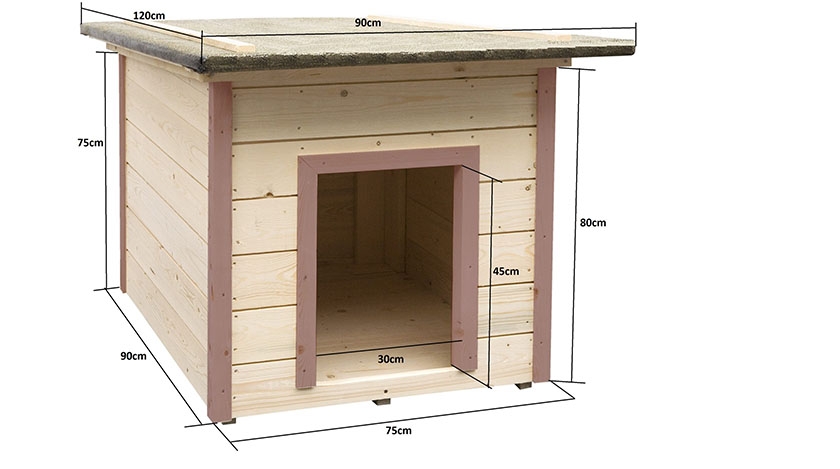
The kennel's floor is made of planks treated with an antiseptic and placed on wooden blocks about 10 cm high or bricks—this is necessary to raise the floor of the kennel slightly above the ground. A 30-35 cm layer of insulation is laid on the bottom, followed by another layer of planed and sanded planks—the finished floor.
The walls can be made from boards or timber left over from building a country house. For insulation, they should be lined on the outside with foam or mineral wool, then covered with plywood, wood paneling, or plastic Euro paneling (to prevent dogs from getting to the insulation).
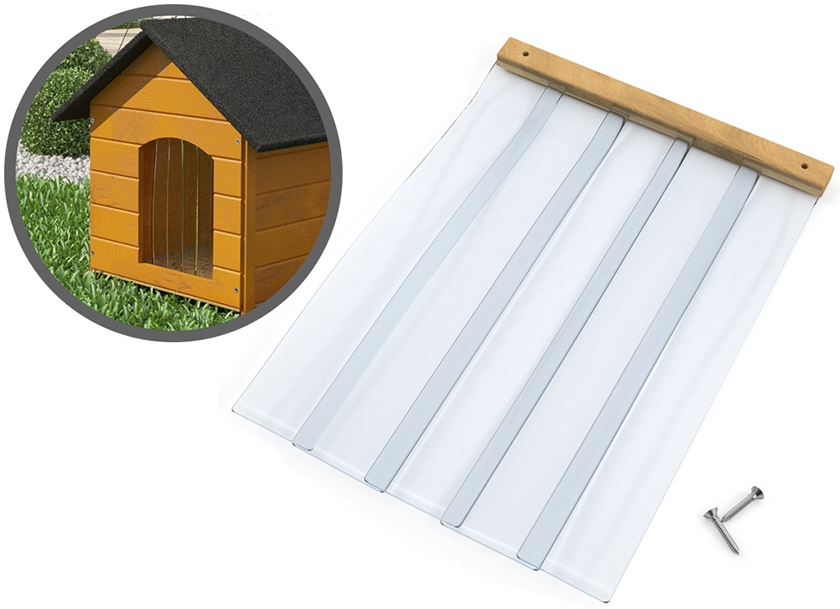
It's best to make the entrance not centered, but offset to the side. This will increase the area of the house protected from wind, rain, and snow. A low threshold can be installed at the entrance to the kennel for the same purpose. To keep the kennel warm in winter and cool in summer, it's advisable to cover the entrance by attaching a piece of tarpaulin or other thick material over it. A ready-made protective curtain made of transparent PVC strips is available.
The top of the kennel can be made of wood or plywood. It's best if it's removable or hinged like a chest. This will allow for easy cleaning of the inside or replacement of the bedding. The roof should be pitched to allow water to drain; it can be either single-pitched or double-pitched. The former is preferable, as many dogs enjoy sitting or lying on the roof of their home. To make the kennel truly warm, the roof, like the walls, must be insulated. To protect it from precipitation, it should be covered with a piece of slate, roofing felt, laminated plywood, thick rubber, or metal roofing.
Dogs prefer to spend most of their time outdoors, so it's a good idea to build a canopy in front of the kennel (it can be built as an extension of the roof, but without insulation), and a deck underneath. Your pet will enjoy sitting or lying on this covered "porch" in good weather.
Dimensions of the booth
Correctly sizing the doghouse is crucial. A dog house that's too spacious, despite carefully insulated walls, floors, and ceilings, will be cold in winter, while a dog house that's too small will feel cramped and uncomfortable. Dogs grow rapidly until they're a year old, and then spend the same amount of time building muscle. So, a puppy's house should be built to accommodate its growth; otherwise, it will eventually need to be remodeled or replaced.
A typical kennel for small dogs is 80x60x60 cm, for medium-sized dogs – 120x80x100 cm, and for large breeds – 140x100x100 cm. However, it's best to build a dog house based on the dimensions of its future inhabitant; measuring them is easy.
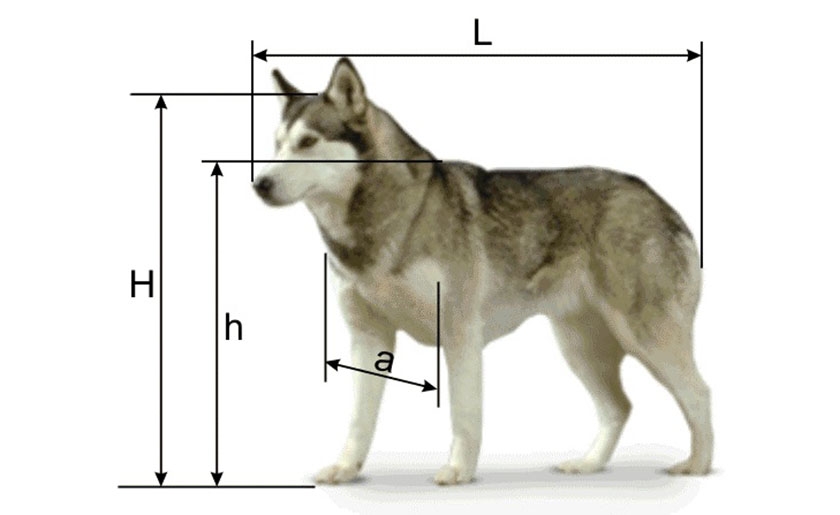
Basic recommendations for making an insulated dog house so your pet can feel comfortable all year round:
- the height of the booth should correspond to the height of the animal (parameter h) with an addition of 10-15 cm for the thickness of the bedding;
- the ceiling, even taking into account the insulation, should not touch the animal’s withers;
- The area of the kennel should allow the animal to lie on its side with its legs freely extended (h×L).
- The opening should be 5-8 cm wider than the animal’s chest (parameter a).
- The height of the opening should be no less than the dog's height at the withers (parameter h) minus 5-7 cm, meaning that it will enter the kennel with its head slightly lowered.
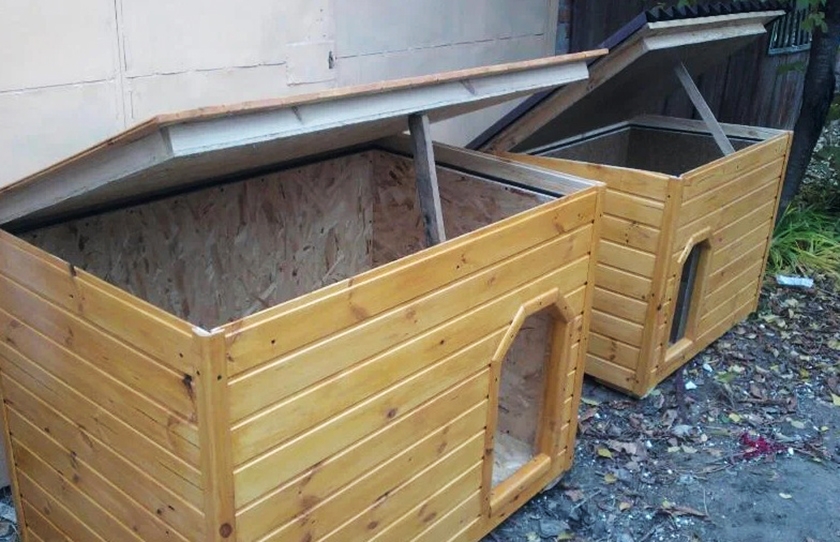
This is what an insulated booth of the simplest design looks like in the photo.
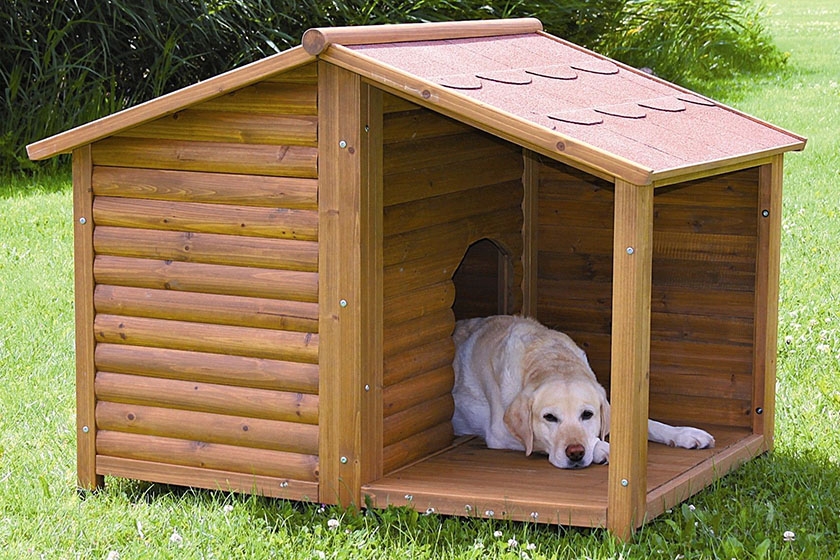
If you wish, you can become the designer of an original kennel project and build the most comfortable and beautiful house for your dog, tailored to your pet's individual size and age.
Read also:



Add a comment