
Uruguayan Cimarron
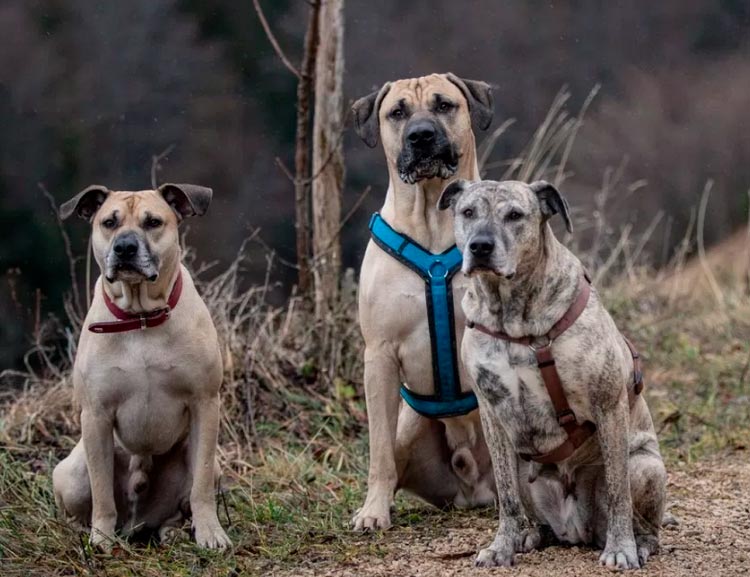
The Cimarron Uruguayan is a dog breed that developed in Uruguay from feral domestic dogs. Many photographs show it with rounded ears, but this is not a natural feature, but the result of a specialized cropping technique. The Cimarron is a medium-sized dog with a strong build, endurance, agility, and strength. Its short coat comes in brindle or fawn. The breed is used for guarding, hunting, and herding, and is suitable for a variety of sports. It requires careful training and a competent approach to obedience.
Content
History of origin
The origins of the Uruguayan Cimarron are still a matter of debate. One popular theory holds that they are descendants of European dogs brought to South America by Portuguese and Spanish conquistadors. Many dogs were released or abandoned, but they adapted to life in the wild, similar to dingoNature left only the smartest and healthiest.
The word "cimarron" is used in Uruguay to refer to any wild animal or plant, or, as in this case, feral dogs. As the breed developed and gained recognition, it was decided to retain this name to emphasize its origins and uniqueness.
In the 18th century, wild dogs became very numerous and often attacked livestock. The government even paid a bounty for each head. The ranks of the Cimarrons thinned significantly, but many dogs survived in the mountains. Landowners in what is now the department of Cerro Largo domesticated them and used them to guard and herd livestock. Apparently, they were the first to breed them as a single breed, protecting them from crossbreeding.
The Uruguayan Kennel Club was founded in 1938. One of its primary goals was to develop a single indigenous breed. In 1989, it officially recognized the Uruguayan Cimarron. The year before, the Uruguayan Cimarron Breeders Association was established. Since then, over 2,000 dogs have been registered. In 2006, the breed received provisional recognition from the FCI, and in 2017, it was granted permanent recognition.
In its native land, the Uruguayan Cimarron is extremely popular and is even considered the mascot of the Uruguayan army. Currently, the breed is gradually gaining fans beyond its borders, gaining recognition worldwide.
It's important to note that the Uruguayan Cimarron is considered a banned breed in a number of countries. Restrictions on keeping this dog are also periodically introduced in Russia, resulting in the breed being placed on so-called blacklists.
Appearance
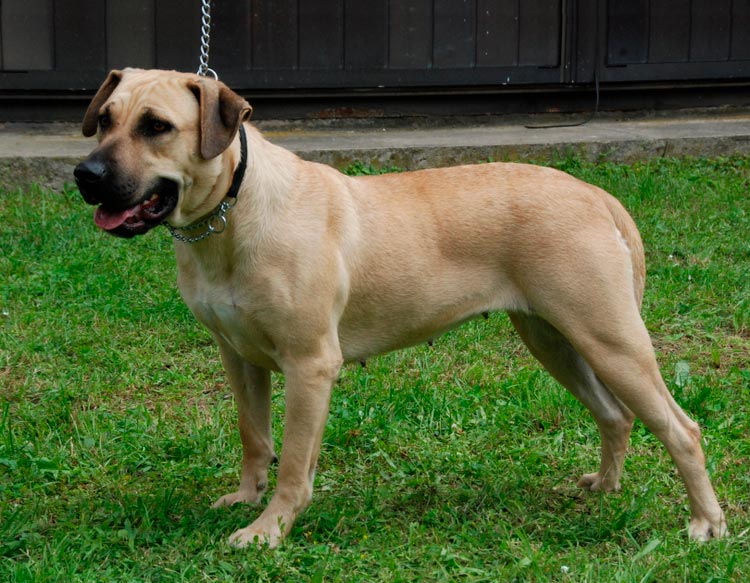
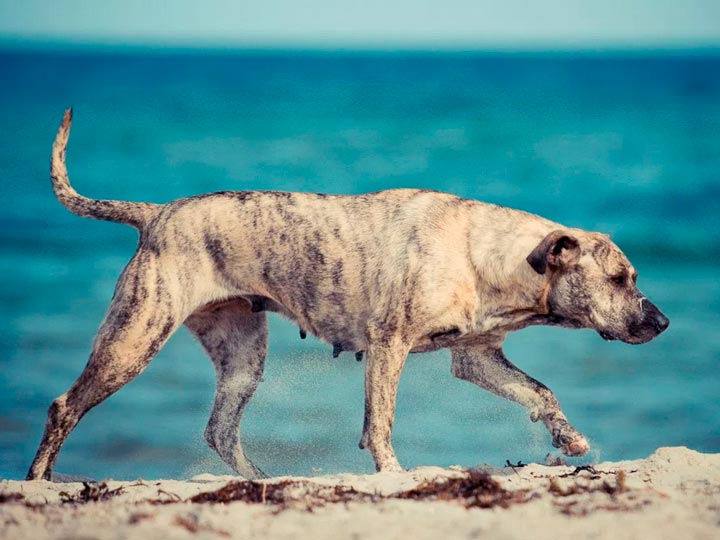
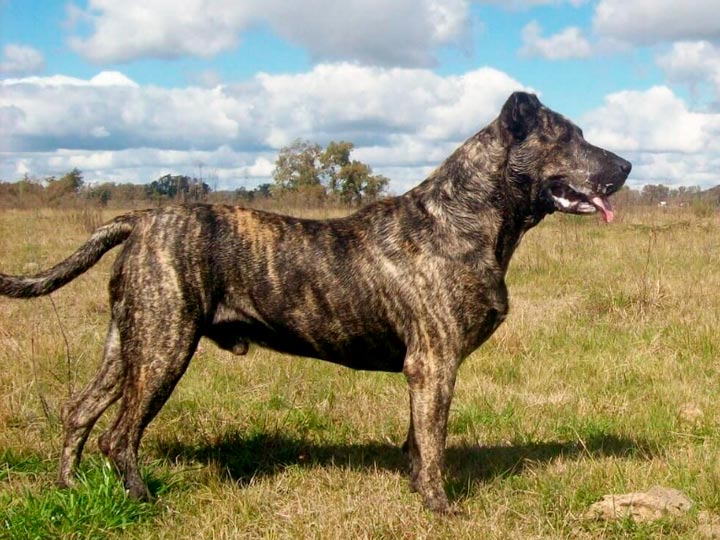
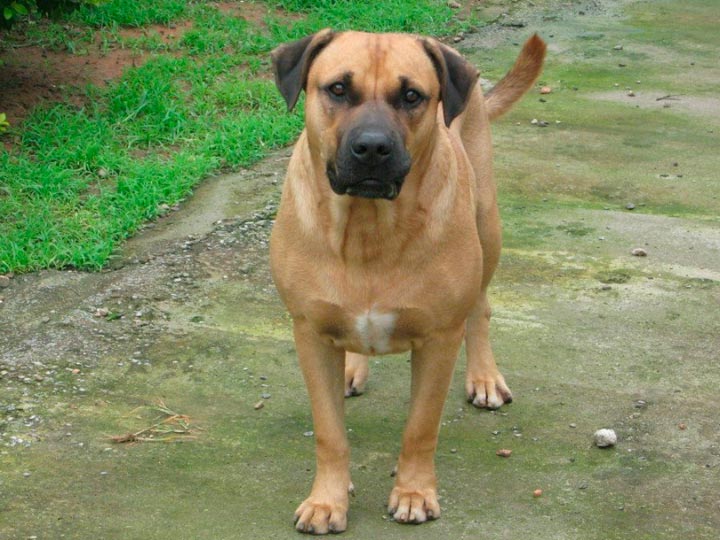
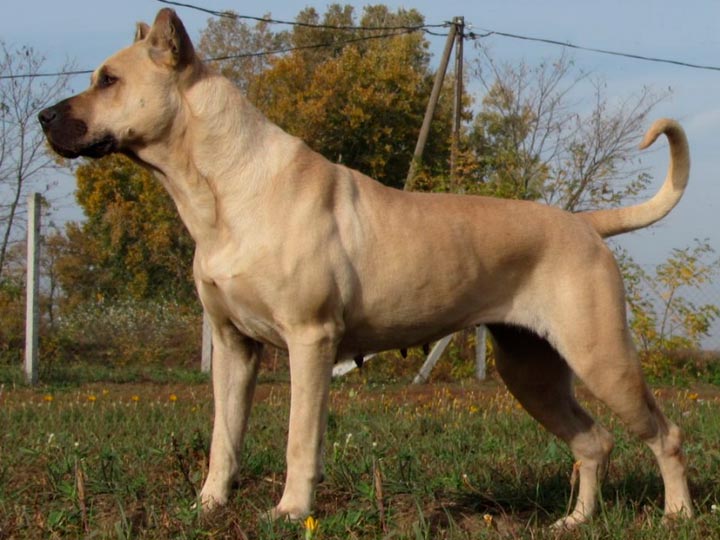
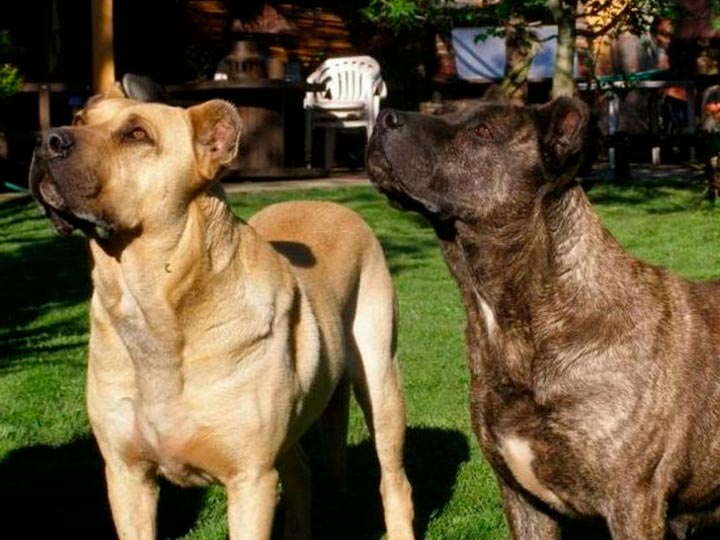
The Cimarron Uruguayo is a strong, compact, medium-sized dog with well-developed bone and muscles. The body is elongated, with a height-to-length ratio of 10:11. Sexual dimorphism is well-defined.
- Height at the withers of males: 58 - 61 cm; weight ― 38 - 45 kg.
- Height at the withers of bitches: 55 - 58 cm; weight ― 33 - 40 kg.
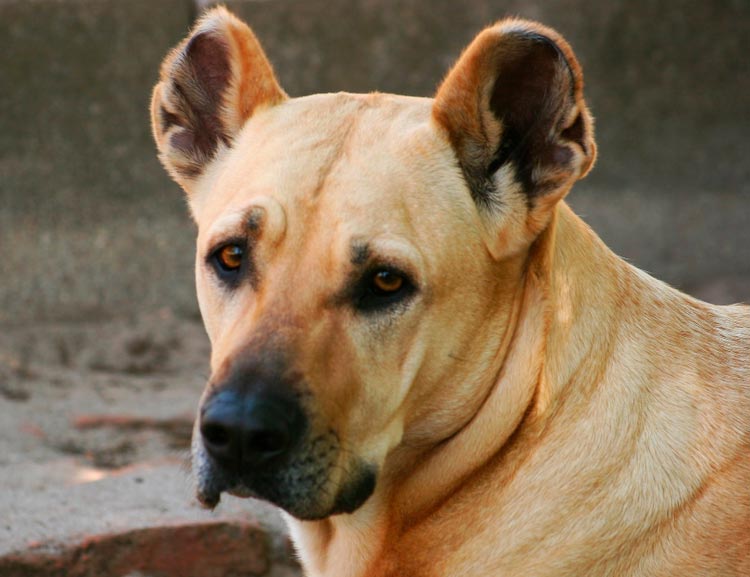
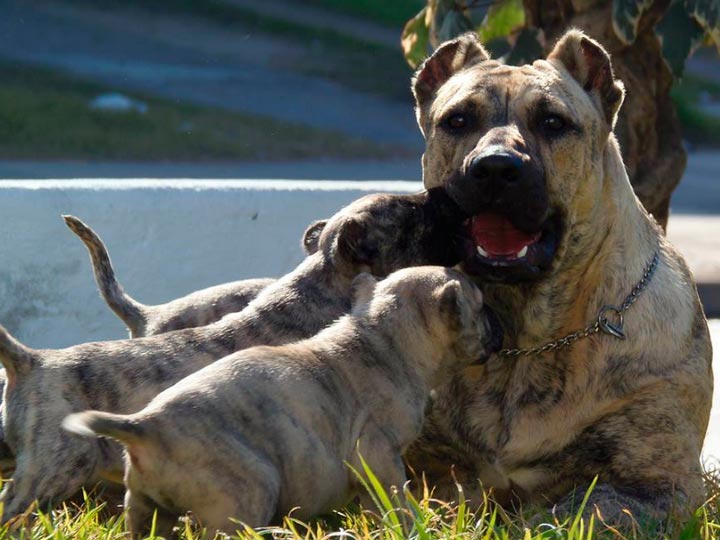
The skull is wider than long. The stop is moderately pronounced. The muzzle is massive and of moderate width. The nose is broad and black. The upper lip covers the lower lip. The bite is scissor-shaped. The cheekbones are well developed. The eyes are almond-shaped, medium in size, and brown. The eyelids are tight-fitting and pigmented. The ears are medium in size, pendant, triangular, and not tightly fitting to the head. The neck is strong and not too long.
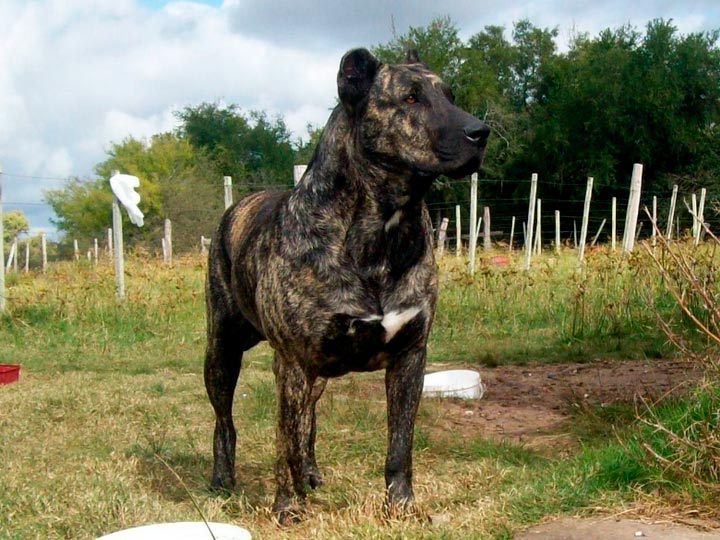
In Uruguay, Cimarrons' ears are traditionally cropped, giving them a rounded shape like a puma's. In countries where this is not prohibited, the ears may be cropped in the same manner, at least to half their length.
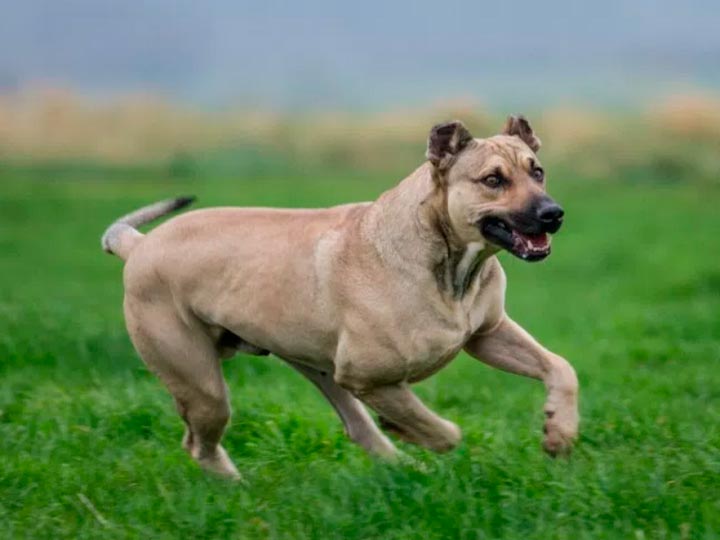
The body is strong and well balanced. The height at the withers is equal to the height at the croup. The loin is slightly arched. The croup slopes at an angle of 30 degrees to the horizontal. The chest is deep, broad, and well developed. The tail is medium-set and thick. When at rest, it hangs down, but is raised when moving. The limbs are straight, parallel, with well-developed joints and strong. The paws are oval with well-knit toes and strong nails.
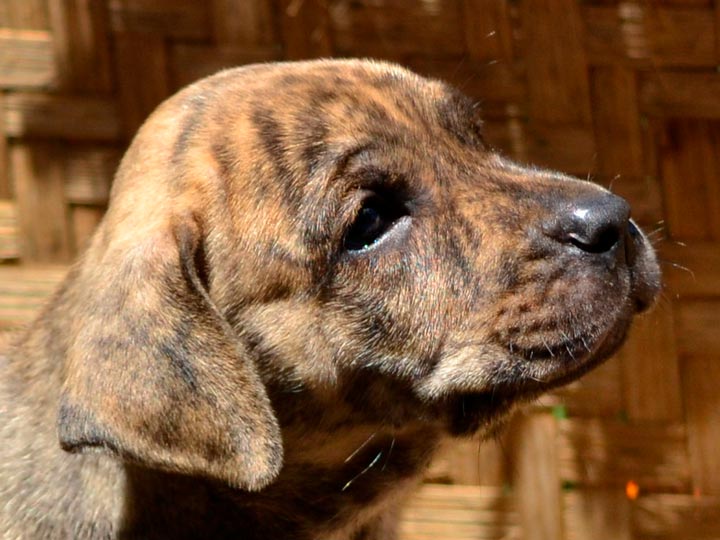
The coat is smooth, short, lying close to the body, with an undercoat. Color:
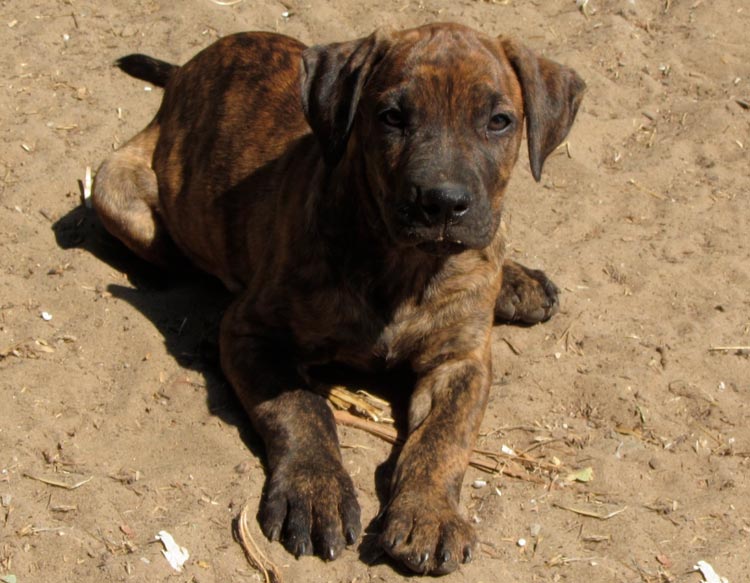
- brindle;
- fawn (any shade) with or without dark mask;
Dark brindle markings are permitted in fawn-colored coats. White markings may be on the lower jaw, neck, forechest, paw tips, and belly.
Character and behavior
The Uruguayan Cimarron is intelligent and balanced, possessing immense courage and self-respect. No single instinct predominates, making it a virtually universal breed. Cimarrons are still used as guard dogs and shepherd dogsSome are used to hunt large game, such as wild boar, but this is becoming increasingly rare. Recently, the Cimarron has proven itself as a companion and athlete. It is suitable for agility, search and rescue, obedience, and rally. coursing, weight pulling and other disciplines.
Standard No. 353 describes the character of the Uruguayan Cimarron in three words: balanced, intelligent, courageous.
The Uruguayan Cimarron is self-assured and confident. Devoted to family, it is good with children. Loyal to guests and wary of strangers, but never hostile without obvious cause. It adapts easily to its owner's lifestyle and habits. It thrives on attention, is very curious, and can be stubborn at times.
The Uruguayan Cimarron is strong and dominant. It requires proper upbringing, excellent socialization, and training. Equally important for proper mental development is some kind of activity. A bored, intelligent dog can develop bad habits, even leading to psychological problems.
Content Features
A private home with a large yard is a good option for the Uruguayan Cimarron. An apartment is also possible, provided the dog receives the appropriate amount of exercise. This can vary slightly depending on its temperament and physical fitness. In any case, Cimarrons are very energetic and resilient; they won't be satisfied with leisurely walks; they need jogging, exercise, swimming, and the like.
The Uruguayan Cimarron doesn't require any special grooming. It only requires occasional brushing with a special brush or mitten for short-haired breeds, ear cleaning as needed, and maintaining the condition of its teeth and nails.
Health and life expectancy
The Cimarron Uruguayan is a relatively healthy breed. Breeding dogs are always tested for hip dysplasia. Elbow dysplasia is also occasionally reported. Life expectancy is 11-13 years.
Where to buy a Cimarron Uruguayan puppy
In its native Uruguay, the Cimarron is a very common and beloved breed, much like the German Shepherd or CAO in Russia. Finding a puppy is not difficult, but they vary greatly in quality, and some only have a brindle coat similar to a true Cimarron. The breed is also popular in Argentina and Brazil. There are many breeders in North America (Mexico, USA), and since 2009, the first Uruguayan "wild" dogs have been imported to Europe. Today, they are found in Sweden, Germany, Holland, France, the Czech Republic, and Hungary; in total, there are about 100 dogs in Europe.
Price
In Uruguay, a Cimarron puppy from a pedigree breeder costs around $700. Rarely does the price exceed $1,000. Online sites abound with private ads for Cimarron puppies and adult dogs for sale in Uruguay, with prices typically ranging from 1,000 to 5,000 Uruguayan pesos (approximately $30 to $150). In Europe, a rare breed puppy typically sells for 2,000 to 4,000 euros, depending on demand, the value of the sires, the puppy's prospects, and other factors.
Photos and videos
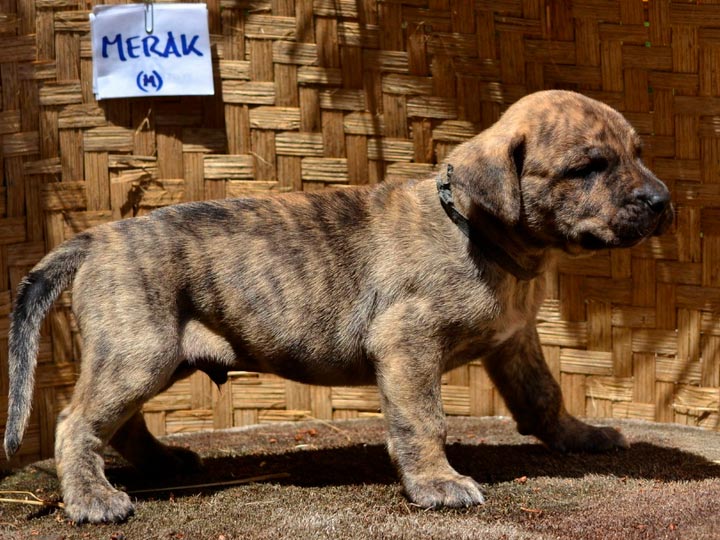
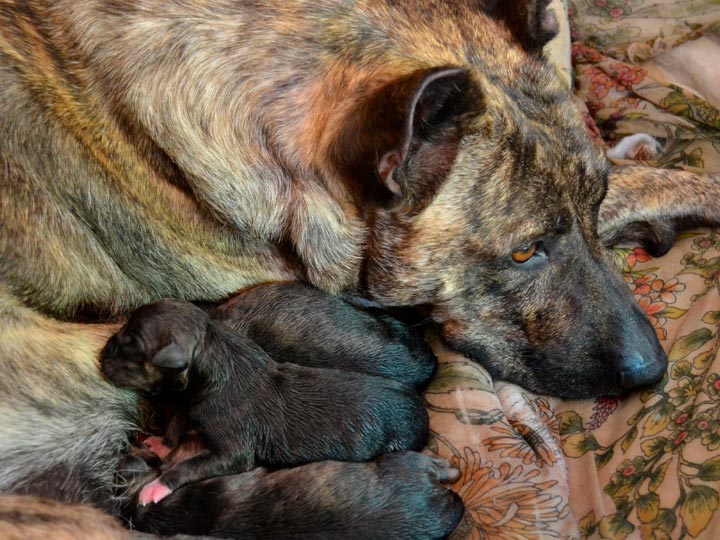
You can see more photos of Uruguayan Cimarrons in the gallery. The photos show dogs of different sexes, ages, and colors.
Video about the Uruguayan Cimarron dog breed
Read also:


Add a comment