
The Ural Rex is a cat breed.
Ural Rex Ural Rexes are a young, indigenous breed with undeniable advantages over many others. They were not bred through selective breeding; they are healthy and easy-to-care-for, requiring little maintenance, and their soft, wavy coat is considered hypoallergenic.
Content
History of the breed's origin
In nature, animals with curly fur are not often found, but on the slopes of the Ural Mountains, a whole group of curly-haired aborigines was discovered; the prefix “rex” in cat breeds implies this feature (Devon Rex, Cornish Rex, Selkirk Rex). That's where the name comes from - Ural Rex.
Curly-coated cats are the result of a natural mutation. They were officially registered in 1988 in the town of Zarechny, but veterans claim that curly-coated cats were encountered in the Urals earlier, and that they had a hard time back then. These kittens are born with undeveloped fur, appearing ugly and bald. People often assumed they had ringworm or some other terrible disease, so they were destroyed.
The Ural "curly-haired" cats had almost fallen into disuse, but one day, an ordinary house cat gave birth to three kittens from an unknown suitor, two of which were curly. Lyudmila Semyonovna Podorovskaya decided to keep one of these kittens for herself and named her Vaska.
Vasily would have been just hanging out, but felinologists from Yekaterinburg discovered him and began working on his type under the careful guidance of Elena Borisovna Fedorenko, chair of the UROFO "Grace" and a breed expert. Vasily was presented at a show in Yekaterinburg in 1992.
In 1993, at the Intercontinental Cat Show, experts noted the uniqueness of the Ural Rexes' coat, with its fine waves and elastic, corrugated curls. The breed was officially registered with the WCF.
Today, the Ural Rex breed is considered relatively rare and uncommon. The largest breeders are located in Yekaterinburg and the surrounding regions, Moscow, St. Petersburg, Samara, Perm, Sevastopol, Volgograd, and Dresden (Germany). Breeders are proud of their pets and the fact that they were fortunate enough to be at the forefront of this unusual and very promising breed.
General characteristics of the breed
Ural Rexes are well-built, medium-sized cats, slender, slightly rounded, and well-muscled. They exhibit pronounced sexual dimorphism, with males being significantly larger than females.
Appearance
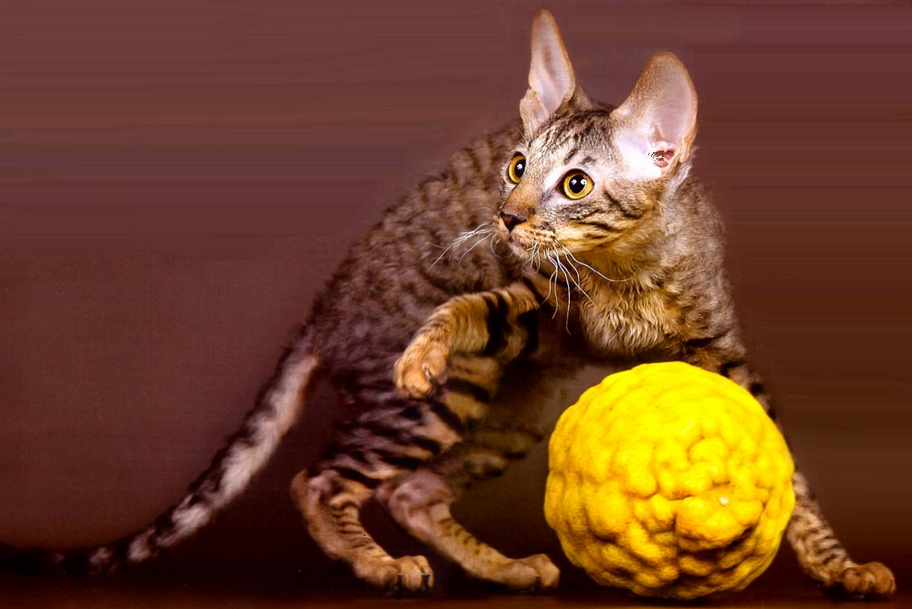
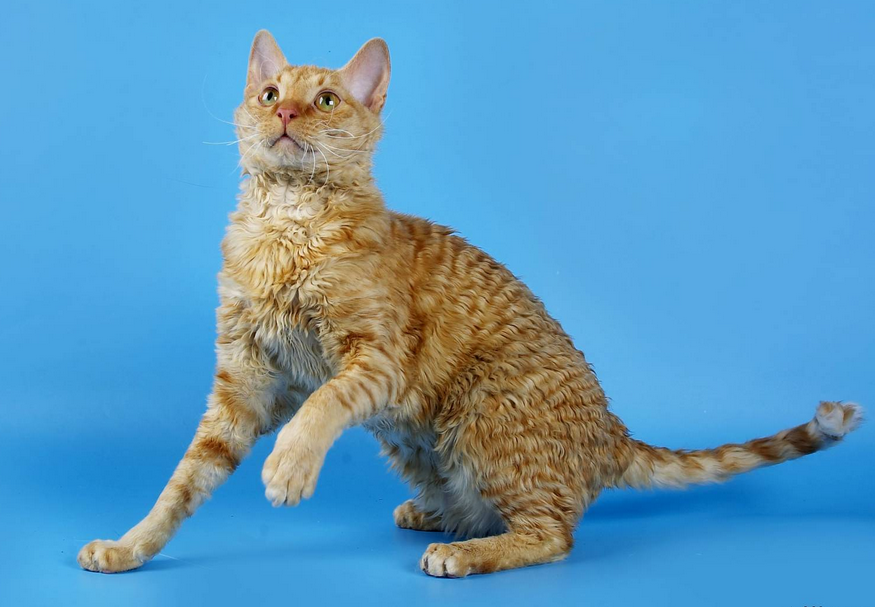
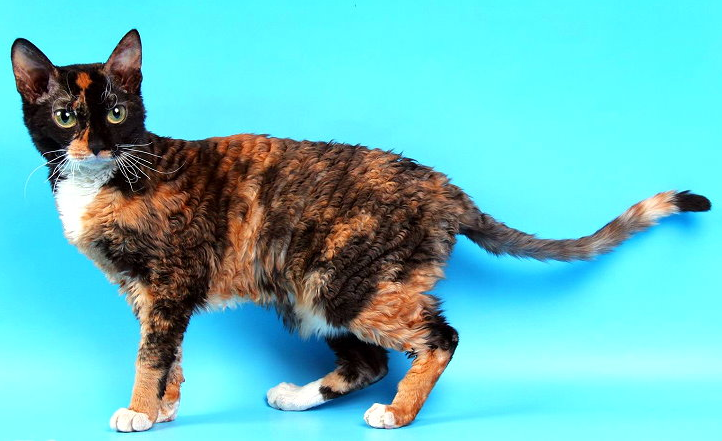
The head is a wide wedge with a flat bridge and well-defined cheekbones. Whiskers are often curled. The ears are medium-sized, triangular with rounded tips, set high and straight. The eyes are bright, almond-shaped, set at an angle, with the upper eyelid slightly straightened and the lower rounded. A noticeable distance between the eyes should be at least equal to the width of one eye. Any color is acceptable, but a match to the coat color is desirable. The chest is rounded. The limbs are straight and strong, with oval paws. The tail is proportionate to the body, long and straight, tapering to a tip.
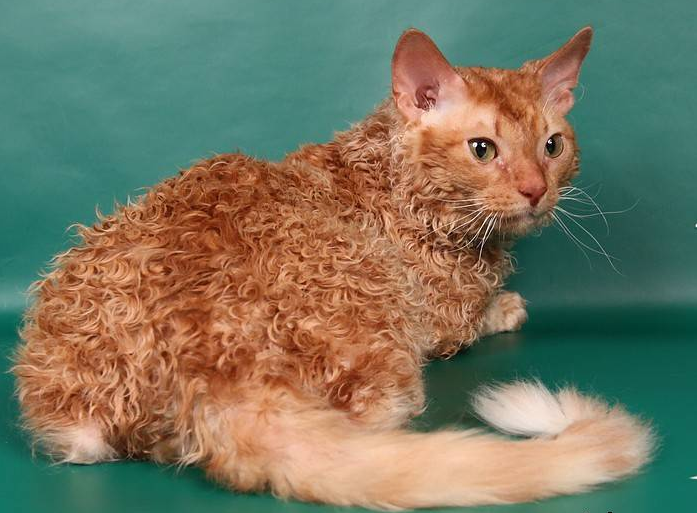
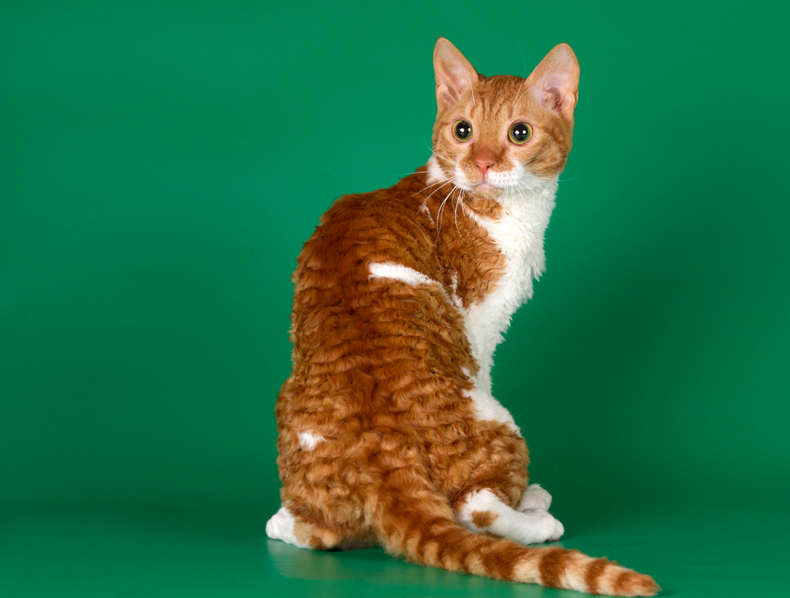
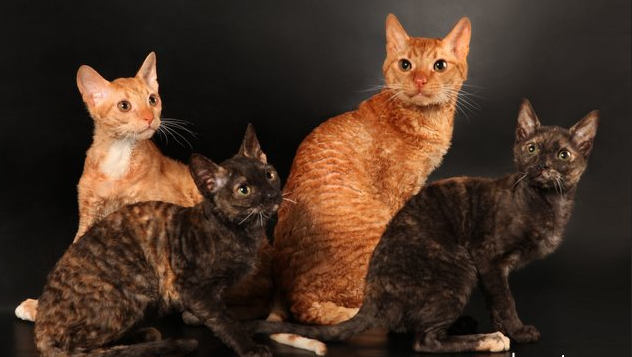
The coat is short to medium length with distinct curls that are fully formed by two years of age. It is very soft and dense to the touch, consisting primarily of undercoat. Cats with semi-long hair are characterized by a distinct wave, a small mane, and longer hair on the tail.
Any colors are allowed, only chocolate, cinnamon and other diluted colors in any combination are not recognized.
Character
Curly-coated Ural cats have a very appealing personality; they are friendly, even-tempered, intelligent, and very people-oriented. They get along well with other animals, quickly adapt to the family rhythm and rules established by their owner, and understand restrictions.
Rexes are considered quiet, lacking in brashness and aggression. They enjoy active play, but their favorite activity is hunting, and they'll do anything, anytime. A typical Ural Rex is unlikely to make a mess in an apartment.
Their incredible docility, patience, and love for small children are very appealing. If a pet trusts its owner, it will calmly allow itself to be washed and brushed, even offering another cat. The only thing Ural cats dislike is loneliness. If the owner spends a lot of time at work, they should consider getting two cats.
Care and maintenance
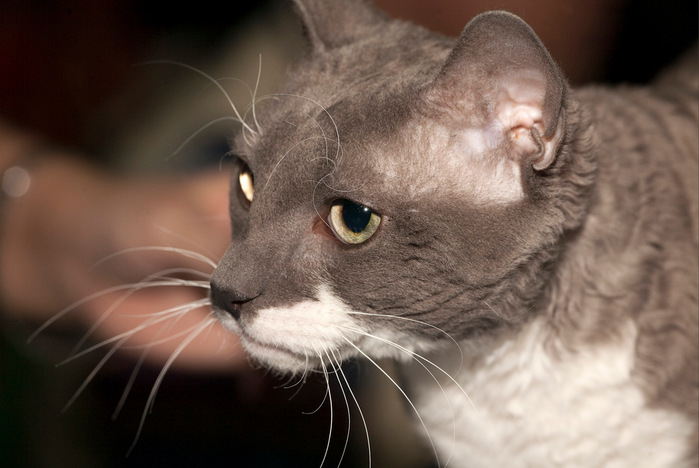
A distinctive feature of this breed is that the hairs rarely fall out on their own; they are trapped within the thick curls, so Rexes need to be brushed once or twice a week, and every other day during shedding season. To add shine to their coat, simply wipe it with a chamois or flannel cloth.
Another characteristic of the breed is its dry, delicate skin, so bathing Ural Rexes is generally not recommended, except in extreme cases or a couple of weeks before a show to allow their appearance to recover. Ears and eyes are cleaned as needed, but most cats can handle this task themselves. Claws can be trimmed every 2-3 weeks.
Diet
Ural Rexes have excellent appetites, are unpretentious eaters, and are not prone to overeating or obesity. One-third of their diet should consist of protein products: meat and offal, one-third should be cereals (buckwheat, rice, rolled oats), and the rest should be fruits and vegetables.
You can choose high-quality dry food or canned food for your pet, whether premium or super-premium. It's best to avoid table scraps, and salty, spicy, fried, sweet, or fatty foods should be avoided.
Health
Ural Rexes are in excellent health. Experts have identified no genetic diseases or predispositions to them. They also determined that the curly coat gene is unique and not associated with any pathologies. These male and female cats have good immunity and resistance to colds.
Video review of the Ural Rex cat breed
Read also:


Add a comment