
Dog bite: what to do
The problem of aggressive dog behavior is frequently covered by various media outlets, shocking the public with horrific details. However, despite existing legislation regulating pet ownership, attacks and bites continue to occur. This problem is so multifaceted that it is difficult to cover it all in a single publication. Let's look at some aspects of this problem.
Before you know what to do if a dog bites you, it's important to understand what makes your dog aggressive.
Content
- 1 Characteristics of dog bites
- 2 What symptoms may appear after a bite?
- 3 Why does a dog bite?
- 4 Algorithm of actions in case of a bite
- 5 Possible consequences
- 6 Compensation for damage to the victim
- 7 If a dog bites a child
- 8 Dog Bite Insurance
- 9 A dog owner's responsibilities in the event of a dog bite
- 10 What to do if you are bitten by your own dog
- 11 How to protect yourself from bites
Characteristics of dog bites
Dogs' teeth have specific anatomical features. As predators, canines once played a key role in food acquisition. Today, they are rarely used in pets, but they have retained their functionality.
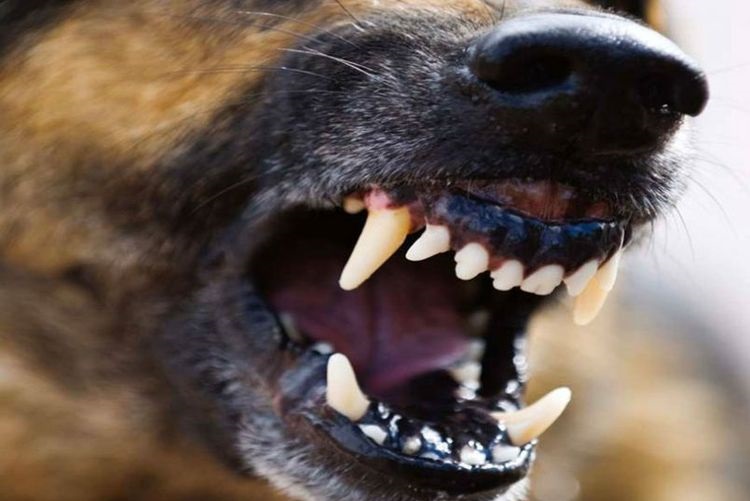
It is the canines that inflict deep, penetrating wounds during bites, severing not only muscle but also blood vessels, tendons, and nerves. Other teeth, such as the molars and premolars, also contribute to the bite. They act like sharp scissors, cutting tissue and crushing small bones. It's important to note that when the jaws close, a tremendous amount of force is generated, which leads not only to damage of soft tissue but also bone. In fighting breeds, this force is equivalent to more than 6 atmospheres. This is sufficient to inflict a very serious wound on an adult, and in a child, it can result in the loss of a limb.
There are three types of bites:
- A teeth strike, or incomplete bite. The animal does not close its mouth, but strikes with the teeth of its upper jaw. This bite is a warning of an attack. If you retreat in time and retreat from the attacking dog, there may be no further bites.
- A yank is the next movement of the attacking animal's teeth. A yank causes complex lacerations, with ruptures of muscles, ligaments, tendons, and nerves. A yank alone, as a rule, aggressive dog is not limited, but does several, thereby aggravating the victim's condition.
- A constant grip is a type of bite also known as a "death grip." It is typical of hunting breeds used to hunt large game such as wild boar, bear, and elk. Fighting breeds also have this type of grip.
Comparative table of risks depending on the nature of the bite
| Bite type | Risk of infection | Action required |
|---|---|---|
| Surface | Average | Processing, observation |
| Deep | High | Treatment, visit to the doctor |
| Ragged | Very tall | Urgent Care |
| Bite to the face or neck | Critical | Urgent hospitalization |
Animal behavior after a bite
If a dog bites, it's important to assess its subsequent behavior. An aggressive dog that doesn't run away and continues to attack may be a carrier of the rabies virus. If the animal suddenly attacks without provocation and appears lethargic, salivating, and exhibiting unusual head or eye movements, it's important to report it to your nearest veterinary service or Rospotrebnadzor.
Particular attention should be paid to stray or poorly cared for pets that appear disoriented - this can be important information for specialists when assessing the risk of infection.
What symptoms may appear after a bite?
Even if the bite seems harmless, the following symptoms may appear during the first few days:
-
local swelling and redness;
-
increase in body temperature;
-
throbbing or pain in the wound;
-
suppuration, appearance of odor;
-
chills or body aches (signs of an emerging infection);
-
Neurological symptoms—photophobia, headache, anxiety—are particularly dangerous and require immediate attention.
If such reactions are observed within 48 hours, this is a direct indication for an urgent re-examination by a doctor.
Dogs have lived alongside humans for centuries. Why do they attack? What drives them to do so?
Why does a dog bite?
Despite a long history of interaction with humans, dogs remain predators. The instinct, seemingly hidden behind centuries of friendship, remains. Dogs know how to attack and do so perfectly when necessary. If improper training coupled with this instinct is present, a pet will display it in certain situations. This is especially true for dogs with unstable psyches.

So, biting is a manifestation of aggression. There are three types:
- Predatory, most often manifested by hungry animals. Sometimes, dogs with mental disorders can even attack humans. Stray dogs hunting in packs are especially dangerous in this regard.
- Hierarchical. According to the hierarchy, a pet who is improperly trained may consider itself the leader of the "house pack," attacking family members and even its owner. If a pet dog growls at its owner when they take away a treat or chase it off the bed, it considers itself the leader of the family. Under certain circumstances, it is possible that it may attack. Moreover, an improperly trained dog will repeat acts of aggression in the future.
- Defensive behavior is associated with fear of physical punishment, fright, or an unfamiliar situation. Often, even the sweetest pets can become angry when defending themselves against unfamiliar adults or children who are trying to get to know them inappropriately.
So, even a well-trained dog can become aggressive and bite a person. What should you do after this?
Algorithm of actions in case of a bite
Taking the necessary precautions against even a minor bite is essential to prevent the most serious consequence: rabies. This viral disease is almost always fatal for humans bitten by an infected animal. The incubation period can range from 10 days to a year. The closer the bite is to the head, the greater the risk of developing the disease. Even if a person is bitten by a rabies-free dog, there is always a risk of infection from the wounds inflicted by its teeth. Therefore, it is essential to call an ambulance. A doctor will document the presence of bites and provide qualified medical care.
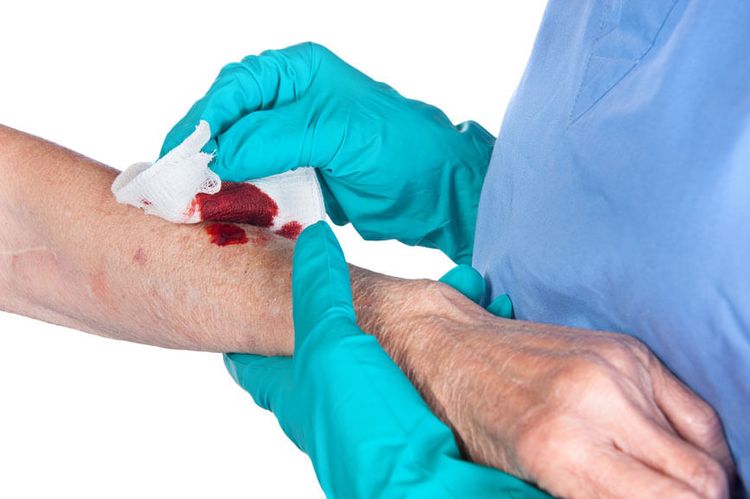
Before the specialists arrive, a number of steps must be taken:
- Wash the bite site with clean water and soap to remove dirt and saliva. Antibacterial soap is best.
- Treat the wound with an antiseptic. This can be a solution of hydrogen peroxide or chlorhexidine. Then, carefully treat the wound edges with an iodine solution.
- If bleeding is minor, do not attempt to stop it until emergency medical personnel arrive. If bleeding is severe, apply a firm, sterile bandage.
If calling an ambulance is not possible, you should seek medical attention yourself. At the emergency room or hospital, the wound will be treated with special solutions and stitches will be applied.
Possible consequences
A bite can be superficial, but more often than not, an aggressive animal inflicts serious injuries. What's the danger?
- the bitten area swells, which indicates damaged tissue and infection;
- the lymph nodes (inguinal, axillary and others) increase significantly;
- severe headaches join in;
- body temperature rises;
- I am concerned about the severe pain of the wound.
But, as already noted, the most dangerous consequence of a bite is the development of rabies. If the dog is unfamiliar or a stray, it is necessary to administer rabies injections. These injections are administered in the shoulder, six at regular intervals over three months.
If a pet has been vaccinated against rabies, it is monitored for 10 days. If the animal shows no signs of the disease (unusual behavior, such as aggression or unprovoked affection, unsteadiness of gait, salivation, or hydrophobia), then injections are not necessary. However, as a precaution, doctors recommend rabies injections. The vaccine can be effective if administered to the victim no later than 14 days after the bite.

The danger of the rabies virus to humans lies in its severe consequences. Once it enters the body, it quickly spreads through the bloodstream and affects the entire nervous system. The initial stage of the disease is characterized by a low-grade fever, headache, restlessness, loss of appetite, and dyspeptic symptoms. As the infection progresses, inflammation of the brain progresses, and the following symptoms develop:
- aggressiveness;
- paralytic convulsions;
- hallucinations;
- excessive salivation;
- hydrophobia and photophobia.
If the convulsions become paralytic, paralysis of the respiratory center and subsequent death are possible.
Therefore, if the first alarming symptoms appear after a bite, it is necessary to seek medical attention immediately. A person suspected of having rabies should be examined using specialized laboratory tests. A sample of saliva and cerebrospinal fluid is taken for testing.
Compensation for damage to the victim
The victim should contact not only a medical facility but also the police. The dog owner is responsible for their pet's actions under the Russian Criminal Code. Punishment under the law may include a fine, restriction of liberty, or other measures.
Furthermore, the owner of an aggressive dog must voluntarily or be forced through the court to reimburse the cost of treatment. The victim can demand compensation equal to their average monthly salary, equivalent to the amount of sick leave benefits.
If a dog bites a child
Many dogs dislike children because they express their admiration for them in rather inappropriate ways: they grab the dog's nose, ears, or tail. This kind of behavior is disliked by animals, especially if the child is not from their family. What should you do if a child is bitten by a dog?
All the above measures for an adult victim are also applicable to a child. However, it's important to remember that a dog attack can cause severe psycho-emotional trauma to a child. They become extremely frightened, and if the adult misbehaves, the fear will only intensify. Therefore, in addition to treating the bite, the child needs professional help from a pediatric neurologist and psychologist.
If a dog bites a child, it's especially important to act quickly. Children develop inflammation more quickly, and their tissues are less resistant to injury. Furthermore, children may not accurately describe their sensations, so it's important to carefully observe:
-
body temperature;
-
appetite;
-
activity level;
-
mood.
Doctors often prescribe a prophylactic course of antibiotics and almost always refer children for rabies vaccination when they are bitten by a dog, especially if the dog was unfamiliar.
Dog Bite Insurance
Animal bite insurance programs are available in some regions of Russia and abroad. In the event of a bite, you can receive monetary compensation if the injuries are confirmed and medical care is provided. This insurance can be beneficial for families with children, especially those with pets or those living in private homes where contact with animals is unavoidable.
To receive the payment you will need:
-
medical report;
-
photo and description of the wound;
-
application to the insurance company;
-
confirmation of contact with a medical facility on the day of the incident.
A dog owner's responsibilities in the event of a dog bite
If the bite was caused by a pet, its owner is obliged to:
-
provide information about vaccinations;
-
by law - provide 10-day observation of the animal in a veterinary clinic or at home;
-
pay for the treatment of the victim in the event of an appeal to the court;
-
report to authorities in case of repeated or severe attacks.
Some regions already require all pets to have a passport, which can make it easier to identify the owner and prove vaccinations.
What to do if you are bitten by your own dog
Many owners underestimate the risk if they are bitten by their own pet. However, it's important to remember: even if you are completely confident in your pet's health, it's important to perform initial wound treatment and monitor its overall condition.
Even a vaccinated dog can carry bacteria (such as staph or pasteurella) found in the oral cavity. In some cases, a bite from your own pet can lead to cellulitis or blood poisoning.
How to protect yourself from bites
The main measures to prevent dog bites are to limit all contact with unfamiliar and stray dogs. There are several simple rules for adults and children that can reduce the risk of being bitten:
- Do not grab the dog by the muzzle, ears or tail, even during games.
- Do not make any sudden movements or wave your arms in the presence of an unfamiliar dog.
- Avoid looking the animal in the eye for too long. It will interpret this as a challenge and may attack.
- Do not touch the animal while it is being fed, do not take food away from it.
- Don't run away from an approaching unfamiliar dog. It may interpret this as a signal to attack.
In summary, it can be concluded that dogs, despite centuries of cohabitation with humans, despite their friendship and devotion to them, still remain a part of nature. Their ancient predatory instincts must be respected and trained so that they do not awaken to the detriment of human health.
You can also ask our website's staff veterinarian a question, who will answer them as quickly as possible in the comments box below.
Read also:
- Rabies in dogs: symptoms and treatment
- The World's 10 Most Dangerous Dogs
- How many teeth does a dog have?


2 comments
Olga
I was bitten by a dog. The bite was superficial, but drew blood. I received Nobivac rabies vaccinations in May 2017. It's now October 2018. Is there a risk of developing rabies?
Dasha is a veterinarian
Hello! If the animal has rabies, then yes, there is a risk. You may think it's not drawing blood. And it doesn't need to. The rabies virus spreads throughout the body not through the bloodstream, but through nerve fibers. The vaccination is expired, so the body is not "protected." It's better to be on the safe side and start a course of rabies vaccinations. Now they're not in the stomach, but in the forearm, and fortunately there aren't 40 of them anymore. The animal that bit you is under veterinary observation (contact your city or district veterinarian, although they will need to receive documentation confirming the attack on a person). If no signs of rabies are detected within 10-14 days, you can forgo further vaccinations.
Add a comment