
Injections for dogs against distemper
Regular vaccination is essential for keeping dogs. This is a procedure that artificially infects an animal with a weakened virus to develop immunity to a particular disease. After receiving the vaccine, your pet will either not become ill or will experience a mild form of the disease if exposed to an infected dog.
Today, both monovalent (against one virus type) and polyvalent (against several virus types) vaccines exist. The standard vaccination schedule includes vaccination against hemorrhagic (parvovirus) enteritis, leptospirosis, viral hepatitis, rabies, and canine distemper.
How much does a distemper vaccine cost? Vaccines designed to prevent multiple diseases are more expensive. For example, the Russian monovalent canine distemper vaccine, Cardanon, costs about 150 rubles, while the polyvalent French vaccine, Eurikan, starts at 350 rubles.

Content
What is canine distemper?
This disease has the Latin name "Febris catarrhalis et nervosa canum" and is caused by a microorganism of the genus Morbillivirus. Plague of carnivores Known since the domestication of animals, it is widespread. The distemper virus affects cells of all body systems, causing:
- fever;
- inflammation of the mucous membranes of the eyes, respiratory and digestive tract (including pneumonia);
- skin lesions;
- lesions of the central nervous system in the form of paralysis, paresis, meningitis, encephalitis.
The latent (hidden) period of the disease averages about three weeks, but in some cases can last up to three months. Statistics show that without adequate treatment, the mortality rate among puppies under six months of age reaches 90%.
Vaccination timing
For the first two months of a puppy's life, it is protected by the immunity it acquires from its mother, so vaccinations begin after reaching this age. When determining individual vaccination schedule The age and health of the dog, living conditions and the relative well-being of the area in terms of infectious veterinary diseases are taken into account.
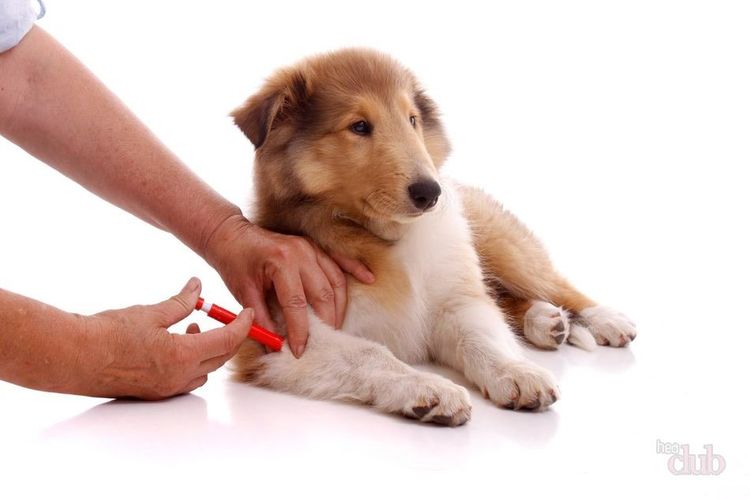
Usually the first vaccination is against plague and parvovirus enteritis, the second from the plague, enteritis, hepatitis, parainfluenza and leptospirosisRabies vaccination is administered last. The standard vaccination course for most breeds ends at one year of age. Distemper vaccination is repeated annually.
The specific timing of comprehensive vaccinations also depends on the dog's breed. This is due to the different stages of maturation and tooth replacement. According to veterinarian recommendations, vaccinations are recommended at the following ages:
- Alabai puppies - at 2, 4 and 12 months;
- Shepherds, Yorkies - at 3, 4 and 12 months;
- toy terriers, shar pei - at 2, 6 and 12 months;
- Spitz, dachshund, and spaniel puppies - at 1.5 months, 2.5-3 months, and 12 months;
- Labradors, huskies, Chihuahuas - at 2, 3 and 12 months;
- French bulldog puppies - at 2.5 and 7 months, then at one year.
Basic rules for vaccination
To avoid unwanted consequences after vaccination, you should know:
- The vaccination can only be given to a healthy dog.
- Vaccines that have not yet expired are permitted for use for injections.
- One to two weeks before vaccination, it is advisable to deworm the animal, since dogs with worms tolerate vaccinations more severely.
- After the vaccination, it is recommended to keep the dog on a gentle regime for some time (the duration will be determined by the doctor). During this period, the animal should not be bathed, should not be given heavy physical exercise, and should not be exposed to hypothermia.
- The immune response to the vaccine develops within two weeks. It's best not to take your dog outside until this period has passed, as the risk of distemper infection persists.
Important! Even if you're skilled at administering injections, it's best to have your dog vaccinated against distemper by a veterinarian. They'll conduct a preliminary examination of your dog and then check for any anaphylactic reactions to the serum 10-15 minutes after the vaccination.
Vaccination preparations
Both Russian and foreign pharmaceutical companies produce animal vaccinations. Among domestically produced products, the following are considered reliable and safe:
- Vakchum. A monovalent dried viral vaccine for immunization against canine distemper. Manufactured by the Moscow-based Poliomyelitis Institute.
- Cardanone (Kamedon). A polyvalent drug for the prevention of canine distemper, parvovirus infection, and viral hepatitis. Manufacturer: Mediter.
- EPM. A dry monovalent distemper vaccine from the pharmaceutical company Biocenter. It has age restrictions: it is approved for use in dogs over 3 months of age.
Among foreign preparations for vaccination against distemper, the following have received recognition from international veterinary specialists:
- Nobivac. A dry bivalent vaccine against canine distemper and parvovirus enteritis. Manufacturer: Intervet International (Netherlands). Learn more: Nobivac for dogs
- Eurikan. Polyvalent vaccine against 6 viruses Manufacturer - "Merial SAS" (France). More details: Eurikan for dogs
- Vanguard. A vaccine for the prevention of 5 viral diseases in dogs. Manufacturer: Zoetis (USA). Learn more: Vanguard for dogs
How to give distemper injections
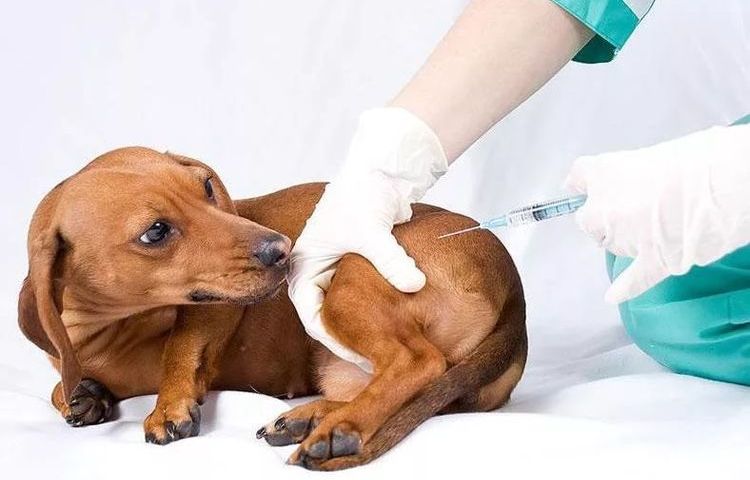
The vaccination can be administered to a dog intramuscularly, on the surface of the thigh or shoulder blade area, or subcutaneously, at the withers. These injection sites are easy to puncture, and there are no major vessels or nerves.
Using a needle, remove the contents of the liquid component vial and inject it through the stopper into the dry component vial. Shake the vial thoroughly until the powder is completely dissolved. Then, draw the resulting suspension into a syringe.
The injection site is disinfected with alcohol, then a fold of skin is grasped with the hand, and the syringe needle is inserted into the skin at a depth of 1.5-2 cm at an angle of approximately 45°. After the vaccine is administered, the needle is carefully removed, and the injection site is gently massaged to improve distribution of the vaccine.
Important! The vaccine dose does not depend on the animal's age or weight. The idea that a smaller dose will reduce the risk of an allergic reaction is incorrect. Reducing the vaccine dose can create the conditions for unwanted changes in the dog's body.
To determine whether your pet has tolerated the vaccination well, observe their condition for 1.5 to 2 weeks. Pay attention to their appetite, activity, and bowel movements. It's a good idea to take their temperature at least once a day; a normal temperature for dogs is considered to be 38 to 39°C.
Read also:


2 comments
Irina
What vaccine can be given to an adult German Shepherd? (They used to give NOBIVAC.) It's no longer available.
Daria is a veterinarian
Hello! It all depends on the vaccine selection at your local veterinary clinics. I know there's a problem with Nobivac Rabbits; it's now available in 10-dose packs. They open them more often when they know there will be a large number of animals (for example, a litter of puppies), because the opened vaccine doesn't last long, even in the refrigerator. However, it seems that combination vaccines aren't in such short supply. There are occasional shortages, but not so much that there's nothing for weeks. Try calling the nearest clinics. If Nobivac isn't available, find out what's available and what alternatives (of equal quality) you can use. I wouldn't even suggest Multikan 6/8. I'm specifically talking about imported vaccines.
Add a comment