
Peculiarities of caring for long-haired and short-haired cats
The condition of your cat's coat is the best indicator of your pet's overall health. Therefore, grooming your cat should begin with a properly balanced diet that includes vitamins in addition to the pet's usual food.
Content
Shorthaired cats: care features
Grooming a cat's coat varies depending on its length. This is due not only to the length of its coat, but also to the fact that short-haired cats have longer tongues than their long-haired relatives. Therefore, animals with short fur are better at grooming themselves. However, indoor cats, with artificial lighting and heating, shed almost year-round, requiring grooming to prevent hair loss.
Even short-haired cats require brushing, which requires owners to have a fine-toothed comb, a soft-bristled brush, a rubber brush, and a piece of chamois leather to polish the coat. Short-haired cats should be brushed a couple of times a week, and regularly remove dead hairs by running damp hands over the cat's coat.
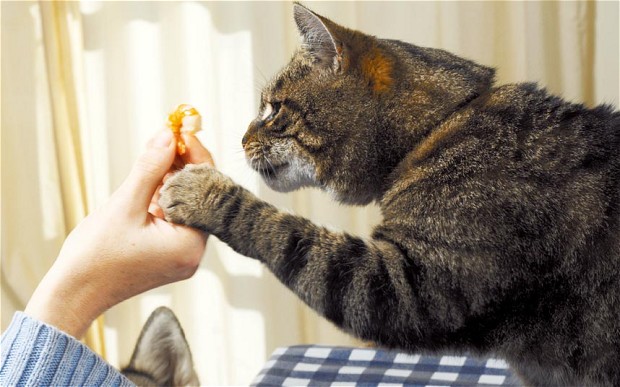
It is recommended to wash a cat only if the animal is preparing for a show, if it has parasites, and also for preventative purposes.
You shouldn't get carried away with this procedure, since the cat's sebaceous glands produce a special lubricant that protects the skin and fur, and frequent washing can deprive the animal of this natural protection.
Longhaired cats: care features
For long-haired cats, daily brushing is essential: without it, their fur will become matted, which can become so large that they need to be removed by a veterinarian. Brush your cat daily for 15-20 minutes. Once a week, it's recommended to use a special brushing powder before brushing to make the fur easier to comb.
Grooming a long-haired cat requires several types of brushes: a metal brush, a natural bristle brush, a wide-tooth comb, a fine-tooth comb, and a smoothing brush. A soft brush is used to comb the fur against the grain, removing all loose and dead hair.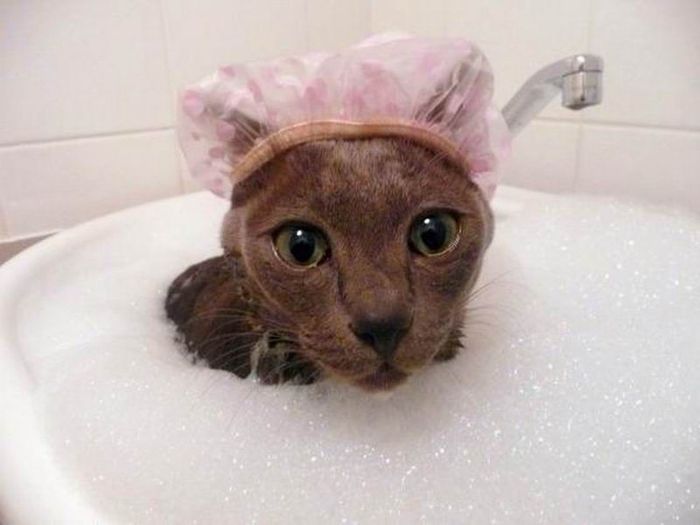
After brushing your cat against the grain, brush in the direction of hair growth and from top to bottom, not forgetting the tail and belly. Next, use a comb to remove tangles and knots. Finish by brushing the collar and the fur on the forehead and cheeks. A toothbrush can be used for this.
When brushing, avoid getting your cat's fur wet, especially if it has matted fur. This can only make the situation worse, and the matted fur will have to be cut out.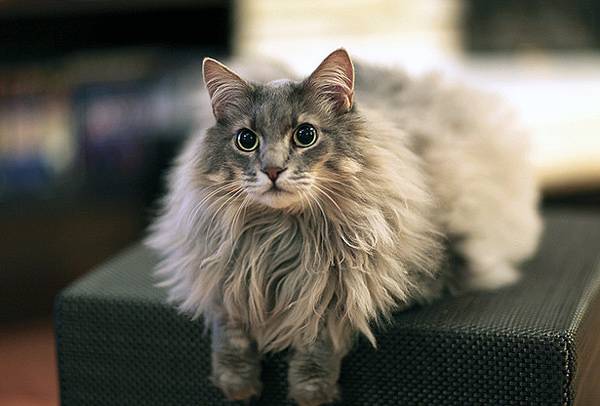
Washing long-haired cats
Longhaired cats need bathing more often than shorthaired cats. They should be washed with special shampoos; human shampoos are not suitable for this purpose, as we and animals have different skin pH levels, and human shampoo can damage a cat's coat.
To ensure that bathing your pet doesn't turn into torture for both you and the animal, you'll need to show plenty of affection and attention, and sometimes even some ingenuity. Before bathing, make sure all doors and windows are closed and there are no drafts in the room. It's best not to feed your pet for four hours before the bath.
You should also prepare several large towels in advance to wrap your cat in after washing. It's a good idea to lay newspapers or other rustling paper on the floor; the cat will naturally sit on the paper, which will drain excess moisture from its fur. Don't disturb the animal for several hours; any stress experienced during the bath should calm down.
Cats, of course, don't like bathing, with rare exceptions. If you suspect your cat will resist, place it in a cotton bag so that only its head is visible. Pour shampoo into the bag and lower the cat and the bag into the water. Then massage the louse, working the lather through the bag. Wash the cat's face with a cotton swab soaked in water.


Add a comment