
My dog's hind legs are failing: causes and what to do
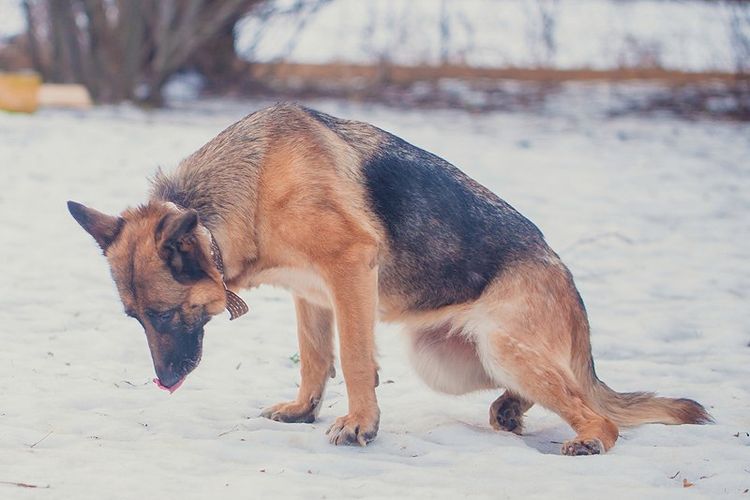
Limb paralysis is a serious sign of neurological problems in an animal. When a dog's hind legs become paralyzed, it is usually accompanied by severe weakness of the hind limbs, dragging when walking, and impaired coordination. The pet may experience pain both while moving and at rest. This naturally raises the question: what is the correct course of action for an owner in such a situation, and what measures should be taken first?
Content
Causes of a dangerous symptom
The main factors that can cause a dog's legs to fail include the following:
- Injuries (eg broken paw, damage or pinched nerves, ligament ruptures or stretching).
- Arthritis.
- Presence of neoplasms.
- Spinal pathology.
Nervous system disorders are one of the most common causes of paralysis. In such cases, the dog may only experience discomfort or pain in the morning, but by evening the condition worsens: the pet begins dragging its hind legs, and then complete paralysis of the limbs develops.
Another cause of this condition is believed to be spondylosis of individual sections of the spine. This disease develops gradually and in its early stages may present virtually no noticeable symptoms. Over time, bony growths form on the vertebrae, compressing the tissue and impairing normal movement, ultimately leading to mobility issues.
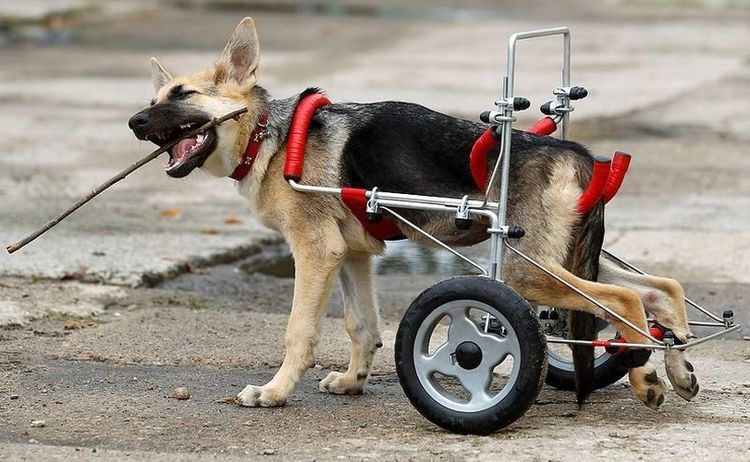
Tumors in the spinal area compress the nerve roots and spinal cord. As a result, the animal experiences weakness in the limbs, arches its back, and loses its appetite. The dog whines when attempting to move normally.
Hip dysplasia is most often seen in heavy breeds. In this case, the dog may limp immediately after sleep, but normal activity returns during the day. The disease progresses, and if left untreated, the pet may stop walking altogether.
Spinal pathologies develop after bites and unfortunate falls, which disrupt the integrity of the spinal column and cause swelling. This results in compression of the spinal cord, leading to paralysis.
My dog's hind legs are paralyzed: what should I do?
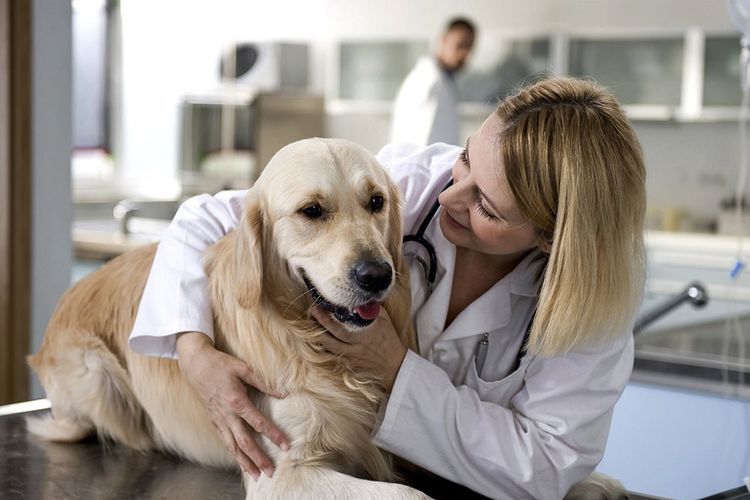
At the first sign of paralysis, it's important to consult a veterinarian, who will diagnose and interview your pet to determine the underlying cause and prescribe treatment. Remember: delays can lead to permanent disability! Since most of these conditions are neurological in nature, you'll need to schedule an appointment with a specialist.
If your dog has been injured (for example, in a fall) and there's a suspicion that the spinal cord is damaged, you should take the animal to a veterinary clinic as soon as possible. It's essential to immobilize the spine by securing the dog to a wide board with elastic bandages.
If the pain is severe, do not administer pain medication yourself. This may cause the animal to begin moving, which could further dislocate the vertebrae, so it's best to wait until a specialist sees you.
Please note: the symptoms of paralysis often resemble those of developing radiculitis. As a result, inexperienced owners resort to massage instead of immobilization. This further aggravates the situation and wastes time.
Diagnostic features
A comprehensive diagnostic assessment of your pet's condition is performed at a veterinary clinic. The veterinarian performs the following procedures:
- Visual inspection.
- Checking the sensitivity of the affected limb.
- Checking reflex activity.
- Definition of pain syndrome in the spine.
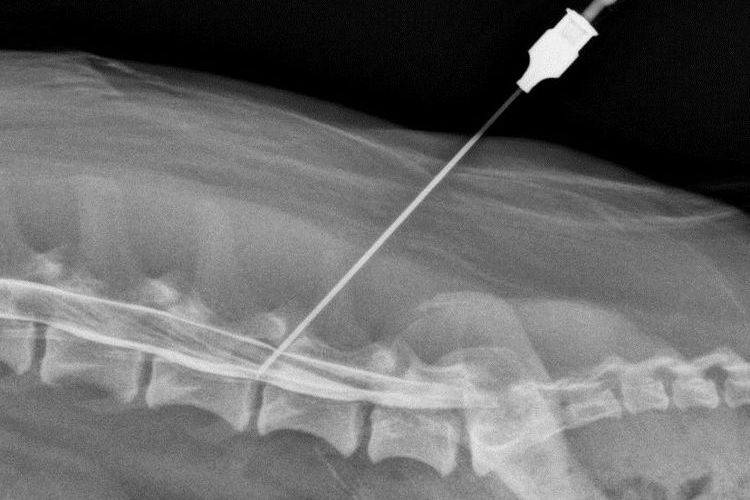
- Carrying out an X-ray.
In some cases, myelography is prescribed: with the help of a contrast agent, even the slightest changes in the spinal column can be seen.
To rule out concomitant kidney pathologies, blood and urine tests are prescribed: laboratory tests allow the veterinarian to determine the exact disease and prescribe a course of treatment.
Features of therapy
The exact treatment depends on the underlying cause. To relieve spasms, No-Spa and other antispasmodics are prescribed. If the animal is experiencing pain, a course of analgesic injections is prescribed. A neurologist may also recommend a course of B vitamins, which restore normal nerve function.
In the treatment of paralysis, blocking individual nerves with novocaine injections is quite effective. Affected muscles can be warmed up, and massage treatments are prescribed. Please note: novocaine blockade is a procedure that should only be performed in a clinical setting under the supervision of an experienced veterinary neurologist!
Preventive measures
There are certain animals that are at risk for these neurological disorders. These include hounds, dachshunds, and other long-bodied breeds. If your pet belongs to one of these breeds, it's important to carefully follow preventative measures.
- Provide your dog with a balanced diet and regular veterinary checkups. Keep a close eye on your dog during walks, and always check for minor injuries upon returning from outside and ensure prompt treatment.
- Inspect your dog's fur: tick venom is highly toxic. If the parasite is not detected promptly, its venom can cause paralysis of the legs and, in severe cases, respiratory failure.
- If your dog isn't getting enough vitamins from their food, ask a specialist to recommend high-quality multivitamin supplements that will strengthen the immune system and nerve fibers.
- Offer your pet only fresh food, otherwise it may develop a dangerous disease such as botulism, which also leads to paralysis of the legs.
- At the first signs of immobility, do not self-medicate: promptly transporting your dog to a veterinary clinic will preserve its mobility! If you are unable to transport your pet, try calling a clinic that offers house calls (some clinics offer 24-hour veterinary services).
Risk group
Large breed dogs are particularly at risk. During their active growth period, their joints can develop abnormally, often leading to paw problems even at a young age. These breeds include St. Bernards, Great Danes of all varieties, German Shepherds, Labradors, and Alabai.
Another risk group is represented by artificially bred breeds. Humankind's desire to emphasize certain external characteristics has led to significant changes in animal conformation: the elongated body of so-called "sausage dogs" and the shortened muzzle of brachycephalic dogs with a nearly absent nose. As a result of years of selective breeding, some pets are predisposed from birth to spinal disorders. These include dachshunds, corgis, basset hounds, pugs, Pekingese, French and English bulldogs, shar-peis, and boxers.
Geriatric patients over 11–13 years of age, regardless of breed, deserve special attention. At this age, the risk of developing irreversible degenerative processes in the joints, nervous system, and muscles increases, which can also lead to movement problems.
Therefore, if a dog's hind legs give out during a walk, physical activity, or after sleep, it is necessary to take measures as soon as possible to determine the correct diagnosis and prescribe effective therapy.
You can also ask our website's staff veterinarian a question, who will answer them as quickly as possible in the comments box below.
Read also:


32 comments
Catherine
Hello. My dog is a Chinese Crested. He is 10.5 years old.
Before feeding, the dog ran around, active and happy.
I unknowingly fed her wheat porridge with food. Then she came and lay under the table while I ate. She moved around normally, but towards evening she started walking with her legs spread apart, as if she wanted to poop, but today she didn't poop.
Her nose is dry, her heart is beating very fast, she doesn't move, she just lies there and wets herself. In the morning, she was salivating excessively, and at night, she was vomiting bile and mush.
She refuses to eat liquid food, but she eats from your hand - bread softened in water, she eats sausage, cheese, she doesn’t drink on her own (I gave her food that way, with bread).
Please help me. She's all I have left. I blame myself so much...
Alina Veterinarian
Hello. With these symptoms, it's best to seek immediate veterinary attention. In your case, you may have pancreatitis (which requires good pain relief, possibly antibiotic therapy, intravenous fluids, and a special diet). It could also be simple flatulence, or it could be a life-threatening gastric dilatation (or volvulus), which is only treatable with surgery.
I really hope that everything is well with your pet.
Julia
My 16.5-year-old dog drags his hind legs. If he falls on them, he can't get up on his own. They wobble and stumble when he walks.
We took an x-ray, but the doctor didn't find anything except arthritis or arthrosis. She prescribed Ketonal for 7 days, but it's not helping and nothing has changed! Tell me...how can I find out exactly what it is? A year ago, he was hit by a car, but no one saw it happen. He stretched out like a frog... and then this happened: he can't wait until his next walk - he pees on the floor! And two days ago, in the morning, he stopped getting up from the floor on his own (his hind legs).
Daria is a veterinarian
Hello! The lumbosacral spine is likely damaged, causing uncontrolled urination. Furthermore, the dog is elderly (especially if it's medium or large, above the knee). The prescribed medication simply reduces inflammation (if present) and relieves pain. However, it doesn't provide a cure. This is symptomatic therapy. The animal won't tolerate surgery due to its advanced age. And without a more detailed diagnosis, there's no way to know the pet's final diagnosis.
Valentina
My German Shepherd is 11 years old. Her back left leg has started to give out. She breathes through her mouth as if she has a fever. We gave her a mildronate injection. She's taking Previcox, which seems to be causing constipation. I'm giving her Vaseline oil, but it's not helping. How can I help? Please respond.
Daria is a veterinarian
Hello! Have you ruled out a stroke/heart attack? Who prescribed Mildronate? Have you had a cardiac ultrasound? Regarding bowel movements: Start giving Duphalac/Lactulose daily (a teaspoon, no more, otherwise it will completely relax). But it will "work" on the third day. Perhaps you weren't giving enough Vaseline oil? How much is the animal drinking? What is it eating? More wet food and fiber are needed (if on a natural diet, then more vegetables, less meat) to improve bowel movements. Unfortunately, Germans live on average 12 years. Therefore, your handsome fellow is already quite elderly, and heart and musculoskeletal problems are not uncommon.
Elena
Hello, our dog was diagnosed with osteochondrosis. She pulls her paw and falls to the side when walking. The doctor prescribed medication for the dogs. We've been taking it for four days now, but it's not helping. What should we do?
Daria is a veterinarian
Hello! If your pet showed clear clinical improvements on the fourth day of treatment for osteochondrosis, people would envy you! Treatment can take years, and it's not always successful (depending on the severity of the disease). This disease is not completely curable; clinical signs gradually resolve (and even then, clear improvements can be seen within two weeks of starting treatment, provided the prescribed treatment regimen is strictly followed). Change the diet to one suitable for animals with musculoskeletal diseases. But don't expect miracles. A complete recovery from this condition is not possible.
Anna
Hello. Could you please tell me if it's possible to help my dog? My German Shepherd is almost 9 years old. About a year ago, he started limping on one leg, then wiggling his hindquarters. This winter, his back legs started to droop, making it hard to stand up. Now, his walking is even worse. He can still stand on all fours, although he's walking slowly. We haven't taken him to the vet. They don't have any.
Daria is a veterinarian
Hello! Sorry, this may sound harsh, but it's impossible to give a prognosis without an in-person examination. It's possible there are spinal problems, pinched nerves, inflammation, or thinning of the intervertebral discs, leading to a spinal cord injury. There are actually many possible causes of hind limb paralysis. Unfortunately, 9 years is already old for German Shepherds (their lifespan isn't that long, averaging 11-12 years). Without at least an X-ray, it's difficult to make a diagnosis (CT and MRI scans are harder to find in clinics and are much more expensive, but they're better for diagnosis and more informative).
Julia
Good afternoon
My name is Julia, I have a 14-year-old toy poodle. She started yelping at night, tucking her paw in and refusing to let me touch her, and her paw kind of drooped. She started limping the next morning. We called an ambulance, gave her a couple of shots, prescribed anti-inflammatory medication, and she seemed to be getting better. They said it was arthritis. Six months later, she suddenly sat on her bottom and won't get up, crawling around on it. She has a good appetite. She only pees and poops sideways and crawls back to her spot, all wet. I called the ambulance, and they told me to give her a dexamethasone injection for five days, but there was no improvement. They told me to euthanize her. I don't know what to do, because she has a good appetite.
Daria is a veterinarian
Hello! Has anyone taken their pet for an x-ray? A picture would show any joint damage. Hip dysplasia should be ruled out (the animal is advanced in age, after all). Has the animal had any injuries? The lumbosacral spine would be especially useful for x-rays, as uncontrolled bladder and bowel movements could be related to damage to this particular section of the spine. Dexamethasone would help with the inflammatory process. However, if the animal has dysplasia, ligament damage, or pathology in the lumbosacral spine, dexamethasone is useless. A diagnosis should be made, not a random prognosis (I'm not just talking about myself, but also about your veterinarians).
Olga
Hello. My dog is 14 years old. At first, he couldn't run outside and kept peeing. Then he started having trouble climbing the stairs. His back end doesn't move well. Then he started peeing blood. The doctor gave him seven days of antibiotics, a kidney medication, and a cystitis medication. The dog stopped peeing frequently and with blood. Only now he can't even lift his back paw onto the steps. He's lethargic. He tries to lie down right away. He drinks a lot. His appetite is not healthy, but he eats. And his stool comes out on its own and has a very strong, foul smell. The doctor says it's old age. And nothing can be done. I gave him vitamin injections. Tell me if there's any way to prolong his life. And what's wrong with his back paws? She says it's arthritis. She only prescribed vitamins. Tell me what to do.
Dasha is a veterinarian
Hello! The veterinarian has seen the animal, unlike me. It's easier for them to make diagnoses. I would also suspect that the paws are failing due to a disruption in the innervation (since there are involuntary bowel movements, then there could be problems in the lumbosacral region). Could he have accidentally lifted the paw that wasn't the one where the antibiotic was injected? Perhaps because of the pain after the injection. I'd recommend getting a blood test for biochemistry and a complete blood count, checking the sensitivity of the paws, and a kidney ultrasound. I'd also check the intestines to rule out cancer (she's at an advanced age).
Vasilina
Good evening! I have a 16-year-old dog. Everything was fine when I left for work, but when I got home, he refused to eat, and he won't touch anything at all. At first, he was limping on his front paw, but now he's having a hard time getting up. His back paws have given out completely. Can you tell me what to do????? I can't take him to a vet. Has anyone else encountered this?
Dasha is a veterinarian
Hello! Your pet's legs are giving out and they've lost their appetite, but you can't take them to the vet? This probably didn't develop overnight; you probably noticed lameness, and then their back legs started giving out. Is there still feeling in their paws or has it been lost? What other symptoms are there? How is their breathing, and is their pulse rate normal? Is there any swelling? How is their drinking and toilet habits? What do their mucous membranes look like (normal pink, pale, or bluish)? They're an elderly pet. It's important to rule out "senile" diseases and heart problems.
Tatiana
Good evening! Please help! My dog came back very tired from a walk and a swim in the pond. She barely made it into the yard, sat down when I took her leash off, and couldn't get up. Her back legs also gave out. She's a young 1.5-year-old Alabay. She was given an injection of analgin and dexamethasone. What could this be and what should I do? HELP!!!!! What tests should be done, when, and how much time do we have to get her up and running? Should she be given B vitamins, and which ones?
Dasha is a veterinarian
Hello! Are you sure you're not suggesting the dog was simply over-swam? Maybe she was just running around and tired? Was she injured? Did she have any infections? Did she have a high fever? Have you checked her paw sensitivity (gently touch the skin with a needle, starting from the tips of her paws). If sensitivity is present, then the innervation is fine. If your dog hasn't improved over the weekend, take her to a veterinarian (with good equipment). X-rays and an MRI are also recommended, if possible.
Alexander
I have an 11-year-old miniature poodle. While on a walk, she was chasing a ball and, right as she was running, she screamed and started pulling her hind legs under her. I examined her at home and found no punctures or cuts. However, when I brought her home, she was depressed and, when sitting, she would straighten her back strangely and slowly raise her head toward the ceiling. Then she started using her paws strangely. She limps a little and places her paws differently than usual—sometimes one paw is noticeably off to the side, and sometimes she places them so close together that she starts to lose her balance. She walks and even jumps up the stairs and onto a chair. But it's clear she doesn't want to walk for more than a few minutes, although she used to be able to walk with me for hours. Before taking her to the vet, I gave her a dexamethasone and milgamma injection. That morning, the vet wanted to run some tests, but they decided that after those injections, it wouldn't be noticeable. Upon examination, they found inflammation of the anal glands. And they prescribed a course of treatment for the glands. They gave me injections - Bicelin3 and Immunophan.
I'm worried there might be something else going on. I think I can't feel a vertebra in her lower back, and I think it might be related.
I'd like to get a separate opinion from my veterinarians. How well does anal gland inflammation correspond to the symptoms and behavior I've observed and described? Thank you.
Dasha is a veterinarian
Hello! Get your dog x-rayed. Rule out a pinched nerve, muscle strain, or pinched disc. Is your dog having trouble defecating? Is there a foul odor coming from under the tail? Any lumps or swelling near the anus? Such unexplained symptoms shouldn't be present with anal gland inflammation. Especially with sudden yelping. The cause needs to be investigated more thoroughly. A further examination is needed. It's also strange that they gave the injection first and only thought about tests the next day. Why couldn't they have taken blood first and then given the injection? A couple of minutes wouldn't have made a difference, but they could have gotten a picture of what was going on in the body.
Olga
Hello. We have a Giant Schnauzer. He's a year old. His back legs went numb while he was swimming, but after 10 minutes everything went back to normal and we haven't seen anything like that since—and I've never seen anything like that before. The water was passable, but people had already been swimming in it. What could it be?
Dasha is a veterinarian
Hello! Tell me, when people swim, do they sometimes get leg cramps? Could this be the cause of drowning? Especially in cold water. So why can't a warm-blooded animal, in this case a dog (and note that even normally, a dog's body temperature is higher than a human's) experience the same thing? If the water is cold to you, imagine the difference between your dog's body temperature and the water's. Let's say the water is 18 degrees Celsius, and your temperature is 36.6 degrees (a difference of 18.6 degrees. For you, that's cool). Now let's take the same water and a dog with an average body temperature of 38 degrees Celsius, and the same water at 18 degrees Celsius (a difference of 20 degrees). For the dog, 18 degrees Celsius is like 16 degrees Celsius for you. That's all the math =))) A common reaction to water that's too cold for a dog. Since it doesn't happen again, there's no need to panic =)
Catherine
Hello. My 6.5-year-old dachshund has trouble with her back legs, can barely walk, and her rear end wobbles. Could this be from the injections? Did I give her the wrong shot? We spent three days giving her Combilipen, Meloxicam, and Lincomycin. The doctor prescribed it. Before the treatment, she had intestinal problems, constipation, vomiting, and her spine seemed hunched over, like her ribcage had expanded. We don't have any good doctors here, so I don't know what to do with my dog!
Dasha is a veterinarian
Hello! What was the diagnosis that led to this treatment? Is the wiggling so much after the injections, or were there problems before? What are you feeding her? A full diet. How are her walks? How long have she been having problems with constipation, vomiting, and chest issues? Have any tests been ordered? Is it possible to get to a good clinic in a neighboring city with its own equipment and lab?
Julia
Hello, my dog has lost the use of his front and back legs. He barely eats and lives outside in a kennel. He's a 10-year-old husky-St. Bernard mix, a large dog. He rarely gets up, only to go to the bathroom, and even then with difficulty, whining, and growling when petted. It's very difficult to watch, and I don't want to put him to sleep. Is there anything I can do to help him get better?
Dasha is a veterinarian
Hello! Your pet needs to be examined! If your dog has lost both front and back limbs, then either treatment under the supervision of a veterinarian or euthanasia will be necessary to prevent the animal from suffering. The dog is a mixed breed, especially a cross between large breeds, which are prone to musculoskeletal disorders. No veterinarian can tell you what's wrong or how to treat it WITHOUT AN IN-PERSON EXAMINATION. It could be a joint issue, or it could be something neurological.
Artem
Hello, I have a German Shepherd, his left hind leg has stopped working and he can hardly walk. What could it be?
The second paw is fine.
Dasha is a veterinarian
Hello! How old is your dog? Were there any injuries? Perhaps she was running, slipped, and hit herself, or maybe someone hit her. Have you checked her sensitivity? Carefully touch the skin with a needle (starting from the heel). If the skin trembles, it means there's still sensation and it's not paralysis or paresis, and the cause needs to be looked for elsewhere. Please understand, without an IN-PERSON EXAMINATION by a veterinarian (ideally with additional tests), it's impossible to say what's wrong with the dog. It could be a pinched nerve, a spinal injury, or something else entirely. You need to take a medical history, examine the dog, and maybe even do an X-ray.
Julia
Hello. My 6-year-old daughter. I came home and she's lying down. She won't get up. Although everything was fine this morning. She seems to have some sensation. She can only turn her neck to one side. She has an appetite. They're diagnosing a stroke, but I don't really trust our doctors. What advice can you give?
Dasha is a veterinarian
Hello! Well, if the veterinarians examined your pet and made a diagnosis, then I can't dispute it. You don't trust veterinarians who have personally seen and examined your pet, but for some reason you're relying on advice from the internet. Sorry, but that's illogical. I can recommend going to a clinic you trust (even to the nearest city), where they can conduct additional tests and prescribe a treatment plan. But if the diagnosis is confirmed, be prepared for a long, expensive course of treatment (and since the precious initial time has already been lost), it's not guaranteed to be effective.
Nikolay
LAIKA, male, 7 years old, played in the evening, in the morning he can’t get out of the enclosure, his legs don’t hold him up.
What to do?
Dasha is a veterinarian
Hello! Your pet needs an x-ray. A sudden illness that could cause limb failure is unlikely. Are they paralyzed or simply painful, and is he unable to stand (pulling, shifting from foot to foot, or unable to stand at all)? Perform a sensitivity test (gently touch a needle from the sacrum to the toes). If sensation is retained throughout the entire limb, we need to investigate: muscle or joint inflammation, uric acid diathesis (commonly known as gout), or a nerve conduction disorder. A veterinarian should examine your pet in person. There may have been injuries, such as a recent fall. Tell the vet everything you can about the situation. And look for a clinic with x-rays.
Add a comment