
My cat's hind legs are not working properly: causes and treatment
The lack of normal weight-bearing ability in a cat's hind legs can cause significant anxiety for its owner, and this is understandable: it's clear to everyone that such a clinical picture is most often a sign of serious illnesses that can cost the pet's life. To help your pet in a timely manner, it's important to understand the cause and promptly administer the correct treatment. Sometimes, medication alone is insufficient. In these cases, surgical intervention aimed at restoring the function of the hind legs is required.
Content
Risk factors
There are several predisposing factors that can cause impaired coordination and motor activity in a cat's hind limbs. It's important to analyze these factors and understand what may have caused the deterioration in this case. This will facilitate diagnosis and promptly prescribe the most appropriate treatment.
Among the common provoking factors are the following:
- Getting injuredVery often, after an unsuccessful jump or fall, even from a small height, injuries of varying severity can occur. Most people believe that cats can brace themselves in a split second after a fall, but this is not always the case. The effects of an injury can be immediately visible, or they can take a while to become apparent, so it's important to remember if any similar incidents have occurred recently.
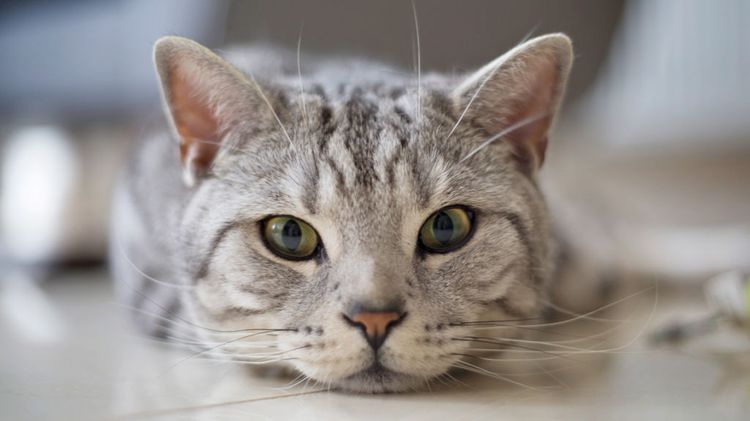
- Breed predispositionSome cat breeds are at risk for certain diseases that can cause the corresponding alarming symptom. Hypoglycemia is a common problem for Burmese cats. Chartreux and Maine Coons often experience this. femoral dysplasia, and Cymrics are considered a breed with congenital weakness in their hind legs. Such difficulties are the price paid for artificially bred beauty and the genetic manipulation carried out by breeders.
- Inflammatory processes and infectionsThey can affect any organ or organ system, but at various stages they can lead to complications such as impaired mobility of the hind legs. In such cases, difficulty walking is far from the only sign of the disease.
- Metabolic disordersA deficiency of essential vitamins often leads to paralysis of the legs. This can be caused by metabolic disorders or improper nutrition.
Reasons
It's only possible to independently determine the cause of a cat's difficulty walking if the owner witnesses an injury. In other cases, only a qualified veterinarian can correctly diagnose the cat based on a thorough interview and examination.
The illnesses that cause these difficulties can vary greatly. Some result in partial weight-bearing ability, while others can lead to complete paralysis of the hind legs.
Parasitic infections
Often, a cat begins to walk poorly after ear mites have been infesting their ears for a long time. Their presence causes pus to form in the inner ear, and if the body can't fight this on its own, it leads to inflammation of the meninges. Even more serious consequences can result from internal parasites, which are carried through the bloodstream and lodge in the brain or nervous system.
Arterial thromboembolism
It occurs due to the migration of a thrombus and the blockage of a blood vessel. This causes ischemia and tissue death. The formation of thrombi is triggered by pathologies such as hypertrophic or dilated cardiomyopathy.
Thromboembolism always has a distinct onset: the cat screams or meows loudly, and suddenly begins walking poorly. When attempting to palpate the tissues in the pelvic area, it may become aggressive due to pain. The paws often become cold, as the blood supply is impaired. The condition of the pads can be noticeable: they become lighter in color than those on healthy paws. The animal's overall body temperature may drop. Often, the pet breathes heavily with its mouth open.
In such cases, it is necessary to react very quickly, since without intervention, a fatal outcome will soon occur.
Intervertebral disc herniation
When a disc slips, increased pressure is placed on the spinal cord. Due to impaired innervation of the hind limbs, the animal begins to stagger, its legs buckle, and it struggles to walk. This can range from minor coordination problems to complete paralysis, depending on the severity of the pressure, with the cat simply falling over. Herniated discs are more common in older and overweight cats, but can also develop after an injury. A herniated disc can also sometimes occur. and kittens.
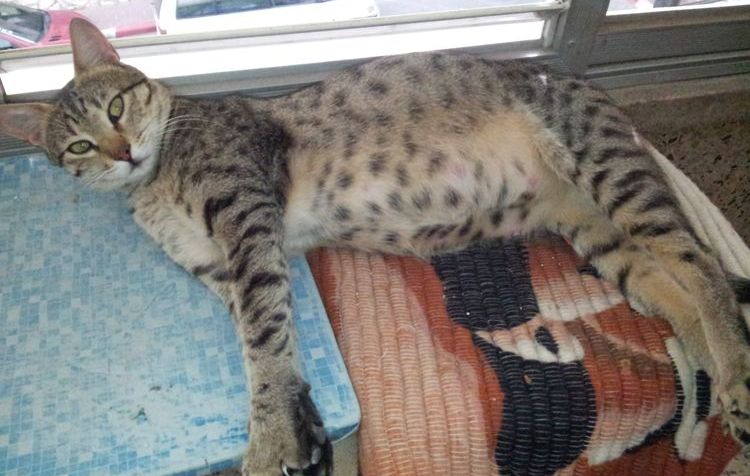
The problem often affects breeds with shortened tails, as they have anatomical changes in the sacral spine. In these breeds, symptoms often progress gradually, and if detected early and treated appropriately, the problem can be eliminated or its progression halted.
Myelitis
This is a very dangerous disease, which can cause cats to behave aggressively even toward family members. Sometimes a high fever is observed, the hind legs become tangled when walking, and serious digestive problems arise. Urinary problems may also occur. The affected animal will constantly lick its hind legs or bite them intensely.
Myelitis can be caused by infection, severe poisoning, or complications following pregnancy. In simpler cases, myelitis affects a small area of the spinal cord, but sometimes it spreads to all parts of the spinal cord. Then, the clinical picture is most severe.
Avitaminosis
Severe deficiencies of essential vitamins can disrupt various physiological functions. This can be triggered by parasitic infections of the gastrointestinal tract, pregnancy, breastfeeding, and poor nutrition (especially in young adults). Often avitaminosis It develops due to a lack of sunlight, which is why cats kept in apartments suffer from it more often than animals living in private homes. It is sometimes triggered by long-term illnesses or the use of harsh antibiotics.
Symptoms of vitamin deficiency include increased lethargy, weight loss, and anemia. The pet may refuse to play and try to hide in a secluded area. Furthermore, the condition of the coat worsens.
Renal failure
The symptoms develop rapidly, and the entire genitourinary system quickly fails. Most often, renal failure This can be identified by a decrease in urine output, which becomes less and less each day. In addition to difficulty walking, your pet will also experience lethargy, digestive problems such as vomiting or diarrhea, and often a fever. The condition worsens rapidly.
Dysplasia
If the hip joint is not properly developed, the risk of dislocation or fracture in the upper girdle of the hind limbs increases. This can lead to decreased motor activity, pain in the animal when stepping and walking, lameness in the hind legs, and possible crookedness of the limbs. The cat may prefer to sit in one place, and after an injury, it may stop walking and begin crawling.
Diagnostics
The earlier diagnosis is initiated, the greater the chance of curing the animal without fatal consequences. Before prescribing an examination, the veterinarian will determine the following:
- how long ago did the first symptoms appear;
- the animal gradually or suddenly stopped walking or falls while walking and its legs begin to move apart;
- whether the onset of the disorder was preceded by injury or illness.
For a comprehensive diagnosis, the following tests and examinations are prescribed:
- neurological examination with determination of reflex conductivity;
- setting the sensitivity of the hind legs;
- X-ray of the spine;
- Ultrasound of abdominal organs;
- general clinical tests of urine and blood;
- MRI of the head and back.
Based on the data obtained, the specialist establishes a diagnosis and determines why the cat is having difficulty walking. In rare cases, additional tests, such as a bacterial culture, are necessary.
Treatment
Treatment begins only after the cause of the cat's difficulty walking has been accurately identified. Incorrect treatment can lead to rapid deterioration and, in some cases, death.
In different cases, therapy is carried out in the following directions:
- Spinal injuriesHome treatment is only permitted for mild injuries: ointments and gels are prescribed, and physical therapy and massage are also effective. Acupuncture is sometimes prescribed. In more severe cases, treatment is performed in a hospital using surgical procedures.
- MyelitisAlong with therapy aimed at the underlying cause of the symptoms, measures are taken to prevent pressure ulcers. The pet should be turned frequently, and the hind legs should be massaged using warming oils or ointments (such as camphor oil).
- ThromboembolismIf the hind limbs retain at least some sensation, their function can be restored. This can be achieved by prescribing physiotherapy and administering anticoagulants.
- Avitaminosis. It's highly treatable if the changes haven't become irreversible. It's important to maintain a proper diet appropriate for the breed and age group. Vitamin supplements may be necessary.
- DysplasiaImmobilizing the limbs to reduce stress can help. Taking chondroprotectors is also helpful, and in later stages, anti-inflammatory injections are often used.
- Renal failureAfter restoring the water-salt balance, it is important to follow a special diet.
Read also:
- Gingivitis in Cats: Symptoms and Treatment
- How to massage the hind legs of cats
- What diseases can a person get from a cat?


2 comments
Vladimir
The information is very useful, but it's very unpleasant to listen to because the music is used so ineptly. It doesn't help, it hinders. "First, do no harm," as the saying goes. That's exactly the case with the music. A recording with very loud music is terrible to listen to. It's better without music at all. I repeat, the music interferes with the perception of speech and your narration on the video.
Svetlana
Music seems to be more important. Nothing is clear.
Add a comment