
The cat is losing hair in clumps, leaving bald spots.
Hair loss in animals isn't such a big deal if it's small and the coat is renewed and remains shiny and silky. All furry pets are subject to seasonal shedding. However, if a cat's hair is falling out in clumps, leading to bald spots, or if sores develop, it's a serious reason to seek veterinary help. Why does this happen? Why do cats develop dandruff? And most importantly, what should an owner do?
Content
- 1 Causes of hair loss in cats
- 1.1 Molting
- 1.2 Poor nutrition, lack of vitamins and minerals in the diet
- 1.3 Allergy
- 1.4 Skin parasites, mites
- 1.5 Lichen
- 1.6 Hormonal imbalance
- 1.7 Solar dermatosis
- 1.8 Folliculitis
- 1.9 Consequence of other diseases
- 1.10 Hair loss at the injection site
- 1.11 Stress and nervous tension
- 1.12 Autoimmune diseases
- 2 Causes of dandruff in cats
- 3 What to do if your cat's hair is falling out in clumps
Causes of hair loss in cats
What are the main causes of hair loss in cats?
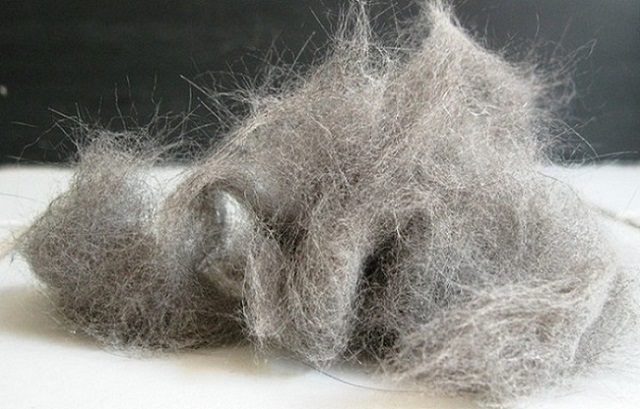
Molting
It's usually seasonal. But in indoor pets, it may not occur at the same time as in animals living outdoors. This is because while outdoor animals develop a thick coat before winter, completely indoor cats begin to shed heavily. Why does this happen? After all, the heating season is starting indoors, and the whiskered cat will be hot in its thick coat, so... sheds.
Poor nutrition, lack of vitamins and minerals in the diet
Take a look at your pet's bowl. What are you feeding them? If it's just table scraps or low-quality food, what's surprising? A lack of vitamins and minerals can cause bald spots, clumps of fur, and loss of luster. Long-haired cats can even develop mats. Be sure to enrich their diet.
Allergy
An allergic reaction causes itching, dermatitis (inflammation of the skin). The animal begins to scratch itself until it bleeds, which only worsens the situation. With dermatitis, the hair does not receive adequate nutrition and falls out. The more advanced the condition, the more thinning its coat becomes. Allergies can develop to food, medications, household chemicals (including personal care products such as shampoos), and the waste products of helminths.
Skin parasites, mites
Again ourselves parasites and their waste products (saliva, excrement) cause severe itching and dermatitis. This leads to hair loss. The list of diseases is extensive, but the most common are demodicosis, sarcoptic mange, and notoedrosis.
Lichen
It doesn't just cause hair loss. It feels like it's been cut. And even patches with scales inside appear on the skin.
Hormonal imbalance
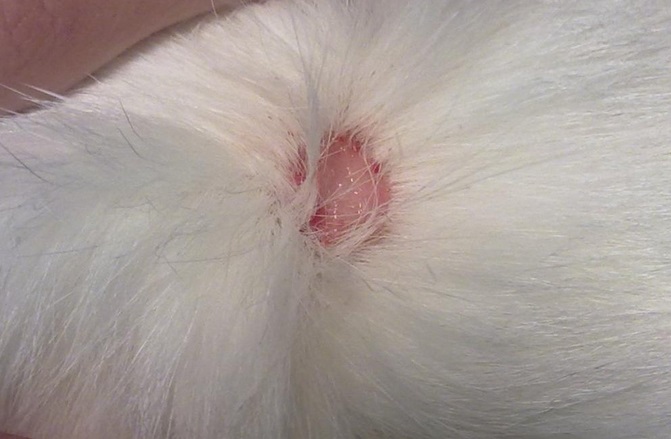
It is precisely because of this that the cat's hair falls out in clumps to the point of bald spots, and spots appear on the skin. soresAnd it's extremely difficult to confuse such a hormonal imbalance with normal seasonal shedding. What causes this imbalance?
A malfunction in just one endocrine gland (pancreas, thyroid, thymus, adrenal glands, and others) or mixed secretion gland (ovaries, testes) can disrupt all metabolic processes in the animal's body. In some cases, the owner is to blame when they indiscriminately administer various hormonal medications (anti-inflammatory steroids, or those used to suppress heat and estrus, for example). Even a single dose of such medications can have a disastrous impact on the cat's health.
Solar dermatosis
Especially white cats have skin that is most sensitive to ultraviolet radiation.
Folliculitis
When the hair follicles themselves become inflamed, the hair stops receiving nutrients and falls out.
Consequence of other diseases
For example, advanced inflammation, problems with the digestive tract, intoxication.
Hair loss at the injection site
The skin thickens, swells, turns red, and the hair in that area falls out, and sores appear on the skin.
Stress and nervous tension
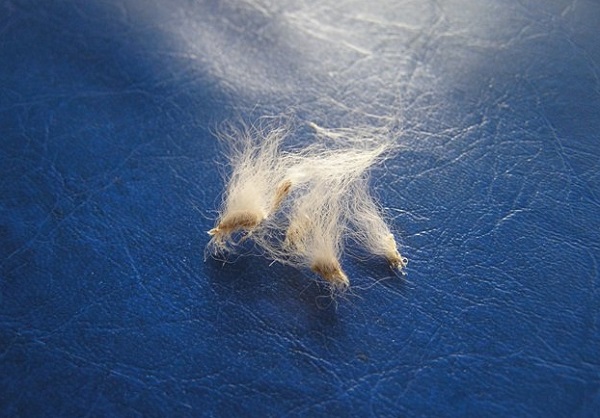
Animals can also suffer from mental illnesses, in which the cat begins to gnaw and tear out clumps of its own fur until bald spots, sores, and blood appear.
Autoimmune diseases
This condition is also known as patchy alopecia. Your pet won't itch, but the fur will actually start falling out in clumps. Alopecia is most often seen in the neck and head area.
Causes of dandruff in cats
Seborrhea can be either primary (an underlying condition) or secondary (a symptom of another ailment). The pet's skin develops an unpleasant odor, becomes greasy, and becomes inflamed. The resulting dermatitis also causes clumps of hair loss.
What to do if your cat's hair is falling out in clumps
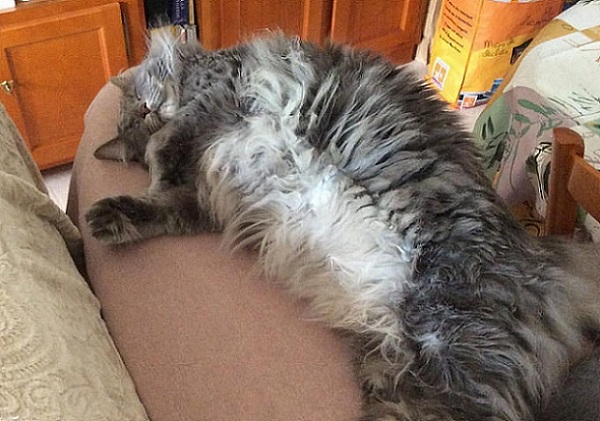
The first step is to seek help from a veterinarian. They should determine the cause of your cat's hair loss. Your cat may require more serious treatment than simply supplementing its diet with vitamins (preferably B vitamins) and minerals, and improving its living conditions and care (washing and brushing regularly).
- If the cause is skin parasites, they need to be eliminated. Wash your dog with a special shampoo, apply drops to the withers if necessary, put on a collar, or perform other procedures as recommended by your veterinarian (especially for scabies).
- If the cat allergy, then first of all you need to find the cause, eliminate the allergen, and then deal with the symptoms.
- But if an animal has health problems, treatment is necessary. In any case, dandruff and hair loss should not be ignored. This is always a warning sign that something is wrong with the pet's health.
If you have any questions, ask them in the comments and we'll answer them promptly!
Read also:


54 comments
Tatiana
Hello! Our cat is 15 years old and spayed. Recently, her fur started falling out in clumps on her back and tail. She doesn't itch and is calm. She doesn't go outside in the winter. In the summer, she lives in the country, goes for short walks, and wears a flea collar. She eats raw fish and dry food and drinks milk and water. It's very difficult to transport her from the village to the clinic. What would you recommend?
Daria is a veterinarian
Hello!
All issues related to skin and coat can only be resolved in person by a doctor.
I understand that transporting a cat from the countryside is quite problematic, but treating an elderly animal online is much more dangerous.
There is treatment for ectoparasites (a collar), if this does not work, then it is the doctor’s job and diagnostics after the fact.
Veronica
Hello, I have a cat and a male cat. The female cat got sick at 2 years old. She started losing a lot of hair around her tail, a brown discharge that smells bad, and greasy fur. We took a bunch of tests and went to 3 veterinarians, but they didn’t find any diseases and said it was a violation of cartinization. My husband gave me a cat six months ago. The cat got sick with the same disease after 5 months and we went again, but there are no parasites, the food is good, so what should I do? ((The female cat and the male cat are exotic breeds, I really want to cure them, help.
Daria is a veterinarian
Hello! If your cat has developed similar symptoms, it's clearly contagious. Either parasites or an infection (viral or bacterial). Although five months is a long time for viral infections. This means the veterinarians aren't conducting a thorough examination. What tests were performed, and what were the results? What treatments have the animals had, and when were the last ones (vaccinations, deworming)? What kind of food? Brand and portion sizes? What does the diet consist of? Is there access to the outdoors? Has there been contact with other animals?
Alexander
My cat is itching, turning into a naked rat. We're at the vet, feeding him, giving him IVs... On our fourth visit, she prescribed Ivermectin injections. Four injections every 10 days. 150 rubles each time. Available in 1 ml, 20 ml, and ++. A mere pittance. This isn't a commercial product. All farm animals (four-legged). Fleas, worms, ticks... (list in the instructions).
For a young cat weighing 3 kg, in a very neglected state, mangy, fur in clumps with bits of skin, a rat tail... 0.12 ml, 4 times, every 10 days. By the 3rd time, there is already noticeable hair restoration. 0.12 ml, on the fingers, is half a centimeter in an insulin syringe, 6 divisions, that's 1 drop! VERY! Toxic! I've already injected mine 15 times, collectively. I haven't noticed any toxicosis. But Vaska, when I picked him up, had brittle whiskers, toxicosis, ate, drips - nothing. I gave him an injection - it went away, without even knowing what was wrong. Dosage by weight is in the instructions. You can inject preventatively if he wanders in the yard. Pull the skin between the shoulder blades, insulin subcutaneously, in the retraction, NOT intramuscularly. They react calmly, no need to hold.
A 1 ml vial (a thimble size) (this is a full insulin vial) equals 8 cat doses. The stopper is rubber and can be pierced with a needle. Store in the refrigerator.
One—for everyone! Now! Cold—thickens, difficult to absorb with the needle. Inject air into the bottle to increase the pressure. Draws slowly.
The skin between the shoulder blades is tight as rubber. After the injection, check that the skin is not wet and that the medication has been injected. The needle bends easily. It's easy to mistake it for a proper injection. Inject until the needle base is firmly in place.
There's a 20 ml bottle in the fridge, and a prescription on a magnet near the camp, with the dates of Mishka's injections, a furry black Siberian.
Irina
Hello... I found a kitten, he is barely a month old... the fur is falling out, there is a brown crust... the fur is falling out on his belly, legs, temples, neck.. He is completely gray from this crust... What should I do?.. I went to the vet, they prescribed an ointment... but they didn’t even take the kitten in their hands... What should I do (how to treat? I also have a female cat and two male cats... I’m afraid for them... and for myself... so that they don’t catch anything... maybe it’s ringworm... but they said no... but how did they diagnose it without taking anything (.. If it were possible to make a video with you so you could watch it, I would send it... how to treat... I live in a village...
Daria is a veterinarian
Hello! The vets have seen the kitten in person, and you're questioning their diagnosis. I certainly can't make a diagnosis from a photograph alone. What ointment did they prescribe (name)? If you're afraid to handle the animal, how are you going to treat it? The kitten won't apply ointment or inject itself. The vets may have suspected a tick. First, they should wash the kitten with flea shampoo. Then, deworm it and look for tick medications suitable for such a small kitten (but this can all be found at a veterinary pharmacy in town). The first thing you need to do is completely limit this kitten's contact with your other animals. After any contact, wash your hands thoroughly (ideally, wash your clothes as well, to avoid transferring anything).
Anna
Hello, please tell me, my cat went into heat and ran away from home for 5 days, there is a piece of fur missing from her back, what could it be? Thanks in advance!
Daria is a veterinarian
Hello! There's a high risk that your cat has had an encounter with males. The cats may have pulled out a clump of fur during mating (they grab it with their teeth and hold it there). To confirm or rule out successful insemination, an ultrasound is necessary.
Vika Smolkina
Our seasonal shedding lasted almost a year, and bald patches started appearing on our cat. After tests, the vet only prescribed vitamins. We chose Bephar vitamins because we'd used their products and were very satisfied. After the course, she noticed that her bald patches had become denser and her hair loss had decreased significantly. However, the hair that was growing back changed color—it became darker. Is this normal?
Daria is a veterinarian
Hello! The "hedgehog" is the undercoat. The darker fur is nothing to worry about. It's "young" and will return to its normal color over time. Continue vitamin therapy, supplementing with amino acids and minerals. Monitor your pet's health.
Vitaly
We're cooking fish porridge for the cat. He eats it with pleasure. We haven't given him any chemicals (food). His fur is matting but not falling out. We're cutting it with scissors. Is this normal?
Daria is a veterinarian
Hello! No, this is not normal. The animal is clearly lacking vitamins and minerals. You shouldn't feed your pet fish too often! Especially if it's freshwater fish, as it contains an enzyme that destroys vitamin B1 in cats. Your pet needs variety, since you've already decided to feed natural foods instead of chemicals. Vegetables and meat (not just fish, but also poultry, beef, and rabbit, but definitely not fatty meats). Be sure to cook the meat thoroughly to prevent helminth infestation. Now you need to adjust your pet's diet and give it a vitamin supplement (you can add supplements, vitamins, and minerals with the food, but it's better to administer vitamins and mineral complexes intramuscularly once a week for 2-3 weeks).
Dina
Good afternoon. My cat is shedding a lot. I thought it was nothing unusual, since she's an indoor cat and the heating season is coming soon. I haven't noticed any bald spots on her neck yet, and she has no sores. She's very fluffy. She's three years old. We feed her dry food (available at the veterinary pharmacy) and supplement with Gourmet wet food.
Daria is a veterinarian
Hello! Let's start with what kind of dry food? Just because you buy it from a veterinary pharmacy doesn't mean you're getting super-premium or holistic. They'll also sell budget-priced options, after all, it costs money (as sad as it may sound, such cheap and even "harmful" foods are bought far more often and in larger quantities than high-quality, good ones). Secondly, is there a collar around the cat's neck? Have you treated it with flea drops? Have you checked for skin parasites? Is there any itching? It would be a good idea to have the cat's skin examined for any changes (a dermatologist can help if you find any). Vitamins will still be needed. Also, has the cat given birth? Is she spayed? How is her weight (has she started losing weight rapidly)?
Julia
Hello. My cat is three years old, fluffy, and not spayed. He's started losing his fur, leaving bald spots with fluff. His skin is normal, but there are some fairly large bald spots on his sides and neck.
Daria is a veterinarian
Hello! The first standard questions are: feeding, housing, flea and worm treatments? You should take your pet to a veterinary clinic for additional examinations: a scraping and a biochemical blood test. Rule out vitamin deficiencies (especially if the diet is unbalanced or the pet is on a budget-class food), endocrine problems, allergic reactions, and hormonal imbalances (especially if the animal has recently been in heat or has been given medication to suppress it). In short, an in-person examination is essential.
Faith
Hello. I have an elderly cat – he's 14 years old. He's loved water his entire life: he drinks from the shower, lies in a damp bathtub when it's hot, and even when drinking from a bowl, he'll dip his paws in it for a long time, licking and tasting the water. He never misses a single puddle – he'll lie on anything wet.
Over the past few days, I have noticed that my cat falls asleep at night near his bowl and the fur on his neck does not have time to dry.
I tried blotting it with paper towels between soaks, changed the bowl, and eventually moved it to a higher surface so I wouldn't be tempted to do that.
The wool dried, but became felted and began to fall out in small clumps on the skin scales.
Now there's a fairly large bald spot. Just skin, no wounds.
The cat does not show any anxiety, does not scratch, communicates, eats, and goes to the toilet without changes.
How critical is this situation? And can it be improved?
In the house, besides us, there is a newborn baby, from whom I can’t leave yet.
I would be grateful for any advice.
Daria is a veterinarian
Hello! What are you feeding him? He's an older cat, so you need to closely monitor his health. First, he might be lacking vitamins. Second, you should check his sugar levels and rule out diabetes (since he's so thirsty, especially if he's peeing a lot and often). Third, it's also a good idea to have his thyroid checked. A thyroid disorder can disrupt his metabolism and cause hair loss. But for your own peace of mind, you should rule out fungal infections (ringworm), especially since there's a child at home. Ask neighbors/relatives/friends to help with this (any clinic can perform a Wood's lamp test and a trichoscopy). But maybe there's something wrong with his diet? Is he not getting enough wet food, or is his diet unbalanced?
Faith
Thanks for your quick reply.
Until recently, I was feeding him NOW dry food, but then it started making him sick. I don't know if it was a bad batch. But on January 3rd, we switched to AATU and haven't had a single episode of nausea or diarrhea—his stool is perfect. Especially since he's already missing teeth, and the kibble in this food is softer and, in my opinion, more comfortable.
Wet food - Animonda.
Plus, I'm now giving a course of Viyo.
I didn't even think about ringworm at first, but now I'm worried. It's little consolation that the hair loss was precisely in the area that was wet, and quickly—in just a day. And it hasn't spread. Just in case, I treated her with chlorhexidine today.
In your opinion, is it possible to call a doctor and carry out a full diagnosis at home?
Or is a trip to the clinic mandatory?
Daria is a veterinarian
Hello! You can also rule out fungal infections at home (a Wood's lamp isn't that big and works from a 220V outlet, so they can bring their own). We do this ourselves in rural areas when the situation requires ruling out microsporia (a type of ringworm). Blood for biochemical analysis can also be taken at home. But again, everything depends on the equipment and capabilities of the veterinary clinics in your city. They may not offer such procedures at home, or they may be well-equipped, in which case it's better to bring your pet to the clinic for a thorough examination on the spot.
Tatiana
Hello, my 18-year-old cat fell ill in the fall, almost stopped eating, and lost a lot of weight (just a skeleton with fur). We took him to the vets, and we ended up feeding him Viyo for seniors in the mornings. He refuses to eat Hills ID dry food, so we feed him Almo Nature mousse (he refused to eat the bags with the meat chunks, only licking the broth in them). He's recovered, become more active, and seems to be gaining weight. However, he's developed a problem with his fur: it's falling out in clumps and there are a lot of tangles. The vet didn't see any allergies or ringworm, didn't recommend anything, and didn't change his diet. Maybe he needs some vitamins? He doesn't eat dry food at all, only mousse.
Daria is a veterinarian
Hello! Don't mix different brands. Choose one that your cat eats best. If your cat has clumps of fur, it might be because the food isn't suitable (my elderly cat had this reaction to a food, but as soon as I changed it, the tangles and dandruff disappeared). Plus, my cat is older, so it's a good idea to rule out hormonal issues (like thyroid issues). Injectable vitamins are better—they're better absorbed, easier to dose, and your pet will definitely get them. Plus, complex supplements also contain amino acids, many of which help restore the coat's shine. A blood test for thyroid hormone levels and a biochemistry profile would be helpful. A diet can be tailored from there. As for vitamins, ask your local veterinarian for vitamins (be sure to get N-vitamins, H, and B vitamins with amino acids).
Maria
Hello! We have a problem with our cat. We used Inspector Total K as a preventative measure, and the next day, her fur started falling out in clumps. What should we do? What is this?
Daria is a veterinarian
Hello! If this occurs almost immediately after using the drops, it's most likely an allergic reaction, an individual intolerance to one of the ingredients, or an overdose. There's nothing you can do now; the active ingredient has already spread throughout the body. For future reference, please be aware that this brand is not suitable for your pet.
Thea
Hello, my cat has been losing a lot of hair around her neck. We took her to the vet, they took a scraping, and nothing was found. The vet said she might be on the wrong diet. Her skin is fine, pink, and free of any sores, the only thing she has are blackheads.
Dasha is a veterinarian
Hello! You yourself wrote, "perhaps the diet is incorrect," but you didn't specify what exactly you're feeding. When was the last time you dewormed your cat? What was the diet? How old is she? Is she spayed or not? Has she been bred or not? Have you had her blood tested for biochemistry? Hormones tested? Specifically, her thyroid tested? Have you put a flea collar on her? Have you accidentally applied drops to her withers?
Thea
Previously, I fed Perfect Fit for spayed cats, both dry and in pouches. Now we've been prescribed Royal Canin, for indoor and furry cats, for tartar and intestinal hair removal. We switched it out this month. She's an indoor cat, 8 years old, and doesn't go outside. She's spayed and had one litter, at age 4. We'll take her for blood work and hormone tests next week.
There is no collar or drops, nothing.
The doctor also said that if she was itchy, she could take two drops of Zodak. I noticed that one day she started scratching her neck a little more often, so I gave her the medicine. Now the fur has stopped falling out, and some areas are starting to grow fluff. But we'll still take her for tests this week. I'm not a doctor, of course, but after the Zodak, I had a feeling it was an allergy.
Dasha is a veterinarian
All that's left is to find the right one. What did the food taste like? For future reference: don't feed both wet and dry food. Choose one. Sometimes a reaction can occur if both dry and wet food interfere (even if at different times of the day). Bring your cat for a checkup anyway. A biochemistry and hormone test wouldn't hurt. Also, get your cat's thyroid checked. And if possible, have them check their pancreas, too. In older cats, it's not uncommon for the pancreas to malfunction (even leading to diabetes if treatment isn't started promptly).
Tatiana
Good afternoon! My cat has started losing bald spots on his sides, belly, and tail. The bald spots look like they've been shaved. There are no sores or scratches. His ears, head, and neck are clean. However, in the spring, he had an infected wound. We underwent lengthy treatment: washes, ointments, and intramuscular antibiotics. After that, he began losing weight and losing baldness. Fleas appeared. We have now treated him for fleas and worms. He used to eat both cheap dry food and table scraps. We switched him to Purina Van and started giving him vitamins. We plan to visit a veterinary clinic soon, but we haven't had the opportunity yet. We are very worried. Could this clinical picture indicate an infectious disease or is it more likely an allergy and loss of immunity after an illness?
Dasha is a veterinarian
Hello! Hair loss as such won't occur with an infectious disease. A weakened immune system or allergic reaction is another possibility. Ideally, a blood test should be done, and a skin scraping should be performed on a patch of skin (at the border between the healthy and affected areas). Rule out intradermal parasites and fungal infections. If there are rashes or pustules on the skin, a bacterial culture should be performed (bacterial dermatitis is a possibility, but visible skin lesions would be desirable).
Tatiana
Hello! Our cat is two and a half years old. We spayed her two weeks ago. She's a domestic cat and hadn't given birth before. She was eating raw, frozen chicken fillet. After we removed her blanket, she started scratching herself, licking herself, and hair started falling out in clumps around her neck, withers, and ears. The doctor said she's allergic to chicken protein! We switched her food to hypoallergenic Royal Canin, but she doesn't really like it. We're giving her 1/4 tablet of Citrine, but there's no improvement. She continues to scratch herself! Please advise what we should do. I looked at the ingredients, and they also contain chicken liver and animal fats. Maybe we should switch to Happy Cat with rabbit and duck? We're all upset and don't know what to do to help our beloved cat! We thought we'd eased her condition with spaying, but it turned out we've actually harmed her! Please help!
Dasha is a veterinarian
Hello! Don't feed any poultry food. You can switch to rabbit or tuna. But first, you should feed hypoallergenic foods. Be careful not to give antihistamines for long periods of time (they can affect the kidneys). It's best to give an IV drip for a couple of days to "cleanse" the blood. You can give white charcoal for up to a week to further "absorb" waste in the intestines. If there's no improvement, then switch to a natural diet, consulting with your veterinarian about choosing a diet and gradually introducing new foods.
Lesya
My cat's fur is peeling off in large chunks, and he's practically going bald. It's May now. I haven't noticed any itching. There are tiny hairs barely visible on his skin, but this has never happened before. What could it be?
Dasha is a veterinarian
Hello! Does your pet go outside? What are you feeding them? Take them to a veterinarian for an in-person examination. Rule out ringworm, vitamin deficiencies, dermatitis, allergic reactions, and parasitic diseases (such as scabies mites or skin lice). To do this, you'll need to take a skin scraping, a blood test, and a general physical examination. Without seeing your pet, it's impossible to say for sure what they have.
Marina
Hello! My cat (9-10 months) has developed mats around her neck and head. A lot of her fur has appeared on the furniture and floor. We thought it was seasonal shedding (it's April!). But today we discovered a large bare spot on her neck between her ears. The spot is pale and dry! We're horrified: is it ringworm?
Dasha is a veterinarian
Hello! Bring your pet to the clinic for an accurate diagnosis. It's impossible to tell whether your pet has ringworm without seeing the animal and conducting an examination. A Wood's lamp and microscopy will provide a more accurate result than guesswork and reading articles. Your pet may have a simple vitamin deficiency or an allergic reaction (unsuitable food, causing tangled and falling fur, dry skin, and dandruff). Ringworm is characterized by spots with clearly defined borders, increasing in diameter, and scales in the center.
Vetch
Hello, I noticed yesterday that my cat has a missing clump of fur just above her tail on her back, but her skin is clear. What could this be? She's a Scottish Fold cat and doesn't go outside. I adopted a neutered male cat in December, and he's been treated. They sometimes play, fight, and chase each other. Could a cat have torn out a clump of fur like that (about 3-2 cm in size)? My cat is clear.
Dasha is a veterinarian
Hello! How exactly is there no fur? Are there any wounds on the skin, crusts, or brownish-brown spots (like dried blood)? Or maybe the fur has simply become sparse. Maybe he chewed it out? It doesn't look like ringworm, as the face and paws are usually the first areas affected. The spots are round, with clear borders and within the scales. This is most likely a mechanical injury, but it's best to have the dog examined by a veterinarian.
Anastasia
Good day, my cat started losing weight and fur after giving birth (three months ago). She's wiped her entire rear end and constantly licks herself. Even though she remains active, I'm very worried if everything is okay with her. She lived in an apartment for two years, and now she's been living in a private house for six months. She doesn't go outside now, saying it's cold. What could this be?
Dasha is a veterinarian
Hello! Who's saying it's cold? The cat? When was the last time she had worms? What about fleas? What are you feeding her (describe her diet in detail and honestly)? How did she manage to clean herself? Was she constantly licking herself or rubbing herself on the carpet, scratching herself? Why hasn't she been seen by a vet in three months? Could she have had postpartum complications, since she's started losing weight? Could vitamin deficiency have developed due to a lack of nutrients in her diet? What other symptoms does the cat have?
Olesya
Nastya, hair loss on the back of a cat's body often indicates the presence of skin parasites (usually fleas), while food allergies usually manifest as baldness on the head and ears.
Inna
Hello, my cat, who goes outside, has started scratching herself, twitching her back and tail, meowing pitifully and jumping up periodically. When she's sitting or dozing, she twitches slightly and monotonously. After examining her, I found damaged skin, which I treated with Levomekol. They healed. I also treated her for fleas. At first, she seemed to cheer up, but then the same thing happened again. She's not refusing food; I feed her chicken and sprouted oats. Taking her to the vet is difficult—after the veterinary hospital, where she had a painful wound treatment, she's very aggressive with strangers, and it's practically impossible to hold her.
Dasha is a veterinarian
Hello! Are you feeding your pet only chicken and oats? That's an unbalanced diet. Moreover, feeding chicken to pets is not recommended. Commercial poultry often contains antibiotics, which are small amounts for humans but significant for cats, and hormones that promote growth, which can trigger an allergic reaction in pets. Please note that chicken-based foods often cause itching and hair loss in dogs and cats. Start by changing their diet and balancing it (introducing vegetables and grains, or switching to high-quality commercial food). Deworm your pet (twice, 10-14 days apart). These are the minimum steps you should take initially. Observe for visible changes. If not, take your pet to the vet for a blood test and physical examination.
Marina
Hello, recently my cat started losing all his fur, and there are some sores on the bare areas.
Dasha is a veterinarian
Hello! My pet needs an in-person veterinary appointment. What kind of ailments are there? Scabs and crusts? Scratching? Ulcers? Dermatophytosis, flea allergy, vitamin deficiency, allergies, and other conditions (including a thyroid exam) should be ruled out. Without a definitive cause for the hair loss, treatment cannot be prescribed.
Galina
The cat has almost completely plucked out all his fur, scratches himself and cries, his skin is clean and sore-free. But the cat scratches himself profusely and cries loudly, and has become very withdrawn.
Dasha is a veterinarian
How did a cat pluck its own fur? It's not a parrot. It could have simply fallen out, torn out by its claws while brushing. You need to look for the cause, what's wrong with the animal. It could be an allergy, fleas, pain (an inflammatory process), or chronic renal failure (which is associated with belly licking). The questions are the same as any veterinarian's: age, diet, date of last vaccination and deworming, where exactly is the itching, what other symptoms are present, how long ago did it start, what were the medications given? There's no information other than the fact that the animal is itching and screaming. Bring your cat in for a checkup so they can palpate it, examine it, and prescribe treatment based on the results.
Julia
Hello! We adopted a cat from the street and dewormed her. I noticed a protruding patch of fur between her ears. I scratched it with my nails, and the fur came off. It was painless, and the cat didn't twitch her ear. The fallen fur had white scabby crumbs on it, but the skin on the bald spot was clean. I also found another similar patch on her withers. What could it be? We feed our cat Sheba soft food and Perfect Fit dry food. Before this, she ate mice and everything from KitKat to super-premium food, which was fed to her by people in the garages where she lived.
Dasha is a veterinarian
Hello! These are most likely crusts from scratching or an allergy. Perhaps the cat was infested with fleas and scratched itself, causing the crusts. It could also be an allergy to something. Perhaps it was injured somewhere, and that's how it healed. Firstly, there are many possible causes. Secondly, the animal needs to be seen, touched, and examined. You might even need some tests. If you haven't noticed any changes in its behavior or well-being, and no new spots or crusts have appeared, and the old spots aren't getting bigger, there's no need to worry. However, I always recommend taking all foundlings to a veterinarian for an in-person examination. They'll examine them and tell you if there are any underlying conditions. Especially since stray cats often infect people and other pets with ringworm. Therefore, it's best to immediately have them checked for fungi at a clinic. If the pet is completely healthy, vaccinate them after the deworming. Vitamins wouldn't hurt, especially for a foundling. Take him to a veterinary clinic, let them examine him and rule out ringworm (even though the symptoms you described are not typical for dermatomycosis).
Julia
Hello, my cat had dandruff. (Age 5.6 years, neutered).
They took him away for family reasons to another house for 3 weeks, and I brought him back the day before yesterday,
She doesn't travel well. Today I noticed that the fur on her back is coming out in a 2cm by 3cm patch!
And in that place, a flaky bald spot remains. White dandruff. What can I do to help the cat? What could it be?
He himself became apathetic, eats and drinks normally as usual.
(They feed Friskies dry food and Whiskas wet food, alternating between the two. I also buy live grass, individual vitamins, and sometimes feed raw fish (rarely).)
Dasha is a veterinarian
Hello! Let's start by completely changing your cat's diet! Friskies and Whiskas are not food. They contain dyes, flavors, additives, and are low in nutritional value. Especially to a neutered cat. Raw fish should not be fed—there's a high risk of helminth infestation. Switch to super-premium and holistic foods for neutered animals. Yes, they are more expensive than Whiskas and Friskies, but they fill animals up faster, stay full longer, and contain fewer nasty ingredients. I can't say for sure that your cat has an allergy; a veterinary examination is necessary. But deworming and changing the food is a must, and a veterinary examination is a must to ensure there are no skin conditions.
Victoria
I've noticed clumps of fur falling out on my cat, and there's a dried wound at the beginning of the "tuft." I found similar wounds on his head and neck. We're feeding him as usual. He's an indoor cat, so ringworm is unlikely. What could it be, and what medications are best for him?
Dasha is a veterinarian
Good afternoon. Well, first of all, even completely indoor cats can get ringworm, an infectious disease, and even worms. You can bring pathogens from outside on your clothes and shoes! Deworming is still necessary every three months, and vaccinations are still required, even for cats that only see the outdoors through the window.
Secondly, feeding. What does "usual" mean? Honestly, when a cat with eczema is brought to a doctor, and you ask the owner what they feed them, they naively reply, "Oh, the same old thing—Whiskas/Friskies/Darling/KitKat/from the table/mixing Whiskas with food from our table (the most common answers)."
Thirdly, no medications should be prescribed to an animal without an in-person visit to the veterinarian. If it's ringworm, antifungal medications and vaccinations are needed. If it's eczema, antihistamines and ointments. If it's dermatitis, the cause needs to be investigated (allergies, fleas, intoxication, or something else). The animal's food may not be working (even if the manufacturer is the same, the ingredients may have changed, causing the reaction). It could be a vitamin deficiency, or the cat may have scratched the area. Therefore, it's important to see the animal, examine its general condition, and its skin (what the wound looks like, how big it is). There may be other symptoms.
Add a comment