
My cat's sides are swollen: causes and treatment
If your cat has bloated flanks, it's important to immediately determine the cause and develop a treatment plan as quickly as possible. The simplest explanation is gas accumulation in the intestines, but to avoid missing more serious problems, it's important to learn to recognize dangerous symptoms.
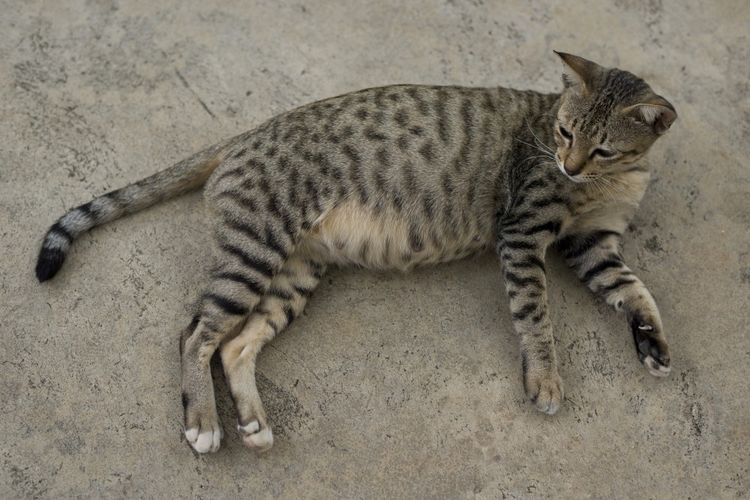
Causes of bloating in cats
There can be several reasons for a sudden abdominal enlargement. Knowing these can help you determine why your cat's sides are swollen and provide first aid.
- Fluid accumulation in the abdominal cavity. This may include internal bleeding, urine accumulation, pus, and effusions. ascites, which is caused by liver and heart disease, protein and carbohydrate metabolism disorders, diabetes, and abdominal infections. Peritonitis, an inflammation of the serous lining of the abdominal cavity, is an extremely dangerous condition. Failure to seek veterinary attention can result in the death of the pet. Peritonitis most often develops in animals with chronic gastrointestinal diseases or in cats after giving birth.
- A digestive and metabolic disorder that leads to obesity. In this case, the animal will simply become fat, and the belly will be soft.
- Helminthiasis. If a cat hasn't been dewormed in a while, its belly may become bloated. This is especially common in small kittens. Helminths multiply very quickly in animals, causing disruption to the entire digestive system.
- Neoplasms are also a common cause of swollen flanks in animals. These can be either malignant or benign. In any case, the appearance of neoplasms leads to enlargement of all internal organs and lymph nodes. Most often, swollen flanks are caused by tumors of the spleen and liver.
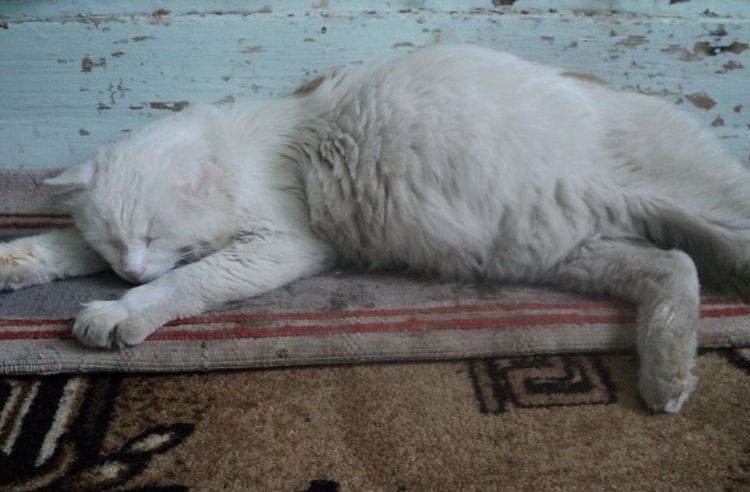
- Pyometra (Pus in the uterus). It can be caused by bacteria entering the uterus at the end of estrus or after a miscarriage. Pyometra is also a common condition in animals whose owners delay their heat cycle with medication. Unfortunately, this condition is usually diagnosed only in its advanced stages. In the open form, pus spontaneously exits the uterus through the vagina; in the closed form, the cat develops swollen sides, a fever, and weakness.
- Gas accumulation. One cause is swallowing air while eating. With aerophagia, you'll notice a bloated appearance not just around the sides but also around the entire abdomen. Your pet will become restless. Another cause of bloating is an excess of carbohydrates. When feeding an unbalanced, carbohydrate-rich diet, fermentation occurs in the stomach. This can be easily detected by looking at the sides, which become distended and resemble a cow's belly. A third cause of gas accumulation is an allergy, which causes severe intestinal irritation. In this case, you'll notice a sudden bloating of the sides and flatulence. With gas accumulation, your cat will become restless, meow, and have a bloated belly, like a balloon.
- Constipation. A secondary cause, the result of aerophagia, helminthiasis, or poor nutrition.
- PlagueIn addition to swollen sides and abdomen, the animal will exhibit weakness, vomiting, refusal of water and food, and a high fever. All of this is a consequence of a parvovirus infection. Distemper progresses very quickly, so if you suspect it, you should immediately contact a veterinarian.
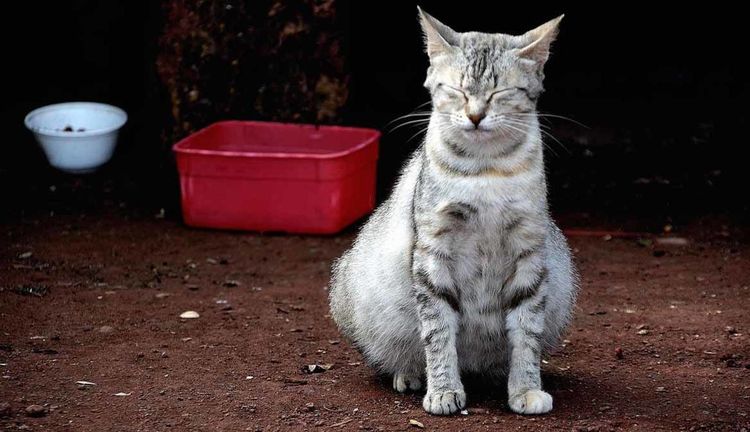
Principles of disease treatment
The first thing you can do at home is to palpate the abdomen and determine if it's causing discomfort. If the condition is serious, your cat will be in pain. If your pet doesn't resist the examination, begin treatment at home.
- DewormingTreatment against parasites should be carried out once every three months.
- Dietary adjustments. A balanced diet and food will help prevent bloat. Medications such as Smecta or children's Espumisan can be used, but only after consulting a veterinarian.
- If your cat is showing signs of obesity and has developed bloated flanks, diet and increased exercise are recommended. Thyroid problems can also be the cause of weight gain. In this case, your cat should be seen by a specialist who can prescribe hormone therapy.
- If your cat's belly and sides are bloated, but you don't notice any gas buildup and your cat isn't constipated, it's possible that hairballs have accumulated in the pet's stomach. In this case, you can give it a special wool-removing paste.
If the measures taken do not help, treatment can only be carried out by a doctor.
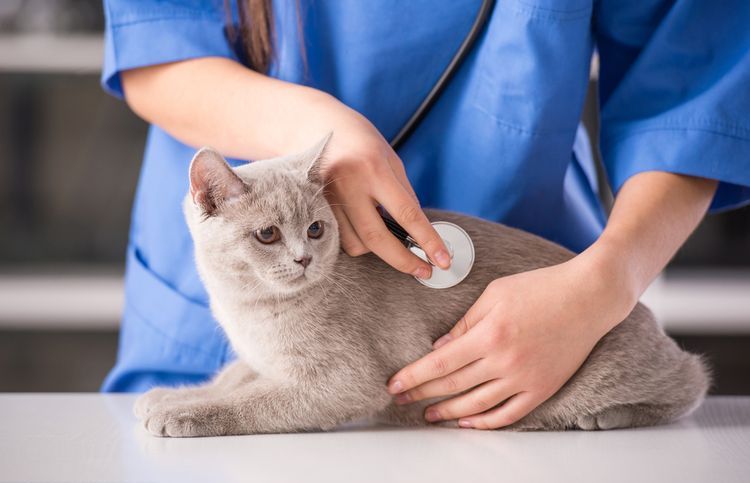
- At the hospital, the cat will undergo tests and an abdominal ultrasound.
- If ascites is present, drainage of fluid from the abdominal cavity is necessary to determine the cause. Dietary intervention (reducing salt intake) and cardiac medications are essential, as the accumulation of excess fluid in the body increases the strain on the heart muscle.
- If the sides are swollen as a result of a problem with the genitourinary system, then diuretics will be prescribed.
- Surgery is a last resort method used when neoplasms develop in cats.
- In mild cases of pyometra, medical treatment includes hormonal therapy, antibiotics, and antispasmodics. If there is a large accumulation of pus in the uterus, surgery is performed.
Read also:
- What to do if your cat has a bloated belly
- Feline infectious peritonitis
- Enteritis in cats: symptoms and treatment


11 comments
Hope
Good morning! We have a 7-month-old British kitten weighing 2290 grams. Over the past week, his belly, or more specifically his sides, have become sluggish, he's been sleeping constantly, his appetite has decreased, his eyes are watery but there's no pus, and his temperature has risen to 40.1 degrees Celsius. We went to the veterinary clinic, where an abdominal ultrasound showed little fluid in the abdomen and greatly enlarged lymph nodes. They said we have viral peritonitis. A biochemistry panel shows total bilirubin 176, albumin 43, globulin 26, eosinophils 100, segmented neutrophils 81, lymphocytes 69, eosinophils 100, and everything else is normal.
They prescribed analgin, an appetite stimulant, and Coronacat, 1.4 ml daily. After two injections, I can't say my cat has gotten any better. He's started walking, but he's weak, can't jump on the couch on his own, his stomach is also enlarged, and he has no voice. He pees 2-3 times a day, with his last bowel movement the day before yesterday. I'm worried that the treatment was prescribed incorrectly. We washed him before he got sick; could we have given him a cold?
Galina
Hello! My cat is 10 years old. Her sides are swollen and she has diarrhea once a day. She vomits occasionally. A lump, slightly larger than a bean, has formed on the right side of her left hind leg. Can you tell me what's wrong with her?
Daria is a veterinarian
Hello! Diarrhea is uncontrollable loose stools occurring more than 5-6 times per day. In this case, it's loose stools. What's the diet like? Deworming? What's the color of the stool? Is the odor characteristic or foul? Mucus? Blood or other impurities? Regarding a tumor, an in-person examination is necessary to determine its nature. It could be a lymph node, a tumor, or perhaps an injection site (vaccines, antibiotics, or other medications) and a tumor must be ruled out. A diagnosis cannot be made remotely without an examination and physical examination.
Catherine
Hello, our 4-year-old cat, a mixed breed, has a swollen belly, doesn't eat, only drinks, and barely walks. He mostly lies down and meows. He goes to the bathroom on the floor in various places, often and only a little at a time. He previously had cystitis with blood, and we gave him Stop Cystitis for cats. What could this be?
Daria is a veterinarian
Hello! My pet needs an ultrasound urgently. Urinary tract pathology is being ruled out, if there was a pre-existing problem. It could be a bladder obstruction, leading to acute urinary retention. Her condition is critical.
Veronica
Good afternoon. We have a 4-month-old male Donskoy Sphynx kitten. He's thin, but his belly is swollen. His stool is loose and frequent. He has an appetite. We went to the vet, they inserted a suppository and told him to drink 5 ml of Vaseline oil. After that, he had diarrhea all night, and in the morning, naturally, he was lethargic, but he still has an appetite. But now the problem is that his belly is still swollen. The right side near the anus is swollen, and he clearly doesn't feel well. He also has trouble going to the bathroom, but he keeps urinating. The vet said we'll keep an eye on him. Maybe it's time to see a different specialist.
Daria is a veterinarian
Hello! Of course, you need to change doctors! The cat already had loose stools, so why bother with Vaseline, which has a laxative effect? Why even bother with suppositories? Has the kitten been diagnosed with a foreign body? How can you give a laxative without ruling out a foreign body? A volvulus or intussusception? An abdominal X-ray is a good start. An ultrasound! Stool tests are needed to rule out parasites, including protozoa. We'll also look into feeding; it's possible there's some kind of digestive upset (food intolerance).
Olga
Please tell me what this could be. We adopted a sphynx kitten (Donskoy boy) on May 31st of this year. He's 2 months old, weighs 1.05 kg, and we dewormed him with Milk Chocolate. Yesterday, I noticed his sides are swollen, and his belly feels very soft. What could this be? He's eating normally, drinking normally, and using the litter box normally.
Daria is a veterinarian
Hello! What exactly does the kitten eat? Is it always this way or only after feeding? Were the parasites released within a day or two after administering the anthelmintic? Repeat the deworming treatment in 10-14 days as a preventative measure. And keep an eye on the kitten for any other clinical signs.
Olga
My cat has a diamond-shaped figure; it feels like her ribs have turned into wings. She eats little, her tummy is painless, and she goes to the bathroom regularly. What should I pay attention to? What could be the cause?
Daria is a veterinarian
Hello! What is your pet's age and breed? How are they kept and fed? What other symptoms are there? Has this always been the case or did it develop gradually? What is their breathing pattern (how do their sides move when they breathe)? Is your pet agitated or is everything normal? Has their weight been lost suddenly (maybe their sides have simply sagged, making it appear as if their ribs have "separated")? What is the position of their forelimbs: are their elbows splayed out to the side? You should pay attention to the organs located in the chest and abdominal cavity but "hidden" under the ribs (the lungs, heart, and liver, especially). Perhaps their enlargement is causing the "separation" of the rib cage. Is there a vitamin D deficiency?
Add a comment