
My cat's hind legs are failing: causes and what to do
Hind limb failure is most often observed in middle-aged and older cats, but can also occur in young animals. In most cases, it is a sign of serious underlying conditions that can be fatal if ignored. The loss of weight-bearing ability in the legs may not occur suddenly, but initially, owners often don't notice their pet's slight dragging or reluctance to move. Therefore, in most cases, owners seek veterinary attention with complaints of sudden hind limb failure.
To quickly resolve this problem, which clearly complicates the animal's life, it's important to understand the underlying causes. In most cases, with prompt treatment, hind leg function can be restored, so it's important to understand the factors that can cause this type of weight-bearing impairment.
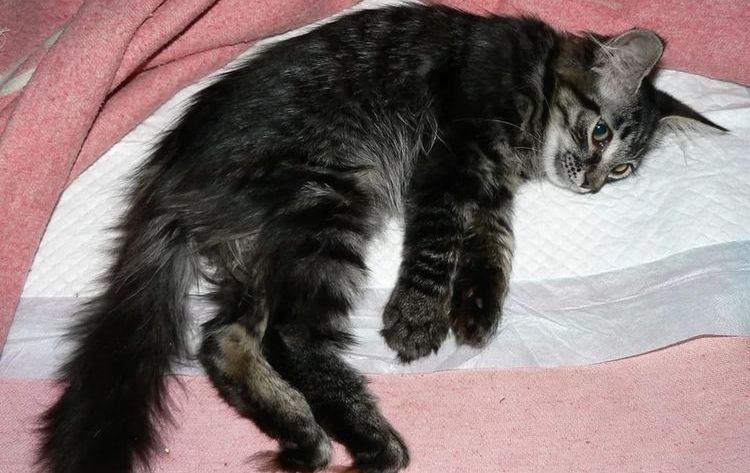
What does it look like?
Hind limb failure is easy to notice, but there are cases where the animal prefers to lie down for several days, refusing food and water. Typically, the cat still gets up to go to the bathroom. At this point, changes in gait may be noticeable. In the early stages, these symptoms may appear as follows:
- an unsteady gait that appears to be off balance;
- strong wiggling of the rear part of the body;
- the hind legs move apart, they become buckled, or the cat drags them;
- after a few steps the cat sits down or falls, doing this many times until the end of the path;
- the animal drags its front or hind legs along the floor without lifting them off the ground.
The condition usually worsens very quickly, but if the owner manages to contact a veterinary clinic at an early stage, treatment will have a better chance of success, preventing the paws from becoming completely paralyzed.
Reasons
Dysfunctions leading to hind leg failure can have various origins: viral, post-traumatic, orthopedic, related to metabolic disorders in the body, etc.
Thromboembolism
A dangerous condition in which a blood clot forms in the femoral arteries and becomes lodged in the circulatory system. Because blood flow to the legs is blocked, deterioration occurs rapidly, beginning with loss of hind limb mobility and culminating in death within three to four days.
The onset of thromboembolism is accompanied by intermittent shaking of the paws, restlessness, plaintive meowing, and possible biting or scratching when touched. Paralysis progresses rapidly, the paws become cold, and the animal refuses food and water. The chances of recovery from thromboembolism are slim, so it is important to seek help within the first few hours after the onset of paw failure.
Progressive avitaminosis
This phenomenon is most often observed in kittens in the stage of active growth and in nursing cats. causes of vitamin deficiency Symptoms include the presence of parasites in the body, lack of sunlight, treatment with strong antibiotics, or poor nutrition. In addition to leg paralysis, severe weakness, weight loss, and anemia occur.
Renal failure
This disease leads to failure of the entire genitourinary system, which is characterized by paralysis of the hind legs, decreased urine output, lethargy, diarrhea and vomiting, and an increase in body temperature.
Dysplasia
Hip dysplasia develops due to congenital abnormalities of the hip joint, increasing the risk of fracture or dislocation. The situation is exacerbated by the cat's lack of physical activity when the legs are failing or have already failed, an unbalanced diet high in protein, and excess weight. After limb failure, the animal may move around the house only sparingly, sometimes missing the litter box.
Cardiomyopathy
It occurs due to thickening of the heart walls and an increase in its volume. Leg paralysis in cats with cardiomyopathy is a relatively rare complication, but it should not be completely ignored.
Limb paralysis occurs because the heart is unable to supply the limbs with the required amount of oxygen, and the muscles begin to atrophy. Shortness of breath, lethargy, and a dry cough develop, and the animal sleeps more than it should.
Stroke
Loss of motor function in a cat's limbs can cause a stroke. Vascular blockage occurs not only in older animals but also in young animals due to exhaustion or reduced mobility. During a stroke, the swallowing reflex is impaired, and salivary gland activity increases. Owners rarely notice the attack itself, but its consequences—paralysis of the legs and other parts of the body—are easily detected. In this case, as in humans, the success of rehabilitation is directly related to how early it is started.
Spinal cord injury
This condition occurs after a cat falls from a certain height. It doesn't necessarily land on its back; it can even land on its paws, but the sudden impact can damage the posterior portion of the spinal cord.
After this, there is a failure of the hind legs, tail, and possibly a disruption of the innervation of individual internal organs.
Intervertebral disc herniation
An experienced veterinarian may be able to feel the disc bulging above the rest of the vertebrae, but someone without experience is unlikely to be able to pinpoint the affected area. Hernia This leads to pinched blood vessels and nerves, stopping impulses from reaching the hind legs, which leads to difficulty walking and eventually leg failure. To restore normal limb function, impulse flow must be restored.
Tick paralysis
This disease develops after a tick bite, so caring owners usually focus on prevention: treating their cat's fur with special products before taking them outside. Tick paralysis causes damage to the nervous system, manifesting as alternating periods of agitation and apathy. In this case, treatment is no longer effective once the legs are weakened, so assistance should be provided early.
Brain inflammation
This dangerous condition is caused by infections of the nervous tissue, worms, the ingestion of toxins, the activation of autoimmune diseases, etc. In addition to hind leg failure, a number of symptoms appear: vomiting, diarrhea, fever, enuresis, and dehydration.
With timely treatment, motor activity of the limbs is restored completely or partially.
Hyperparathyroidism
A specific condition that occurs due to vitamin D and calcium deficiency and excess phosphorus, which negatively impacts the thyroid gland. Due to excessive parathyroid hormone production, bone deformities, seizures, and paw weakness occur. Treatment takes time, and hormonal balance is restored, restoring the cat's freedom of movement.
Fracture or dislocation of the hind limbs
This can occur as a result of a fight, beating, a blow, or an unsuccessful jump. Sometimes cats get stuck in plastic windows and, while trying to escape, inflict further injuries on themselves.
The animal may be hostile to attempts to probe the injury site, and sometimes purrs loudly and lies close to its owners the entire time. After a few days, the cat is usually able to stand upright, but the fracture is highly likely to heal improperly.
What to do
Before treatment begins, veterinarians prescribe a comprehensive regimen, as only by identifying the exact underlying cause can it be effectively addressed. To identify the underlying pathology, the following tests are performed:
- neurological examination and identification of reflex activity in the paw area;
- x-ray of the lower spine;
- Ultrasound of abdominal organs;
- if an infectious nature is suspected – bacterial culture;
- standard urine and blood tests;
- MRI of the spine and head;
- checking the sensitivity of the limbs.
These tests are never ordered separately. Depending on the clinical picture, the veterinarian will refer the animal for several of them to confirm or rule out the most likely diseases. There is no time for lengthy diagnostics when limbs are failing.
A veterinarian explains why a cat's hind legs may fail: video
Once a specific pathology is identified, a specialist develops a treatment plan. This may include the following methods:
- Surgical intervention. This is necessary for cardiomyopathy and spinal injuries. Such procedures are performed only in a hospital, where specialists monitor the cat's condition for several days.
- Most illnesses can be treated with medications in the form of injections, tablets, drops, gels, ointments, vitamins, etc.
- Sometimes it's necessary to use orthopedic devices that help simulate walking. You can make these yourself or purchase ready-made products.
- In some cases, physical therapy cannot be avoided – acupuncture, myelostimulation, massage, etc.
- During treatment, the diet is important, which the veterinarian will tell you about.
It is important to remember that when the animal's paws fail, the owner's speed of action affects not only the health but also the life of the pet, so delay in this case is unacceptable.
Read also:
- Lymphoma in cats: treatment and symptoms
- Cucumber tapeworm (dipylidiosis) in cats: treatment, symptoms
- Paranal glands in cats


Add a comment