
Tuvan Shepherd Dog (Tuvan Guard Dog)
The Tuvan Shepherd (Kadarchy Yt) is a large breed of dog that has served humans for centuries, being used as herders, guard dogs, and watchdogs. In the second half of the 20th century, they were on the brink of extinction. They had never been systematized or studied before. Today, they are in need of restoration efforts. The Tuvan Shepherd is courageous, powerful, agile, and resilient. They adapt easily to different living conditions and climates, and are loyal and even-tempered.
Content
History of origin
The Tuvan Shepherd is an aboriginal dog breed. Its origins are closely linked to yak herding. It is believed that the ancestors of the shepherd arrived in the territory of modern-day Tuva with people and herds of yaks from Tibet. Migrating to the mountainous northern regions with their sharply continental climate, the dogs adapted and evolved. Selection for working qualities and folk breeding played a significant role in their development. This suggests that Tuvan Shepherds are related to Tibetan mastiffs and, to some extent, Mongolian wolfhounds.
Tuvans call their large shepherd dogs "kardachi yt", which literally means "shepherd's dog".
From 1997 to 2002, researchers at the Vavilov Institute of General Genetics studied Tuvan dogs in their original habitats. They concluded that only a few aboriginal shepherds suitable for purebred breeding remained. In the early 2000s, several puppies and adult dogs were transported to Moscow. They formed the breeding core at the Mongun-Taiga kennel. In 2005, an RKF breeding show was held, where experts praised the Tuvan dogs.
In 2016, the government of the Republic of Tuva approved state aid to support a project to increase the population of Tuvan shepherds. This project plans to reimburse 30% of the cost of a puppy to shepherds and farmers who purchase a dog from a specialized kennel for its intended use. Experts believe that only by providing a natural habitat and use shepherd dogs, it is possible to achieve the preservation of the breed and its unique characteristics.
Appearance
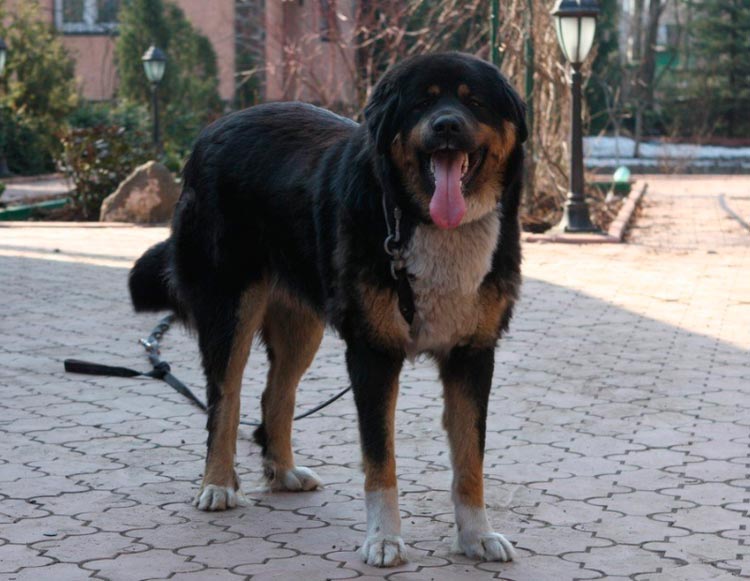
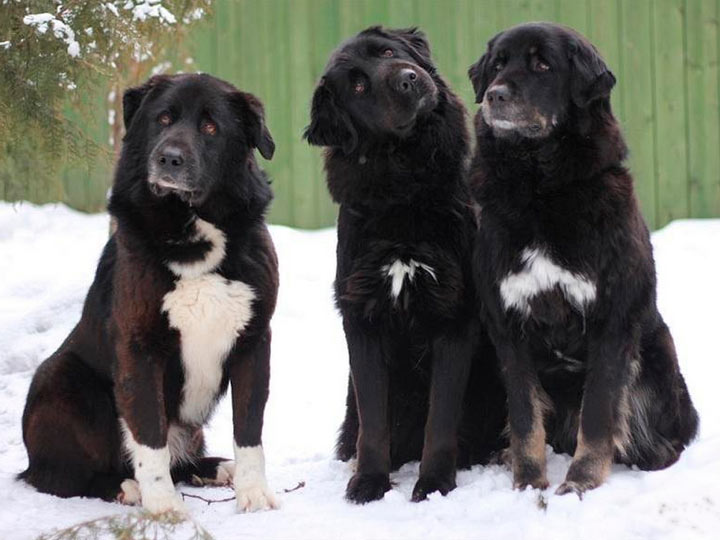
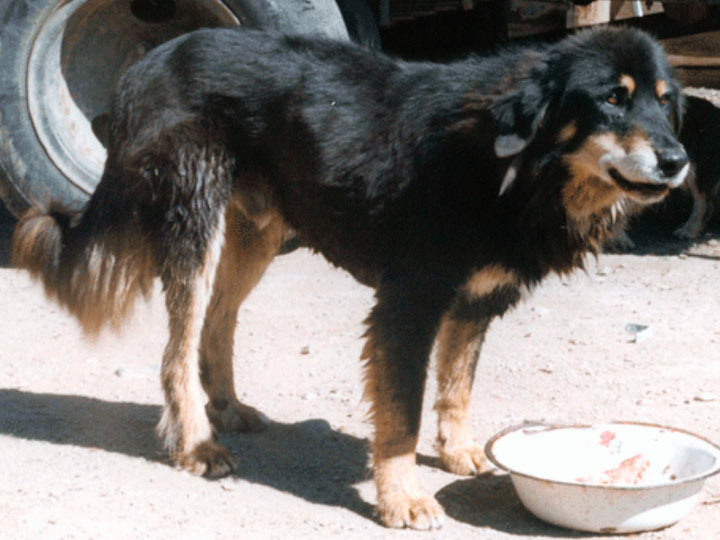
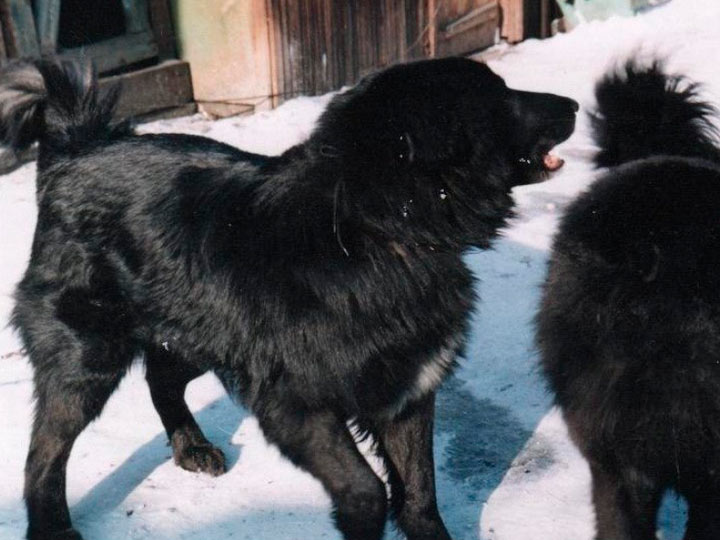
The Tuvan Shepherd is a large, powerful dog with strong bones and well-developed muscles. It is proportionately built. Sexual dimorphism is pronounced.
- Height at withers: 60-70 cm;
- Weight: 30-40 kg.
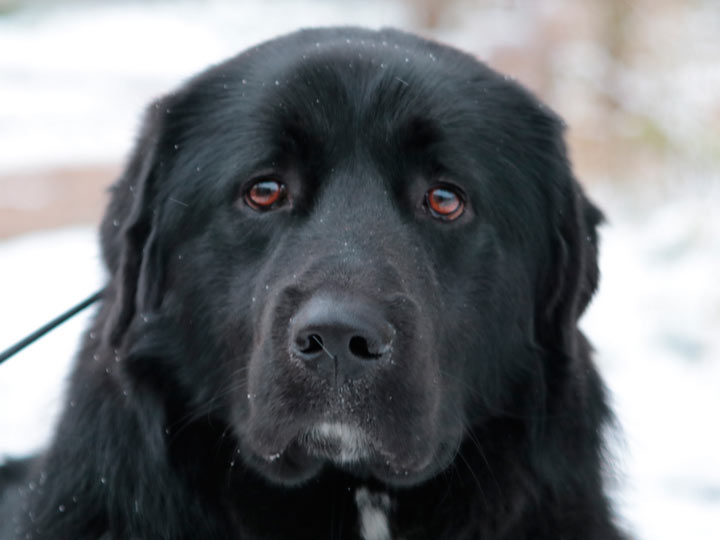
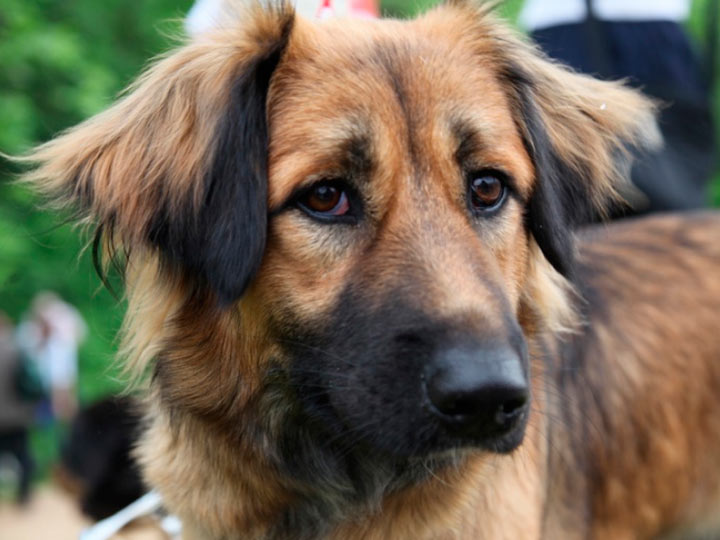
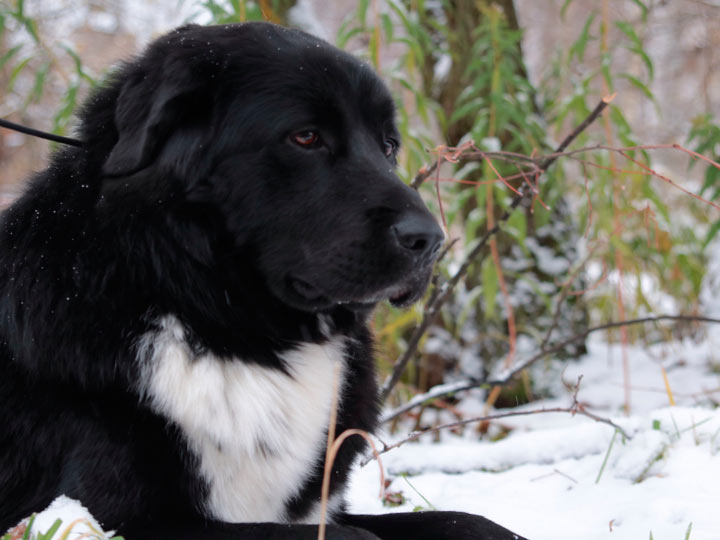
The head is massive, proportionate, covered with soft, short hair. The skull is broad, the forehead is wide, flat or slightly convex. The muzzle is wide, deep, tapering towards the nose. In profile, it is almost rectangular in shape, tapering wedge-shaped at the top. The bridge of the nose is wide and straight. The nose leather is large and black. The lips are thick, but not wet. The teeth are complete, large, and white. The bite is level or scissor. The eyes are medium in size, preferably dark in color. The eyelids are tight-fitting or slightly drooping. The ears are medium in size, triangular, hanging, close to the head. The neck is strong, rounded in cross-section, approximately equal in length to the head.
The body is strong and well-balanced. The height at the withers is slightly greater than or equal to the height at the sacrum. The back is straight and broad. The loin is short and level. The croup is medium in length, wide, straight, or slightly sloping. The chest is wide, capacious, and rounded in cross-section. The forelimbs are straight and parallel, set wide apart. The hindquarters are strong, with wide thighs and moderately angulated stifles and hocks. The paws are round. The tail is set high and saber-shaped.
The undercoat of Tuvan Shepherds is fine, light, and soft. It makes excellent knitwear.
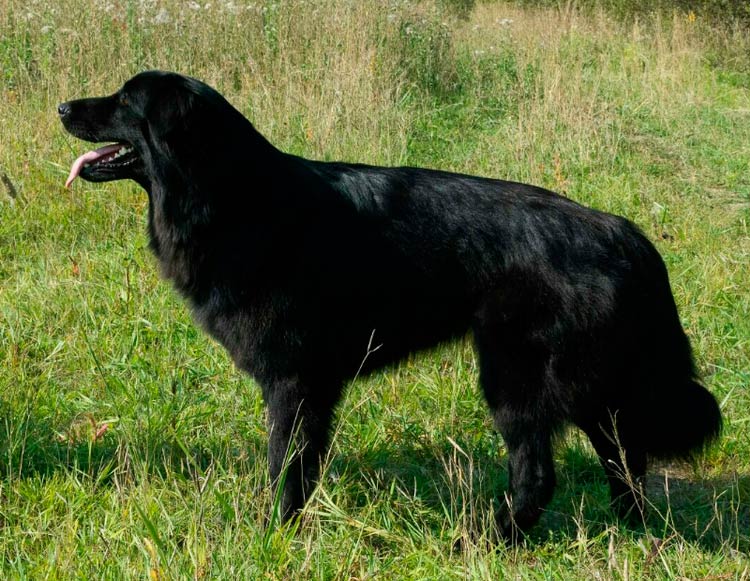
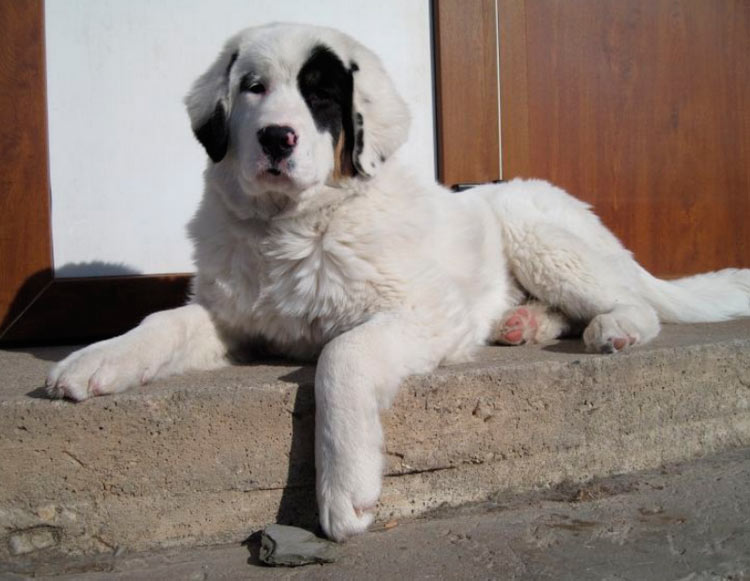
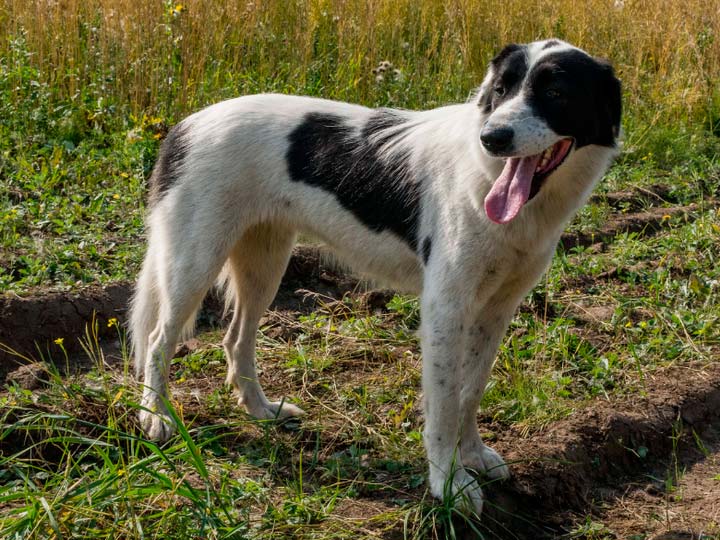
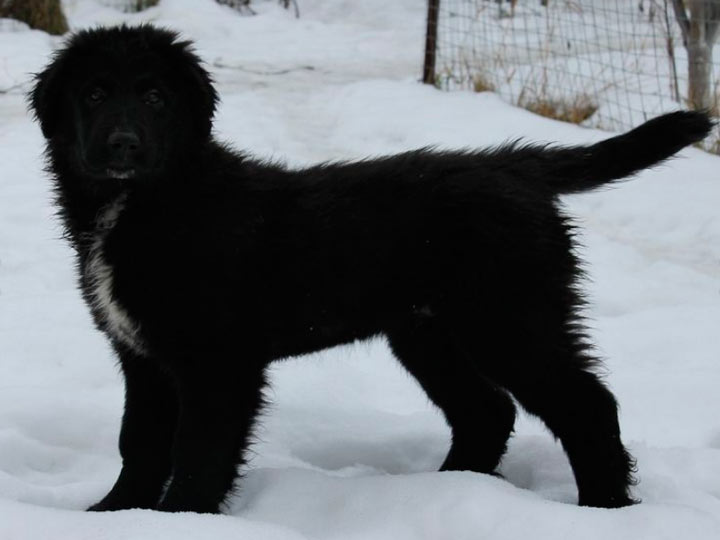
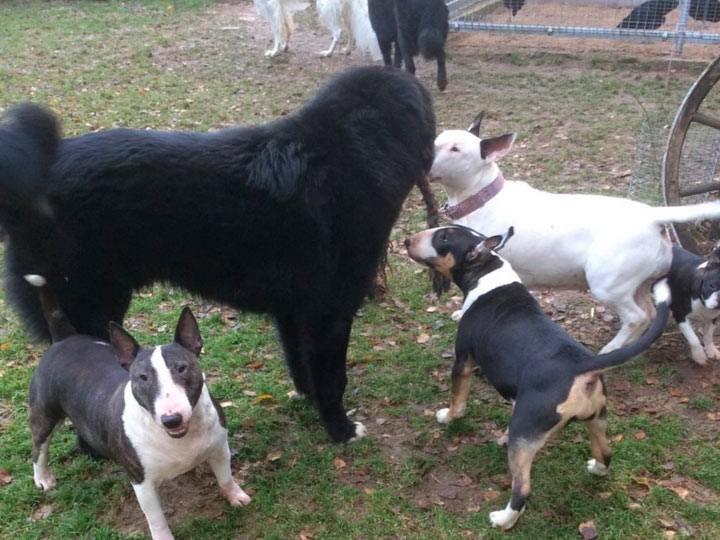
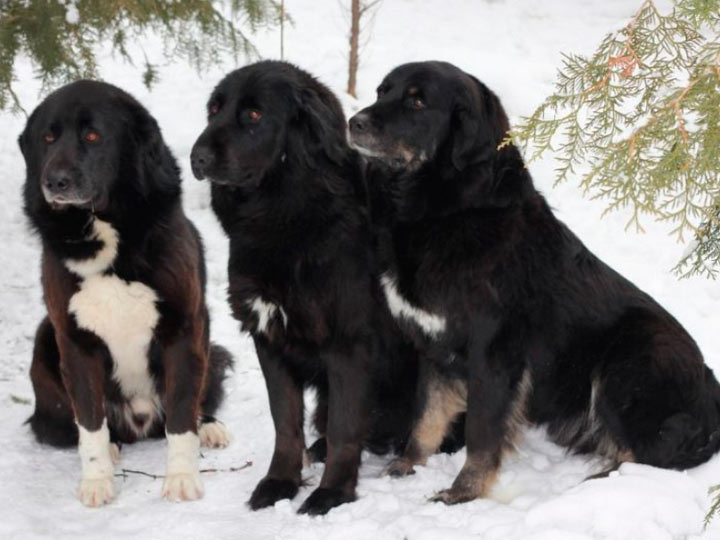
The coat is long, thick, and elastic. The outer coat is straight or slightly wavy. The undercoat is dense and thick. The topcoat forms a mane on the neck and withers, feathering on the legs, and a feather or tuft on the tail. Tuvan Shepherds with relatively short hair (4-5 cm) can be found. They have close-lying hair and no furnishings. The main colors are black and black and tan. Less common colors include brown, yellow, fawn, sable, gray, white, and white with black spots.
Character and behavior
Tuvan Shepherds possess a highly developed natural intelligence and a stable psyche. They are calm, balanced, and alert. Among family members, they are playful and sociable, patient, and intelligent. They thrive on attention and do not tolerate loneliness well. They should be considered primarily as serious guard and watchdog dogs, capable of independently engaging in defensive actions, decisive, and courageous. They are wary of strangers, but not overtly aggressive.
Some Tuvan Shepherds possess a hunting instinct, capable of catching small animals and rodents. This ability developed due to the need to secure food in the steppes while grazing livestock. They treat livestock with care. Tuvan Shepherds are intelligent and obedient. They are highly trainable. With proper training and good socialization, they are easy to manage. They combine the best qualities of service and guard dogs. In many ways, they resemble Central Asian Shepherds.
Tuvan Shepherds are excellent guard and watchdogs. They protect not only their territory but also everything within it. Males exhibit more pronounced guarding qualities.
Content Features
Tuvan Shepherds are well-suited to year-round outdoor living. They are better suited to being kept on a farm or in a garden plot. Even in temperatures as low as -28°C, they don't seek shelter in their kennels and tolerate sudden temperature changes relatively well. They are not well-suited to living in apartments or confined spaces.
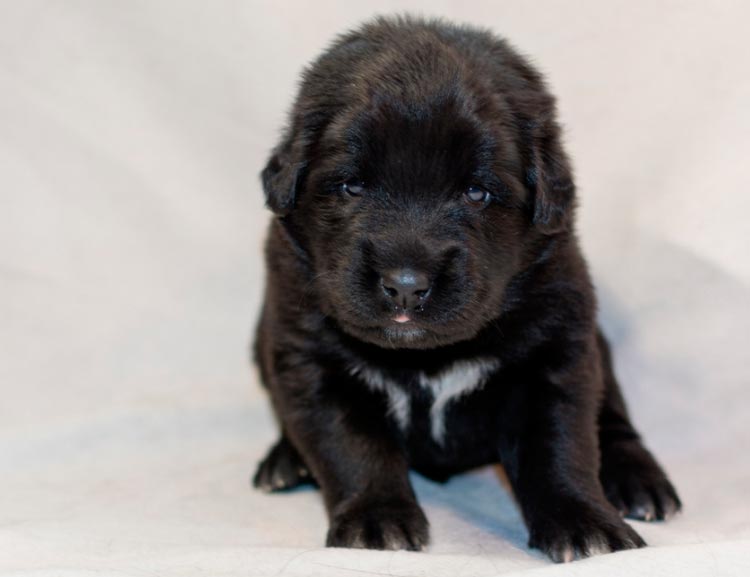
Tuvan Shepherds have a strong maternal instinct. They are caring mothers, often feeding their puppies themselves, regurgitating food from their stomachs. This demonstrates the breed's ancient origins and its development in natural conditions. Puppies are usually born in winter.
Care
The Tuvan Shepherd is a clean and low-maintenance dog. It has a special coat that is resistant to rain, retains heat well in winter, and is self-cleaning. It requires regular brushing and bathing as needed.
Health and life expectancy
The population is generally healthy. Tuvan Shepherds have strong immune systems and are highly adaptable. Currently, breeders report no serious hereditary diseases or congenital abnormalities, but note a risk of hip dysplasia and other diseases common to large breeds. Life expectancy is 10-13 years.
Heavy and fast feeding can lead to diabetes and volvulus, so it is recommended to divide the daily intake into two meals and adhere to other standard feeding recommendations.
Where to buy a Tuvan Shepherd puppy
Today, several kennels are working to restore the breed, one of the largest being located in the Moscow region, and the others in Tuva. The breed is very rare, and finding a good puppy can be challenging.
Price
The cost of Tuvan Shepherd puppies ranges from 25,000 to 70,000 rubles.
Photos and videos
The gallery contains photos of Tuvan Shepherd dogs.
Video about the Tuvan Shepherd breed
Read also:


1 comment
Alexey
In principle, this is correct. However, it should be noted that locally bred dogs differ from the native ones. Having seven Tuvans in front of us, we were able to compare. The natives are more uncompromising and more clearly divide the world into black and white. The locals, on the other hand, see "100 shades of gray." However, loyalty to their owners is a priority for both. They also have a creative, independent nature. Definitely, this breed is not for beginners or those accustomed to straightforward service dogs.
Add a comment