
Turkish Van: Males and Females
In the mountains of Turkey, there is a very beautiful lake called Van. People have lived there since ancient times, and, as the saying goes, where there are people, there are cats. Today, they are known throughout the world as Turkish van They are renowned for their unique qualities: a love of water and their unusual "cashmere" coat color. Fanciers say they are ideal family cats, but the breed isn't suitable for everyone.
Content
- 1 History of origin
- 2 Appearance
- 3 Character and behavior
- 4 Content Features
- 4.1 The Turkish Van is not hypoallergenic. However, it has no undercoat, and its guard hairs and skin are resistant to dust accumulation and are coated with minimal natural oils. Therefore, the breed should be adopted with caution by those allergic to cat fur. It is not recommended for those with reactions to saliva, other particles, or secretions.
- 4.2 Feeding
- 5 Health and life expectancy
- 6 Where to buy a Turkish Van kitten
- 7 Photos and videos
History of origin
In 1955, reporter Laura Lushington and photographer Sonia Halliday traveled to Turkey on assignment for a British magazine. It was there that they encountered these beautiful animals, with their striking habits and striking coloring. At the end of their trip, the journalist was given two kittens of different sexes, which she brought back to London. But even on the way to the airport, the women noticed something else.
It was scorching hot outside, and the car's engine began to overheat. The driver stopped at a stream to add cold water to the radiator. Naturally, the girls also went to the stream to rinse off, taking the small kittens with them. Imagine their surprise when they saw the cats quickly jump into the water and begin frolicking and swimming. It was these two kittens who became the founders of the Turkish Van breed. In the UK, they were registered under the names Van Atilla and Van Guzeli Iskenderun.
Four years later, Laura Lushington returned to Turkey, bringing back two more kittens. The offspring had consistent genetic traits, indicating a purebred breed. The International Cat Federation officially recognized the Turkish Van breed in 1973.
Modern genetic research has shown that the Turkish Van is one of the oldest breeds of domestic cats.
The Legend of Turkish Cats
When Noah (Arabic: Nuh) built the ark and set sail, the devil allowed a mouse on board, commanding it to gnaw at the bottom of the ship. It was then that God commissioned a white cat to find the mouse and destroy it. The cat successfully completed the task and saved everyone from certain death. For this, God blessed her by touching her back, leaving dark chestnut marks on her white fur. Since then, these marks on the fur have been called "the mark of Allah's right hand" in Turkey and are treated with great favor by the Vanir.
Appearance
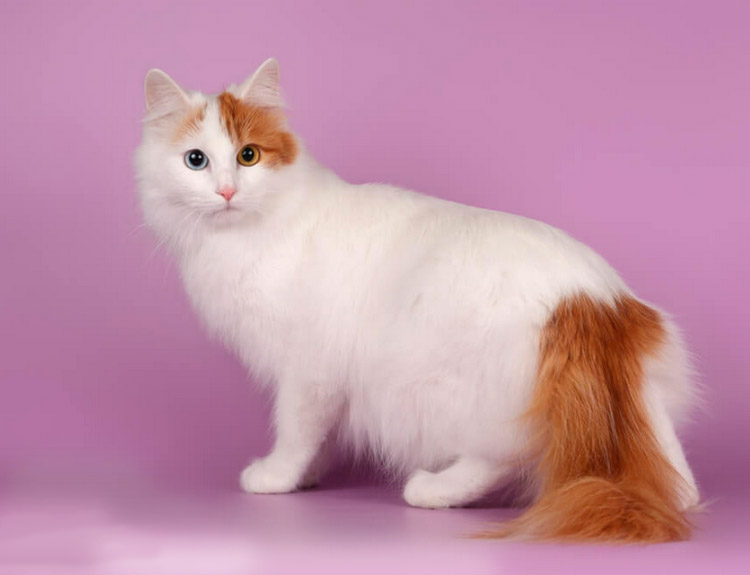
The Turkish Van is a very beautiful, fairly large cat with a distinctive coloring and soft, cashmere-like fur. The length from the tip of the nose to the tail is 90-120 cm, and the height at the shoulders is approximately 38 cm. Sexual dimorphism is very pronounced.
- The weight of cats is 6-9 kg.
- The weight of cats is 4.5-6 kg.
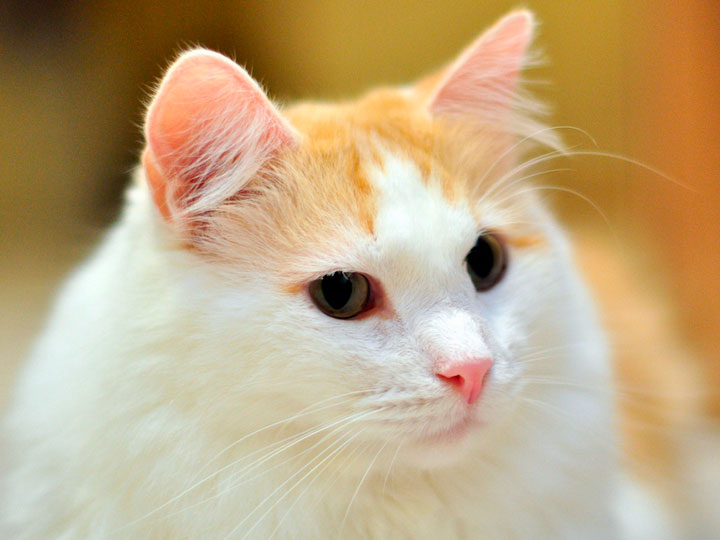
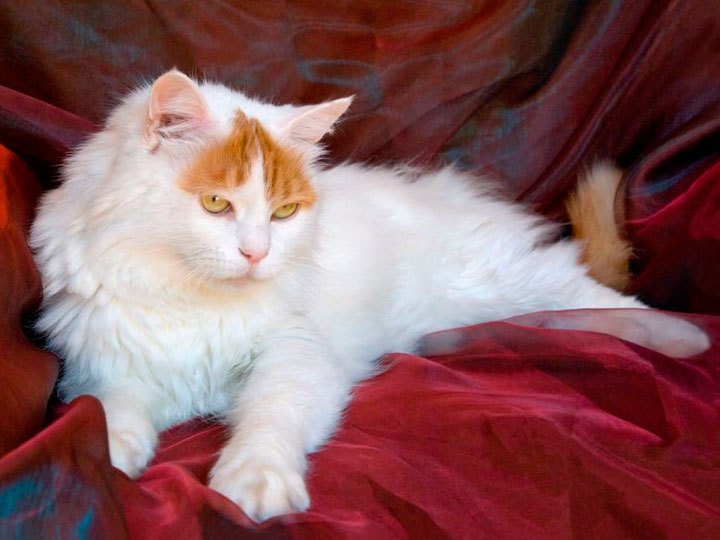
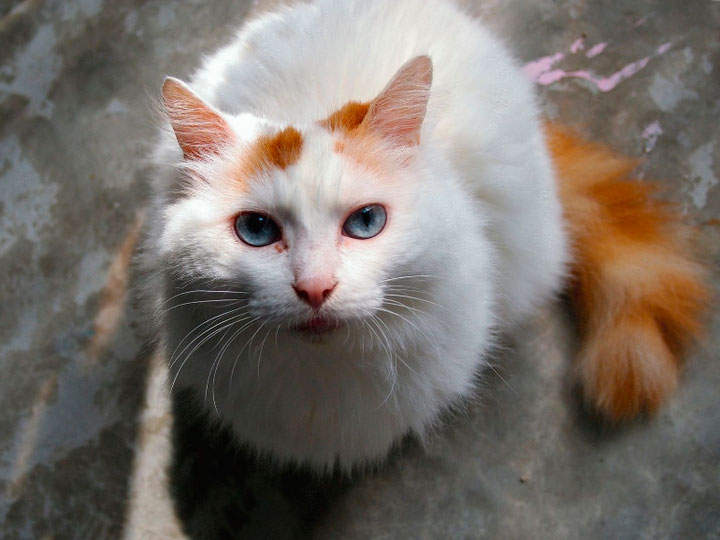
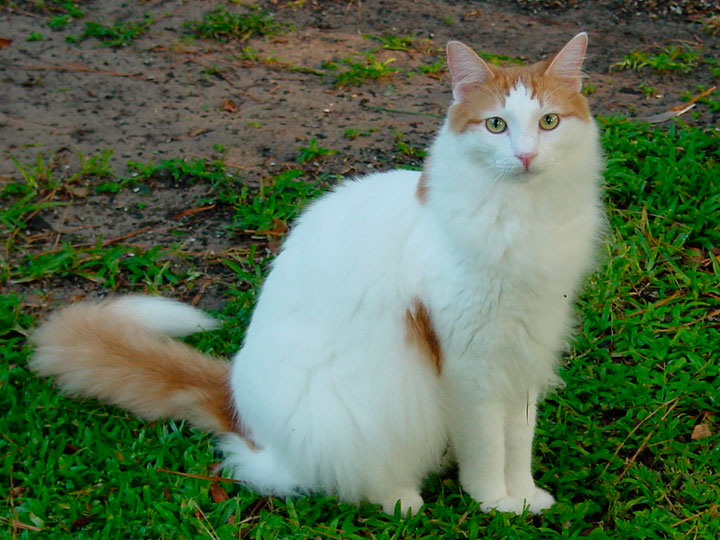
The head is wedge-shaped. The profile is almost straight. The ears are approximately three fingers apart. The ears are medium-sized, set high, wide at the base, and have rounded tips. The inside of the ears are well-furred. Turkish Vans have unusually beautiful eyes, large and slanted. Their color is blue, amber, or copper. Heterochromia is common.
The body is muscular and elongated. The back is rectangular, tapering slightly toward the tail. The legs are of medium length, with the front legs slightly longer than the hind legs. The paws are round, with tufts of hair between the toes. The tail is long and well-furred.
With age, the coat becomes thicker and more voluminous. Turkish Vans reach full maturity at 3-5 years of age. This is important to keep in mind, as the standard describes mature adult cats.
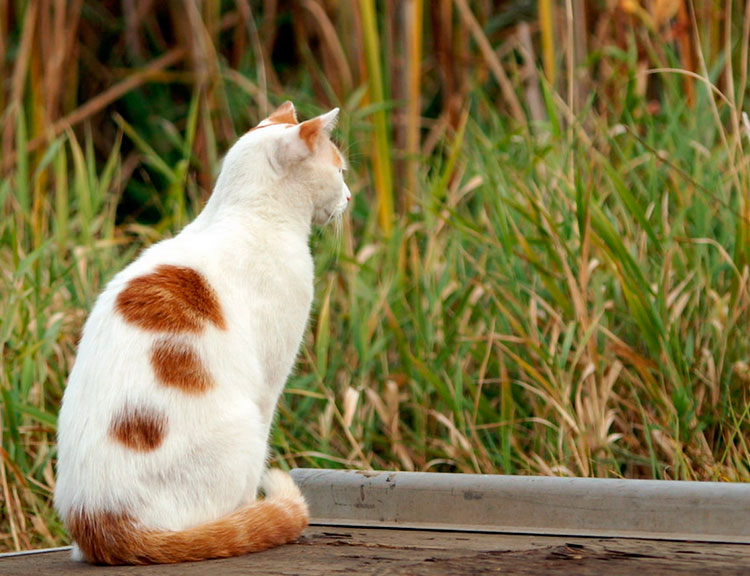
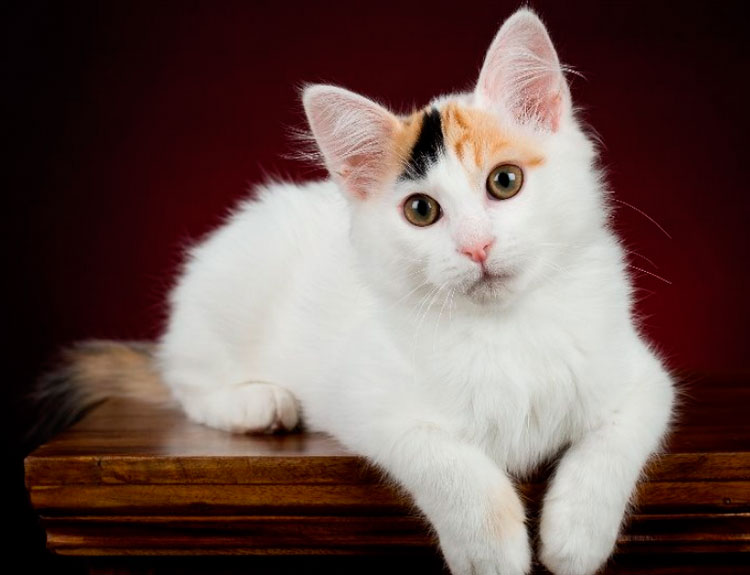
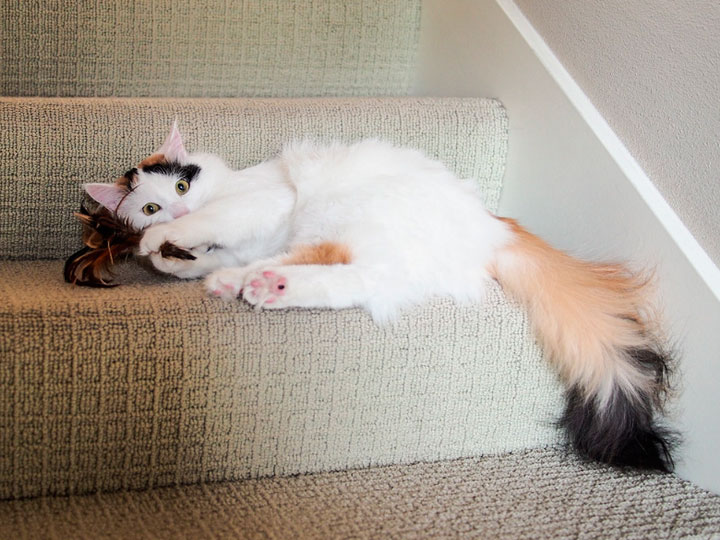
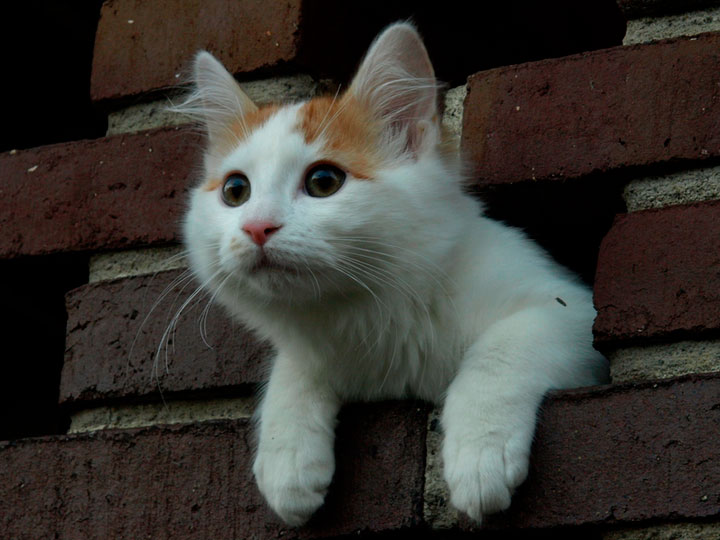
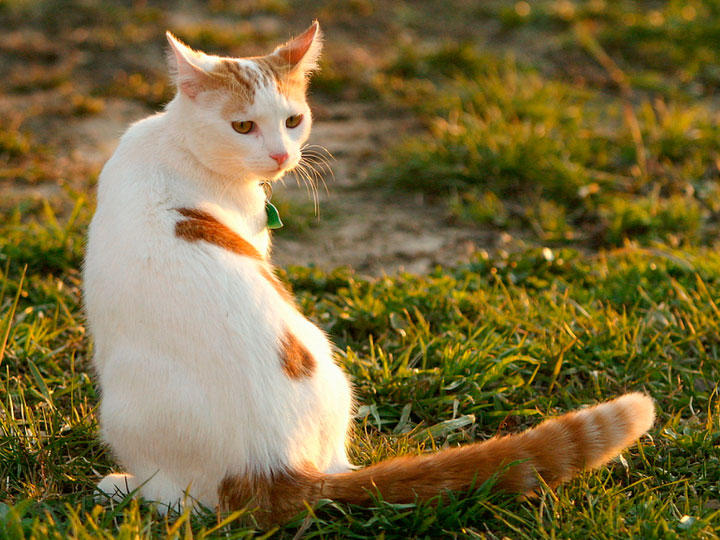
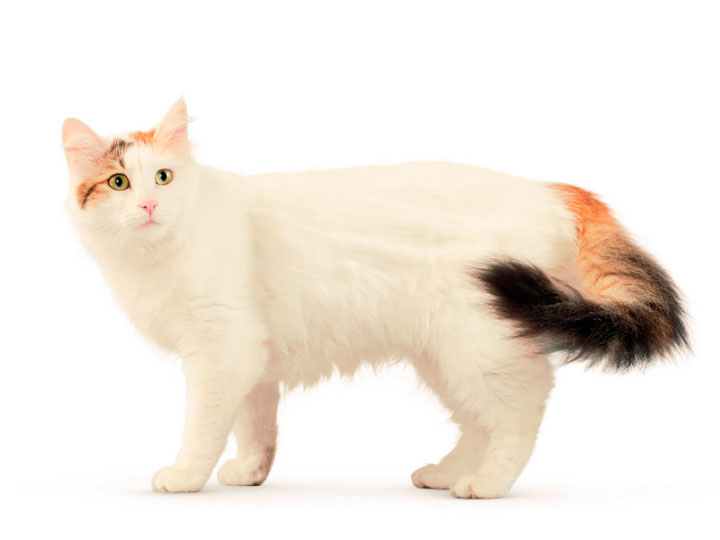
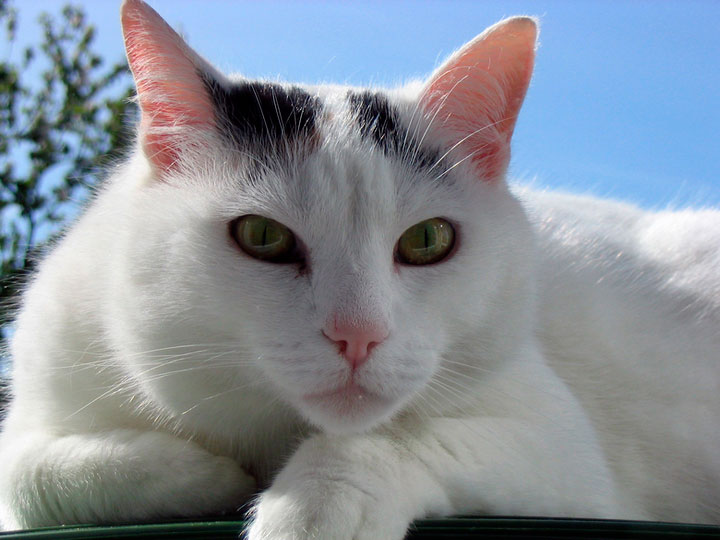
The coat deserves special attention. The guard hairs are medium-long, snow-white, and resistant to tangling and yellowing. They are self-cleaning and very pleasant to the touch, reminiscent of cashmere. The hair length varies across the body. There is no undercoat. The classic coloring: the white coat is distinguished by reddish-brown spots located on the head. The beautiful, fluffy tail is the same color, with 5-8 distinct rings. Small markings are allowed on the back, usually around the shoulder blades. The white color must be at least 80%. Some feline organizations also recognize other colors, with or without similar spotting patterns:
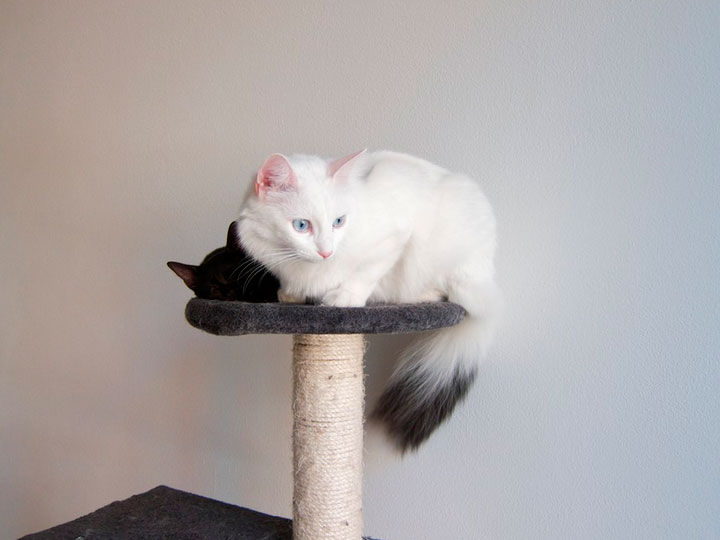
- All white;
- Black;
- Blue;
- Cream;
- Tortoiseshell;
- Blue tortie tabby.
WCF and CFA recognize only the classic color of the Turkish Van cat (white with red-brown spots), while FIFE, TICA and less significant organizations also recognize other colors (black and white, tortoiseshell and white, etc.)
Character and behavior
Turkish Vans are affectionate, loyal, and loving, but they can be stubborn and prefer to live on their own terms. Many don't like to be held, but will certainly rest somewhere nearby. They are highly intelligent and can be cunning when necessary. The Turkish Van is considered a one-person cat. While they bond with other family members, they often favor one over the others. They are very sociable, expressing their emotions vividly through gestures, facial expressions, and vocalizations.
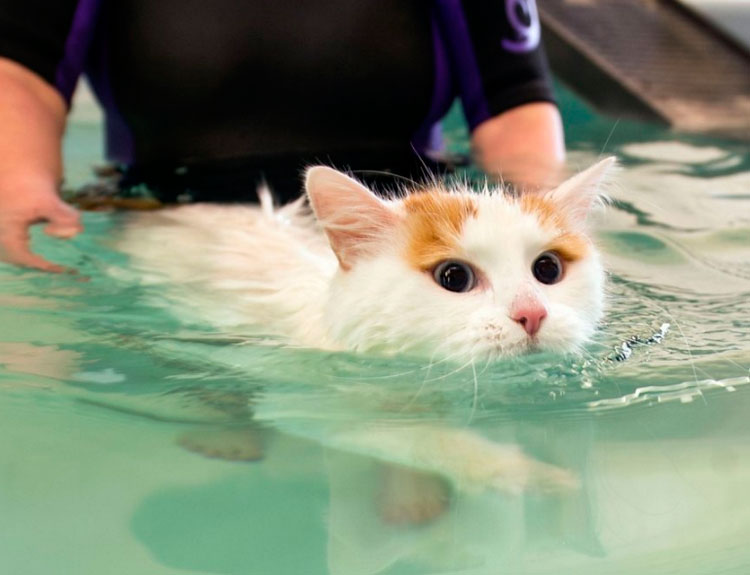
One of the most amazing characteristics of Turkish Vans is their love of water. Many members of the breed are not only unafraid of it, but also enjoy swimming, playing in streams, and even fishing.
Turkish Vans are quite independent cats, and their behavior is very similar to that of dogs. They are energetic and easy to train, quickly adapting to leash walks. They prefer company to solitude and are very loyal to those who love them. They also get along well with other pets in the house. They may show some interest in small animals, but usually don't develop a strong desire to kill and eat them. In the company of other cats and dogs, they will try to assume a leadership role.
The Turkish Van isn't suitable for someone looking for a stolid, fluffy creature. These are intelligent and active cats that demand attention and won't sleep for days on end.
Another characteristic of Vans is their playfulness. They love to spend long periods of time playing with toys. If they don't have any, they'll protest by tearing down curtains, throwing objects on the floor, or otherwise making a mess. They're very inquisitive and always exploring every nook and cranny of the house. They're especially active until they're 8-10 months old. During this period, owners must make every effort to raise an obedient, well-balanced, and content kitten.
Content Features
Turkish Vans are very attached to their home and family and are wary of strangers, making them a safe choice for homeowners. While they will thrive in an apartment, it's recommended to train them to walk on a leash and then take them for regular walks. A Van should have a resting area and at least two or three toys within easy reach.
The Turkish Van does not need to have a bathtub filled with water and live fish regularly, as civet cat, but he'll likely enjoy this kind of fun. You don't need to fill the baths with water; just enough to cover his paws is enough. Many Vans enjoy playing with a thin stream from the tap, and sometimes even show interest in the toilet bowl, which, for obvious reasons, shouldn't be encouraged. Due to the lack of an undercoat, the coat dries quickly.
The Turkish Van is not hypoallergenic. However, it has no undercoat, and its guard hairs and skin are resistant to dust accumulation and are coated with minimal natural oils. Therefore, the breed should be adopted with caution by people with allergies to cat hair. It is not recommended for those with reactions to saliva, other particles, or secretions.Care
Turkish Vans are low-maintenance. They shed lightly and are virtually unnoticeable with regular brushing. Their straight, soft coat is easy to comb and resists tangling. These cats are generally quite clean and self-care. Occasionally, owners should check their ears to ensure they are clean or wipe the corners of their eyes. Their nails are trimmed as needed.
Frequent bathing with shampoo is not recommended. If necessary, use only a special product for soft fur. While bathing, it's recommended to play with your cat; they'll likely enjoy it.
Feeding
Turkish Vans need a balanced diet. It's basically the same as other similar breeds. Most owners prefer dry food, which should be a complete premium or super-premium diet. Water should always be available in the bowl, which should be changed at least once a day.
Health and life expectancy
Turkish Vans are excellent health cats and can outperform many other breeds. The breed is free of genetic defects and is not predisposed to hereditary diseases. If you provide your pet with proper care and a balanced diet, they will delight you with their playful nature for a long time. Many Turkish Vans live very long lives. On average, Van cats live 14 years.
Where to buy a Turkish Van kitten
You can find numerous ads online for Turkish Van kittens, but these are often kittens with similar markings to a common cat. Not being purebred, they are unlikely to live up to expectations and possess the characteristics that make the breed distinctive: distinctive appearance, large size, love of water, playfulness, and exceptional intelligence. While with more popular breeds like the British Shorthair, it's possible that purebreds were mated, but their offspring are unregistered for some reason, this is unlikely with a breed as rare as the Turkish Van.
The International Cat Association (TICA) recently recognized all-white Van cats—the Van Kedis. It's worth noting that they are only bred in crossbreedings with standard-colored Van cats. A completely white male and female Van cat have a high risk of producing deaf kittens.
You should only buy a Turkish Van kitten from a breeder or cattery that is a member of one of the felinological societies and breeds animals according to the rules.
Price
The price of a Turkish Van kitten in catteries usually ranges from 25,000 to 50,000 rubles.
Photos and videos
More photos of Turkish Van cats can be seen in the gallery.
Video review of the Turkish Van breed
Read also:


Add a comment