
Eye color in cats: what colors are they?
Just like humans, cat eye color comes in a wide variety. Some breeds always have a consistent shade, while some breed lines offer an incredibly wide range. Let's take a closer look at the eye colors of cats and male cats of different breeds, what influences eye color, and whether it's possible to predict which color kittens will inherit from their parents.
Content
Secrets of the cat's palette
Eye color, as well as the shade and length of the coat, as well as many other exterior characteristics, are inherited by kittens from their parents and are inextricably linked with the features of the color.
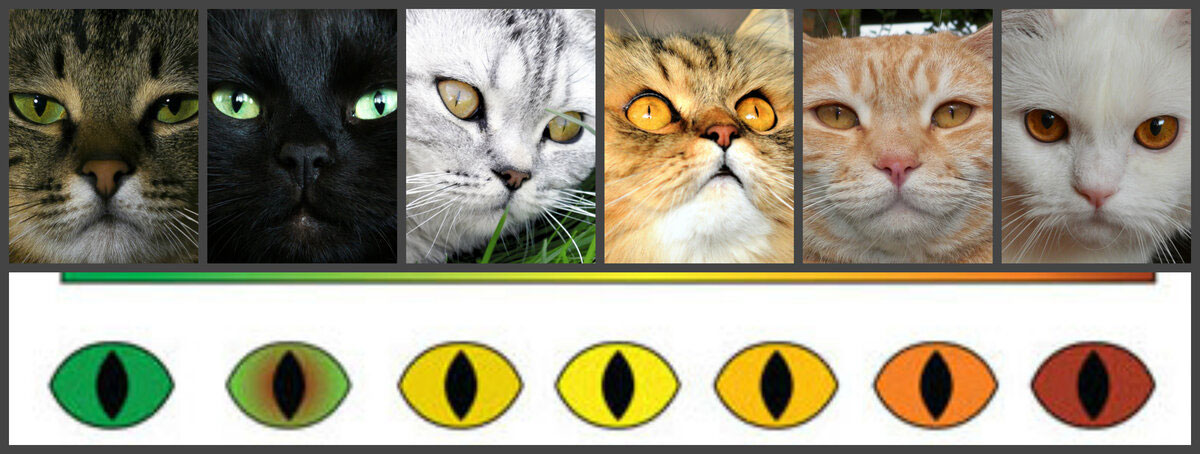
Unlike the relatively simple and straightforward inheritance of eye color in humans, cat genetics is complex and variable. A combination of several genes determines cat eye color, so scientists have yet to formulate a rule for the inheritance of eye color.
It's not uncommon for a pair of purebred cats with different eye colors to produce a baby whose iris color will be radically different from that of its parents.
There are two main factors responsible for the formation of color and the saturation of the eye color in cats:
- The amount of melanin in the iris (if the pigment is absent, a striking blue hue is produced).
- Density and depth of pigmentation.
- The color of the stroma (the outer layer of the iris), which can vary from pale with a barely noticeable blue tint to deep blue and even violet.
It's worth noting that adult male and female cats' eyes can have a bright, pure color and sparkle like a gemstone when the light hits them, or they can combine a wide variety of tones and change depending on the lighting. Owners of these cats can sometimes find it difficult to determine which category to classify their pet into.
Basic eye colors
Let's get acquainted with the amazing and diverse palette of cat eyes and the breeds that have each shade.
Blue
Interesting fact! The vast majority of kittens under 12 weeks old have a delicate blue tint to their eyes, as their irises, like the membranes of their eyes, are completely devoid of melanin.
As the kitten grows, the body begins to produce melanin and the color of the eyes changes.
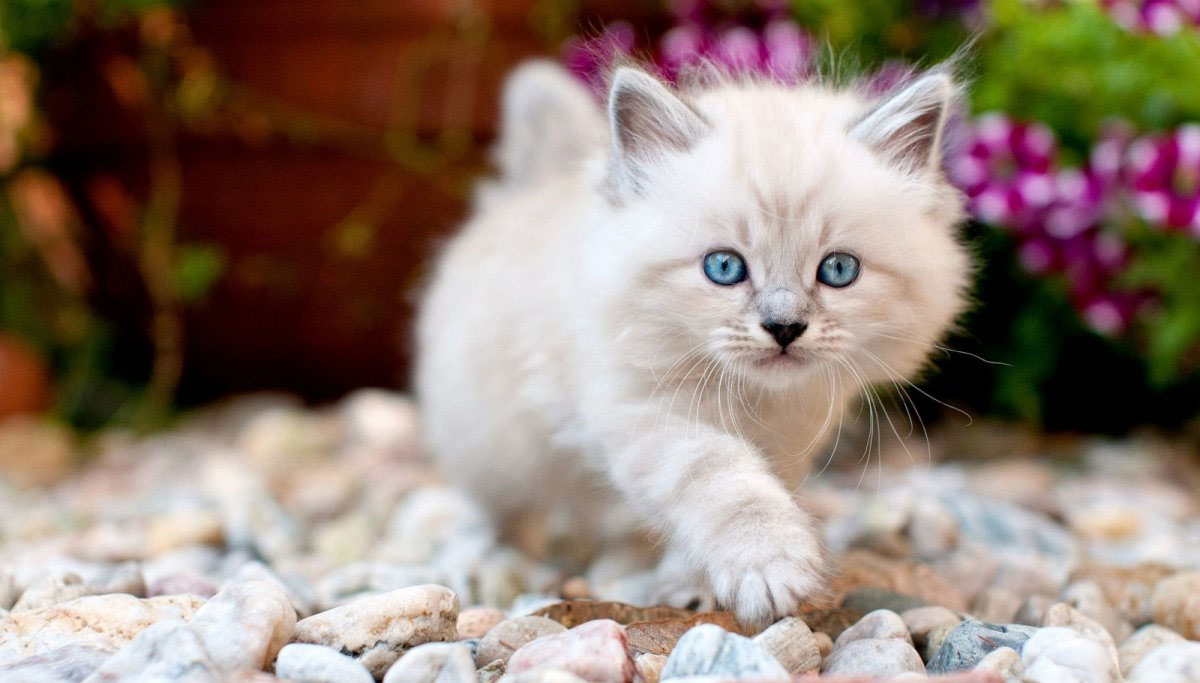
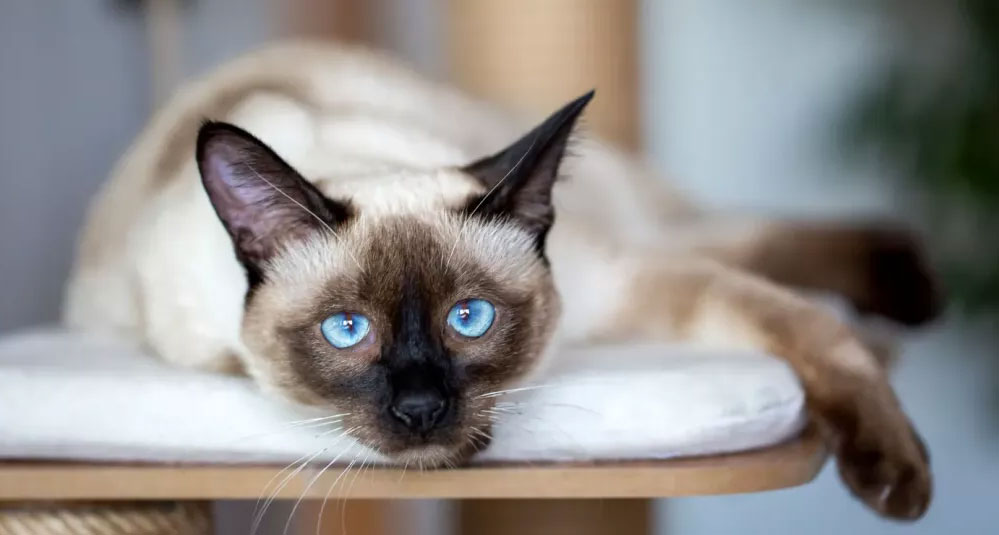
Cats whose bodies produce minimal amounts of melanin have blue eyes throughout their lives. Scientifically, these animals carry the partial albinism gene, so they don't necessarily have white fur.
These include the following breeds:
- Siamese;
- Burmese;
- Ragdoll;
- Persian;
- Maine Coon;
- British Shorthair;
- American Shorthair and others.
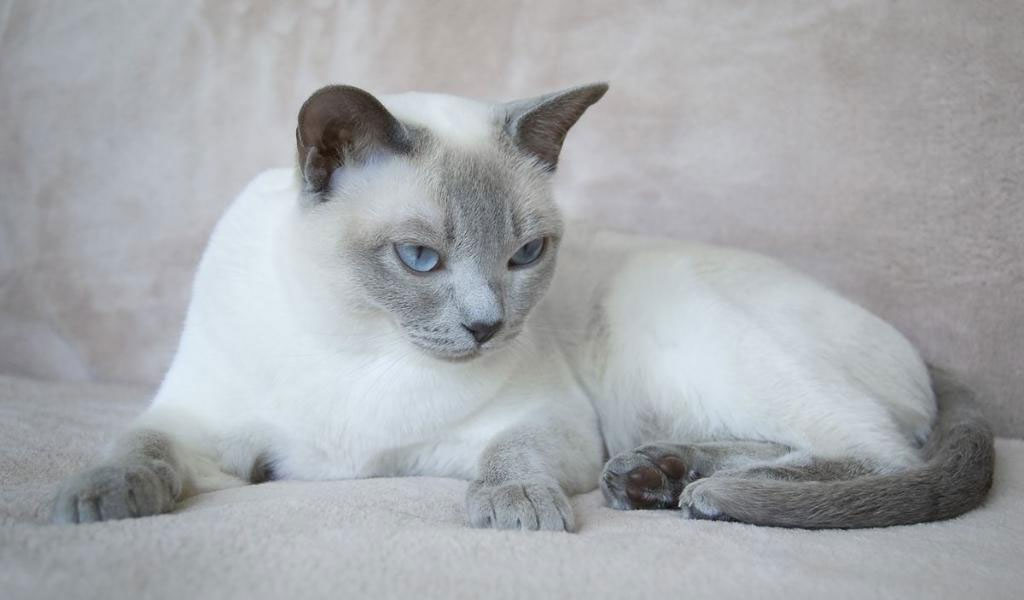
A unique and incredibly beautiful sky-blue shade is found in Tonkinese cats.
Reds
Pink eyes in cats are very rare, as only 1 in 10,000 completely white cats are true albinos.
A complete albino's body does not produce melanin at all, so blood vessels show through the colorless iris, giving the eyes a characteristic pinkish tint.
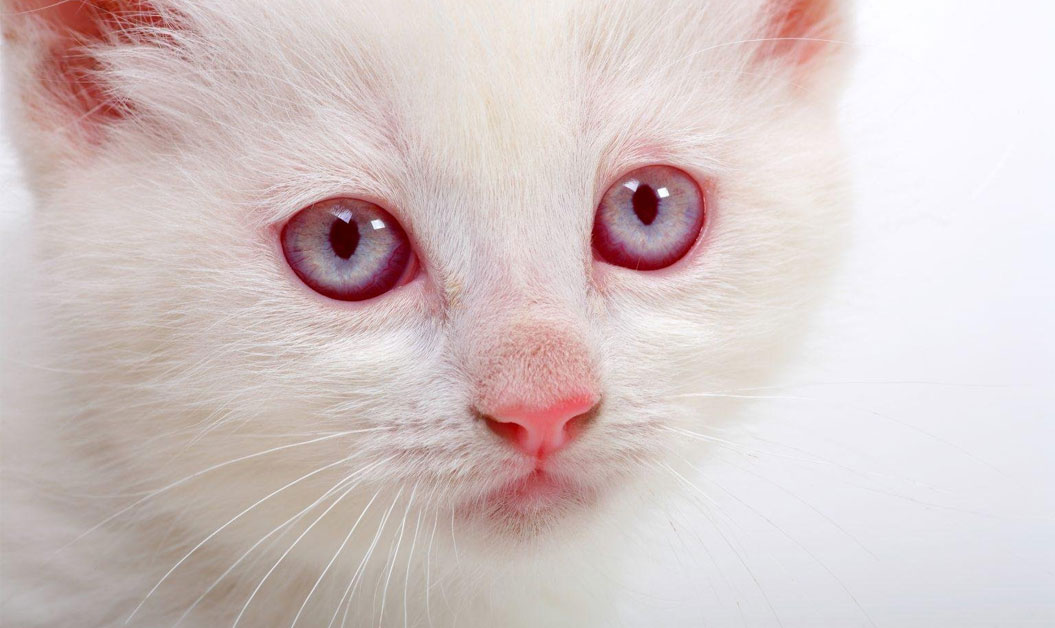
Although this phenomenon is called "red eyes," bright red does not exist in nature; more often, the eye shade is colorless with a barely noticeable shade of pink or blue, as in the photo.
Unfortunately, complete albinism is genetically linked to a number of dangerous diseases. These animals may experience complete deafness and poor vision, as well as various allergies and weakened immune systems.
Greens
Green-eyed cats are considered the most common color in nature, as the vast majority of domestic pets, regardless of breed, have irises in various shades of green. The color can range from almost gray with a subtle grassy undertone to a rich emerald.
Green eyes can be found in cats of various colors, but the most saturated pure color is found in solid gray, as well as bright red and striped animals.
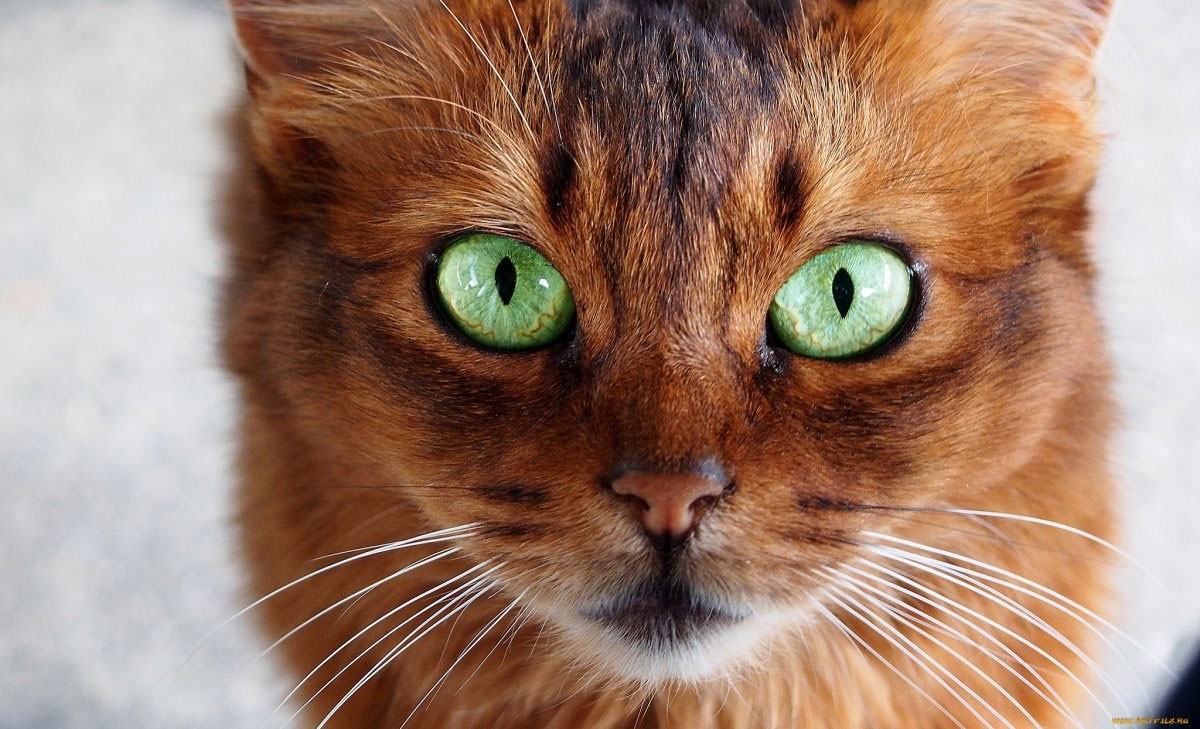
The most beautiful green cat eyes are considered to be found in representatives of the following breeds:
- Egyptian Mau;
- Norwegian Forest Cat;
- Russian Blue.
Yellow (golden, amber)
Amber color is one of the most common shades among cats of different breeds.
A cat's yellow eyes can vary in tone from soft lemon to rare golden and more saturated, from light brown to pure amber.
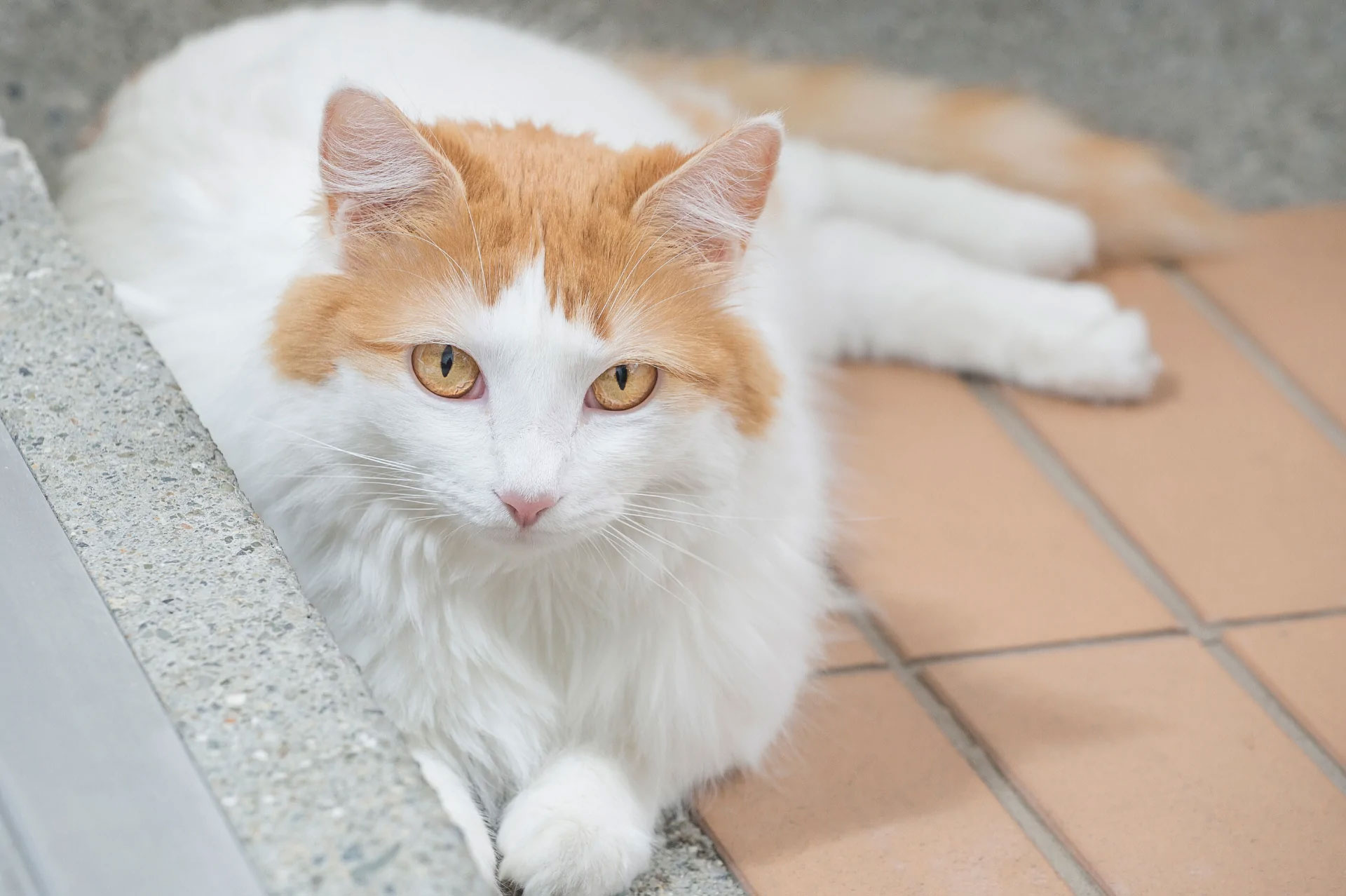
Breeds that often have amber eyes include:
- Maine Coon;
- Bengals;
- British Shorthairs;
- Scots;
- Sphinxes;
- Abessinov;
- Lapermov;
- Cornish Rex;
- Birmov.
However, pure brown eyes are rare in cats. In most cases, the pattern is interspersed with gray and green tones, giving the cat's eyes the appearance of light brown.
Orange
British breeders have been working hard to develop bright orange eyes in their offspring. Their efforts have paid off, as today, individuals with these striking orange eyes can be found in a variety of breeds.
Orange color is typical for Turkish Vans, Devore Rexes, Maine Coons and Japanese Bobtails, British Shorthairs and Scottish Folds.
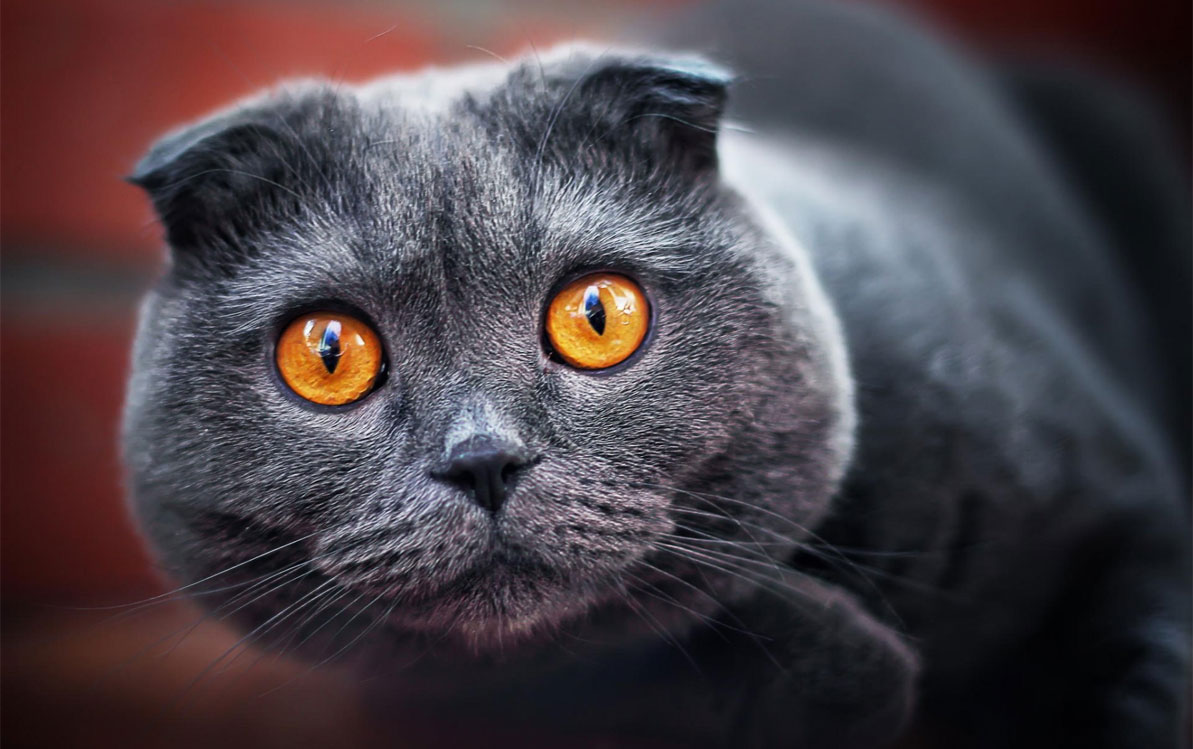
Copper (brown)
Rich brown eyes with orange to red undertones are commonly referred to as "copper eyes." They, like orange eyes, are found in many artificially bred breeds. They are extremely rare in non-pedigree cats.
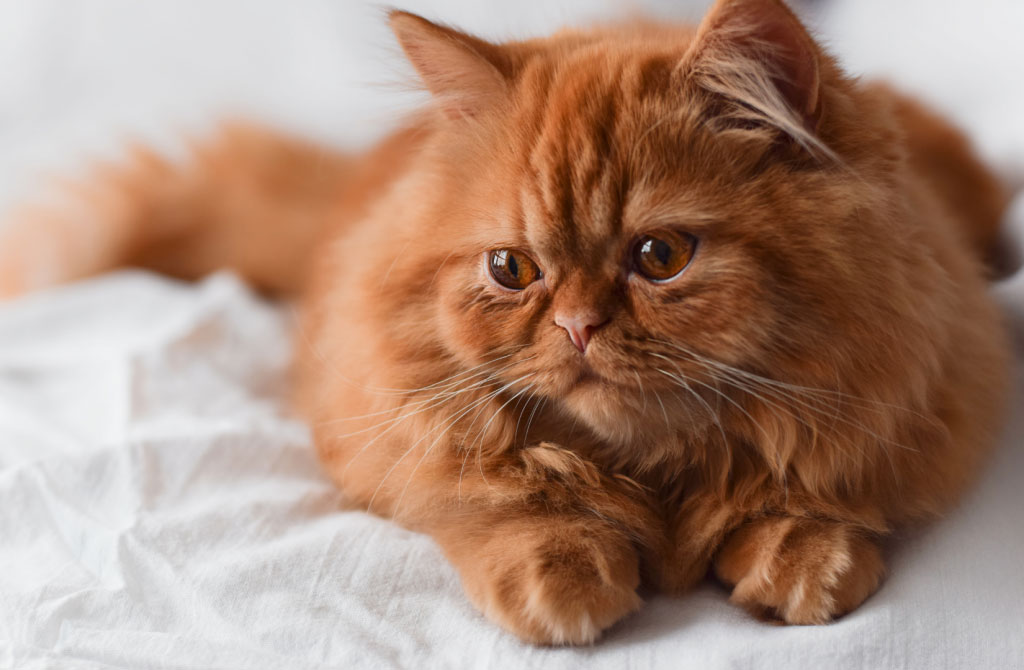
Such rare eyes are amazing for British and Scottish greys.
Interesting fact! Cats don't have truly brown eyes.
Heterochromia
A genetic mutation that can result in an animal having eyes of different colors or an uneven iris coloration that combines several shades.
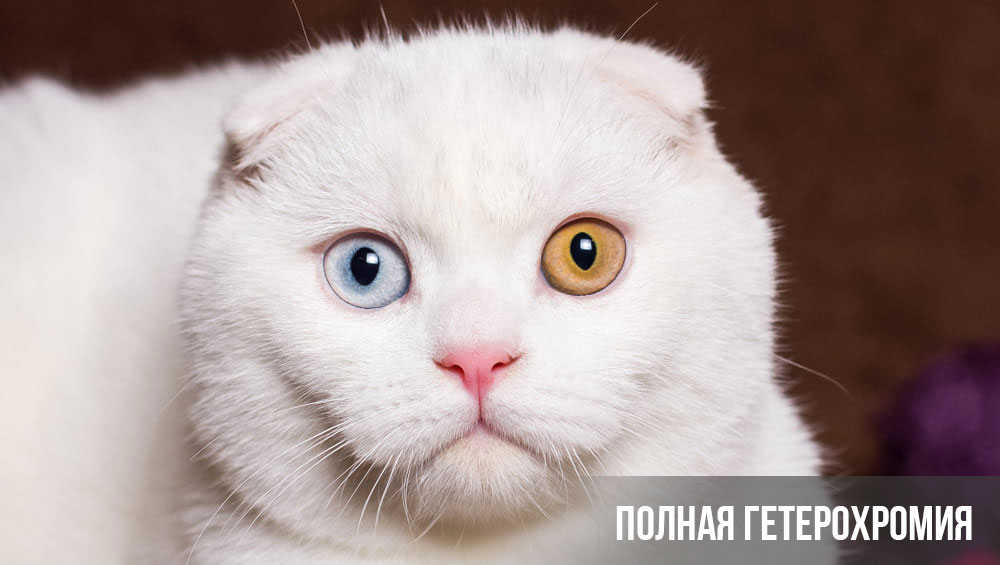
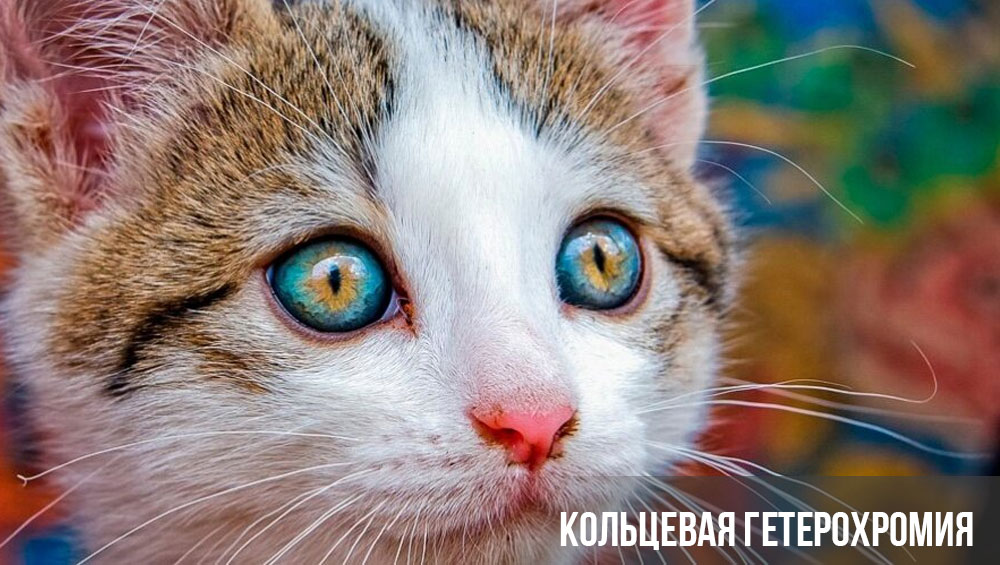
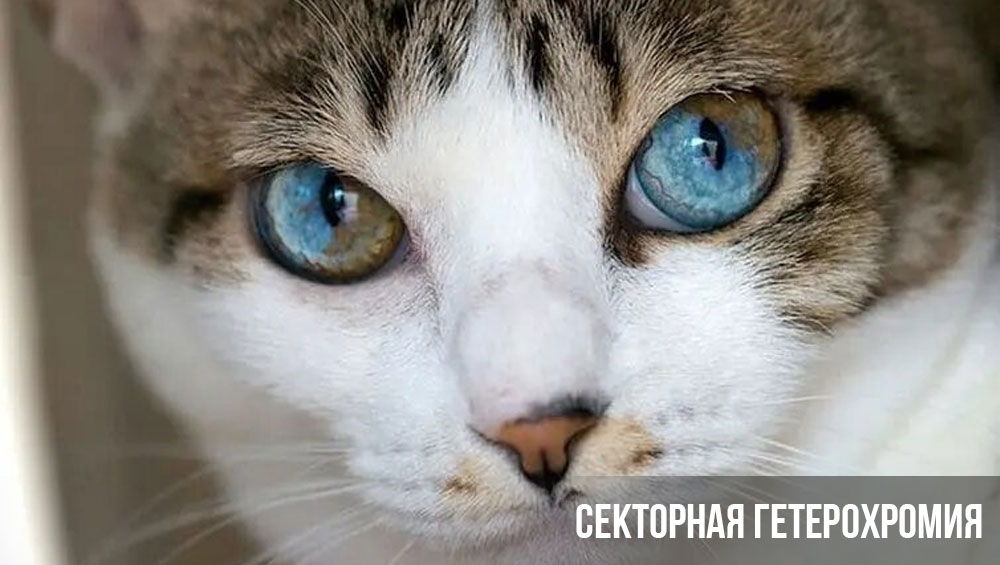
Depending on the pattern, there are three types of mutations, which we will clearly demonstrate in the photo.
Complete heterochromia This occurs when the eyes are uniformly colored but have different shades. Typically, one eye is yellow in varying intensities, while the other is green or blue.
Annular heterochromia Characterized by a difference in the color of the area around the pupil and the marginal color of the iris. Typically, it occurs in both pupils.
Sectoral heterochromia It usually affects only one eye, in which areas of different colors can be seen.
Various variants of heterochromia are considered normal for breeds such as:
- Turkish Angora;
- Persian cat;
- Khao Mani;
- Turkish Van;
- Exotics;
- Orientals (only allowed in whites);
- British Shorthair (allowed in white and bicolor cats);
- Scottish Fold (only allowed in whites);
- Sphinx (only allowed in light-colored cats);
- Devon Rex (allowed for all except colorpoint and mink).
Why do cats' eyes glow?
The structure of a cat's eye differs significantly from that of a human's. Among other features, a cat's eye has a special layer called the tapetum lucidum, which reflects light onto receptors, allowing cats to see perfectly in the dark.
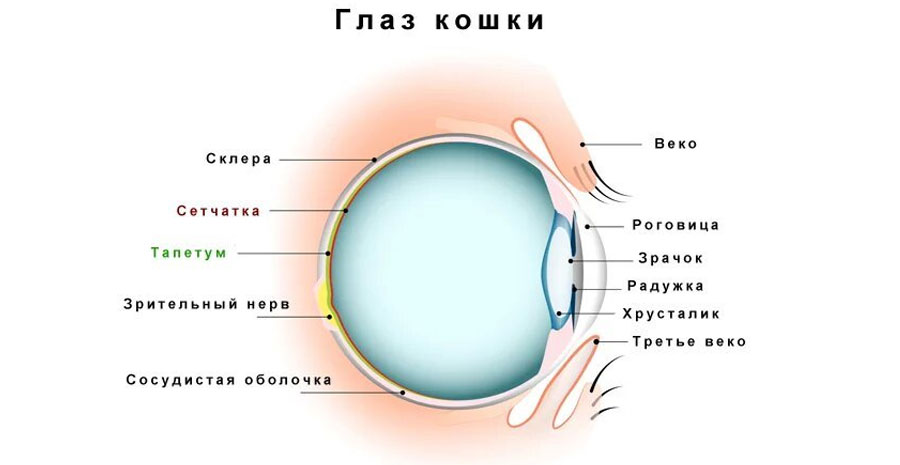
It's worth noting that not all cats see equally well in the dark. For example, blue and pink-eyed cats have very weak luminescence, and scientists have proven that their owners have very poor night vision. However, cats with green, yellow, orange, and amber eyes thrive in the dark.
Read also:
- The Smartest Cat Breeds in the World: Top 10
- Books about cats: Top 10
- How to name a calico cat: the best creative names


Add a comment