
Dog tricks: a list of the most interesting ones
Dogs are intelligent enough to perform a variety of circus tricks. Training will require patience from the owner, but any breed can be taught interesting routines by developing their natural intelligence. Training should begin with creating a list of commands, the easiest for your pet. You can move on to a more complex program only after the simplest commands have been reinforced.
Content
Why is trick training necessary?
Obedience training is a method of training an animal to develop obedience and reduce natural aggression. Trick training is aimed at strengthening the bond between owner and pet and teaching proper behavior in public places and at home. It is also popular for play and making life together easier.
Training begins when the animal has fully mastered basic commands. The advantages of trick training are that the four-legged animal's well-behaved behavior:
- will surprise your friends;
- will allow you to have fun;
- will help to better develop the animal's muscular corset and coordination of movements.
Selecting teams
To ensure effective training, it's important to select tricks that a dog of a particular breed can handle. Personality traits should also be considered:
- Temperament – for less active dogs, simple routines, such as posing for a camera, are best. For more active dogs, playful commands, such as jumping over an obstacle or dancing, are preferable.
- Group affiliation. Hunters are easier to teach routines based on "fetch." Herding breeds are better suited to programs that demonstrate their attention and patience, such as holding a treat on their nose.
- Game preferences. If your pet enjoys pulling things, tug-of-war will be easier to teach. And for someone who loves jumping around the lawn, catching a Frisbee is ideal.
- Dimensions. A small dog can easily slither between its owner's legs. A larger dog might not be able to do this easily, but it will be able to reach the necessary item from the shelves and retrieve it.
Once you've decided which direction to begin training in, you can immediately create the most convenient and simple program from the new commands.
Features of the process
When working with puppies, it's important to understand that they don't understand language and respond only to their owner's emotions. Therefore, it's important to alternate between angry shouts when the animal breaks the rules and calm praise when it performs correctly.
It's important to follow the rules yourself—don't reward misbehaviors with praise and treats that previously would have been punished. If a puppy was allowed to sleep in the same bed with its owner and steal food from the table, as an adult, it won't understand why its owner started scolding it.
Learning algorithm:
- give a command;
- the student performs;
- If done correctly, you will be rewarded.
If a mistake is made, don't immediately repeat the command. It's best to ensure compliance without using force, guiding the dog with your hand or a leash. It's better to use single words rather than phrases—"stand" rather than "stand still." Single-word commands are easier to remember.
Easy tricks
Beginners are better off focusing on learning simple routines that don't require any special training. While they may seem easy, it takes time to memorize and master the routine. Therefore, it's recommended to practice in a game-like format.
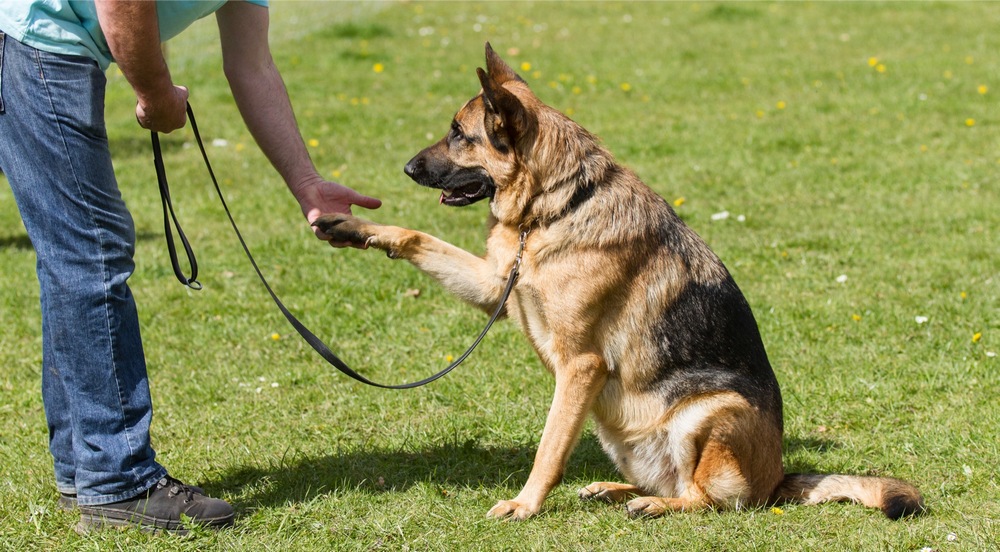
Give me your paw
A hand is raised over the puppy with a treat clutched in its fingers. The dog usually tries to pull the treat out with its teeth, but its attempts are ignored. When it begins scratching the palm with its paw, the treat is given out, clearly spoken. give me your paw.
Cleaning
The toy is placed on the floor, the dog steps back, and the command "fetch" is given. When the dog retrieves the object, a basket with a treat at the bottom is placed near its mouth. Upon seeing the treat, the dog opens its mouth and drops the toy into the basket. After several repetitions, an empty container is placed to reinforce the reflex. Gradually, the game becomes more challenging by using multiple objects.
Kiss
Place a treat on the puppy's cheek and lean toward it. Point to the treat with your finger. When the dog licks the treat, say "kiss." With each training session, decrease the size of the treat.
High jump
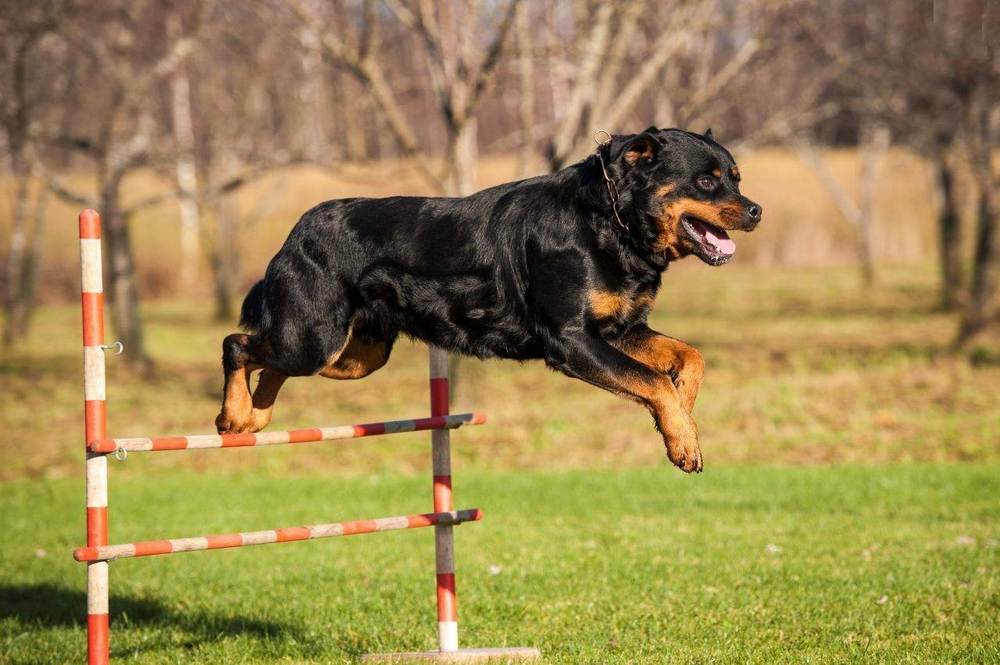
It's easier to practice outside, using dog park equipment. However, you can reinforce this skill at home by using your owner's leg as a pull-up bar. Squat down, extend your leg in front of your pet, and present the lure over the bar. Your pet will jump over the obstacle and receive a reward. With each session, raise your leg higher.
Crawl
After the "down" command, hold the bait close to the floor and hold it toward the dog's nose. Slowly move the treat away, repeating "crawl," encouraging the dog to follow it. If the animal tries to get up, gently press it to the floor with your free hand.
Catch
Hold the treat at eye level—about 1 meter from the puppy's muzzle. Toss it up, commanding "catch." If your four-legged friend catches it, great. If it doesn't, quickly cover the treat with your hand.
On the handles
One of the simplest tricks for small breeds. A dog often jumps up to greet its owner when he returns home. Simply catch it mid-jump and command it to "pick up."
Often training involves the use of bait, so teaching a dog tricks should be done on an empty stomach.
Complex numbers
You can move on to a more complex program once the simplest tricks have been mastered. It's important to remember to complete training sessions before the puppy becomes overly tired. Otherwise, it will develop a persistent aversion to training.
Snake
They command "near" When the student takes a place at the right foot, take a step. Freeze and lower your hand with a treat to the gap between the legs on the left. As soon as the child passes through the gap, give the treat and repeat the exercise, taking a second step. To start, 3-5 steps at a slow pace is enough.
Ring of Fire
Once your pet has learned to jump over a hurdle, you can move on to a more challenging task: instead of a horizontal bar, use a hula hoop with strips of paper attached to it. The difficulty lies in the rustling sound the paper strips make, which can be confusing and often frightening for your puppy.
Start with a few strips, spaced widely apart—the child needs to get used to the feel of the paper and the unfamiliar sound. The hoop is held at a low height, the "hurdle" command is given, and after the four-legged student completes the task correctly, he or she is rewarded. Gradually increase the amount of paper, moving the hoop further and higher.
Waltz
Place your front paws on your hips and, while showing the treat, encourage the puppy to stand tall on its hind legs. Hold for a few seconds and reward the student. Keeping the second treat in sight, carefully take one step back. It's important that the puppy's paws don't slip. Once the exercise is mastered, progress to steps forward and sideways.
Doors
Training to teach opening and closing doors is preferable for large breeds. Place the dog in front of an open door and command "give me your paw." If the animal, having raised its paw in greeting, manages to close the door slightly, be sure to reward it. Reinforce the skill until the door is completely closed. Opening the door is more difficult, but training will be easier if the pet responds to the word "pull." Attach a belt or leash to the handle and give the command.
Thimbles
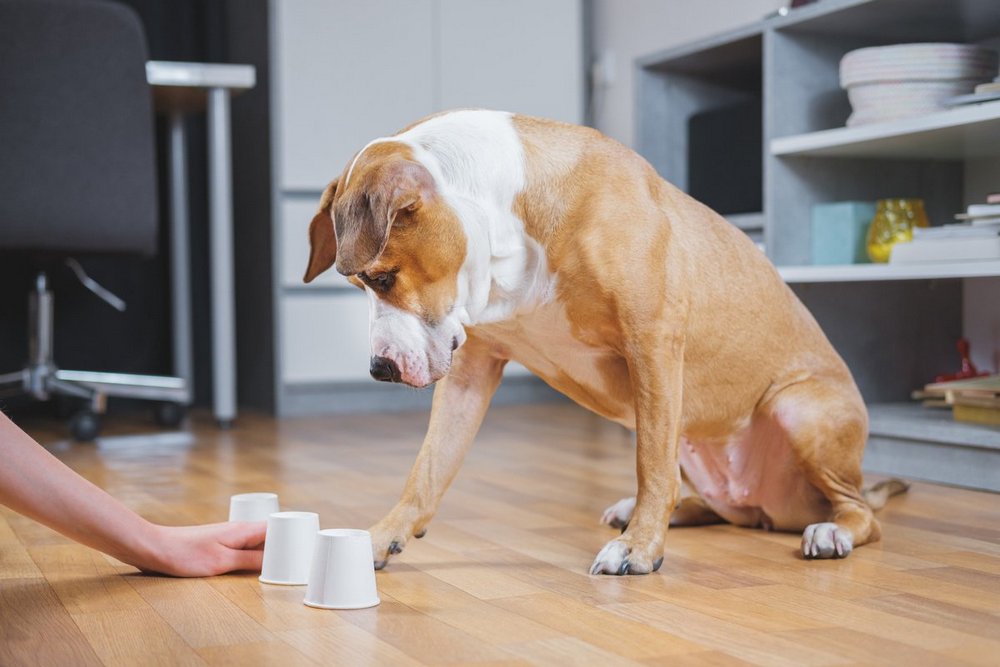
The treat is shown to the dog and covered with a plastic cup. Once the pet turns the cup over and eats the treat, the training is repeated. The task is made more challenging by lining up three cups. The trainee finds the right one by sniffing and is rewarded—allowed to eat it. If unsuccessful, the treat is removed and the training is repeated.
Walking next to a bicycle
Training is possible for a dog that has mastered the "heel" command. Initially, a 15-20 minute training session is sufficient. While sitting on a bicycle or motorcycle, hold the leash with one hand. Do not wrap the strap around the handlebars to avoid injury to your four-legged friend. Stiff leashes are not recommended; it's better to purchase a harness that doesn't put pressure on the throat or lungs. Start with slow, straight movements, gradually increasing speed and practicing turns.
The animal should always remain between the vehicle and the curb, to the right of the bicycle. The best option for running is on a dirt road.
At home, even without the help of a dog trainer, you can turn your pet into a true circus performer. It's important to take your time and carefully monitor your dog's condition. You can learn how to master tricks in detail by watching special videos with demonstrations and tips from professionals.
Read also:
- How to teach a dog the "Die" command
- How to teach a dog to retrieve a stick and other objects
- ZKS for dogs: what is it?


Add a comment