
Grass for cats
Cat owners often notice their pets' penchant for eating various vegetation, such as grass or indoor plants. The exact cause of this phenomenon varies from case to case, but it's a natural process for both indoor cats and outdoor enthusiasts. While the latter often take care of themselves, owners are often responsible for the needs of their pets. To this end, pet lovers purchase sprouted grasses for their cats in stores or consider planting grass for their cats at home to save money.
Content
Do cats need grass?
Cats need grass, but not as a source of food. vitamins and minerals. These animals most often consume vegetation to cleanse their intestines. Cats are already known to love to lick and groom themselves, and when they shed, this process intensifies. As a result, the animal ingests a large amount of hair. This is when grass becomes especially important for cats. While felines have adapted to involuntary hair consumption, everyone needs periodic cleansing at certain times, and cats are no exception. Therefore, they begin eating a lot of grass, which promotes natural regurgitation. However, not every blade of grass is suitable for this purpose. If a pet lives indoors, their choice is limited to bushes growing on the windowsill. Cats simply have to eat "whatever they can find" for lack of better options. However, outdoor animals have plenty of space to spread out and choose the greenery they prefer. Typically, these include grasses and coarse weeds.
Why do cats need grass?
Experts have many different opinions on this matter. Some believe that eating grass provides no benefit to cats, and that they simply chew it for the flavor of the juice.
Another version is that this is the reason for evolution, when special plants were the only way to rid an animal of intestinal parasites that could not tolerate a certain type of grass fiber.
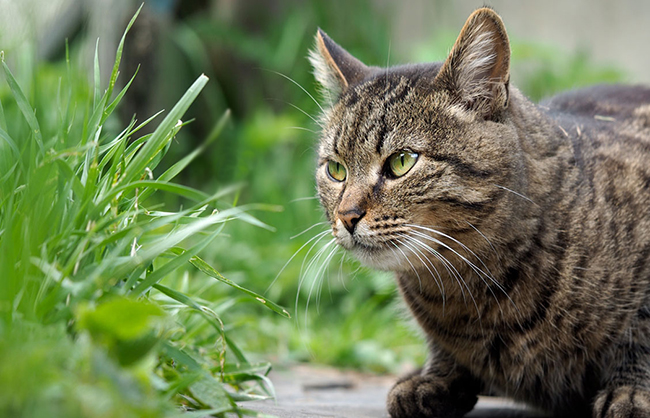
Some experts say the motivation for eating plants lies in the ability of grass to positively impact the digestive system and intestinal motility of pets. They also see why cats need grass, literally. After all, after eating plants, cats often regurgitate them along with undigested pieces of waste:
- wool;
- feathers;
- bones, etc.
You can always buy ready-made grass for cats through Yandex Market Here:
And if we take cereals into account, it turns out that the popular cat grass made from wheat contains a ton of vitamins and beneficial minerals:
- zinc;
- niacin;
- manganese;
- riboflavin;
- pantothenic acid;
- vitamins of various groups.
Pets also need folic acid. Here's the facts: sprouted legume grass for cats contains sufficient amounts of this acid.
Why do cats eat grass?
Cats enjoy chewing grass; most owners know this and, as a rule, don't worry about it. And rightly so, as grass eating is a natural occurrence and poses no hidden threat to the pet.
But Why do cats eat grass?Long ago, before cozy apartments, loving owners, or, at worst, warm basements, existed, cats had to survive in the open and forage for their own food. Back then, the main food available to cats consisted of small rodents, birds, and vegetation. Moreover, grass acted as a catalyst for cats to regurgitate excess undigested food.
Of course, for a pet accustomed to comfort and eating food cleaned of all unnecessary elements, such additional cleaning is unnecessary and completely irrelevant. However, the animal's instinctive nature takes over, and cats begin to take an interest in indoor plants. They chew flowers and taste the leaves of plants within their reach. Naturally, such behavior is often punished, but most of the time the animal suffers undeserved punishment, as this is their natural nature. It's much better to grow your own medicinal herbs for cats and delight your pet with long-awaited greenery.
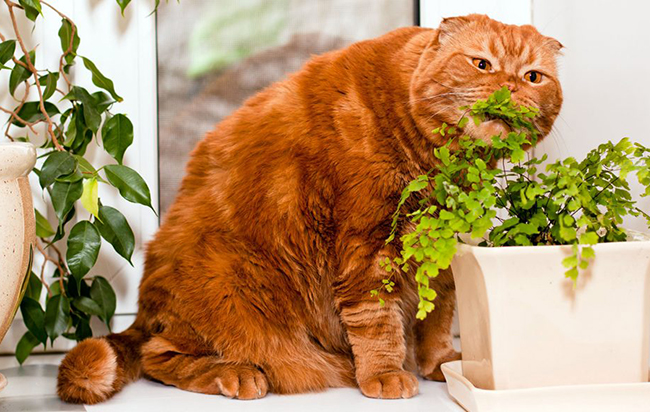
Some might disagree with this statement and say, "My cat eats just fine and doesn't need any additional food, especially vegetation." But there's one interesting aspect, usually known only to cats: they eat grass not only to regurgitate food or out of natural instinct. Yes, all of this is true, but cats also use grass as a form of treatment.
What types of herbs are there for cats?
To figure out what kind of grass your cat prefers, first let it out onto the lawn and observe it. Most cats prefer coarse weeds like couch grass. This plant can be found in any patch of grass that's even slightly overgrown, and in fact, it often takes over every available space. The downside of this plant, from an owner's perspective, is that it's often dirty. This means that a cat eating grass ingests:
- microorganisms;
- exhaust gases;
- chemicals;
- eggs worms and much more.
You can, of course, collect this grass and process it properly, but this will not help much - dirt of this kind cannot be removed with simple water.
Pets kept indoors often don't bother considering what kind of grass is suitable for cats, simply eating whatever's available. This might include anything from a beloved ficus plant to a common kitchen broom. In this case, caring owners first face the question of how to plant cat grass, as many houseplants contain toxins that can seriously harm a pet's health, and even a common kitchen broom can also pose a potential intestinal hazard. After understanding the nuances of growing and germinating plants, the next step is choosing the right grass for your cat.
While your cat's favorite treat can be collected in the summer, grass can also be dried. To do this, gather the selected herbs into bundles and hang them in a convenient location, typically a balcony or pantry. Cats will enjoy their favorite "hay" just as much as fresh grass, especially if it's essential for their health. It's clear that it's best to collect cat food in rural areas, as, as mentioned, cities are associated with higher levels of toxic sediment. Store the collected grass for cats in a regular paper bag; a canvas bag will also work.
If you've decided to plant grass for your cats, instead of hay, you can stock up on seeds of plants your pet enjoys. Storage conditions are the same. If your beloved pet has never been outside, consider bringing them some wheatgrass. It's long been noted that cats, regardless of their preference, always pay attention to this tough, ubiquitous weed. Incidentally, this grass can be grown indoors, giving your cat 24/7 access to this natural treat.
So, we've established that grasses for cats come in a wide variety, and your pet may prefer any plant they can reach. Looking at the matter from the perspective of general feline popularity, besides wheatgrass, you can grow grass from legumes and cereals. It's also worth noting catnip, which deserves its name, and your cat will also appreciate peppermint. Your pet should also appreciate chlorophytum and lavender.
What grass is good for cats?
Not every plant will benefit a cat, and although cats are picky creatures and know which greens to eat, sometimes knowing which herbs are good for cats is essential. Beneficial plants for cats include:
- parsley;
- wheat;
- barley;
- oats, etc.
It's best to buy cereal and grass seeds from the store, as outdoor plants may contain worm eggs or be treated with pesticides. Besides beneficial grass, there are many dangerous plants that can even be fatal to animals. Here are some examples of houseplants popular among indoor greenhouse enthusiasts:
- Decembrist.
- Monstera.
- Azalea.
- Begonia.
- Dracaena.
- Ficus.
- Ivy.
This is a very short list of herbs that are dangerous to cats, so if you know your plant is poisonous, keep it away from your pet to avoid a tragic accident. A cat can chew through a leaf even while playing, which is enough to poison a small animal.
How to Grow Cat Grass at Home
It's important to understand this issue, and it's better to grow your own healthy cat grass than to bring in weeds from outside and thereby harm your pet. After all, outdoor grass contains parasites, chemicals, and other contaminants that are completely unnecessary for your cat and you, too.
So, let's look at how to grow cat grass at home. We'll explore three popular methods. There are two, and the third method is more of a technical guide that helps minimize the hassle associated with growing cat grass.
This video shows another way to quickly grow grass for your cat at home without soil:
Method one – with soil
| What you will need |
|
| How to grow | The preparatory process is complete. Now, pour almost all the soil into the prepared container and moderately moisten it. Keep in mind that you don't need to pour the soil all the way to the top, as you'll still need to sow the seeds and cover them with the remaining soil. Meanwhile, soak the required number of seeds in water and then (after about an hour) evenly scatter them over the entire surface of the prepared plot. Then, cover the seeds with the remaining soil and cover the improvised farm with the prepared plastic sheet. Keep the sheet on until the first shoots appear; after that, the greenhouse effect created by the plastic sheet will lose its significance. That's all there is to it; all that's left is to wait a little longer. |
Method two – without soil
This method can also be called simple or lazy, depending on your preference. Cat grass without soil is grown as follows:
| What you will need |
|
| How to grow | This improvised seedbed should be watered again and, as before, create a greenhouse effect for the seeds. The advantage of this method is not only its simplicity, but also its time-saving nature, and you'll definitely not see soil scattered around the apartment. After all, grass-eating cats are notoriously clean. |
The third method is the conclusion
If you're growing cat grass in a flowerpot or using the second method, the risk that your pet will become intrigued by the structure and knock it over is quite high. Therefore, when choosing a "home" for your cat grass, choose wide and low items. A former cat litter box is an ideal option. Another interesting point: you can use cat litter instead of soil. These sticks are nothing more than compressed sawdust. Of course, the litter must be soaked in water until it becomes a paste, and then you'll need to follow the same steps as in the first method. It's important to remember that the materials used to grow the grass must be new. Otherwise, your cat won't understand your generous gesture and will use the litter box as an extra urinal.
Read also:




Add a comment