
Toyger
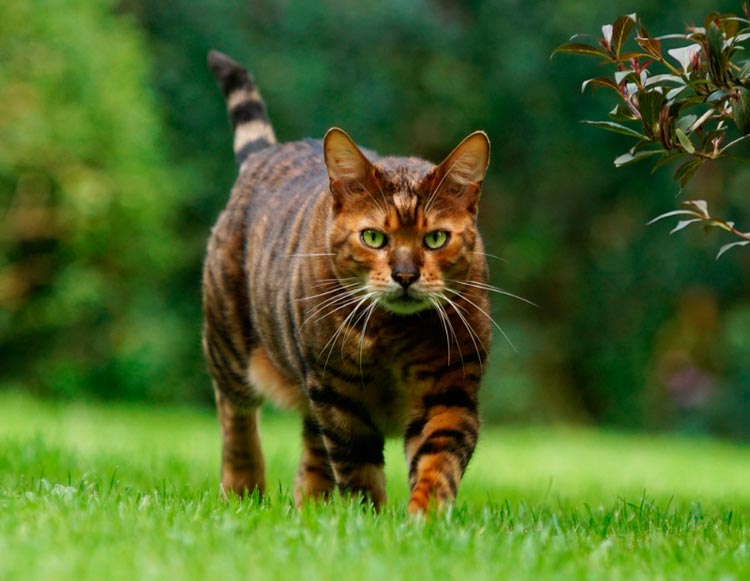
Toyger The American Shorthair is a young American breed of shorthaired cat with a distinctive tabby pattern reminiscent of a tiger. They are intelligent and sociable animals with an affectionate and playful nature. The breed was developed in the United States in the early 1990s and is considered rare and expensive worldwide.
Content
History of origin
"Toyger" (English) is not just a "tiger," but a "toy tiger" (from the word "toy"). This breed is one of the youngest. Its author and creator is felinologist Judy Sugden. She has been involved with breeding cats since childhood. Her mother, Jean Mill (Sugden), is the author of the world-famous and popular Bengal cat.
In the late 80's Judy worked on improving the coloring marble Bengal cats. Then she noticed that one of the cats had unusual spots on his temples. The breeder believed this could be the key to the development of a circular pattern on his head, like a tiger's. Judy was right.
The Toyger's coloring is unique and is not found in any other domestic cat.
The genetic foundation of the Toyger breed began with several Bengal cats. In 1903, they were infused with the blood of a common stray cat brought from Kashmir, India. Its breeding value lay in its unique ear stripes. Over time, other breeders joined Judy's work. In 1993, TICA began registering Toygers, and in 2007, the breed received full recognition.
Toyger's appearance
The appearance of these cats is truly captivating. Toygers are often referred to as a toy breed, but their size and overall appearance are anything but toy-like. Particularly large specimens can weigh up to 10 kilograms. Males average 5-7 kg, while females weigh 3.5-5 kg.
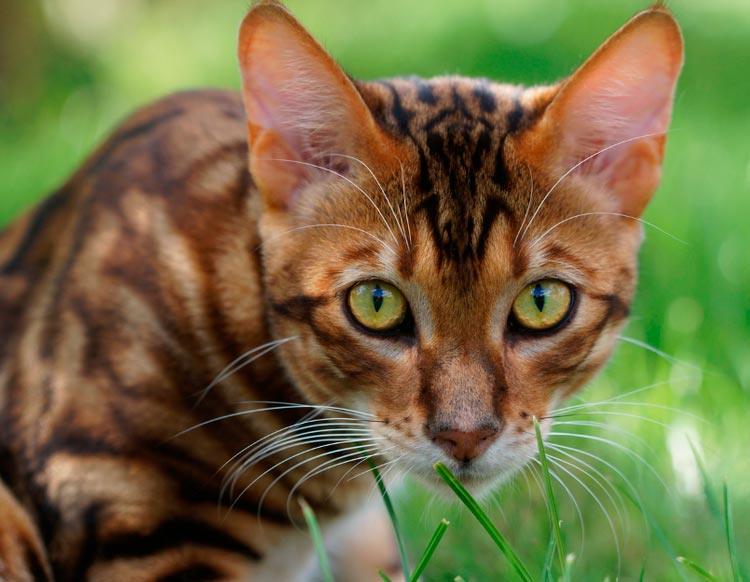
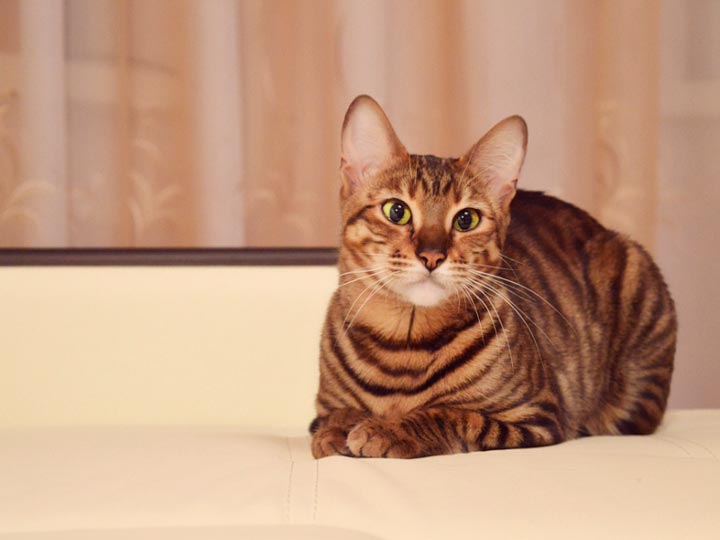
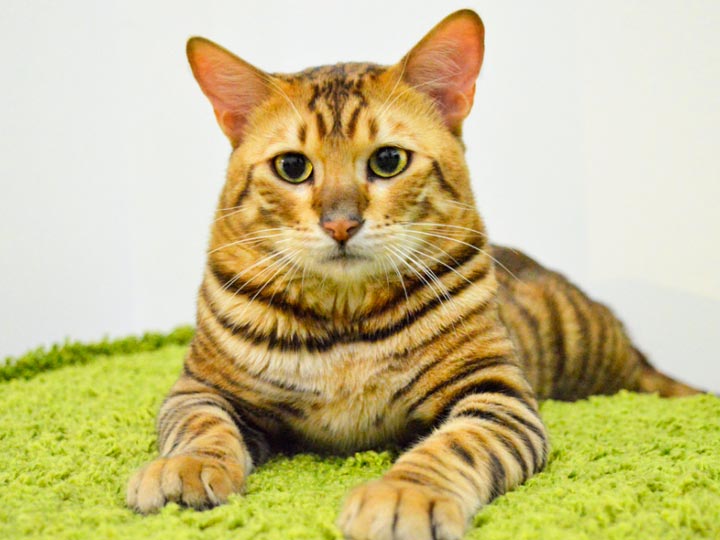
The head is medium-sized, with prominent depth. The muzzle is long, clearly defined, wide, and deep, with a strong chin and rounded contours. The stop from the forehead to the nose is clearly defined. The bridge of the nose is wide, approximately the same width at the tip as the distance between the eyes. According to the standard, the Toyger's ears should be set high, small, and rounded. Thick fur is desirable both near the ears and at the temples, but there should be no tufts at the tips of the ears. The eyes are medium-sized, slightly slanted, made even more expressive by the black rims of the eyelids. They are set moderately deep. The eye color is always very rich, often amber or green.
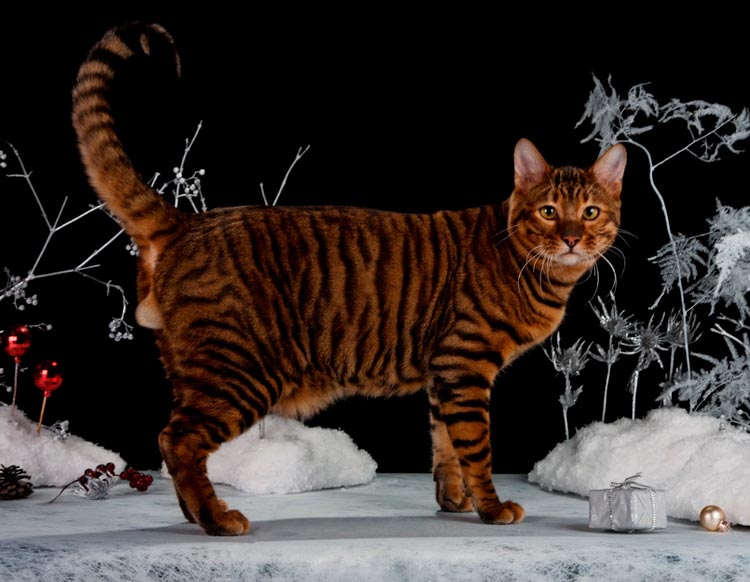
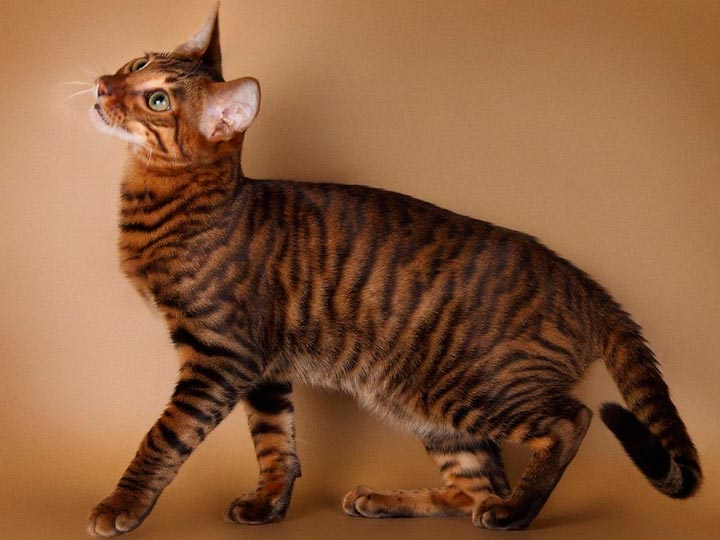
The body is elongated, strong, and athletically built. The Toyger gives the impression of a strong and agile cat with well-developed muscles. The front of the body is slightly higher and more massive than the back: a strong, well-developed neck, a powerful chest, and shoulders that jut forward like those of a tiger. The limbs are long and strong. The paws are small, with neatly knit toes. The long, low-set tail further enhances the cat's tiger-like appearance.
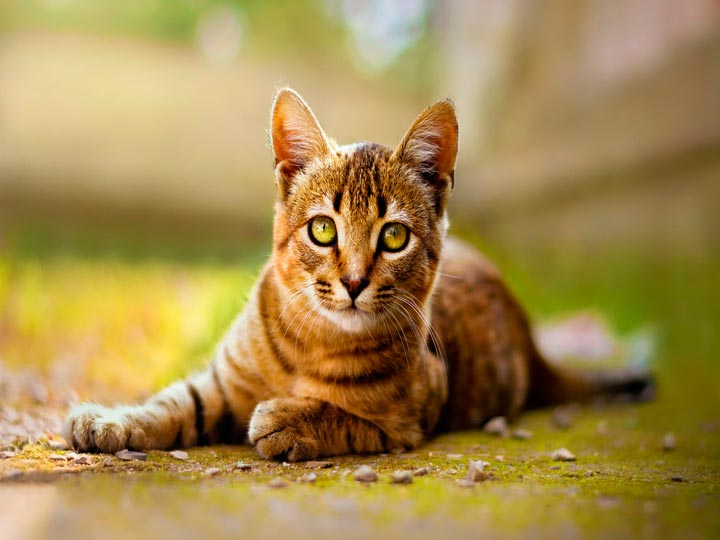
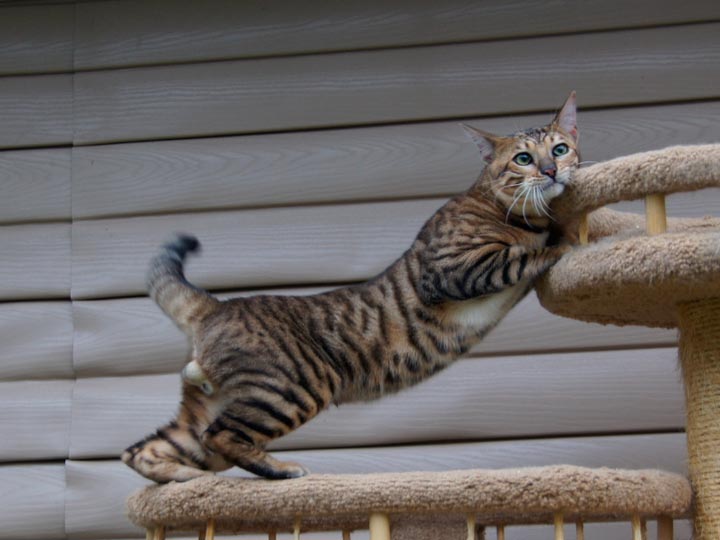
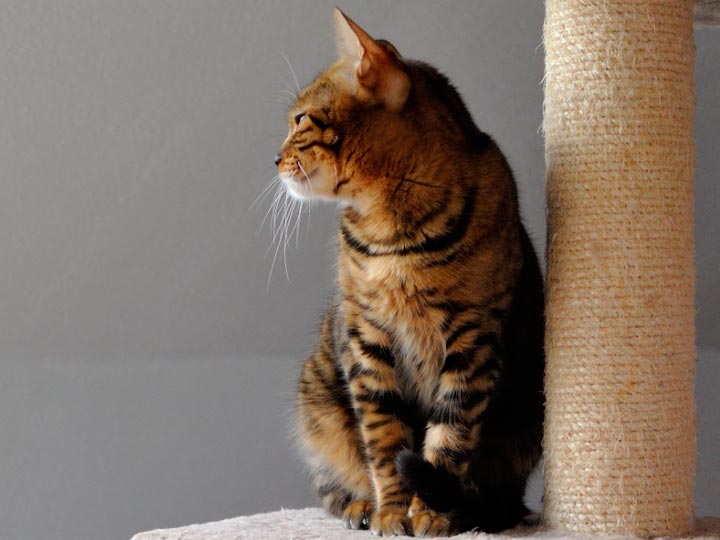
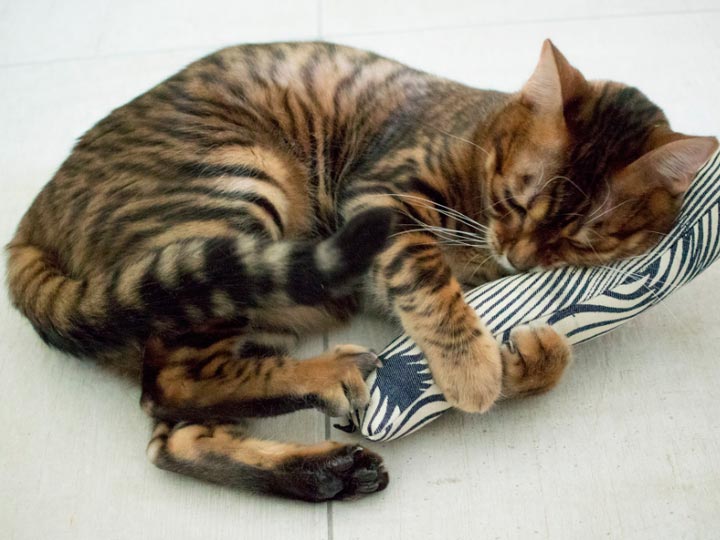
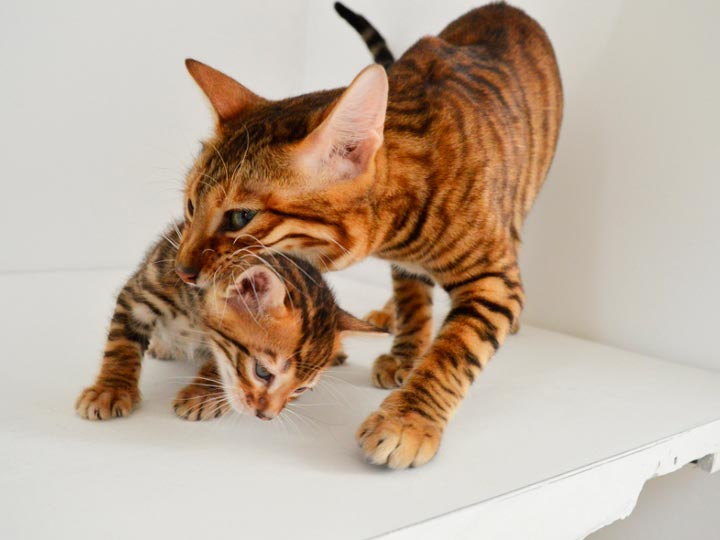
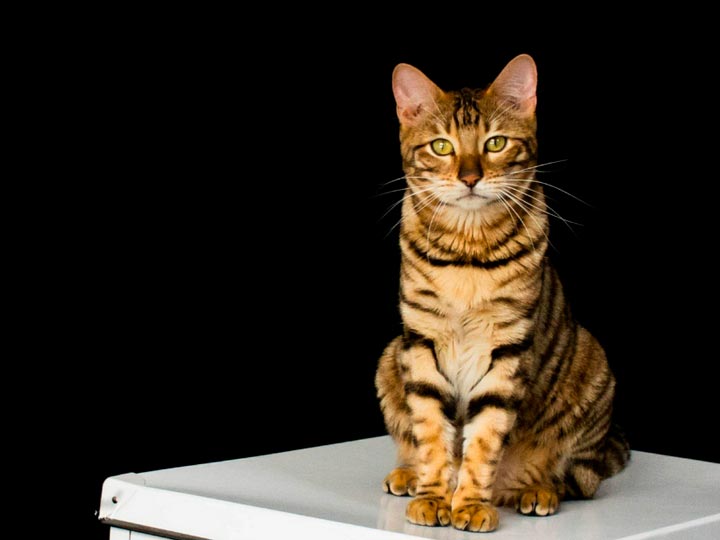
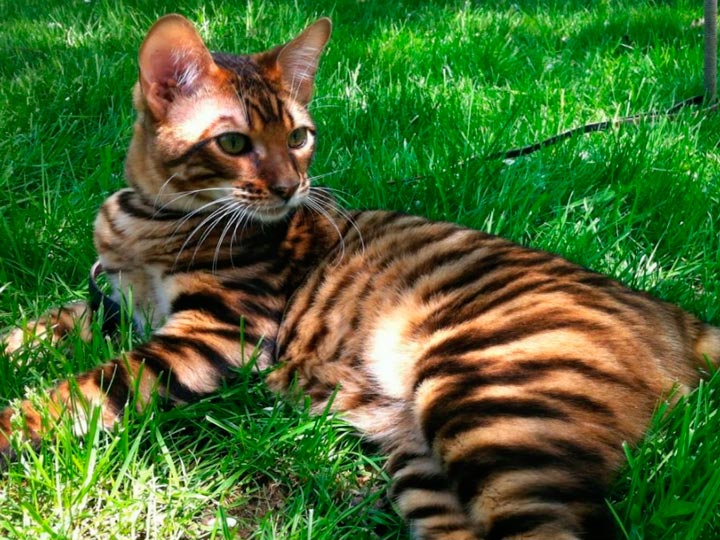
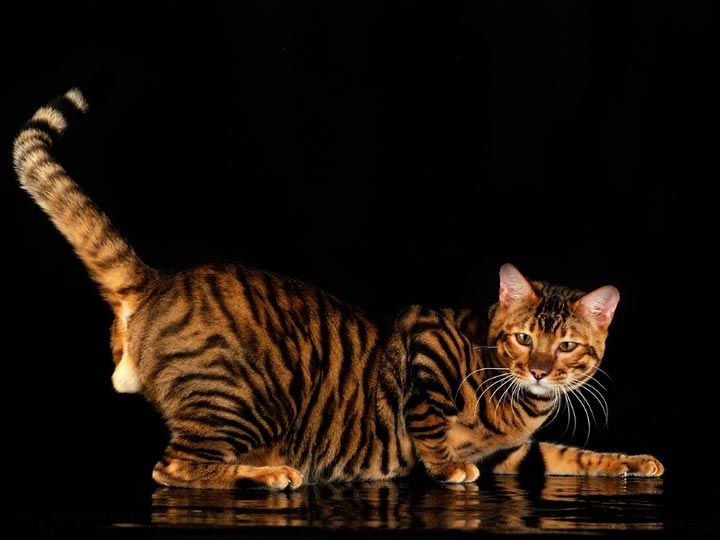
And, of course, the Toyger's main attraction is the stunning tabby pattern of its short, silky fur. Dark or completely black, distinct stripes cross a contrasting light brown or rich red background. The fur on the belly is typically a shade lighter than the fur on the back. Circular markings should be present on the neck, legs, and tail. The paw pads and tip of the tail are black.
Some breeders today are working on as yet unrecognized, but very beautiful colors: snow (coffee-colored stripes on a white background) and silver (black stripes on a gray background).
Character and behavior
Toygers are friendly, affectionate, and very sociable. The most important thing for these cats is to feel loved. But they don't require constant human presence. When given toys, they occupy themselves well on their own, and when not playing, they rest in a secluded spot. They quickly adapt to a new family and adjust to their lifestyle, even if they are already adults. They are easily trained. tray and a leash. They are neither vindictive nor aggressive. They love to cuddle, purr, and sleep in your arms. They are not very talkative, meowing rarely, only when necessary.
Toygers resemble tigers in appearance, but have the blood of wild Bengal cats in their veins. Despite this, they are very affectionate, sociable, and loyal.Toygers are very intelligent and curious; they love a variety of toys, and when playing, they amaze with their agility and maneuverability. Their hunting instinct is weak. A Toyger might chase a butterfly outdoors, but indoors they often live peacefully, even with parrots. They get along well with other cats and dogs if raised with them. In a large, close-knit family, they are not aggressive and remain a loyal companion to all household members. However, if a Toyger was raised alone in an apartment and has never been outdoors, introducing them to other pets can be challenging.
Content Features
Toygers are well-suited to apartment living. They are clean and tidy, and easily litter-trained. With regular brushing, shedding is virtually invisible. They can be kept on a leash for walks. Keeping such a cat in a private home is possible, but comes with a number of risks. Fences are no problem for a Toyger, especially if he's not neutered. During such outings, he could get into fights, pick up an infection, or get hit by a car. He's also highly likely to be stolen. It's a good idea to purchase a play structure or at least a scratching post for your Toyger. This way, he won't be interested in furniture as a means of sharpening his claws.
Care
Short fur doesn't spread around the house, doesn't stick to clothing or furniture, and doesn't get caught on hands. Shedding is an exception, but it doesn't last long, so it's perfectly acceptable to tolerate it, or it can be minimized with daily brushing. Toygers should be bathed no more than 3-4 times a year. Their fur is easy to wash and dries quickly. Their nails should be trimmed with a special nail clipper once a month. It's also important to keep their ears and teeth clean.
Nutrition
Toygers are generally not picky eaters and adapt well to their owner's chosen diet. This can include natural foods or prepared foods. They often prefer natural foods and happily eat meat and vegetables. This type of diet presents a lot more challenges for Toyger owners, as they must carefully consider the amount of nutrients, vitamins, and minerals in their pet's food. However, these cats ultimately have large bodies and excellent health.
It's also important to remember that, due to their omnivorous nature, Toygers may steal food from their owners, which may be completely unsuitable for their pet. It's important to ensure that no harmful foods are left readily available to the cat that might tempt it.
Health and life expectancy
The breed is generally healthy. From the very beginning of Toyger breeding, breeders have paid special attention to this issue and have not bred sick animals. However, some hereditary diseases that are difficult to treat are common among these breeds:
- Cataract;
- Progressive retinal atrophy;
- Cardiac hypotrophy;
- Cardiac cardiomyopathy.
Other feline diseases and infections are also possible. Regular veterinary visits, timely vaccinations, and parasite treatments will help reduce the risk. Life expectancy is 12-15 years.
Buying a Toyger kitten
The Toyger is a rare and scarce breed. Catteries are few and far between, mostly in large cities. The key is to have enough money to acquire such a wonderful pet. Many people are discouraged and give up on their dream when they learn how much a Toyger kitten costs.
Representatives of the breed were brought to Russia in 2008 by Judy Sugden herself. These were two female cats and a male cat—the founders of the Russian Toyger line. The first cattery was also opened in Moscow at the same time. Today, several catteries officially breed Toygers in the country: in Moscow and the Moscow region, St. Petersburg, the Saratov region, the Krasnodar region, and Crimea. Among the most famous are "Moscow Family," "Goldenspark," "Wild Jungle," "Fairy Berendey," and "Greencity."
Before purchasing a cat, make sure the cattery you choose is officially registered with TICA, the only international feline association that recognizes the Toyger breed. If the kitten has documents from another organization, they are likely fake.
Today, at least one Toyger cattery can be found in almost every European country. In total, there are approximately 40 official breeders worldwide.
Choosing a Toyger Kitten
Please note that even within a Toyger breeding facility, prices can vary even for kittens from the same litter. The price is determined by several factors: breeding value, compliance with the breed standard, and a characteristic, flawless coat color. Minor deviations from the norm can lead to a significant price reduction. This does not prevent them from being considered purebred animals, as documented by a pedigree.
After studying the breed standards, you can choose a kitten yourself, but it's still best to seek the help of a specialist—a felinologist—or trust a breeder. It's recommended to purchase an animal only from a breeder. This purchase option not only provides you with various documentary guarantees but also ensures that the cats have been raised in the most suitable conditions for them, resulting in a balanced character, a standard appearance, and robust health.
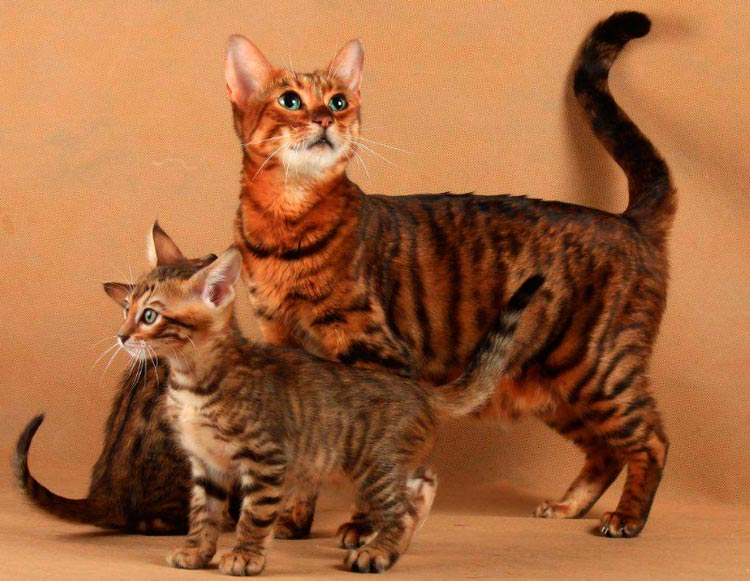
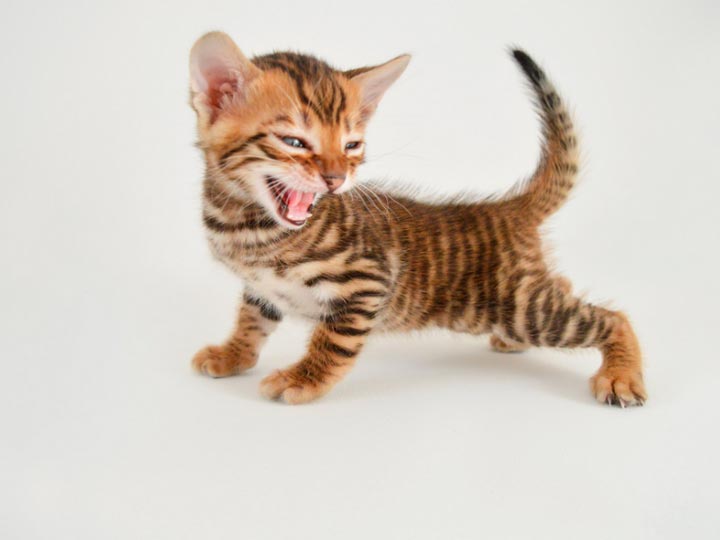
To "appraise the product properly," so to speak, a Toyger cat should be purchased no later than two months of age. After this point, kittens temporarily change color, their fur turns gray and fades, and only by six months of age does everything return to normal.
Toygers should not be taken from a breeder until they are at least three months old—by this age, they have already received the necessary vaccinations. Animals of this breed are mostly sold already spayed or neutered. These procedures are performed to protect the breed from uncontrolled breeding and interbreeding.
With the growing popularity of Toygers, advertisements have begun to appear for the sale of tabby kittens, which are obtained from other breeds, and sometimes even from ordinary cats, under a resonant name.
Price
In foreign countries, the price of a Toyger ranges from $1,500 to $5,000. If you want to buy a Toyger in Moscow or St. Petersburg, the animal will cost slightly less: 50,000 to 200,000 rubles. The price difference in Russia is explained by the fact that breeders abroad are required to donate a significant portion of their Toyger sales to a fund to support wild tigers living free in the wild—a requirement set by Judy Sugden, the breed's creator.
Catteries sometimes stock male and female cats that have been bred out of breeding. This is perhaps the only way to get a genuine Toyger at a lower price.
If you've already budgeted the necessary funds to purchase a pet, the next question arises: where can I buy Toyger cats? Naturally, it's cheaper and easier to buy a Toyger kitten in your home country, as purchasing and shipping one from another country will be more expensive and add additional paperwork hassle.
Photos and videos
You can see more photos of Toyger cats in the gallery.
Video about the Toyger cat breed
Read also:


Add a comment