
Tornjak (Bosnian-Herzegovinian-Croatian Shepherd Dog)
The Tornjak (Bosnian-Herzegovinian-Croatian Shepherd Dog) is an ancient, aboriginal dog breed that was almost completely lost in the 20th century and was revived by enthusiasts in the 1970s. In their historical homeland, breeders and enthusiasts still use these dogs for their intended purpose. And they are very proud of their truly working breed.
Content
History of origin
There are several theories about the origin and spread of herding dogs in Europe. The most popular holds that they all descended from Tibetan dogs and traveled a long way from Central Asia to Western Europe.
The name of the Tornjak breed (Bosnian: Tornjak) is derived from the word: torn - pen and in rough translation means "pen guard"
Research by cynologist Alan Salkic shows that the Tornjak is an indigenous breed that inhabited the territory of modern-day Bosnia for at least 10 centuries, primarily in the area of Mount Vlasic and the surrounding plains. The first written mention of the Tornjak appears in the Annals of the Bosnian Church (1067). Later, the dog was described in documents from the 14th to 18th centuries. From that time to the present day, the Tornjak's appearance and character have remained virtually unchanged.
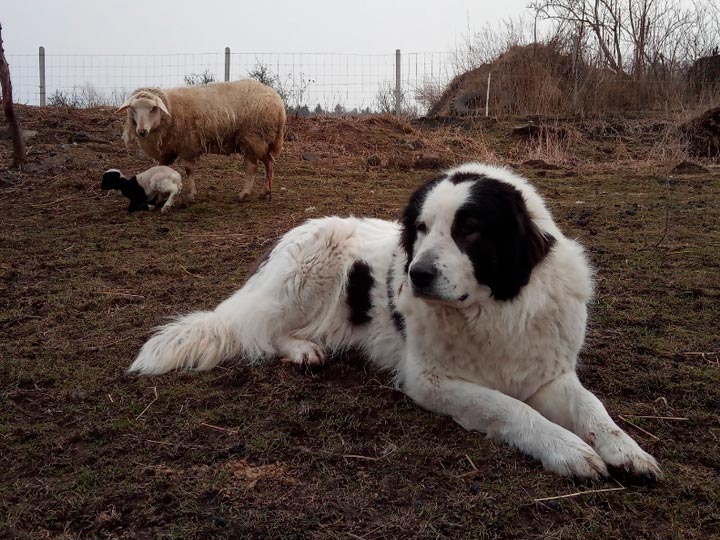
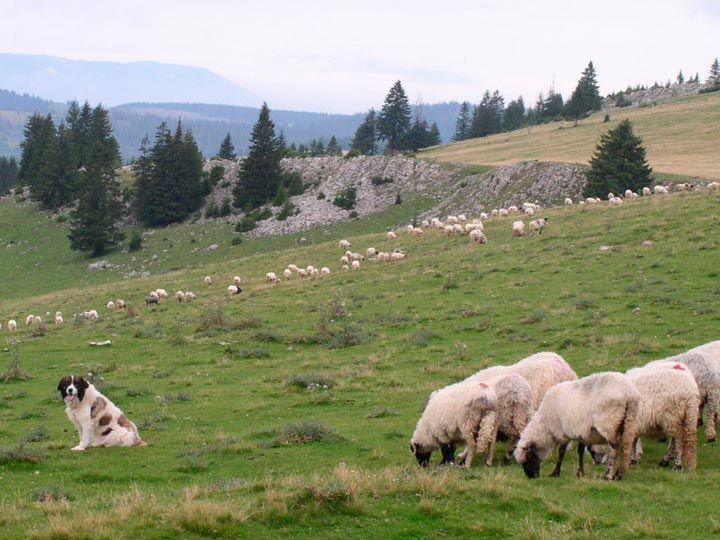
Traditionally, the Tornjak was used to guard herds and homes. It can easily defeat two wolves, and a pair of dogs can drive off a bear.
The transition from pasture-based to stall-based livestock farming had a negative impact on the breed, and by the mid-20th century, Tornjaks were virtually extinct. Efforts to restore the breed began in the early 1970s in Croatia and Bosnia simultaneously. Pure-breeding has been practiced since 1978. In 1981, the breed was registered with national clubs. The first standard was approved in 1990. Since February 2006, the Tornjak has been a conditionally recognized breed by the FCI. It is eligible to be shown and participate in any show without the right to a CACIB title.
Appearance
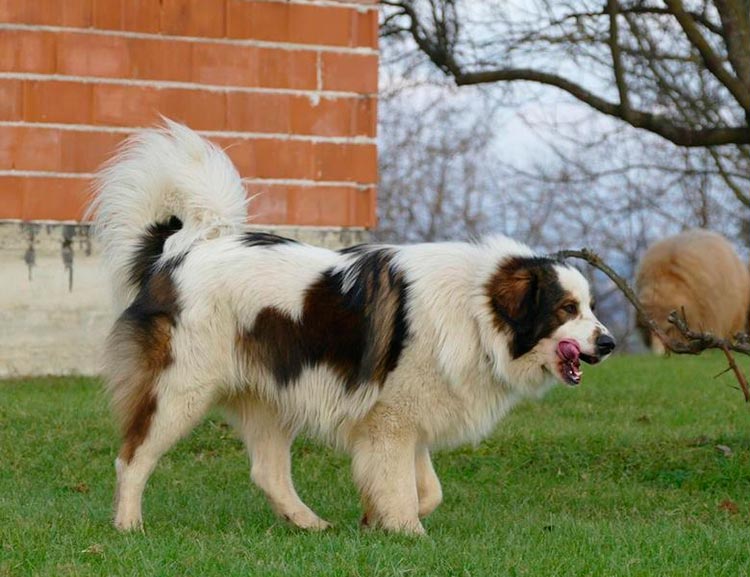
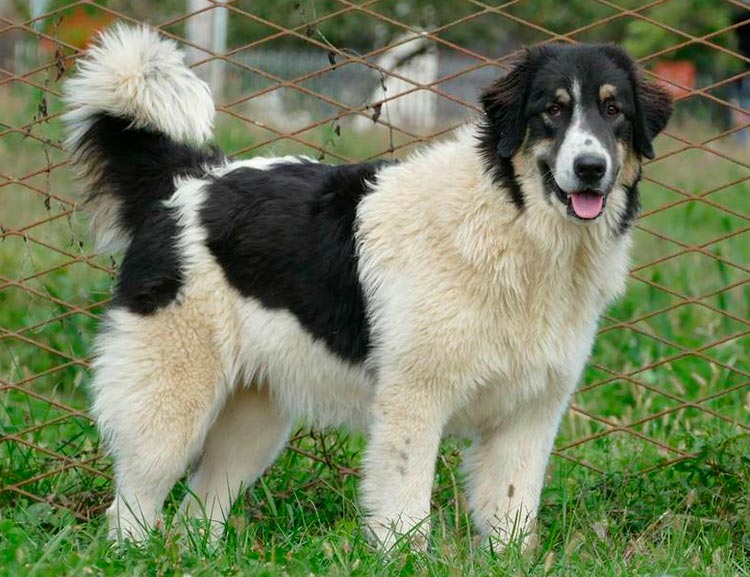
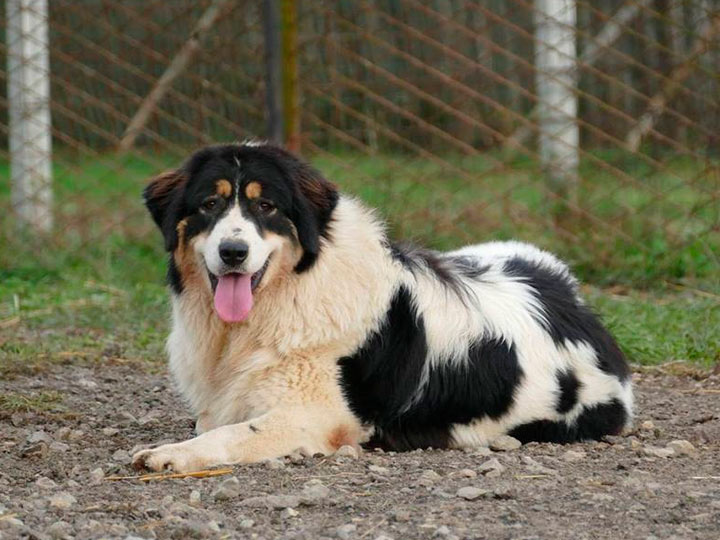
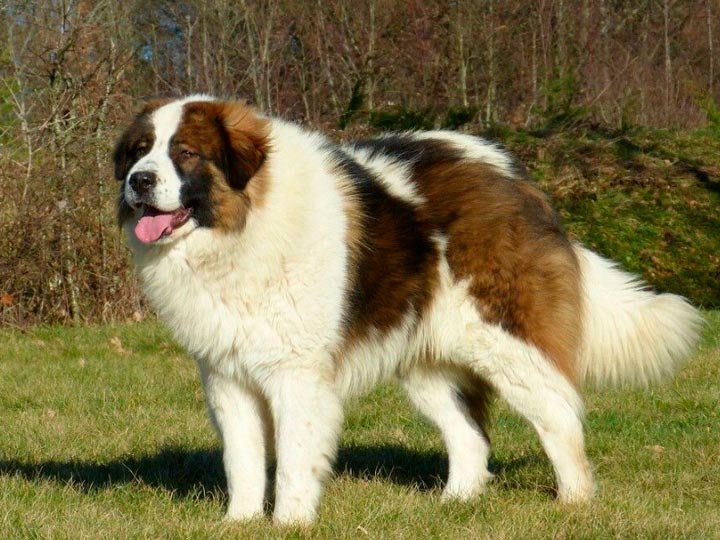
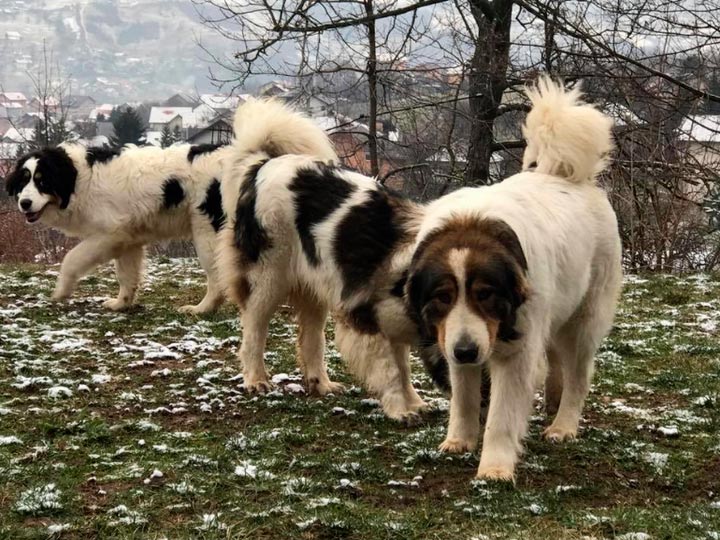
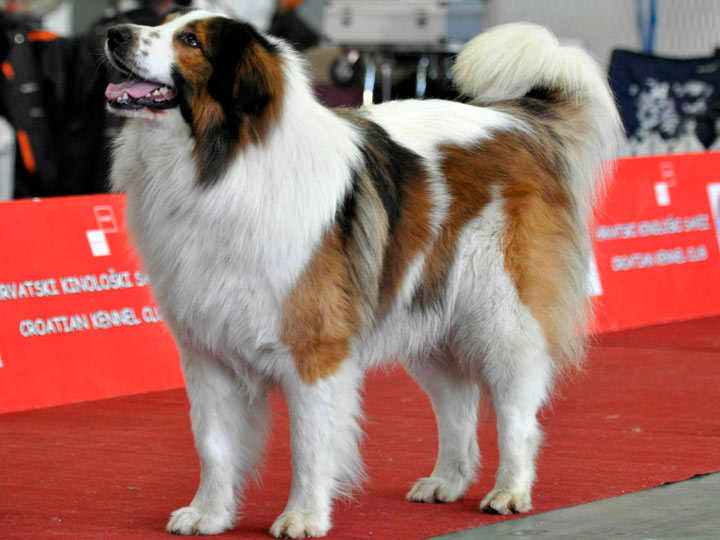
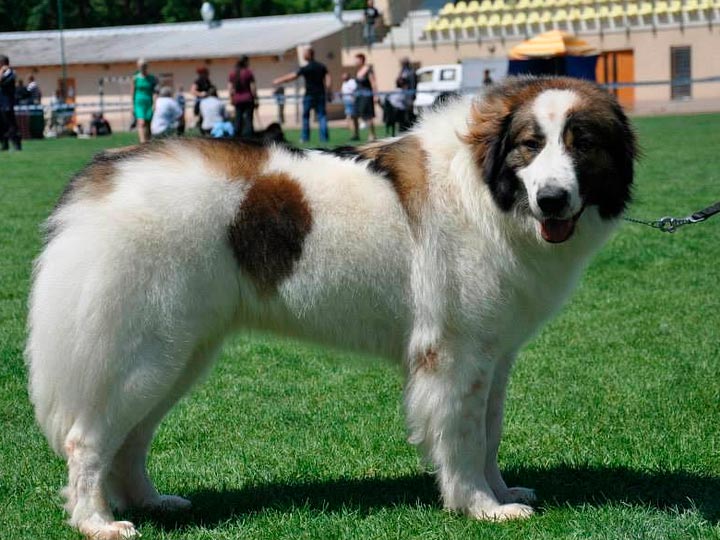
The Tornjak is a large, strong, well-proportioned dog. Its body is almost square, with medium bone structure. The coat is long and dense. Sexual dimorphism is well-defined.
- Height at the withers of males is 65-70 cm; Weight is 34-50 kg.
- The height at the withers of bitches is 60-65 cm; weight is 34-40 kg.
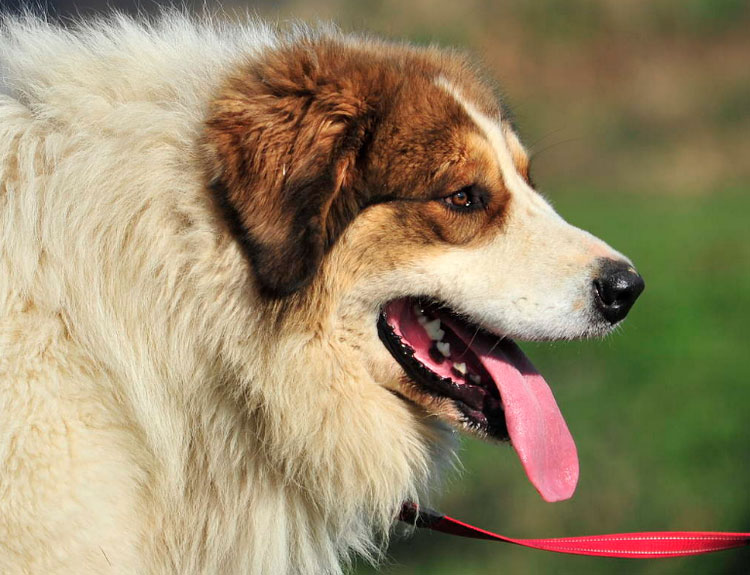
The ratio of the length of the skull to the length of the muzzle is 1:1. The head is elongated, with the toplines of the muzzle and skull diverging. The stop is slightly defined. The muzzle is rectangular with a straight nasal bridge. The nose leather is fairly wide and dark in color, matching the coat color. The lips are tight. The bite is a scissor bite. In adulthood, this often changes to a straight bite. The eyes are dark and almond-shaped. The ears are triangular, medium in size, set fairly high, and hang close to the cheeks. The neck is strong, medium in length, with tight-fitting skin.
The back is short, straight, and moderately wide. The loin is short. The croup is wide and slightly sloping. The chest is deep, broad, spacious, and oval in shape, reaching to the elbows. The belly is moderately tucked up. The tail is set at a medium height, very mobile, and long. When at rest, it hangs down. The limbs are strong-boned and strongly muscled, parallel, and well-positioned. The paws have well-arched, tightly knit toes. The nails are dark. The pads are dense, hard, and dark in color. Correct structure of the limbs ensures well-balanced, elastic movement with a strong drive from the hind legs.
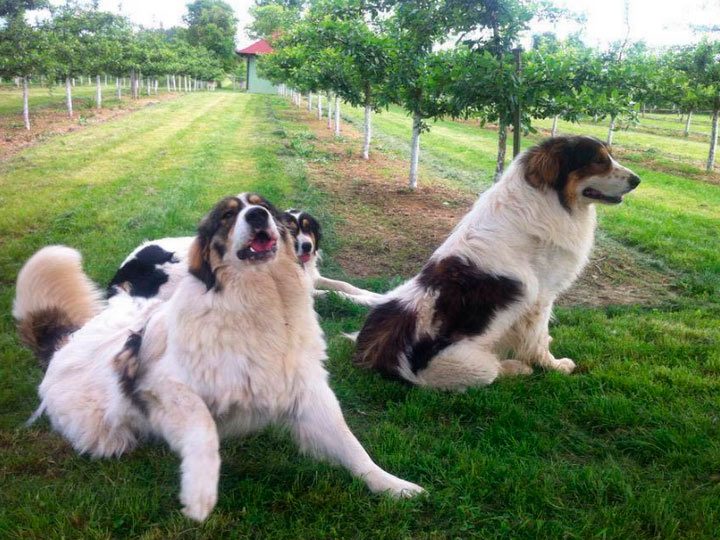
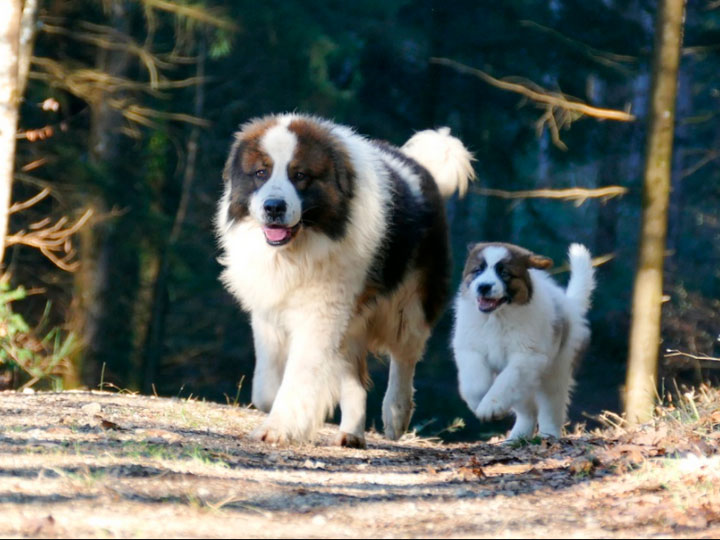
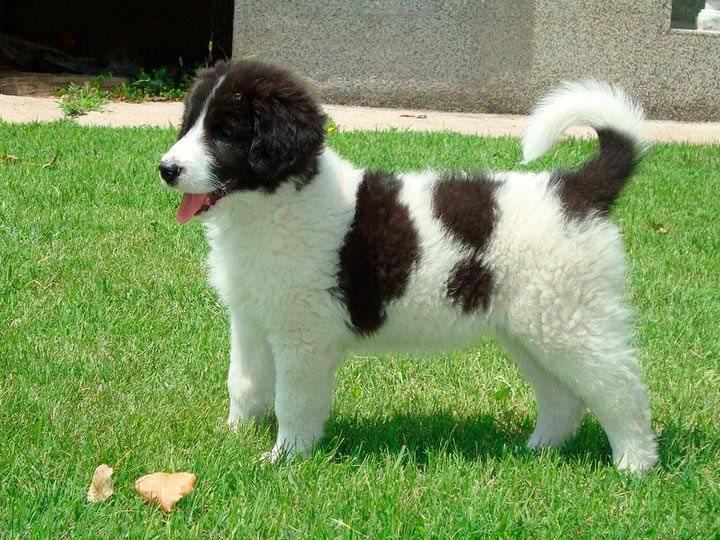
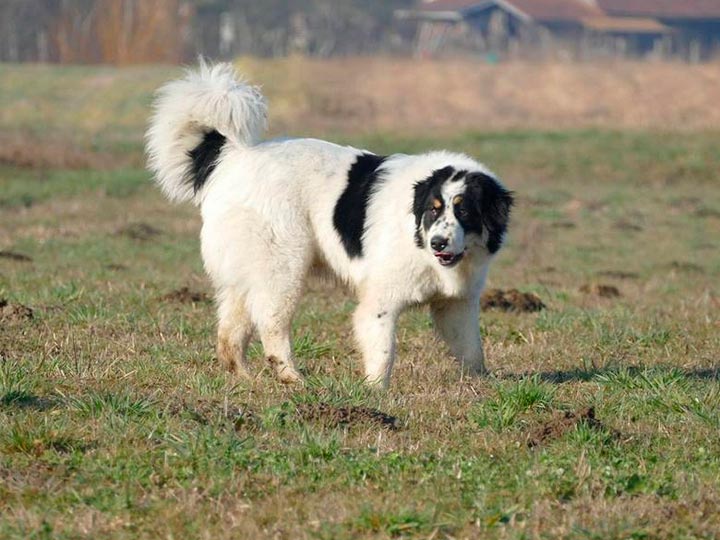
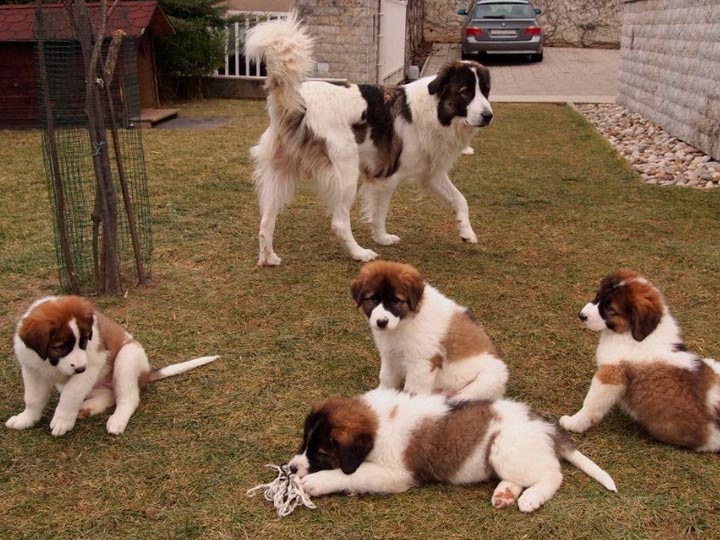
The skin is tightly adherent all over the body. The hair on the head, muzzle, and legs is short, while elsewhere it is long and straight (at least 9 cm). It may be slightly wavy on the shoulders and back. It forms a ruff around the neck, and there are featherings on the back of the legs and tail. The winter undercoat is dense, long, and has a pleasant woolly texture. The coat is bicolor or tricolor, with white predominating. The spots on the body are red, black, yellow, or brown.
Character and behavior
The Tornjak is independent and stubborn, but sincerely devoted to its family and always thinking of others. It has a balanced character, is bold, intelligent, and self-confident, with innate protective instincts, and is very resistant to pain. It rarely barks. Each Tornjak is a distinct individual and can react differently to the same situation. By nature, it is calm and serious. An adult dog may appear lazy and even phlegmatic, but it has lightning-fast reflexes and is ready to defend itself at the slightest threat.
The Tornjak is not well suited to the role of a companion; it is primarily a working dog, a guardian of the herd from predatory animals and ill-wishers.
The Tornjak is unobtrusive and non-aggressive. It treats unfamiliar animals and people with suspicion, but without overt aggression. A well-behaved Tornjak will not grumble at guests or show aggression toward strangers on walks. Of course, all these "good manners" come from genetics and proper training. This herding dog is relatively easy to train, but will constantly test its owner, looking for weaknesses. The Tornjak is obedient, but dominant, willing to be treated as an equal by its owner and capable of independently performing the work for which it was born. It's worth noting that some Tornjaks are trained in freestyle skiing and other sports.
Content Features
The Tornjak is not suited to apartment life. This dog needs space and freedom to roam. Its thick coat allows it to easily tolerate even severe frosts. Physiologically, Tornjaks are better adapted to a low-protein diet. A diet high in meat can cause skin, coat, kidney, and other problems.
The Tornjak is a very social dog by nature and thrives in the company of other dogs.
The Tornjak is a very large dog that requires a lot of exercise. Powerful and quite athletic, it's not suitable for people who don't have time to walk outside a secure area. Particular attention to walking, play, and training is needed during the first two to three years, when the young dog is maturing into an adult. The Tornjak shouldn't be considered a sporting dog for running or cycling; it can move leisurely alongside herds, but is not suited for marathons.
Care
The Tornjak requires little grooming. Brushing once every two weeks is usually sufficient, but more frequently during shedding season. Working dogs are often never brushed, while show dogs are frequently brushed and bathed before showing. The ears are regularly inspected and cleaned. The nails are normally filed down on their own. It is very important to accustom the dog to grooming procedures from puppyhood.
Health and life expectancy
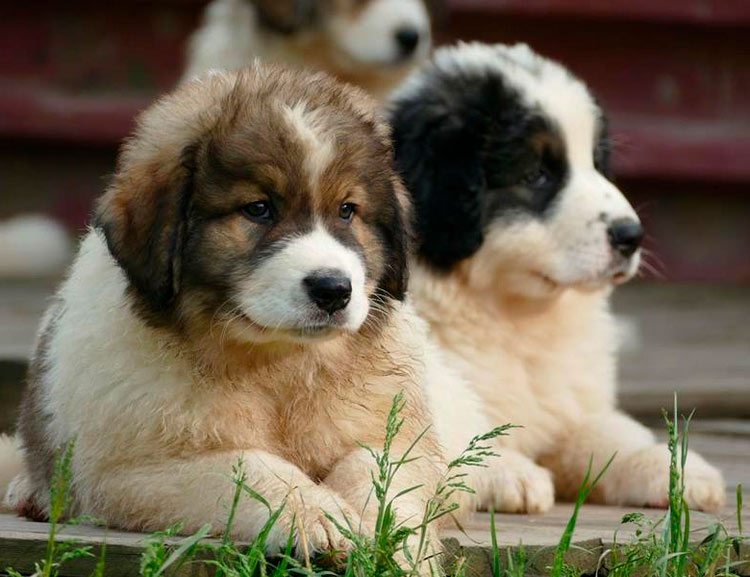
The Tornjak is a healthy breed, very hardy, and has a strong immune system. While the puppy is growing, owners should pay attention to its joints. Good genetics do not eliminate the need for vaccinations and deworming. Life expectancy is 9-11 years.
Where to buy a Tornjak puppy
Those wishing to buy a Tornjak puppy often have to look for a breeder abroad. Finding a good kennel in the breed's historical homeland is easy, as is finding a puppy of the desired sex and color for sale. It's best to decide on the dog's intended purpose in advance and immediately look for a breeder of working or show dogs. Outside of Croatia and Bosnia and Herzegovina, large kennels are located in France, the Czech Republic, Poland, and several other countries. In Russia, there are several representatives of the breed and kennels, one of which is located in the Moscow region.
Price
The price range is very wide. In Croatia, a puppy costs between 500 and 4,000 kuna (US$80-650). Rarely, puppies cost more. In Bosnia and Herzegovina, prices are roughly the same.
Photos and videos
You can see what Tornjak dogs look like in the photos in the gallery.
Video about the Tornjak dog breed
Read also:


Add a comment