
Tonkinese cat
The first information about the appearance of the breed Tonkinese cat Dating back to the late nineteenth century, she was brought to England as a chocolate-colored Siamese cat. However, the oriental beauty's coloring was very different from that of the Siamese.
Content
History of origin
The coat was brown, but the eyes were bluish-green or yellow. During the breeding program, breeders established and exaggerated the "Wong Mau" type, which became the ancestor. Burmese catSiamese cats were also used in this program. The resulting breeding resulted in kittens with a darker coloring than "Wong Mau," as well as other unusual babies.
Tonkinese cats were an intermediate link between Siamese and Burmese cats.
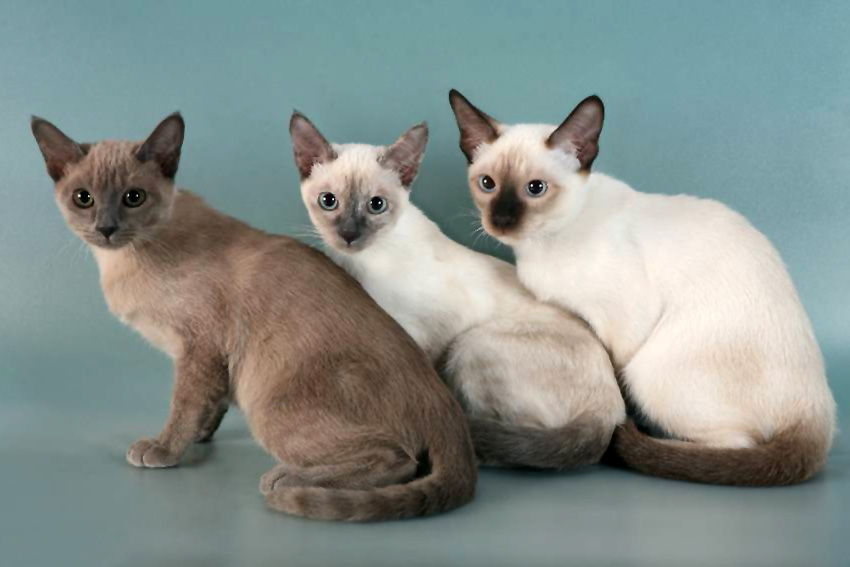
These kittens were a point color (a uniform light color). Their light blue eyes had a greenish tint. They became the first Tonkinese kittens.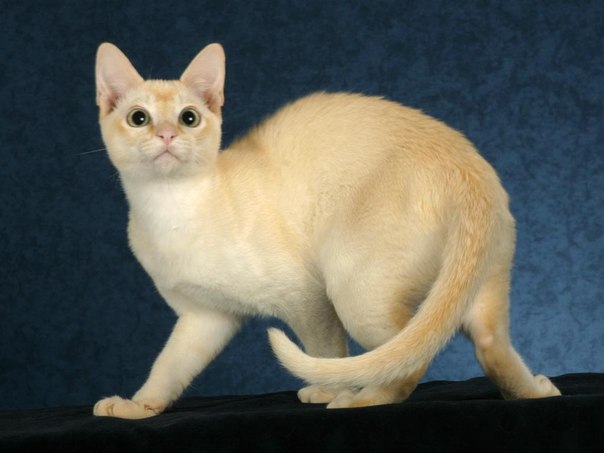
For a long time, Tonkinese cats were perceived solely as a crossbreed and not considered a distinct breed—official registration was unavailable. However, their origins were never a secret: everyone knew they were the result of crossbreeding. However, over time, the situation changed—the breed developed its own standard and received official status.
True, Tonkinese cats have so far gained full recognition primarily among American breeders. In Europe, their status remains controversial, and experts have yet to reach a consensus. Overall, the Tonkinese cat's appearance and character represent a harmonious blend of traits inherited from the Burmese and Siamese breeds.
General characteristics
What do cats of this breed look like?
Appearance
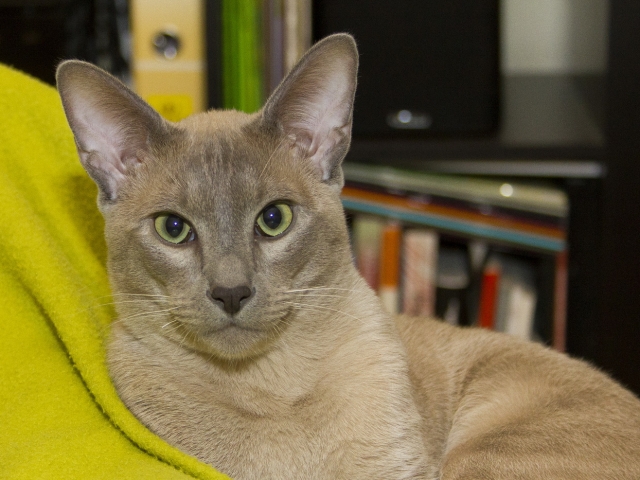
The Tonkinese cat's body is medium in size, but with superbly developed muscles. The ideal Tonkinese cat's body size should be between that of the Burmese and Siamese catsThe Tonkinese cat's body is crowned by a head shaped like an elongated wedge with a muzzle of equal width and length. The obliquely set eyes are almond-shaped and typically blue-green in color. The small ears are set wide apart.
Slender, graceful, yet quite strong, the legs are set proportionally to the body. The tail is usually wide at the base and tapers to a point. Tonkinese cats are a short-haired breed; their coat, very shiny and silky, lies close to the body, with virtually no undercoat.
Possible coat colors for the Tonkinese are pale gray with dark gray markings (platinum mink), brown with chocolate markings (true mink), and beige diluted with pale brown markings (blue mink).
Character
Through hybridization, breeders and cat owners have received a wonderful gift: the Tonkinese cat's character has proven incredibly affectionate and gentle. This is despite the fact that Siamese cats have always been known for their willfulness and even a touch of aggressiveness. The Tonkinese fits perfectly into a close-knit family with both children and pets. It adapts seamlessly to any environment. Even if its owner is away all day, it doesn't get bored at all, but instead finds something to occupy itself. Throughout its life, the Tonkinese maintains a love of active behavior and play. Its voice is pleasantly melodic, and it will happily delight its owner with it, as if telling him how it spent its time in their absence.
Tonkinese cats are known for their open and sociable nature. They are naturally curious, so they readily interact with visitors and generally don't hide when strangers appear. Furthermore, members of this breed are renowned for their intelligence. In North America, Tonkinese are often used in animal-assisted therapy programs due to their gentle and sensitive nature. These cats get along well with children: they love to play, are affectionate and attentive, are sensitive to human moods, and are not prone to aggression.
Tonkinese also get along well with other pets. These cats are not competitive and generally prefer a peaceful coexistence, trying to avoid any conflict.
Another important character trait of the Tonkinese is boundless curiosity. Therefore, it's best to keep all windows and cabinet doors closed. Only those windows with screens should be opened for ventilation. A positive trait of the Tonkinese cat is its keen intelligence and excellent trainability.
Rules of care and nutrition
Caring for a Tonkinese cat is practically no different from caring for any other purebred or non-pedigree cat.
Care
She sheds very little, but if you notice some shedding, your cat is likely ill and should be examined by a vet. Rather than combing, brush the fur with a brush or a special mitten to increase blood flow. This will improve the condition of the coat.
Regarding bathing, many owners prefer not to bathe their cats at all, as it dulls their coat's shine. It's safe to say that Tonkinese cats do need bathing, but only when they naturally get dirty. Tonkinese cats master litter box training quickly and easily. Because they are highly trainable, they can easily remember their place. Furniture in the house can retain its original appearance if owners are persistent enough to train their Tonkinese to use a scratching post.
If you're willing and your cat has had all the necessary vaccinations, you can take them for walks, but only on a leash. However, walks should only be done during warmer months, as they absolutely cannot tolerate cold weather. Regularly inspect their ears, eyes, and teeth, and clean or wipe them as needed.
Nutrition
The Tonkinese cat's diet is no different from that of other cats. Dry food generally contains sufficient minerals and vitamins. Natural foods are, of course, much more beneficial in this regard. Therefore, a combination of the two is possible. An adult Tonkinese should eat twice a day. Care should be taken to prevent excess weight gain by feeding them in moderation.
Health
Tonkinese diseases are almost always hereditary.
These are most often upper respiratory diseases. Due to its relationship with the Siamese cat, the Tonkinese has inherited a possible liver amyloidosis.
Video review of the Tonkinese cat breed
Read also:


Add a comment