
Toxoplasmosis in cats
One of the most dangerous diseases frequently diagnosed in cats is toxoplasmosis. It's crucial for breeders to know the main symptoms, routes of infection, and preventative measures for toxoplasmosis, as it is a zoonotic disease (possibly dangerous not only to the animal itself but also to those around it).
Important! Toxoplasmosis is especially dangerous for pregnant women, as even a mild, asymptomatic infection can cause serious damage to the fetus's nervous system.
Of course, this isn't a reason to avoid cats, but it is a compelling reason to carefully monitor your pet's health and hygiene. So, let's look at the key issues surrounding the disease and learn what veterinarians recommend for the prevention and treatment of toxoplasmosis.
Content
What causes toxoplasmosis?
The causative agent of toxoplasmosis is the tiny parasite Toxoplasma gondii, which can live in the bodies of many birds and mammals, penetrating into the body's cells.
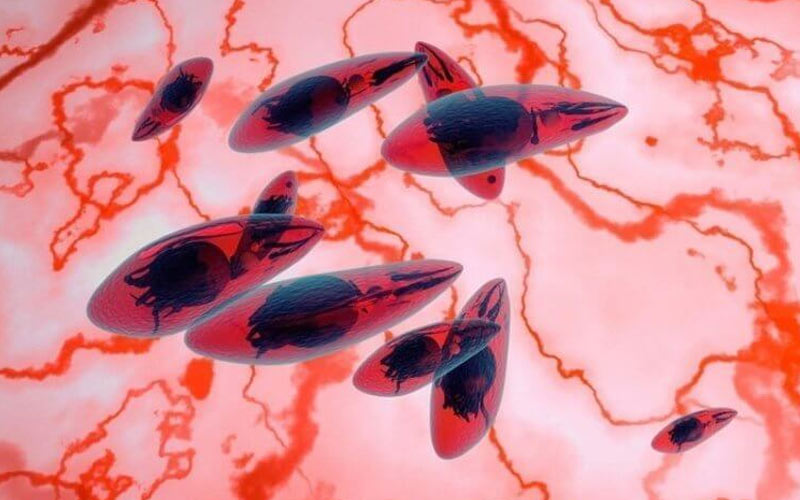
A characteristic feature of toxoplasma is its ability to reproduce in two different ways:
- sexual (occurs only in the intestines of cats with subsequent release of oocysts with feces);
- division (occurs in the cells of other infected organisms).
Due to this feature, it is believed that the main route of penetration into the human body is contact with a sick animal (caring for it, cleaning the toilet, etc.) without observing basic rules of protection and personal hygiene.
However, there are many more ways for Toxoplasma gondii to enter a cat's body (and the human body). Infection can occur through:
- by eating raw (or undercooked) contaminated meat such as pork, beef or venison;
- through contact with a sick animal or contaminated raw meat;
- during blood transfusions and organ transplants.
Toxoplasma is also capable of penetrating the placental barrier, which allows for another route of transmission – from mother to fetus during pregnancy.

If you're thinking you don't know anyone who has had toxoplasmosis, it's helpful to know that according to official statistics, about 20% of people in Russia are carriers of this disease, about 23% in the United States, and in some countries, almost 95% of people are infected with Toxoplasma.
It's simple: in people and animals with strong immune systems, the presence of Toxoplasma gondii in the body may not cause any symptoms. Moreover, a strong immune system can easily stop the parasite (although in its dormant form, toxoplasmosis can lie dormant for years or even decades).
Life cycle of a parasite
During its development, Toxoplasma gondii goes through several states and changes hosts:
- Adult parasites multiply in the cat's small intestine, producing oocysts, which are subsequently excreted from the animal's body in the feces.
- Oocysts can remain outside the host's body for up to 1.5 years, waiting for their next victim, which can be birds, rodents, cats, dogs, livestock, and even people.
- Once in the body of a new host, oocysts develop into tachyzoites.
- Young parasites migrate within the victim's body, creating new cysts in various tissues (skeletal and cardiac muscles, eye tissue, brain).
- The cyst usually enters the cat's body again through eating contaminated meat.
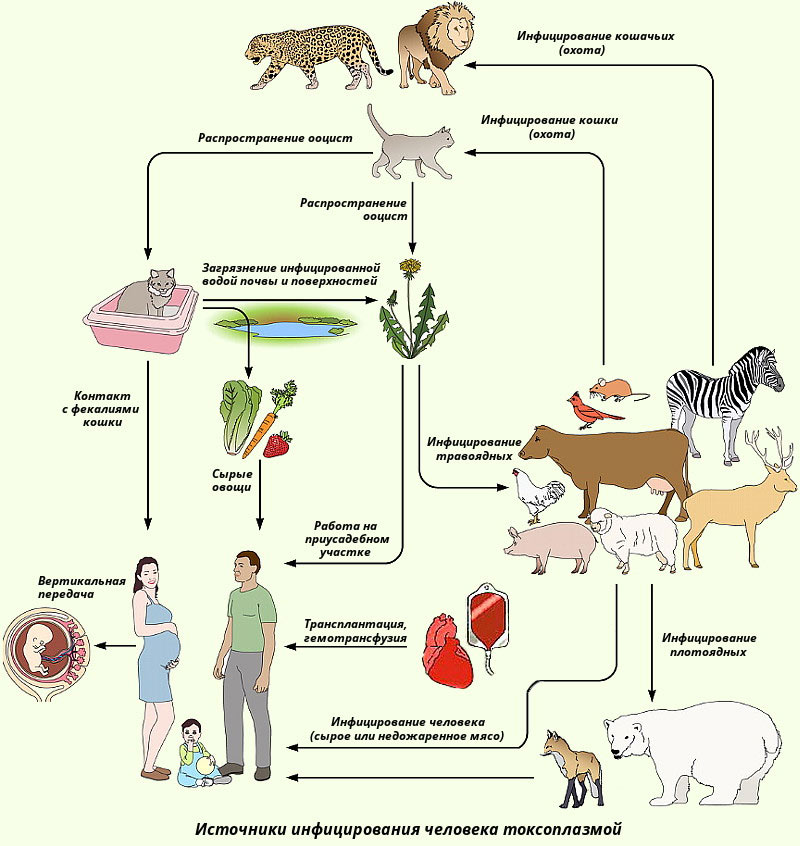
It's not hard to guess that stray cats, who are in constant contact with other cats and who eat wild rodents and birds, are at risk. But this doesn't mean that a house cat that has never ventured outside a city apartment can't contract toxoplasmosis.
How can you become infected with toxoplasmosis and when is it dangerous?
Of course, handling a cat that is acutely ill poses potential risks for owners. But by following basic hygiene rules, you can help your pet without harming your health or the health of others in the house.
Fact #1. Oocysts excreted in cat feces are noninvasive for the first five days after they enter the environment. This means that for a real danger to arise, the cat must avoid using the litter box for at least several days, or do so with bare hands without maintaining proper personal hygiene.
Fact #2. The release of oocysts occurs only during the first 14 days from the moment of infection and does not recur, as the healthy cat's body develops immunity that suppresses the activity of T. gondii.
Fact #3. A cat that has recovered from toxoplasmosis does not pose a danger to others.
Fact #4. Toxoplasmosis is not transmitted from person to person (except from mother to fetus during pregnancy).
Fact #5. For most healthy people, exposure to toxoplasma does not necessarily mean the development of the disease. A strong immune system quickly neutralizes the parasite, but serological testing will continue to show the presence of antibodies throughout life. Serious problems typically arise in people with very low immunity (after severe illnesses) and those with AIDS (not carriers, but those suffering from the disease).
Thus, it is easy to understand that the likelihood of becoming infected with a parasite from poorly cooked shashlik or rare steak is significantly higher for lovers of such dishes than from a domestic cat.

The main danger of toxoplasma is associated with the initial entry of the parasite into a woman's body during pregnancy. If the mother's immune system is not yet familiar with T. gondii and is not prepared to respond quickly, infection of the fetus occurs, with serious consequences such as:
- intrauterine fetal death;
- development of serious defects (including disorders of the nervous system);
- the birth of a child with signs of the acute phase of the disease (fever, acute poisoning of the body, liver failure).
The degree of fetal damage and prognosis depend on the stage of pregnancy at which the infection occurred.
Symptoms of toxoplasmosis in cats
You may not even know your pet has been infected with toxoplasmosis. There are three forms of the disease:
- subacute – proceeds almost asymptomatically;
- chronic – does not give obvious manifestations, but the animal may look lethargic, lose body weight, refuse food;
- acute – manifests itself with symptoms similar to a cold.

For an acute course, the characteristic manifestations in cats are:
- discharge from the nose and eyes;
- cough;
- sneezing and shortness of breath;
- digestive disorders;
- general weakness;
- lack of appetite;
- increase in temperature;
- body tremors;
- In animals with low immunity, convulsions are possible when there is a strong spread of parasites.
Important! Most often, pronounced symptoms appear after the oocysts have been released.
Thus, most often, the disease in cats goes unnoticed by owners. However, if any symptoms indicate the possible presence of toxoplasma, a consultation with a veterinarian is essential.
Toxoplasma is as dangerous for pregnant cats as it is for humans, so even when planning a breeding, it is worth visiting a veterinarian and determining the cat's status (whether she has had contact with Toxoplasma gondii).

Diagnosis and treatment
To confirm a diagnosis of toxoplasmosis or to establish the fact that the animal has already been ill, laboratory tests will be required.
Important! Stool analysis is not informative in this case, as the oocyst formation period is less than three weeks, and during this period, the disease often goes undetected.
Veterinarians recommend the following types of diagnostics:
- serological blood test;
- polymerase chain reaction method;
- diagnostics of material taken from a cat on a laboratory mouse.
Treatment of toxoplasmosis is a complex and lengthy process. It can last for months, years, or even the rest of the animal's life. Often, the parasite cannot be completely eradicated, as the protozoa, inactivated by the immune system, remain in isolated capsules, impermeable to medications. T. gondii can remain in this state for an incredibly long time.
In most cases, treatment involves suppressing the inflammatory process caused by protozoan activity, inhibiting cyst development, and relieving symptoms. To achieve this, your veterinarian may prescribe:
- antibiotics;
- anti-inflammatory drugs;
- drugs that boost immunity.

If a cat diagnosed with toxoplasmosis lives in the house, the following precautions should be taken:
- Daily cleaning of the tray.
- Treating the tray with 10% ammonia solution.
- Perform these procedures using disposable gloves.
- Wet cleaning of the house using disinfectants.
- Wash your hands regularly after every contact with your pet.
Prevention
Important! All antiparasitic tablets, drops, and other medications do not affect Toxoplasma gondii, but they do improve the animal's immunity, preventing a range of other parasitic diseases.
Since the main route of infection for cats is through eating infected rodents, birds, or raw meat, it is important to protect your pet from these risk factors as much as possible.
- pork and beef, like river fish, must be heat treated;
- Minimize your indoor cat's contact with outdoor shoes;
- If your cat roams freely outside, consider getting a collar with bells, the noise of which will prevent the animal from hunting mice and birds.

Pregnancy and cats with toxoplasmosis
Naturally, it's important for pregnant women to avoid contact with animals suffering from any form of toxoplasmosis. During pregnancy, it's best to entrust the care of the pet to someone else, even if the cat has been in the house for many years.
It's worth noting that Toxoplasma gondii poses a particular danger only to expectant mothers who have not previously encountered this parasite. A serological blood test can help determine whether you have been exposed to toxoplasma. This test is typically administered to all women upon registration.
The presence of antibodies in itself shouldn't be cause for concern. A high concentration is considered undesirable, indicating the acute phase of the disease. The absence of antibodies can also be a cause for concern. This means that if the protozoa enter the woman's body, serious consequences may occur. Such women are advised to:
- completely avoid contact with cats during pregnancy;
- do not come into contact with raw meat (cut only with gloves);
- perform any work on garden plots with caution (wear gloves);
- Wash vegetables and fruits thoroughly, or even better, scald them before eating.
Important! If a woman has contracted toxoplasmosis during pregnancy, regardless of the outcome of that pregnancy, there is no longer any risk in subsequent attempts to conceive.
Also watch this video for a detailed explanation of toxoplasmosis and its dangers:
Any questions? You can ask our website's staff veterinarian in the comments below, who will answer them as quickly as possible.
Read also:
- Coccidiosis in cats: symptoms and treatment
- Why pregnant women shouldn't pet cats
- Giardia in cats: what it is and how to treat it


1 comment
Olga
Hello, thank you for the article)
Add a comment