
Tibetan Terrier
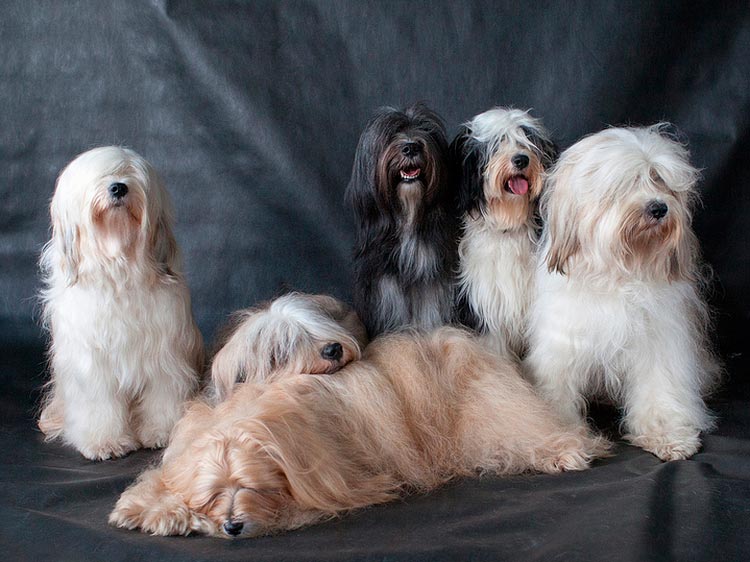
The Tibetan Terrier attracts long-haired dog lovers worldwide with its friendly, even-tempered nature, sensitivity, and exceptional intelligence. This dog is virtually effortless in everyday life, but requires regular grooming.
Content
History of origin
Tibetan terriers are not related to terriers. The breed received this name for its resemblance to small rodent-killing dogs that were and remain popular in the UK. Dogs of this type are known to have been bred for centuries on the Tibetan Plateau, but the exact uses for these small helpers remains unknown. Some believe they were versatile – they could have served as shepherds or guard dogs, alerting larger guards to approaching danger.
A new era in the breed's history began in the 1920s, when English doctor Agnes Graick received a pair of Tibetan terriers as a gift from an Indian princess and brought them to Great Britain. She became the first person from Europe to obtain puppies of this breed, so prized by the Tibetans. Her dogs laid the foundation for the English Tibetan terrier dynasty. Further breeding work took place in Great Britain. In 1957, the breed was recognized by the English Kennel Club.
Tibetan terriers are often called "Tibetans" for short. They should not be confused with "Tibets," which are Tibetan mastiffs, or "Tibbies," which are called Tibetan spaniels.
Video about Tibetan Terriers:
Appearance
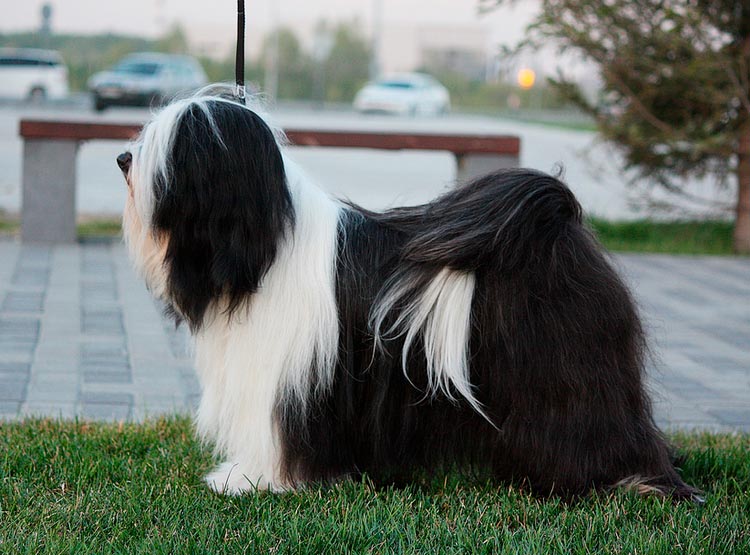
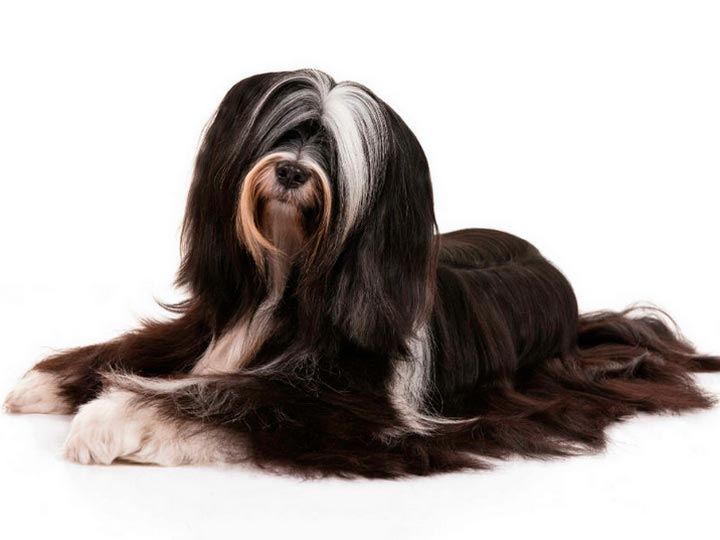
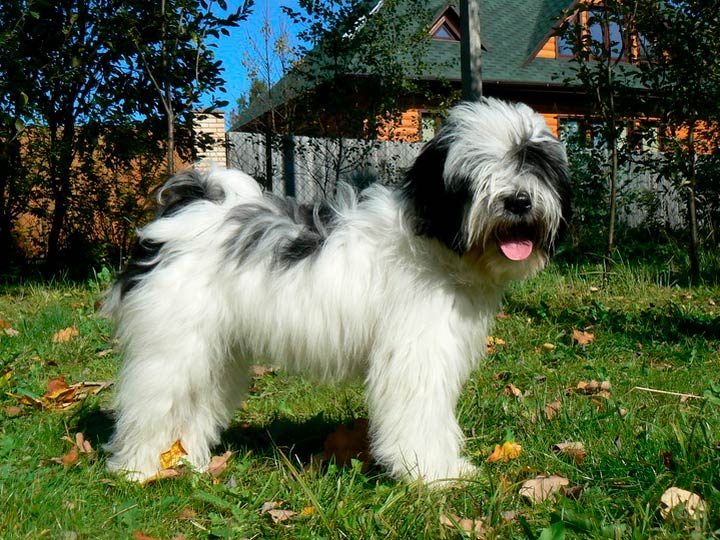
The Tibetan Terrier is a small, sturdy, medium-sized dog with long, flowing hair. The body is square, and the length from the point of the shoulder to the base of the tail is equal to the height at the withers. The height at the withers is 35-41 cm, and the weight is 8-14 kg.
The skull is medium in length, tapering slightly from the ears to the eyes. The stop is moderately defined. The muzzle is very long, with the length from the eyes to the tip of the tail equal to the length from the eyes to the occiput. The nose is black. The lower jaw is well developed. The bite is a scissor or reverse scissor. The jaw arch is arched. The eyes are round, large, set fairly wide apart, dark in color, and should not be protruding. The eyelids are black. The ears are not too close to the head, set high at the sides, and hanging.
The neck is medium in length, allowing the head to be carried above the level of the back. The body is compact, strong, and well-muscled. The topline is level. The loin is slightly arched and short. The croup is horizontal. The tail is set high and carried curled over the back, with a kink at the tip permitted. The chest is let down to the elbow. The ribs are well sprung and well laid back. The legs are straight and parallel. The paws are large, round, and firmly planted on the pads, not arched.
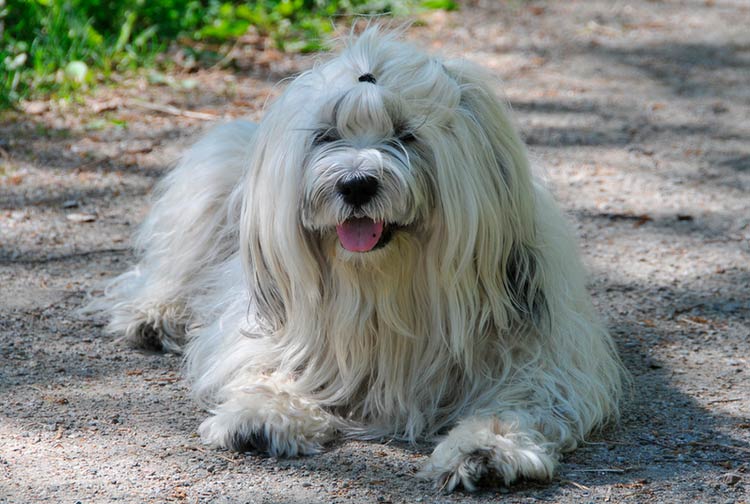
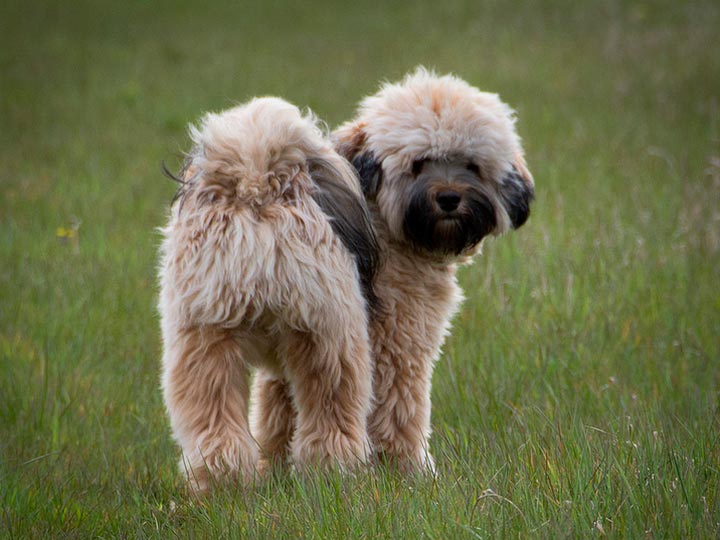
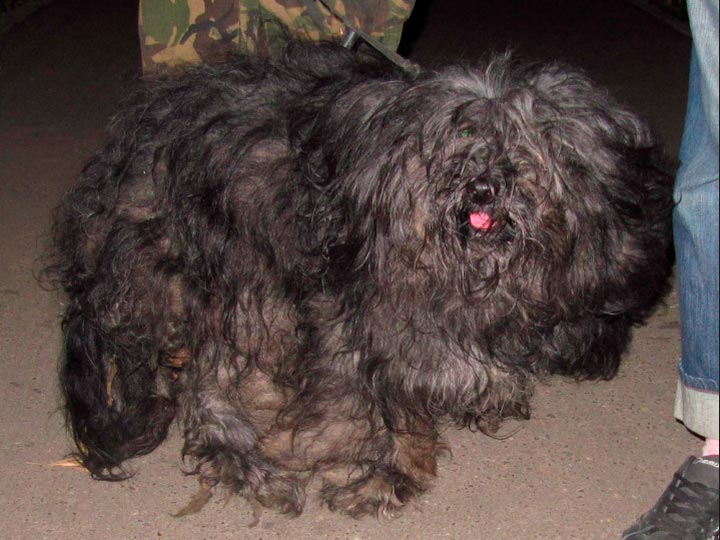
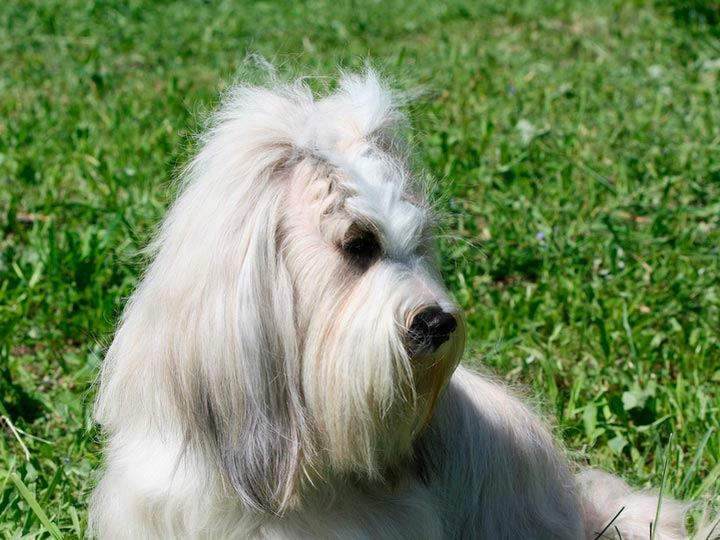
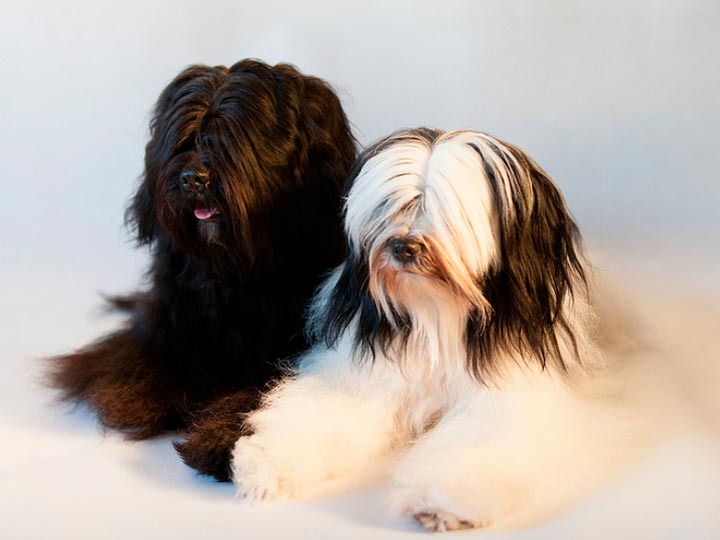
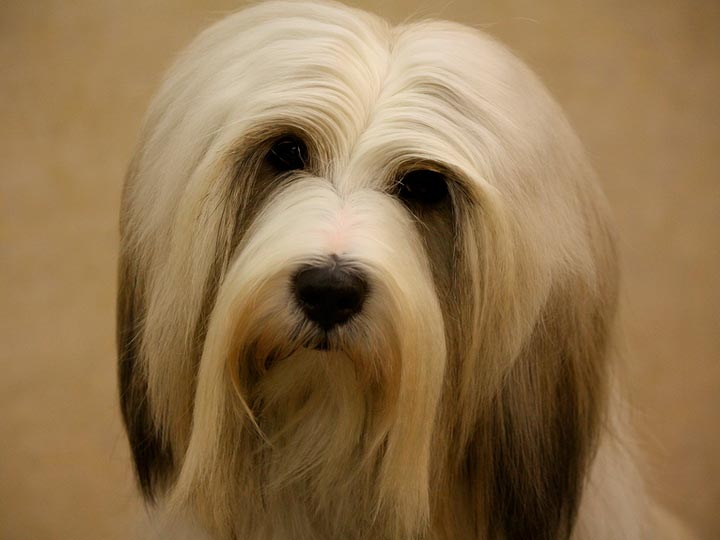
The coat is double, consisting of a thick, fine outer coat, which should be straight or wavy, but not curled, and a fluffy, fine undercoat. Virtually any color is acceptable, but chocolate and liver are considered serious faults, although they do not result in disqualification. The most common colors are red, white, cream, gold, smoke, black, tricolor, and bicolor.
Character
The Tibetan Terrier is an alert, friendly, intelligent, and playful dog that is very devoted to its owner and other family members, non-confrontational, and non-aggressive. These dogs are moderately friendly with strangers.
The Tibetan Terrier is the epitome of the ideal companion dog. People-oriented, it requires constant attention, can accompany a person anywhere, adapts quickly to new environments, and suffers greatly from loneliness. The Tibetan Terrier adapts quickly to family life and is highly sensitive to a person's mood.
In most cases, Tibetan terriers get along well with other pets, large and small, in the home. However, if a new neighbor arrives while the dog is still an adult, they may become jealous and provoke conflicts. The owner's temperament and the environment in which the dog was raised and developed greatly influence the development of their character.
Tibetan Terriers are excellent for families with children, especially older ones, who can be playmates without overwhelming them with excessive attention. Interaction with very young children should be supervised—Tibetan Terriers are tolerant of a lot, but can snap if hurt. They can also easily knock a child down by jumping during play. Tibetan Terriers, especially males, tend to display leadership qualities not only over humans but also over other animals in the house, especially during the transitional years between 1 and 2 years. This behavior is often encouraged by owners who overindulge their dogs.
Education and training
Tibetan Terriers require careful and unhurried training. They are very sensitive to raised voices and do not tolerate unfair treatment, especially physical punishment. Dogs of this breed are very intelligent and quick-witted, and with the right approach and motivation, they can achieve great success. Tibetans can perform a wide variety of commands, from simple to complex tricks. Early training is of great importance during the dog's development. socialization, the absence of which will lead to aggression towards strangers and other animals.
Content Features
Tibetan Terriers are ideal for indoor or apartment living. With proper grooming, they shed virtually nothing. This breed is known for its cleanliness and is calm and unobtrusive in the home. The level of barking depends on training: if encouraged, Tibetan Terriers can become very vocal, but if this is addressed during training, they will not produce excessive noise.
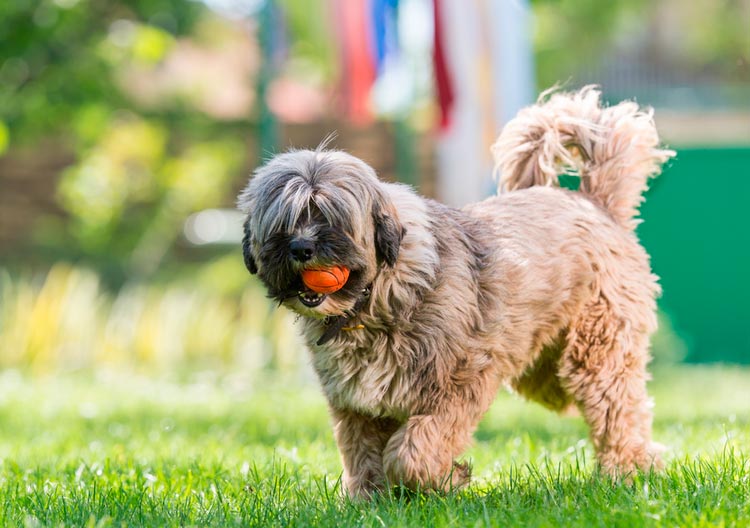
Tibetan Terriers are very agile and resilient, requiring regular long walks to stay in shape. Walks are always complemented by games and training, and these dogs excel in agility, Pinch & Go, and other sports. These activities help keep your dog mentally stimulated and channel their boundless energy in positive ways.
Care
Grooming Tibetan Terriers is a laborious and expensive undertaking. Primarily, their long, beautiful coat requires care, brushing it daily or at least two to three times a week. Wash the dogs once a week and blow-dry thoroughly. After washing, it's important to detangle and comb the coat thoroughly. Grooming products are selected individually, and anti-static and tangle-preventing products are used after washing. During cold weather, the coat requires additional protection with oils or a rich conditioner. Dogs between 10 and 14 months of age require especially frequent brushing, when the puppy coat is replaced by the adult coat. The longer the dog remains mat-free, neat, and healthy, the better the grooming products will be.
The Tibetan Terrier's long, well-groomed coat is its pride, but the dog can be trimmed, and sometimes it is necessary.
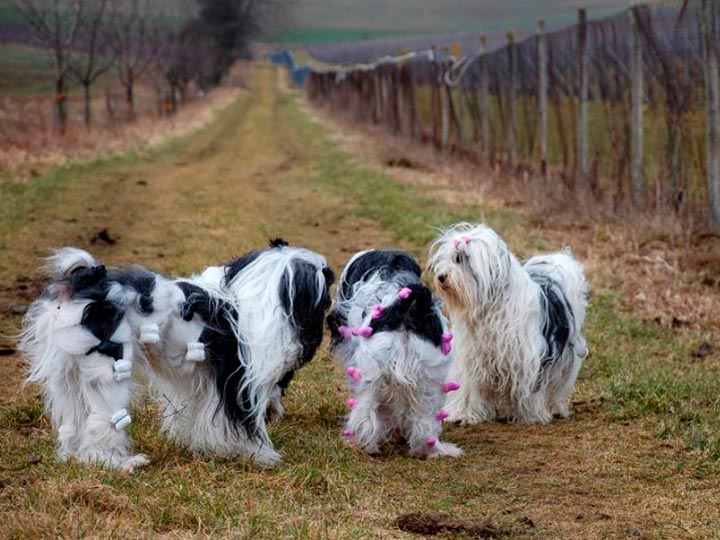
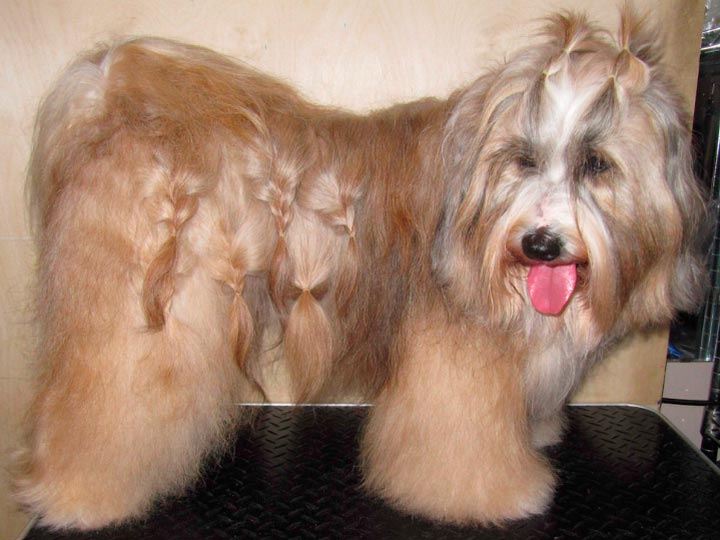
Owners who do not exhibit their Tibetans usually decide in favor of haircutsThe dog is clipped when the weather warms up, using clippers with a 6 mm attachment, often leaving a long tail and ears. By the time the cold weather arrives, the terrier will have time to grow both a topcoat and an undercoat. After a close shave, the dog will grow a full coat in about a year and a half. If the Tibetan terrier is being shown and long hair all over the body needs to be preserved, braids are used or curls are gathered with curling pins.
Nutrition
Tibetan Terriers need a healthy and balanced diet, but the exact feeding method is a personal choice. This can include high-quality commercial pet food above the super-premium level, or a natural diet based on meat, cereals, vegetables, fruits, some fermented milk products, eggs, and fish. Bran and vegetable oil are added to the diet.
When choosing a diet, it is necessary to take into account that Tibetans often suffer from allergies.
In general, feeding Tibetan Terriers should be done according to the basic rules developed by veterinarians for small breed dogs.
Health and life expectancy
Like all dogs, Tibetan Terriers are susceptible to various infectious diseases, some of which can be protected against with annual comprehensive vaccinations. Regular treatment for external and internal parasites is also necessary. Generally, Tibetan Terriers are considered a healthy breed. The typical lifespan for these dogs is approximately 14-16 years. Tibetans are resistant to colds and tolerate both hot and cold weather well. As with any breed, they have their own hereditary health issues, but compared to other dogs of a similar size, their incidence and frequency are low.
- Dysplasia hip joints;
- Eye diseases (lens dislocation, progressive retinal atrophy, cataract);
- Ceroid lipofuscinosis (a rare neurological disease that has been studied fairly well, but there are no treatments);
- Dislocation or displacement of the kneecap.
Most breed-specific health problems affect the eyes. They are hereditary, and contrary to popular belief, the length and thickness of a dog's forelock does not influence the development of ophthalmological pathologies, especially when the hair is naturally long. In rare cases, trimmed forelocks can grow back and damage the cornea, causing inflammation. With prompt treatment, the problem is quickly resolved.
Pigmentation disorder: redness of the coat in the Tibetan Terrier
In light-colored dogs, pigmentation changes in the coat manifest as redness in various areas of the body. It's important to determine the cause of these changes: they can be caused by certain foods in the diet, metabolic disorders, or shedding disorders, whereby old hair that hasn't fallen out takes on a red or reddish-brown tint while remaining light at the roots. If the disorder is diet-related, the coat typically discolors from root to tip and returns to its normal color after changing the dog's diet. If such changes persist after changing the diet, a metabolic disorder may be suspected. Reddish coloration of the coat can also be a sign of allergies, flea infestations, or fungal skin infections.
Choosing a Tibetan Terrier Puppy
The breed is quite popular, so finding a puppy shouldn't be difficult, but only if you don't have any special requirements—don't look for a puppy with potential for show or breeding, or for a specific gender or color. When choosing a Tibetan, keep in mind that only dogs with a pedigree are allowed to participate in shows and breeding. However, this rule is often relaxed by owners who breed their dogs for health reasons. While this allows potential buyers to purchase a puppy of their desired breed at a lower price, it also increases the risk of getting a dog with undesirable personality traits or hereditary diseases.
It's worth noting that even among breeders who run kennels, some are responsible and some are not, so before purchasing a puppy, it's advisable to evaluate the conditions in which the puppies are kept, the mother's condition after birth, and the breeder's experience. Young puppies should already largely meet the breed standard, but most importantly, they should be outwardly healthy, have a normal demeanor, and be appropriately socialized. It's not recommended to buy puppies before they are 2-2.5 months old and vaccinated against major infectious diseases.
Two well-coated Tibetan Terriers sometimes produce short-coated puppies. At birth, they are virtually indistinguishable from their normal counterparts, but their hair growth stops at three months. Some dogs develop a skirt, pants, and forelock, but the rest of their body hair remains short.
Price
The price of a Tibetan Terrier puppy at breeders typically ranges from 25,000 to 50,000 rubles. Pet-quality dogs are cheaper, while promising puppies for shows and breeding are more expensive. Dogs without a pedigree usually cost no more than 10,000 rubles, and owners of mixed-breed puppies rarely raise prices above 2,000 rubles.
Photos
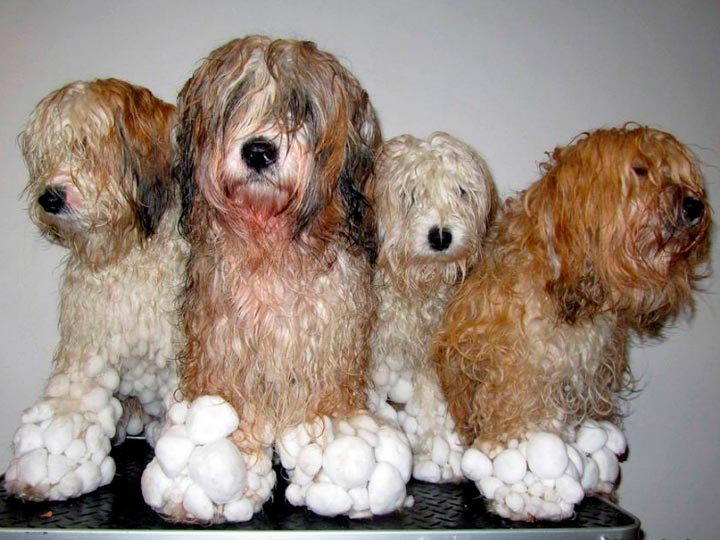
The gallery contains photos of Tibetan Terrier puppies and adult dogs.
Read also:


Add a comment