
Heat in dogs
Estrus in dogs is a natural and logical process, the features and nuances of which every responsible owner should know.
By choosing a sweet and playful female puppy, we unconsciously choose a more difficult path. This is the path of the owner of a loyal and active dog who, twice a year, forgets everything except the need for brief doggy affection.
Content
Signs of heat in dogs
It's important for owners to notice their dog's heat cycle early. Not missing the onset of this period is crucial, both if you plan to breed and if, conversely, you're trying your best to protect your dog from casual encounters.
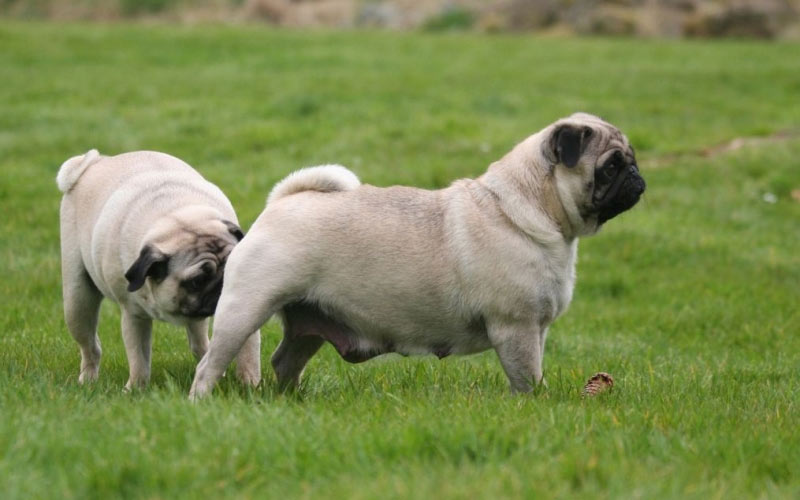
Today we'll talk about how long a dog's heat cycle lasts, how often it happens, when the first one should be, and many, many other nuances related to this issue.
When observing a dog, you can notice the following changes:
- changes in mood (may become more playful or, conversely, more irritable);
- the desire to urinate frequently (the desire to “mark territory” also occurs in female dogs, but only during the heat period);
- molting (quite often the events coincide);
- showing interest in the opposite sex;
- loop enlargement;
- the appearance of bloody discharge.
It's worth noting that obvious signs such as discharge and visual changes do not appear from the first day, and inexperienced owners can easily miss the beginning of an important period.
First heat
Puberty is an individual characteristic of each individual dog and depends on many factors. While it's impossible to give a definitive answer to the question of when a dog goes into heat, some general guidelines can be given.
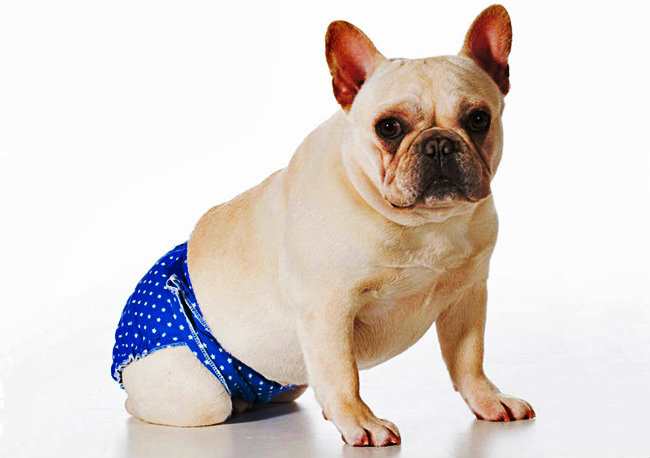
In most cases, dogs begin to go into heat for the first time after 6-7 months. For medium-sized dogs, this period shifts to 7-8 months.
Much also depends on the breed. For example, Labradors, poodles, and others may wait up to a year or even longer before the first time. However, the individuality of the pet should also be taken into account.
The first heat cycle in many young female dogs can go completely unnoticed. Discharge and behavioral changes may be minimal or absent. Obviously, breeding during this period is strongly discouraged, as the dog's body is not yet ready for pregnancy and birth.
You'll likely notice a full range of characteristic symptoms in your dog by her second heat cycle. In dogs without hormonal imbalances or reproductive system diseases, the cycle typically stabilizes and becomes predictable by 1.5 to 2 years of age.
Cycle periods
The dog's cycle is divided into 4 periods: proestrus, estrus, metestrus (diestrus) and anestrus.

Proestrus (beginning)
|
Duration |
3-16 days |
|
Discharge |
bloody |
|
Readiness for mating |
No |
During this period, the animal's body actively prepares for conception. Follicles actively mature in the ovaries, and under the influence of hormones, the uterine lining begins to form.
In the first phase, the dog attracts the opposite sex with a characteristic smell, but reacts extremely aggressively to males’ attempts to mate.
Important! Discharge is not the primary symptom, as some dogs experience what's known as a "dry" heat, during which discharge is virtually absent.
Estrus (hunting)
|
Duration |
4-12 days |
|
Discharge |
pale pink |
|
Readiness for mating |
Yes |
This is the optimal time for mating, as evidenced by the dog's behavior. She happily responds to advances from the opposite sex and adopts a comfortable mating position when interacting with a potential partner.
Metestrus (completion)
|
Duration |
about 80 days |
|
Discharge |
No |
|
Readiness for mating |
No |
Hormonal activity subsides and the dog's behavior gradually returns to normal.
The physiological symptoms of estrus disappear, and the dog begins to react negatively to advances from the opposite sex again.
Important! During this period, uterine diseases most often worsen, and false pregnancy.
Anestrus (rest)
|
Duration |
3-4 months |
|
Discharge |
No |
|
Readiness for mating |
No |
The period of sexual rest is characterized by a general balance in the functioning of the body's systems and a low level of hormones responsible for the sexual sphere (progosterone and estradiol).
Main questions
Below we offer you answers to the most frequently asked questions about heat in dogs.
How long does a dog's heat last?
There are plenty of nuances that influence the duration of a dog's estrus period:
- conditions of detention;
- nutrition;
- age;
- breed, etc.
In fact, you can only find out how long your dog's heat period will last based on personal experience and observations. If we take the average number, it is 20 days. Keep in mind that a dog's heat cycle isn't established immediately; it stabilizes only by two years of age. If you want to know exactly what, how much, and when, keep an eye on it and record your findings.
As mentioned above, a dog's first heat cycle is short-lived. On average, the entire cycle lasts 3-5 days.
How often do dogs go into heat?
On average, ornamental breeds go into heat twice a year. This heat lasts 20-25 days. The interval between heats is approximately six months.
Important! The frequency of heat in female dogs depends on age, breed (size of the dog), and health.
For example, a husky only goes into heat once a year. If the dog is old, there may be no outward signs of heat at all, but if allowed to mate, she will become pregnant. Hormonal imbalances can also disrupt the cycle. For example, if a dog has an anostria, the pet's body produces few hormones and will not go into heat.
When does heat occur in dogs after giving birth?
To determine how long after a dog gives birth, it's important to consider the animal's size and breed. Typically, small dogs go into heat once every six months, while larger breeds go into heat less frequently—once every 8-12 months. Generally, it's impossible to assign precise figures to the frequency and duration of heat cycles. It all depends on the individual case: breed, size, etc. To accurately determine when the first heat cycle will occur after giving birth, the owner should observe the pet and monitor her cycles.
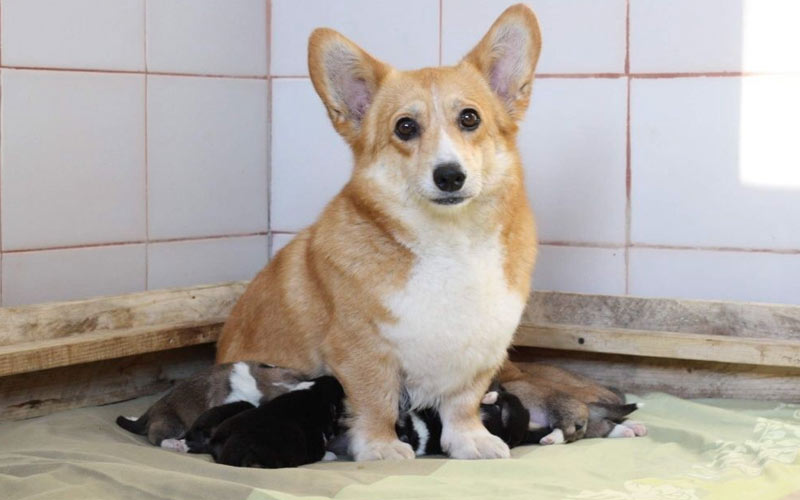
The main thing to understand is that, in most cases, estrus after birth will occur when the cycle is due, and the animal's pregnancy has no effect on this. That is, birth does not delay estrus.
Do dogs stop going into heat after mating?
A dog's heat intensity decreases after mating and rarely ceases. Everything continues as normal. Therefore, it's important to monitor your dog until her sexual desire has completely subsided. Even if your pet behaved kindly toward the future father of the puppies during mating, this doesn't mean she won't want to go out somewhere else.
Dog smell
The unpleasant odor in a dog during heat, as well as its intensity, depends on the individual characteristics of the pet.
One female dog may smell during her heat cycle, another will be fragrant during her second cycle, and a third will haunt their owners with an unpleasant odor almost constantly. Of course, we're talking about the odor that humans detect; to a male dog, a female dog in heat always smells.
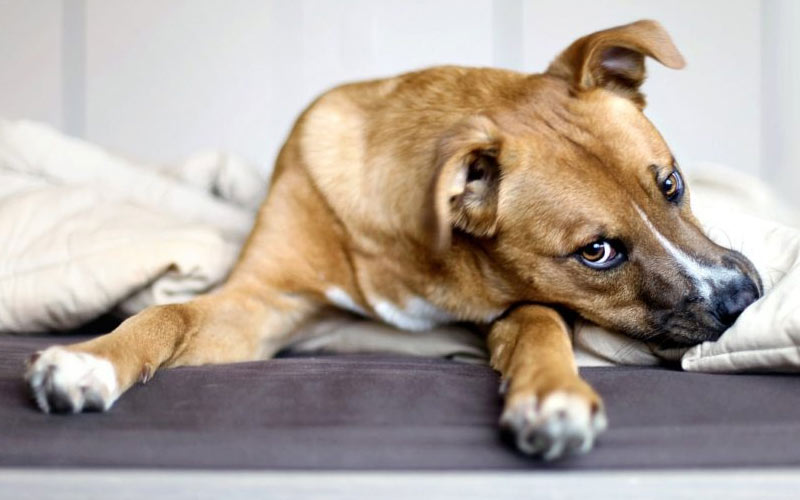
If you visit a pet store, you can find a variety of products to combat unpleasant odor in female dogs. Popular products include the following sprays:
- Jimpet.
- Beaphar.
- 8 in 1.
These products are considered luxury, but if you're looking for something a little more affordable, consider options like Smart Spray, Antikobeline, and more.
Important! It's important to note that the odor may not be related to heat, but rather a signal of hormonal imbalances in the dog's body.
It's also possible that a dog is completely healthy, and the unpleasant odor during heat is just a characteristic of her. However, if there's any suspicion about the nature of the "odors," it's best to take your pet to the veterinarian.
Heat in a spayed dog
Whether or not spayed dogs go into heat depends on the type of surgery performed. Sometimes, a veterinarian may perform a tubal ligation to sterilize an animal. If this method is used, the dog's heat cycle will remain intact, but she will no longer be able to become pregnant.
If a female dog's uterus and ovaries were removed during surgery, she will no longer go into heat. However, there have been cases in veterinary practice where the adrenal glands took over the ovaries' function, and heat in such dogs resumed after some time.
Complications of estrus in dogs
Although the process of estrus itself is a natural state for a dog's body, sometimes conditions may arise that require medical attention. Complications are quite common. Among the most common causes are:
- hormonal imbalances;
- inflammatory processes of the genital organs;
- chronic diseases.
An attentive owner who understands the main symptoms of potential problems will be able to spot the problem early and consult a veterinarian promptly. It's worth noting that if problems are detected, a visit to the vet should not be delayed, as many inflammatory processes can progress very quickly, and the dog's condition will worsen with each passing hour.
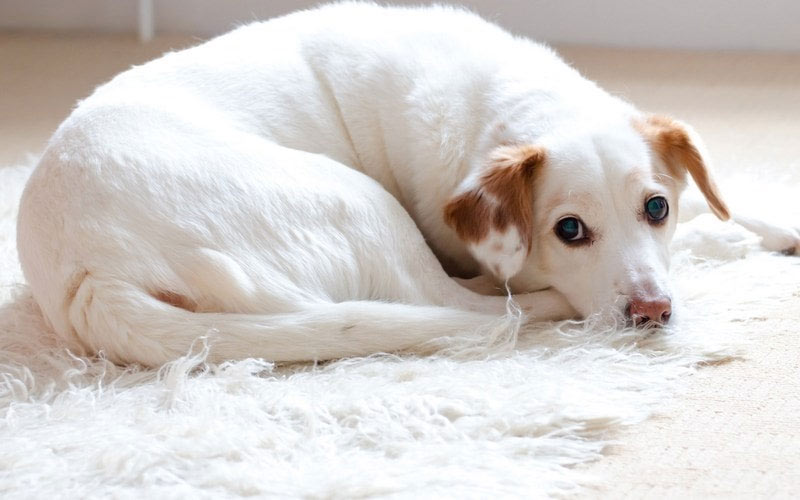
Discharge after estrus
When monitoring your dog's condition during heat, it's crucial to monitor all aspects of her discharge. All aspects should be taken into account:
- consistency;
- color changes;
- quantity;
- smell, etc.
Important! Your dog should be seen by a vet immediately if the discharge is very heavy or has a characteristic putrid odor.
During estrus, a dog expends a great deal of energy preparing her body for reproduction. Her natural defenses are sharply weakened. This is a fertile time for various pathogenic bacteria to take root in the body's weakened immune system. If an infection is allowed to gain a foothold during this period, it can not only affect the entire subsequent estrus cycle but also seriously damage the animal's health. And some diseases, such as pyometra life-threatening for your pet. Most often, you can tell if a dog is sick by its external signs:
- the temperature rises;
- decreased appetite;
- activity decreases.
But in any case, only a specialist can give a general conclusion on the situation, so it’s best not to delay.
Delayed estrus in a dog
A dog's lack of heat, as well as its delay, is a sign of ovarian dysfunction. In some cases, the delay is due to the pituitary gland. For example, hypothyroidism – one of the reasons for hidden estrus.
- If the dog is old enough, ovarian hypofunction is inappropriate. In some cases, a delayed estrus may be due to a complicated birth, which may trigger a reproductive system disorder. In such cases, a veterinarian will examine the animal and prescribe the appropriate course of treatment.
- If you'd like to help personally, you can introduce your pet to another female dog in estrus. In some cases, the foreign pheromones trigger the mating cycle.
- If the delays are persistent, the dog may require surgery; if it is impossible or difficult to help the animal, the doctor will suggest sterilization.
- Oncological diseases can also cause delays. To avoid these types of problems, it's important to undergo regular preventive screenings.
Also watch a video about how dogs go into heat and how to care for your pet during this period:
Any questions? You can ask our website's staff veterinarian in the comments below, who will answer them as quickly as possible.
Read also:


31 comment
Tatiana
Female Labrador. Fourth heat. After her heat ended, she began to sit on her butt. She licks her butt. Her appetite and activity are normal. However, she is clearly very bothered by itching. What could this be? Thank you!
Daria is a veterinarian
Hello! There's nothing you can do at home. It's best to have your pet have an ultrasound to rule out any serious urinary tract problems. Be sure to also monitor their behavior—has their urination or drinking increased? Has their appetite changed?
GALINA
In what cases does a dog continue to go into heat after mating?
Daria is a veterinarian
Hello! Heat won't stop immediately after a successful mating (the very next day). Even after successful fertilization, signs of heat will persist for some time. While fertilization and embryo implantation occur, hormonal levels will change. If a new heat occurs after mating, it means the previous mating was unsuccessful. In this case, the problem lies either in the incorrectly chosen mating day or in the animal's health. In this case, the animal should be taken for an ultrasound to determine what's wrong.
Michael
Dogs typically gestate for 61 to 65 days, but until very late in pregnancy, signs that your pet is expecting may be barely noticeable. Unfortunately, there are no home pregnancy tests for dogs. So, how can you tell if your pet is pregnant?
Daria is a veterinarian
Hello! If you're sure mating has occurred, the easiest and most effective way to find out if your pet is pregnant is to take her to a clinic for an ultrasound. It's not difficult, and it's available in almost all cities (even small ones now have clinics with ultrasound equipment).
Alena
Hello! We have a two-year-old Russian spaniel. We mated her a week ago. Her discharge was pale, but two days ago it became bright again. Last night, she peed on the floor, which she hasn't done in a while. This morning, while we were getting ready, she made a puddle again. Then I put her in the bath and she peed again, and there were small streaks of blood in her urine. When we went for a walk, she was dropping bloody drops instead of my usual urine. What could this be? Could it be kidney problems?
Daria is a veterinarian
Hello! Well, I won't guess what's wrong with the dog. Take her for an ultrasound. First, rule out any inflammatory processes. You never know what kind of infection the dog might have brought with him (you should always breed only with proven males from professional breeders, so that all health certificates of the potential father are up-to-date and always available to the owner). And there's no need to panic ahead of time. It could just be cystitis, or maybe the mating went badly. Kidney problems aren't necessarily the immediate cause. Gynecological pathologies also need to be ruled out.
Svetlana
Hello, our dog (English Cocker Spaniel) mated on May 25th and 27th, on the 11th and 13th days of her heat cycle, but she is still having bloody but light-colored discharge. Is this normal, or was she not fertilized? Thank you.
Daria is a veterinarian
Hello! Light, slightly bloody discharge is normal. It may persist up to the 16th day. After that, it will become progressively lighter (more transparent). Even if the bitch has been fertilized, this doesn't mean the discharge will stop immediately. The cycle will continue until the end (hormonal levels won't change overnight; it takes more time). To be 100% sure that fertilization has occurred, it's best to have an ultrasound. Then you'll know for sure. This will save you from waiting for the next heat or the first signs of pregnancy.
Tatiana
Good evening. Thank you for your advice. We took our dog to the vet, and they prescribed injections to shrink her uterus and something else, which I won't mention. Everyone was terrifying us about having to have her uterus removed, but during the examination, the doctor said, "Take the injections for now; there's no purulent discharge, so it's too early to panic." I'd like to remind you of our story: our dog is a 9-year-old German Shepherd. She hadn't stopped her heat for a month. After the doctor and the first injections, her appetite returned by the evening, but she's still bleeding. They prescribed injections. That's basically it.
Daria is a veterinarian
Hello! I remember your story =)
It's good that we sought help in time and it didn't develop into pyometra. No, there's conservative treatment for that too. But it requires a specific injection schedule, and the medications are expensive. Everything is strictly scheduled. Most veterinarians prefer to operate immediately to avoid such a hassle (because if the owner doesn't follow the schedule, misses an injection, or simply has a severe case, there will be a relapse—a return to purulent endometritis). So keep an eye on your pet! And don't forget to schedule a follow-up ultrasound to make sure all is well. Wishing you a speedy recovery!
Tatiana
Thanks for your response. This morning, Hera, our dog, woke up with a swollen muzzle. She drank a lot of water during the night, and here's the result. I called the vet, and we're taking her to the vet tomorrow. Although she's not feeling well, she's active and playful, running and playing like a young girl, but she refuses to eat. I fed her some cream. The vet said she's having an allergic reaction, as she's been licking herself, and, as you said, she needs an ultrasound. Thank you. We'll go tomorrow and I'll let you know what's wrong with my beloved dog. Others might have the same problems.
Tatiana
Good evening! We have a German Shepherd, she'll be 9 in September. We've been mating her for two years, and we've had no problems with her heat cycles. Now, her heat cycle has been going on for a month. Sometimes she won't eat in the morning, but by evening, we coax her to eat. She's active, her nose is dry, she's spitting a lot of water, and she's been bleeding and dripping. She started on March 5th and it's still ongoing. Can you tell me if this is normal? What should I do?
Daria is a veterinarian
Hello! Well, the bloody discharge should have stopped by now. My heat cycle has been prolonged. Have you given her hormonal suppressants before (during this heat cycle or in the previous two years)? Ideally, you should take her for an ultrasound. They might be able to find the cause of the prolonged heat cycle. It could be a problem with the ovaries (giving false "signals," like a cyst) or with the uterus (who knows, endothelial hyperplasia or inflammation). It's best to rule out such conditions and begin treatment promptly.
Anna
Good evening, could you tell me, my Labrador has started having a heavy heat for the first time in 6 years, and the clots are constantly and profusely flowing. Is this possible or should I call the vet?
Daria is a veterinarian
Hello! It's essential to see a specialist, get an ultrasound, and have a complete blood count and biochemistry profile. Has the animal ever given birth? Is this the first heat cycle or is it her first (the wording isn't clear)? Are the clots bloody or of another origin? What were the previous heat cycles like? In any case, an ultrasound is essential; it will further clarify whether this is a pathology and what to do next. The problem may be treated conservatively, or it may only be treated surgically (hysterectomy).
Rita
Hello! Could you please tell me: in Murmansk, the situation with both doctors and veterinarians is dire. The doctor prescribed Vizualen Horulon 500 for our cat, which is unavailable anywhere, neither in Moscow nor St. Petersburg. An ultrasound revealed a small cyst, and the heat hasn't started yet after two months. Will Ovariovit help? The cat weighs 3.5 kg. Thank you in advance for your reply!
Daria is a veterinarian
Hello! Horulon contains hCG, while Ovariovit contains only herbs (pure homeopathy). Do you see the difference? One is a pure hormone, the other is an herb. Of course, many people prefer homeopathy, but I prefer hormones for cysts.
Anna
Hello. I have a Yorkshire Terrier. We mated for the first time during her third heat, and it was also a first for our fiancé. At first, we thought she was pregnant; she started gaining weight, then her belly stopped growing. We had an ultrasound and suspected a missed miscarriage. Today, she had another ultrasound, and nothing was found. Her belly had retracted again and her nipples had shrunk, so it looks like she was having a false pregnancy. This evening, I noticed a pinkish mucus discharge. She's active and has a good appetite.
Dasha is a veterinarian
Hello! Resorption of the fetuses can sometimes occur in dogs and cats early in pregnancy if the pregnancy is not progressing as expected. However, any discharge is a reason to urgently visit a veterinarian. A complete blood count and biochemistry profile should be performed, and a repeat ultrasound should be performed. If the clinic is able, hormone levels can also be checked. Even if the pregnancy is false, progesterone will be present. A female dog that has not yet given birth will not have it. However, spontaneous abortion, false pregnancy, and uterine inflammation should also be ruled out.
Anna
Could you please tell me my German Shepherd had her first heat two months ago? Today, her vagina is very swollen again. Could she be in heat again? Thank you.
Dasha is a veterinarian
Hello! It's possible this is a split heat, where the first "part" was anovulatory, and the second occurs a few months later. Same with the first heat. They're so "mysterious" until hormonal levels return to normal and the cycle becomes regular. I hope you're not giving any hormonal medications to suppress heat. But keep an eye on your pet. If any suspicious discharge occurs, or if her body temperature rises or she becomes lethargic, rush to the vet.
Maria
Hello! Our 7-month-old dog is showing signs of an approaching heat cycle. We haven't had a rabies shot yet. Is it safe to deworm and vaccinate her during her heat cycle, or is it better to wait? Thanks in advance.
Dasha is a veterinarian
Hello! Deworm your dog for good health. Even if heat is approaching, the first dose of anthelmintic plus a 10-14 day wait is followed by a second deworming plus a 10-14 day wait and vaccination. So, 20-28 days before vaccination, the heat will already be over. It's not a contraindication for vaccination. Vaccinations are given to CLINICALLY HEALTHY animals, and heat is not a disease. If you're really worried, you can wait, but there's no particular danger.
Natalia
Good evening, we have a 1-year-old German Shepherd, she is in her first heat and has developed a strong unpleasant odor. Is this normal or is something wrong?
Dasha is a veterinarian
Hello! An unpleasant odor is almost always abnormal. What does an unpleasant odor mean to you? Is it rotten? Like inflammation? Perhaps the discharge is a strange color? Get an ultrasound.
Natalia
Hello! Our dog was mated on May 22nd, and yesterday, June 22nd, suddenly in the evening, her vagina became swollen and she developed spotting, a foul-smelling discharge. The vet gave her a Dicynone injection and said we'd do an ultrasound on Sunday. She might not be pregnant, but her nipples are swollen. I noticed they've become even more swollen today. Is she experiencing uterine contractions or is she about to miscarry? The discharge is odorless, and she's active. She's larger and heavier than a toy terrier, three years old, and has had three litters. IS THERE A REASON TO PANIC?
Dasha is a veterinarian
Hello! There's always cause for panic when an animal begins bleeding. In female dogs (even more often in small dogs), false pregnancies are diagnosed, so an ultrasound is necessary. It's also important to rule out endometritis, incipient pyometra, or even an incipient spontaneous abortion. However, without an ultrasound, it's impossible to say what to do. The most safe thing to do now is No-Spa to relieve the muscle tension. Anything else can obscure the clinical signs and make a definitive diagnosis difficult.
Oleg
Good afternoon, we have a Samoyed and something like a golden retriever mix, the Samoyed was part of the genes, a girl, we are now 10 months old and it is time for her first heat, it all started like this: in the morning we ignored everyone, only drank, did not eat, in the evening when she came home from work, she only met us and again went to the place where she was lying in the morning with guilty eyes, then we found drops of blood and it became clear that this is her first heat, but for the third day we have not eaten or drunk anything ... yesterday we took her to the vet, and they told us that ours is too impressionable ... they put an IV with a saline solution and an injection with vitamins and gave us to take with us in the morning, something like this ... Another thing began on the second day, after she drinks, after a couple of minutes, sometimes after 15 she burps everything with bile, I tried giving vodka, it does not help ... Thanks in advance
Dasha is a veterinarian
Hello! Why did you give her vodka? Anyone who drinks alcohol on an empty stomach will vomit bile. Bile appears because the gastrointestinal tract is empty, there's no food, and there's nothing to digest. Try giving her small amounts (literally a tablespoon every 10-15 minutes) of special saline solutions: rehydron, for example, or similar. They contain both salt and glucose, which will help maintain her strength. Perhaps she was truly stressed; everyone's body is different. Don't try to force-feed her. After so many days of fasting, gradually introduce light foods into her diet: broths, porridge, and fermented milk products.
Add a comment