
Tazy (Kazakh Greyhound)
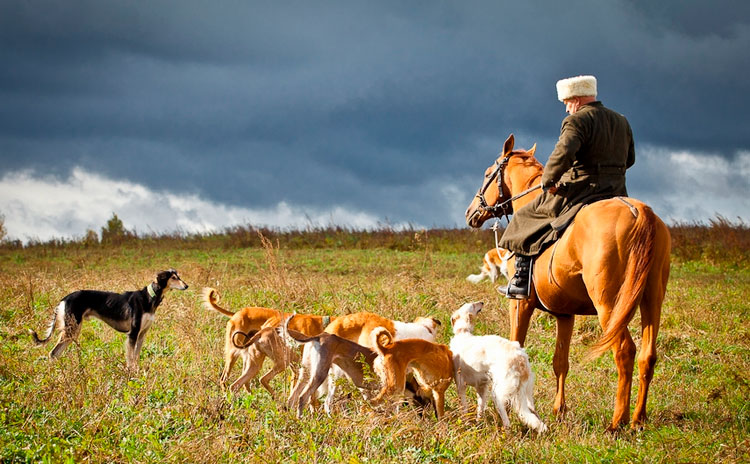
The Tazy, or Kazakh greyhound, is an ancient dog breed adapted for unarmed hunting in the steppe. Like other sighthounds, it is distinguished by its refined appearance, gentle disposition, and ability to reach incredible speeds.
Content
History of origin
This hunting dog of the peoples of Central Asia has been known since ancient times. It is believed that it was bred many centuries ago from the Persian Saluki, Arabian slug and ancestors Pharaoh Hound, which were infused with the blood of local dogs to quickly adapt to different living conditions and climates. Tazy dogs are widespread primarily in Turkmenistan, Kazakhstan, and Uzbekistan, with isolated specimens found in large cities of Central Russia, among rural hunters in the Stavropol, Krasnodar, and Volga regions, as well as in Central European countries.
Tazy dogs are a national treasure, a treasure of the Kazakh people. They once saved entire villages from starvation. With a dog, you can hunt hares, corsac foxes, foxes, as well as roe deer, saiga antelopes, and goitered gazelles.
During the Soviet era, the breed attracted researchers. A.A. Slutsky compiled the first official description of the Tazy and published the book "The Asian Sighthound Tazy and Hunting with It" in 1939. According to the scientist, there were tens of thousands of sighthounds in Kazakhstan. The breed is recognized by the Union of Cynologists of Kazakhstan and cynological organizations in several other countries. In 2014, a standard was developed and recognized. The president of the National Club of the Kazakh Tazy Breed noted that recognition by international organizations should save the breed from extinction. Today, Kazakh dog breeds are on the verge of extinction, especially the Tobet, as they are bred only by amateurs. Furthermore, there is a very fine line between the Saluki and Tazy breeds. In some countries, for example, in America, all Tazys are registered as Salukis.
Purpose
Like other sighthounds, the Tazi hunts using the "catch and kill" principle. These dogs are bred for running and hunting without weapons. Moreover, they are often gun-shy. Specimens that tolerate loud noises can retrieve prey from water, but they do so less passionately than a spaniel or a sled dog. retrieverTazis have a keen sense of smell; they roam freely in front of a hunter, independently identifying the animal and rushing after it.
The Tazy's natural element is running. These dogs chase anything that moves.
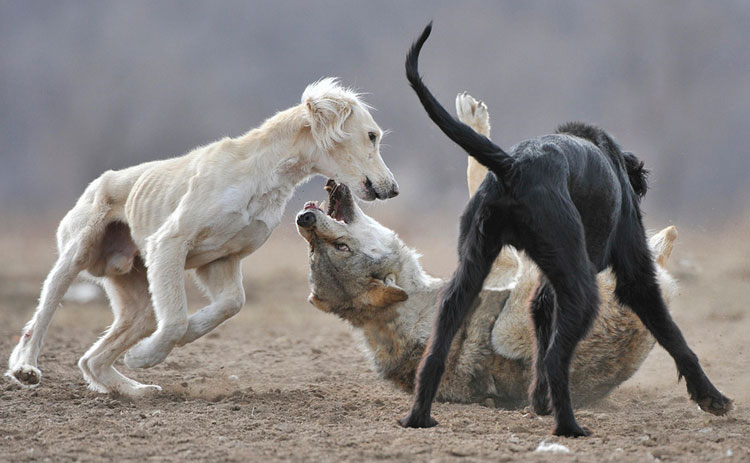
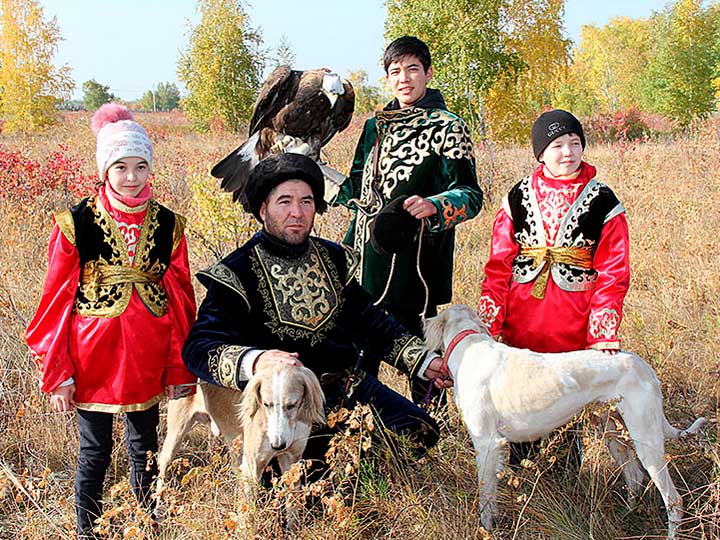
The main game for Tazy hunting remains foxes, hares, ferrets, and badgers. Several dogs can bring down ungulates and wolves. It's worth noting that Tazy dogs are too small for wolf hunting and often don't survive encounters with the gray predator. When hunting, Tazy dogs rely on their sight, but they also track well using their nose and have a knack for retrieving. Tazy hunters claim that these dogs never crash into obstacles, as is common with other speedy breeds. Some enthusiasts use Tazy dogs in team hunting with falcons. A sighthound must be greedy, maneuverable, agile, fast, and have a good grip.
Video about the Tazy (Kazakh Greyhound) dog breed:
https://youtu.be/7M2M0X3Kh8Y
Appearance
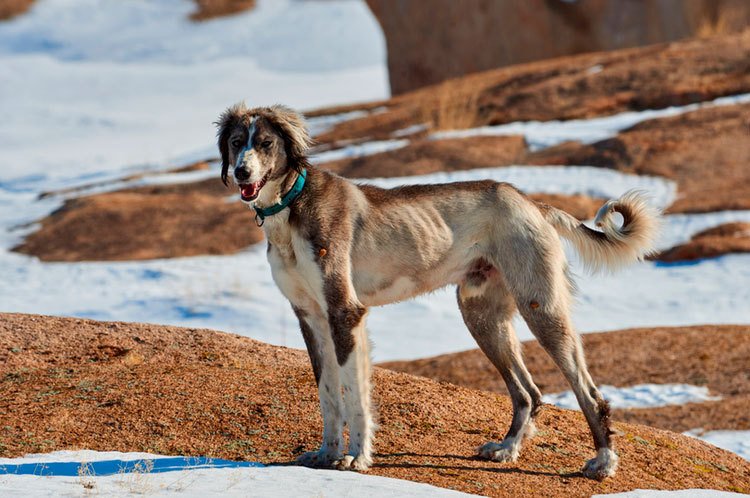
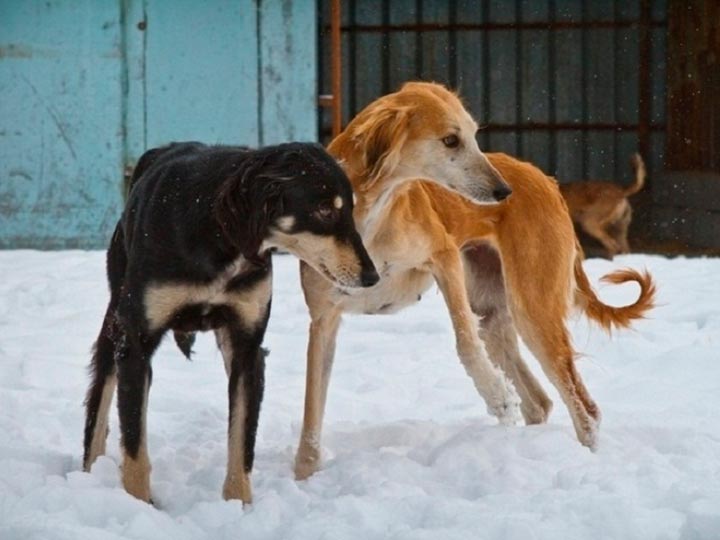
Tazis are medium-sized dogs with strong but not heavy bones, a dry constitution, and well-developed muscles, especially in the thighs and loin. Males stand 55-70 cm at the withers, and females 53-65 cm. Turkmen-type Tazis are usually slightly smaller than Uzbek-Kazakh-type dogs.
The head is lean and long, forming a sharp wedge when viewed from above. The lips are thin and tight. The skull is moderately wide, with a slightly defined parietal crest and a moderate occipital protuberance. The stop is smooth. The ears are set at eye level or slightly higher. The nose is black, but may be brown in light-colored dogs. The eyes are large, oval, expressive, and dark in any color.
The neck is long, approximately equal in length to the head, rounded and slightly flattened at the sides, set high. The back is straight, wide, and muscular. The loin is short, arched, or straight. The croup is wide, long, moderately short, and sloping. The hip bones are noticeably prominent, with the width between them being 7-8 cm in a dog of medium height. The chest is deep, wide, and rounded, with the ribs let down to the elbows. The belly is strongly tucked up. The tail is lowered when at rest, with the tip forming a steep hook, curled into a ring or semicircle. When moving, the tail is raised above the line of the back. The forelegs are dry, straight, and parallel. The elbows are directed backward, and the pasterns are relatively long and sloping. The paws are oval, with slightly elongated toes that are tightly pressed. The claws point to the ground. The hind legs are straight, parallel, set wide apart, dry with well-defined joint angles and long levers, the metatarsus is vertical and long.
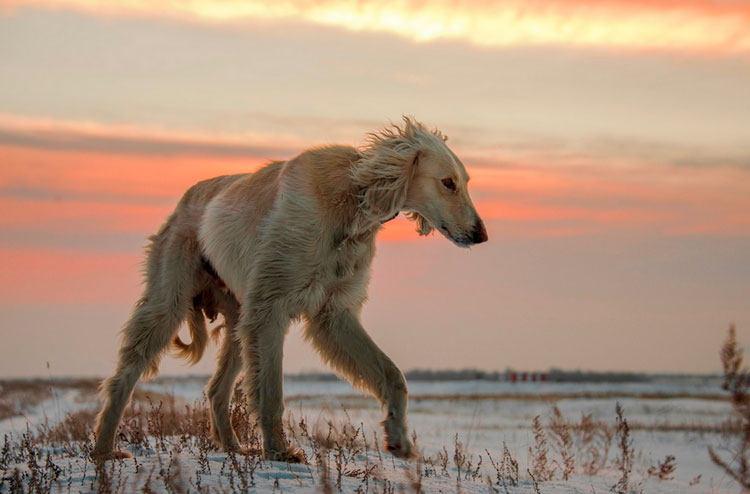
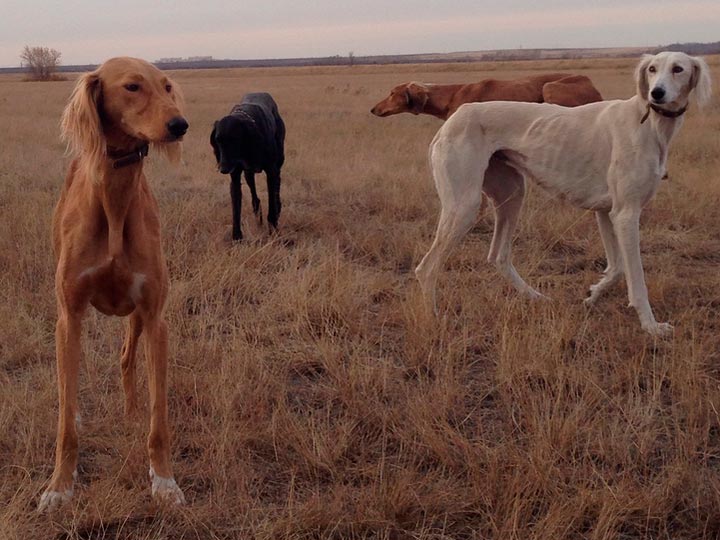
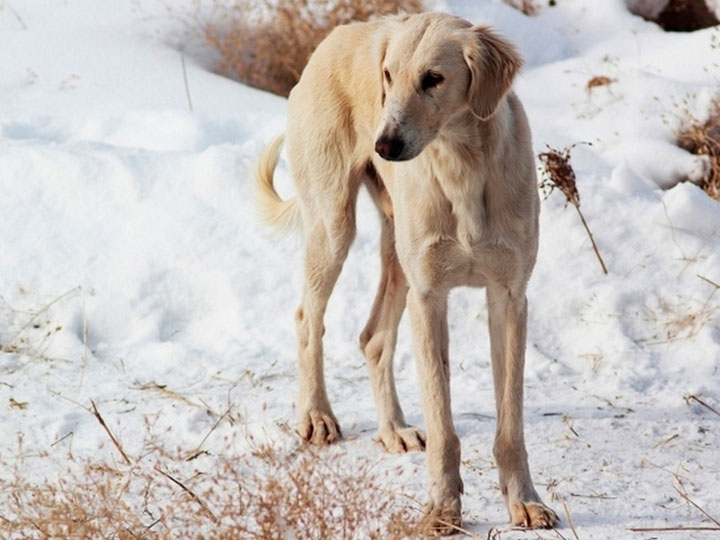
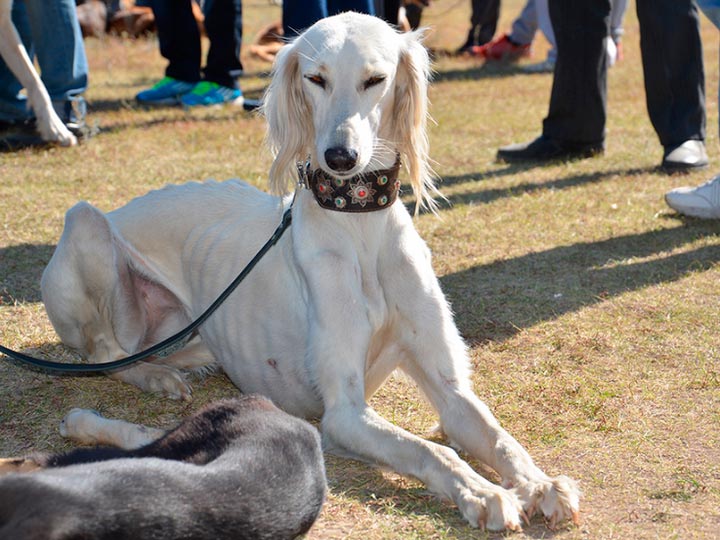
The Tazy's coat is soft, short, and lies close to the body, with no undercoat. The ears are long and wavy, extending 5-6 cm below the tips of the auricles, forming what are called "burkas." The hind and forelegs are feathered, and the underside of the tail has a thick plume. The coat is solid in color: white, fawn, gray in all shades, and black. Speckling to match the coat on the legs, whitish or light gray tan markings, and a white spot on the chest in black coats are permitted. Piebald and brindle patterns are considered faults.
What is the difference between a Tazi and a Saluki?
The similarities between these two breeds are so striking that only experienced breeders can immediately identify which is which. Identifying the breed from a photo, especially one taken at an awkward angle, is often impossible. Identification is further complicated by the fact that Tazis can come in a wide variety of types. Today, many Saluki-like dogs are bred in Russia; they are beautiful, but very different from Kazakh and other working lines.
The Tazy's head is slightly coarser, distinguished by a more pronounced stop and lower-set ears. The tail always forms a steep hook, while in the Saluki it is usually carried loosely curved. The Tazy's hindquarters are more well-angulated, with steep, long metatarsals, while in the Saluki they are short, and the hock angle is moderate.
Character
The Tazi is an active, playful, and good-natured dog, a bit willful, yet affectionate and intelligent. One of its characteristic traits is timidity toward strangers, overly large dogs, and loud noises. It gets along very well with children, treating them with care, affection, and patience, but does not tolerate overfamiliarity. Tazis form strong bonds with their owners, although they may not show it. Generally, they are rather stingy in their displays of affection. They have difficulty with loneliness and changes in ownership. They are wary of strangers, but very trusting and will follow anyone who puts them on a leash.
In normal circumstances, Tazis are gentle and docile, but when left in the open, they often run away and become disobedient, succumbing to their hunting instincts. They make poor watchdogs; they are silent and, on rare occasions, will bark to alert intruders, who are immediately greeted with a wagging tail. At home, they are often intolerant of pain and can become hysterical when combing out mats, but when chasing prey, they ignore scratches.
Tazis are generally non-confrontational. If properly socialized, they won't be aggressive toward other animals, but don't expect them to be exclusively herbivorous. Being hunters to the core, Tazis rarely harm poultry or livestock, unlike other sighthounds and gundogs. While walking, they may encounter problems with smaller dogs, which they sometimes perceive as prey and pursue. To avoid this behavior, the puppy should be raised in an environment with others of similar breeds and sizes.
Education and training
Tazis are quite trainable, but don't expect them to obey commands unquestioningly. Training is rarely a challenge if the owner is familiar with the breed's personality and leashes. Tazis are intelligent and quick-witted, quickly understanding praise and criticism, and strive to live by established rules. When hunting, they prefer to make decisions independently and use their wits. The owner is relegated to the role of observer. Tazis can and should be trained, especially if they live in the city. Otherwise, they can become unruly and willful, making it impossible to walk them off-leash or in the presence of other dogs. Positive reinforcement is used during training. Using physical force can cause a Tazi to become withdrawn, timid, and often unsuitable for hunting.
To get a Tazi to take a hare or fox, a young puppy is first introduced to an experienced dog. Tazi rarely takes an animal without prompting from her elders.
Content Features
A Tazy's ideal home is a private home, but walks around the yard shouldn't be considered adequate exercise. Keeping a Tazy in a crate is only permissible if there are several dogs living together, and if they receive regular exercise and human attention. A leashed dog will wither. Tazys are steppe dogs that can easily reach speeds of 60 km/h (37 mph), with some breed members reaching speeds of 80 km/h (50 mph). A dog confined to the house is unlikely to be able to hunt. Tazys can live in apartments; they have virtually no distinctive dog odor, and their coat is thin and lacks an undercoat, so there will be minimal shedding on carpet. Indoors, Tazys are neat and calm, don't take up much space, and aren't a nuisance.
Keeping this intelligent hunting dog in the city presents its own challenges. Tazys are wilful, can destroy apartments as puppies, and can run away on walks at any age. This is due to their intense hunting instinct and the incredible speed they reach while pursuing. They often run into traffic and are killed by wheels.
It's good when hunters keep dogs and the dog is used for its intended purpose. Otherwise, it needs to be given the opportunity to run freely at least once a week. Many owners don't even allow their dogs this opportunity, fearing they'll pick up a scent and get lost. There's a good chance this will happen. GPS collars have become a lifesaver for many.
Care
Grooming a Tazi's coat is easy. Bathe the dog every 7-10 days, then gently brush the damp coat with a massage brush. A hair dryer can be used for thorough drying. After walks, it's best to remove burrs and change the grass immediately to prevent matting. Inspect the ears regularly and remove wax as needed. Older and sick dogs that don't exercise much should have their nails trimmed. Hair length is hereditary. There are no magic balms or vitamins for lengthening the coat. It will grow to the length determined by the dog's genetic makeup.
Tazys have very soft, fine fur that easily becomes tangled. The problem is exacerbated by improper use of detergents and poor nutrition.
Nutrition
You can find stories on online forums about Kazakh hunters who don't feed their dogs, and their dogs live by the principle: if you want to survive, you'll find your fill somewhere. Of course, there are such people, but they're few and far between. Responsible Tazy owners feed their Tazys well. Tazy diets are formulated according to standard guidelines. Food is selected based on their age, size, and physiological condition. The optimal choice for this breed is a super-premium food for active, medium-sized dogs. During periods of intense physical activity and in cold weather, caloric intake is increased by supplementing with protein products or by adding an extra meal equal to ½ to 1 serving.
Health and life expectancy
The typical lifespan of a tazi is 13-15 years. In general, these dogs are very hardy, strong, and rarely get sick when properly cared for, maintained, and fed. It's difficult to determine whether there are any hereditary diseases in the breed. The few breeders who breed Tazy rarely keep statistics on the incidence of illnesses. Furthermore, due to the small population, inbreeding is unavoidable, which itself increases the likelihood of various illnesses and pathologies. This should be taken into account when choosing a puppy.
In terms of disease prevention, pelvises require standard measures: annual vaccinations, regular treatment for external and internal parasites.
It is worth noting that the pelvis often exhibits individual intolerance to anesthesia, some antiparasitic and other drugs.
Choosing a Tazi puppy
The easiest way to find a puppy is to inquire with the owners of these wonderful dogs about their availability, without inquiring about the parents' origins, health, or working ability. However, this isn't the most reliable route for a serious, aspiring greyhound breeder.
It's best to get a borzoi puppy in the spring. The puppies should be born in late winter, and mating should occur in December or January. This means it's a good idea to attend several major dog shows or field trials in the summer, learn about kennels and representatives of the breed, and choose a breeder who breeds dogs of the type you like.
Breeding is primarily done with working qualities in mind, but increasingly, you can find greyhound breeders who prefer decorative breeding. These dogs are not known for their exceptional talent and often lack conformation and behavioral traits. When choosing a greyhound for hunting, it's crucial to see the parents in action. While there's no guarantee the puppies will inherit their skills, the likelihood is higher than if you were to pick a greyhound from a couch cushion. Choosing a puppy from a litter is equally important. It's helpful to find a specialist who isn't interested in selling but has the necessary knowledge and can help. All puppies in the litter should be outwardly healthy, in appropriate condition for their age, and show no signs of illness.
It is very difficult to see a future hunter in a small puppy; much depends on how the puppy is raised.
It's not a good idea to bring a puppy under 3 months old into a home with small children. It's even better to consider buying an adult dog with a gentle nature, who grew up with children, and who was never kept in a kennel.
Price
Unlike their show-breeding counterparts, the Saluki, Tazys are relatively inexpensive. Finding a puppy is quite difficult, given that the population is small and concentrated primarily in Kazakhstan and southern Russia. The price of a Tazy puppy typically ranges from 15,000 to 25,000 rubles.
Photos
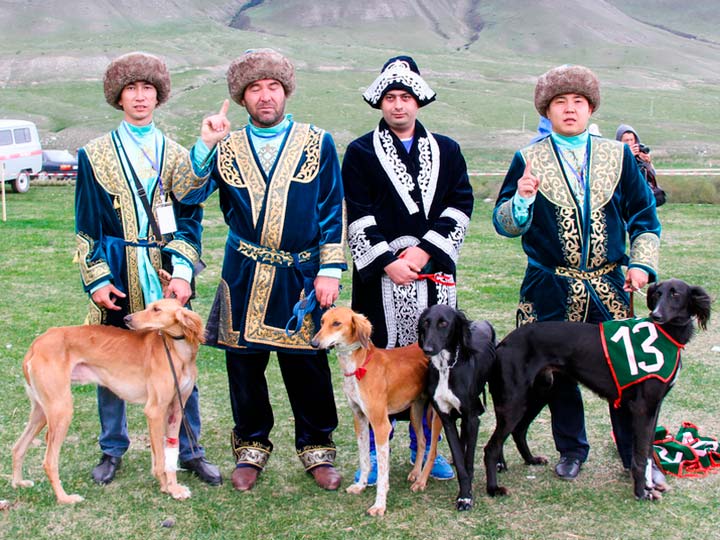
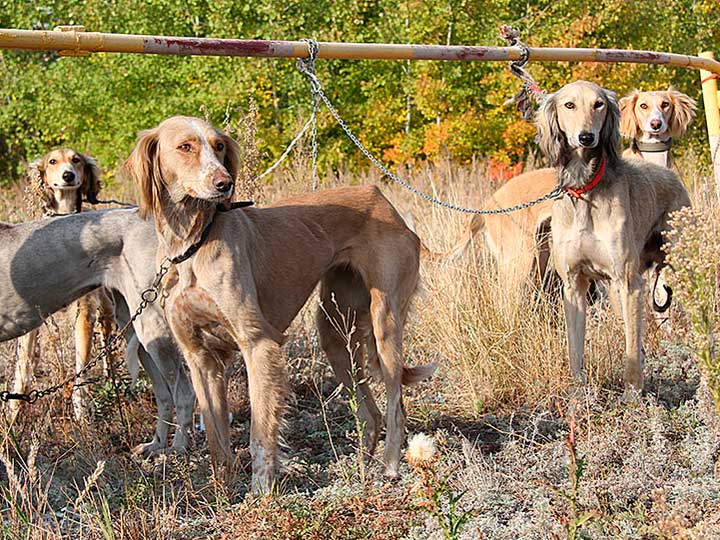
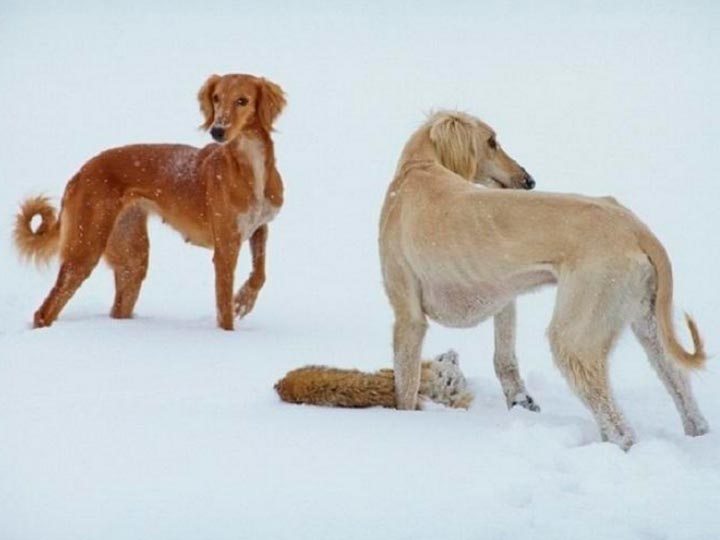
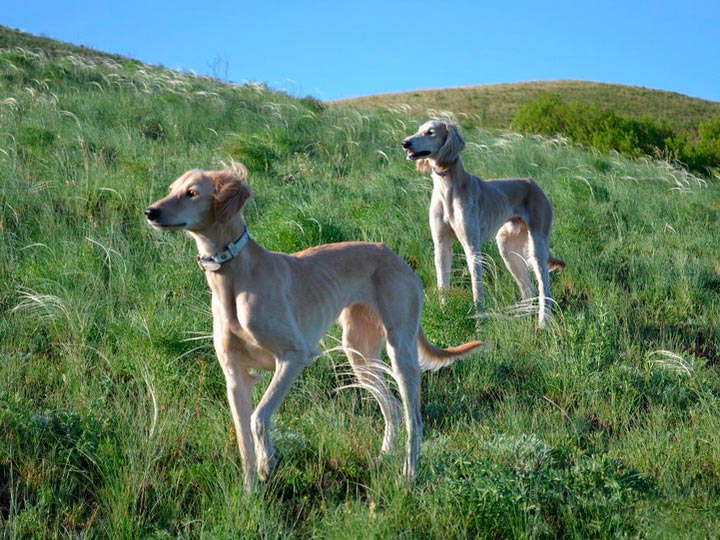
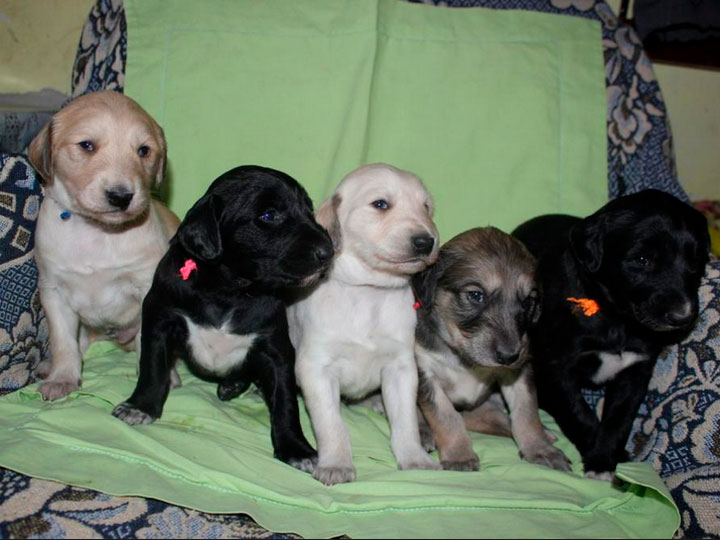
The gallery contains photos of puppies and adult dogs of the Tazy breed (Kazakh greyhound).
Read also:
- The fastest dog in the world
- Podenco Ibizanco (Ibizan Hound, Ibizan Hound)
- Greyhound
- Tobet (Kazakh wolfhound)


Add a comment