
Thai Ridgeback (TRD)
Thai Ridgeback or TDR (from English Thai Ridgeback Dog) is the national breed of Thailand and possibly one of the oldest. The main distinguishing feature of these dogs is the ridge on their back, formed by hair growing in the opposite direction. Thai Ridgebacks have a difficult character, but with proper training, they become loyal friends and reliable guard dogs.
Content
History of origin
The Thai Ridgeback is a breed native to Thailand, although similar dogs are also found in Cambodia and Vietnam. For centuries, Thais used them for hunting and guarding. They are considered one of the most distinctive breeds. Poor transportation and isolation from the outside world have protected the Ridgeback from inbreeding for centuries, preserving its distinctive type and key characteristic.
Genetic studies have confirmed that the dogs from Thailand are related to crested dogs found in Cambodia and Vietnam.
In the 19th century, after the colonization of the eastern lands, Western dog breeders saw these unusual dogs, which the locals called Mah Tai, and immediately recognized their potential. Soon, the Thai dogs were recognized as a distinct breed.
Despite its ancient origins, the breed was officially registered only recently. In 1589, it was recognized by the Asian Kennel Union. Then, in 1990, the Ridgeback was registered by the Japanese Kennel Club, and in 1993, Standard No. 338 was published by the FCI. The Thai Ridgeback was brought to Russia in the 1990s.
Video review of the Thai Ridgeback dog breed
https://youtu.be/iEHnDGc8YwM
What does the Thai Ridgeback look like according to the standard?
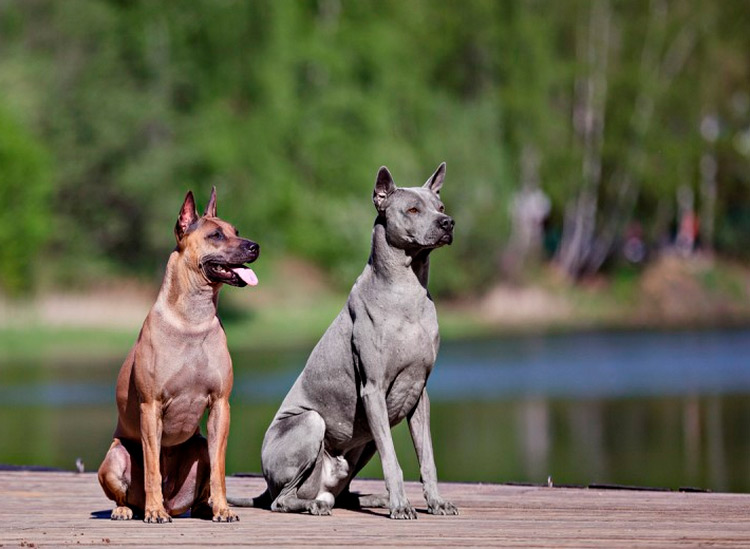
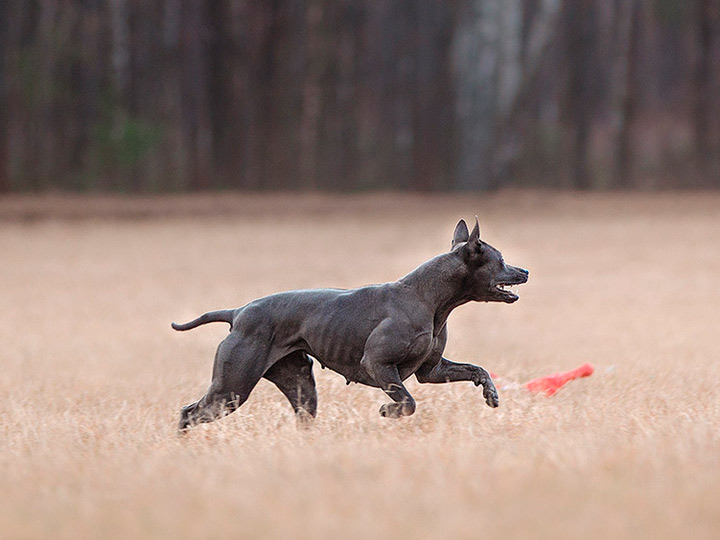
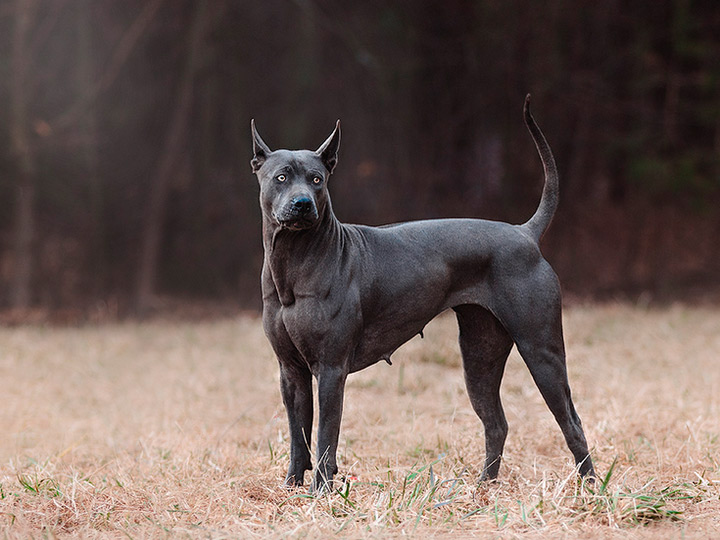
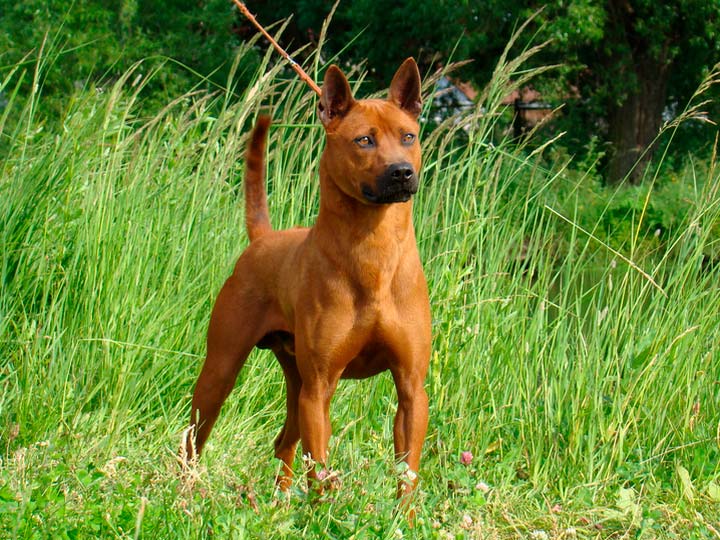
The Thai Ridgeback is a medium-sized dog with well-developed muscles and short, close-lying hair that forms a ridge on the back. The height at the withers is 51-61 cm, and the weight ranges from 16-32 kg. Sexual dimorphism is pronounced.
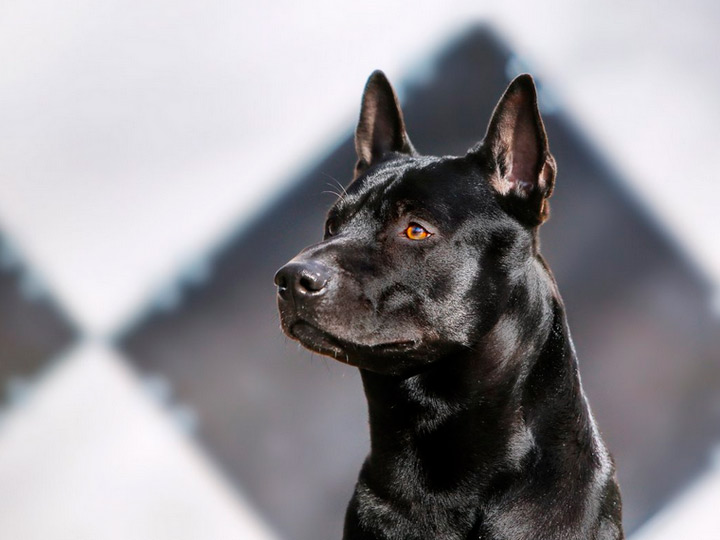
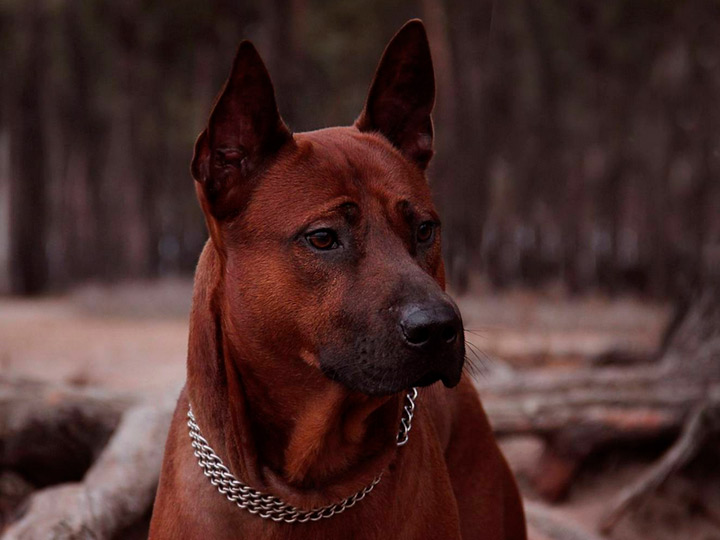
The skull is flat between the ears and slightly rounded when viewed from the side. When the dog is alert, wrinkles appear on the forehead. The stop is clearly visible. The muzzle is wedge-shaped. The bridge of the nose is straight and long, with a black tip, which is bluish only in blue dogs. A tongue with black markings is preferred. The jaws are strong, with a scissor bite. The eyes are almond-shaped, medium in size, and dark brown, but amber is also acceptable in dogs with blue coats. The ears are set at the sides, triangular, medium in size, erect, tilted slightly forward, and not docked.
Few breeds can boast of having a ridge, or rather only three: the African Ridgeback, the Thai Ridgeback, and the aboriginal Vietnamese Phu Quoc dogs.
The neck is medium in length, slightly arched, and set high. The body is strong, almost square, with a length-to-height ratio of 11:10. The back is level, the loin is strong and broad, and the croup is slightly sloping. The chest is half the height of the chest, and the ribs are well sprung. The underline is tucked up. The tail is thick at the base, gradually tapering toward the tip, and slightly arched. The legs are strong, well-muscled, and the paws are oval.
The skin is thin and soft, lying close to the body, with no dewlap at the throat. The coat is smooth and short, with a ridge or crest formed by hairs growing in opposite directions on the top of the body. The ridge must be clearly separated from the rest of the coat; it can be of different shapes and lengths, but must be located symmetrically to the spinal column. Curls of hair on the front edge of the comb are allowed.
Solid color:
- black;
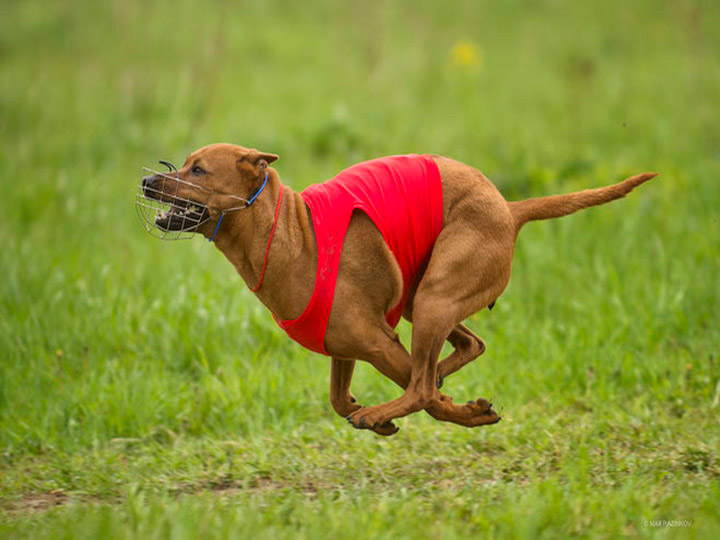
- red (preferably with a black mask);
- blue;
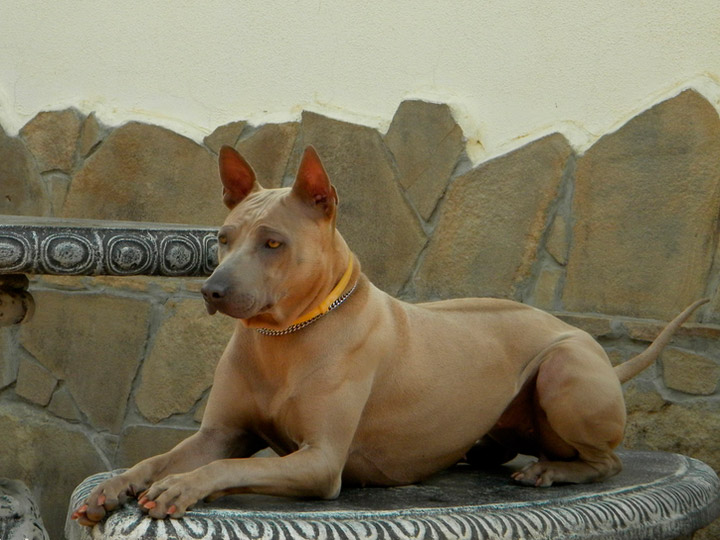
- fawn (isabella).
Character
The Thai Ridgeback has a balanced temperament and a strong nervous system; it is alert, serious, strong, and courageous. It is obedient, yet capable of making independent decisions. It can sometimes surprise with its resourcefulness and ingenuity. Primitive breeds, such as the TRD, have very high self-esteem, a strong hunting instinct, and an excellent memory. However, they are also very sensitive. With proper training, they are very devoted to their owners, which does not prevent them from remaining independent and self-sufficient. They do not require human company, but if they establish a strong bond with the dog, they will seek it.
The Thai Ridgeback is a wonderful companion, and thanks to its athletic build and drive, it can also be an excellent athlete. Under normal circumstances, these dogs rarely bark, only barking when there's a compelling reason to do so. Their aloofness, distrust of strangers, and serious expression give the Thai Ridgeback the appearance of a fighting breed, a major plus for those who take them for evening walks.
The Thai Ridgeback is a dog with a very complex character and highly organized behavior, typical of aboriginal breeds.
In a normal home environment, Thais don't strive for dominance. They get along well with other dogs and cats, and they don't mind chasing them outside. Birds and small rodents are of interest to them only as potential prey. Outside, Thais won't provoke conflicts, but they'll also never show weakness among their fellow dogs.
Education and training
The Ridgeback is a highly intelligent dog with excellent intuition, but, like many other native breeds, it requires an individual approach and has its own opinions. Play and food motivation are effective only when working with a puppy. As the dog matures, the emphasis should be on social motivation—in other words, building the right relationship between owner and dog.
Canine experts advise against developing hunting instincts in Thai Ridgebacks, taking them to baiting or blood-tracking trials. While a Thai Ridgeback will thrive on this, it will be much more challenging in the city, and in open spaces, they can wander far and get lost. Furthermore, baiting can trigger aggression in Thai Ridgebacks toward other animals, particularly dogs, which can damage relationships with neighbors.
A Thai Ridgeback can be trained to obey commands at any age. However, the owner has limited time to develop their personality—only a few months of work with a relatively docile puppy.
Between 2 and 5 months, a puppy should master basic house rules, find its place in the family, and memorize essential commands. It's crucial to keep the dog on a leash and punish disobedience, without resorting to force if possible. Difficulties in training may arise because the dog simply doesn't want to do what you ask. Training should be structured in such a way that the dog is interested in executing commands.
Content Features
The Thai Ridgeback is well-suited for apartment living. They are unobtrusive, very clean, and their short coat is virtually odorless and sheds little. In cold weather, it's advisable to dress the dog before long walks outside. Clothing should be comfortable and allow for movement. Light overalls are suitable at first, but in winter, fur-lined jackets are recommended.
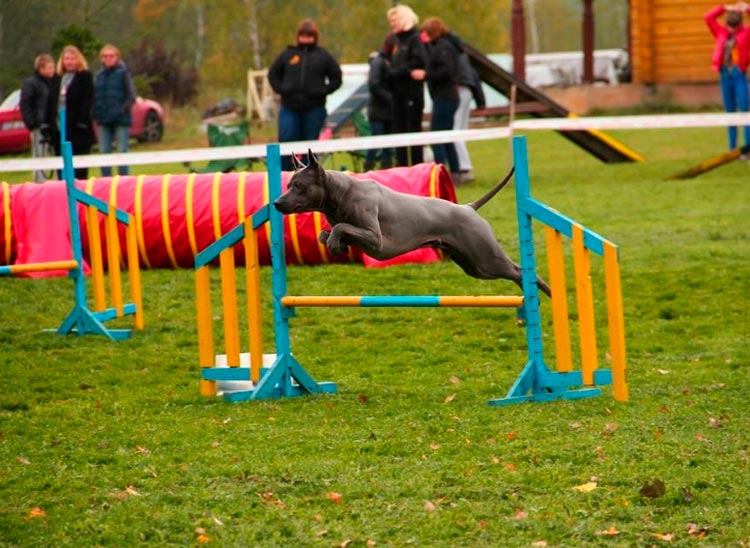
You need to walk your Thai Ridgeback 2-3 times a day. Each walk should last 2-3 hours, and it's advisable to include some active games. Ridgebacks excel in a variety of sports, starting with agility, frisbee and ending with parkour, in which they are not inferior AST And pit bulls.
Care
The Thai Ridgeback is completely low-maintenance in grooming. It sheds moderately, but weekly brushing with a brush or mitten designed for short-haired dogs will minimize shedding. Bathe as needed, but no more than once a month. This does not apply to rinsing the paws or even the entire dog after a walk. Ears and eyes should be inspected and cleaned as needed once a week. Nails should be trimmed every 3-4 weeks.
Feeding
Most Ridgeback owners prefer to feed their dogs high-quality, ready-to-eat, super-premium or holistic dog food. A natural diet based on lean meat and, to a lesser extent, organ meats is also an option. Dogs are also given cereals, fermented milk products, eggs, vegetables, and fruits.
Thai Ridgebacks are not prone to overeating or obesity; however, owners should monitor their dog's calorie intake and train them to eat the optimal portion.
Health and life expectancy
Overall, Thai Ridgebacks can be considered a healthy breed. They are strong and resilient dogs with a strong immune system. However, the breed is susceptible to certain hereditary health conditions:
- dermoid sinus;
- hip dysplasia;
If poorly cared for and fed, Ridgebacks are prone to skin conditions, colds due to hypothermia, and gastrointestinal issues. Regular veterinary checkups and careful attention to their pet's health will help prevent these ailments.
Choosing a puppy
In Russia and the CIS countries, the breed remains quite rare, and the population is small. However, finding a Thai Ridgeback puppy for those who want one won't be difficult.
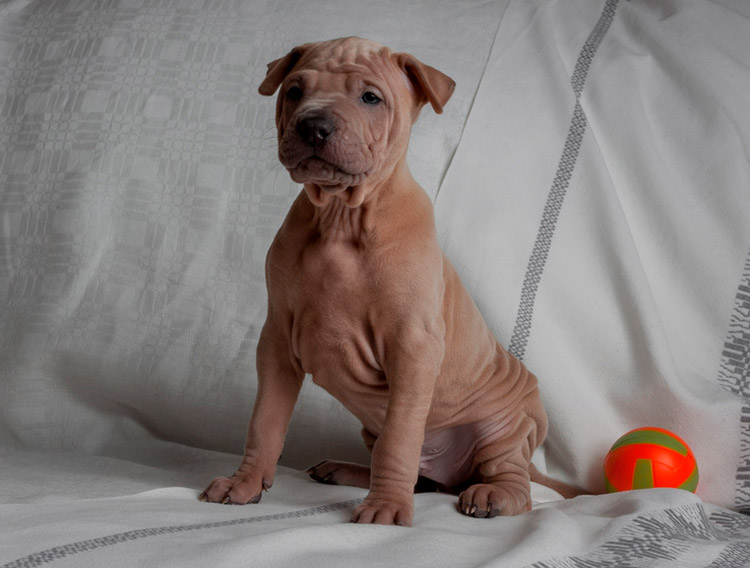
It's important to decide in advance on the dog's purpose and role in the family, whether it will be a pet, an athlete, a bodyguard, or a show champion. Gender is also important. Males will be slightly more difficult to train, while females are more docile and affectionate. When choosing a Thai Ridgeback puppy, pay special attention to its compliance with the Standard: pure color, correct bite, symmetry of the ridge, and other characteristics that are already clearly visible at 2-3 months of age. The puppy can be adopted after 2-2.5 months. The breeder must provide the puppy's first document—a birth certificate. This is later exchanged for a pedigree. Furthermore, puppies should be age-appropriately vaccinated, in good physical health, and neither aggressive nor shy.
Price
The price of a Thai Ridgeback puppy ranges from 50,000 to 100,000 rubles. The price is influenced by the breeder's geography, the breeder's status, the dogs' pedigree, their prospects, and the parents' achievements. Some pet-class puppies may have defects that will prevent them from being used for breeding. These may include an incorrect bite, structural abnormalities, a missing ridge, or poor nasal pigmentation. These defects don't affect the puppy's overall health, but they significantly reduce its value.
Photos
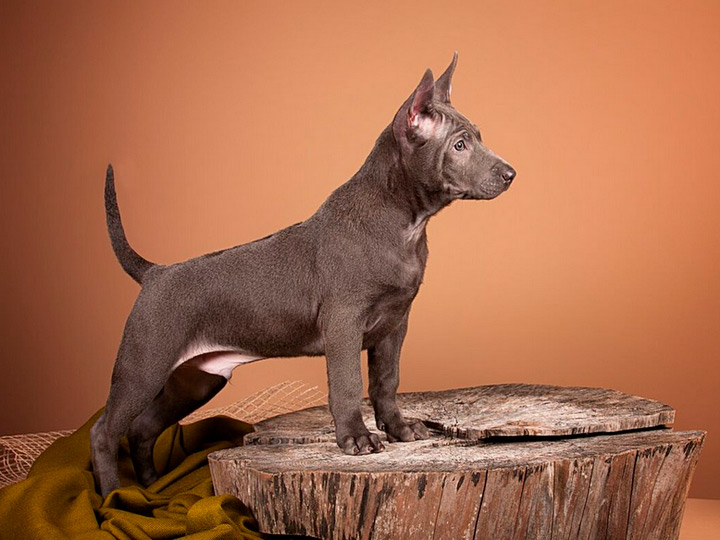
The gallery contains photos of Thai Ridgebacks of different ages, genders, and colors.


Read also:


Add a comment