
Deworming tablets for dogs
Deworming tablets for dogs can sometimes be very helpful, and keeping a good supply in your first aid kit is a good idea. Many different types of parasitic worms threaten a dog's health. Some prefer to infest the heart and are considered the most dangerous to a pet's health and life. Others prefer to live and parasitize in the gastrointestinal tract. Although these worms are less dangerous than their cardiac counterparts, they require no less vigorous treatment.
If this problem affects your pet, special medications can help. Reviews of deworming tablets for dogs vary, and if you're wary of any comments about the medication you've chosen, don't worry. Veterinary pharmacies stock dozens of deworming tablets for dogs, and to make the right choice, you need to analyze reviews of each medication, its side effects, price, and many other factors. That's what we'll discuss today.
Content
Is there a difference between the drugs?
Dog deworming tablets are widely available on the pharmaceutical market. You can even find options for specific dog breeds, not to mention genders and ages. And, of course, dog owners may wonder whether there's any difference between these medications. After all, it's not just price and reviews that differentiate deworming tablets for dogs.
The answer is, of course, no. Price is indeed often the deciding factor when choosing a pill, but only those dog owners who are completely ignorant of the pharmacological components of each individual brand of medication consider price. Yet this is precisely what a dog owner should pay attention to first, as different active ingredients have different effects on the same species of worm.
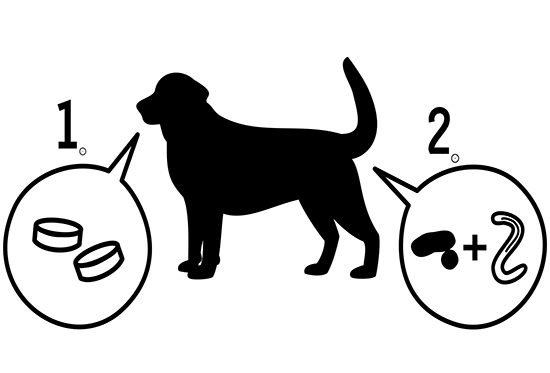
It's important to remember that different companies use combinations of the same active ingredients when preparing their pills. Therefore, before purchasing pills and reading reviews, it's important to determine which ingredient will help your four-legged friend in a given situation. Many companies produce expensive medications, even though the same pills are available on the market, just under a different name and less well-known.
The box of deworming tablets for dogs contains instructions for use. These instructions outline the key pharmacological properties and list the main active ingredient. Popular active ingredients include:
- Abamectin.
- Albendazole.
- Ivermectin.
- Pyrantel and pyrantel pamoate.
- Praziquantel.
- Febantel.
- Fenbendazole.
Each of the above-mentioned substances actively combats a specific type of worm, although some share similar characteristics. If you truly want to help your pet fully, you should find out what type of worm is present before purchasing any product.
It's not uncommon for a dog to be infected with two or even three different types of worms. In this case, it's not always necessary to purchase several different medications. For such cases, combination medications are available that actively kill parasites of different categories. For this reason, these tablets are increasingly popular. We'll discuss the most popular ones a little later.
When can and cannot you give pills?
Dog owners are constantly wondering at what age a dog can be given deworming tablets. When can a single course of tablets be administered? dewormingHow often can this be done?
Basic rules
The first time pills can be given to puppies is when they reach three weeks of age. However, it's important to keep in mind that not every medication will provide the desired benefit. Therefore, deworming pills for puppies should be purchased with a special label confirming that the medication is recommended for young animals. Other anthelmintics, not labeled "for puppies," are suitable for older dogs, aged 1.5 to 2 months. The frequency of preventative pills also depends on the dog's age. Puppies are given deworming medication more frequently—every three months. Adults are dewormed less frequently—every six months.
In any case, before giving your pet any medication, you should read reviews of deworming tablets for dogs and be sure to consult a veterinarian. Some dogs may not tolerate certain ingredients well. anthelmintic drugs.
Giving tablets to pregnant female dogs is generally not recommended, but as with any other case, it all depends on the type of medication and the individual needs of your four-legged friend. Deworming medications are also contraindicated during illness.
Can puppies be given pills before vaccination?
Giving deworming tablets to puppies is practically mandatory. Parasites significantly weaken the fragile body of a small animal. And if an infected puppy is vaccinated, there's a high risk that the puppy will not be able to adequately absorb the vaccine virus and will die.
For reference: A deworming course may consist of two tablet doses, with a two-week interval between doses. Therefore, deworming tablets should be administered gently one month before the scheduled vaccination.
A review of the most effective anti-worm tablets
Among the wide variety of modern anthelmintic medications, combination medications with a broad spectrum of action are particularly popular. These tablets offer a comprehensive effect on various types of helminthic infestations. These medications not only kill helminths but also actively destroy helminth eggs, thereby providing comprehensive treatment and protection against re-infestation for several months to come.
Among the variety of antihelminthic drugs, the following tablets for worms in dogs can be safely distinguished:
Let's look at them in more detail.
| Drontal Plus |
Drontal appears as a yellowish tablet. The drug is effective against a wide range of helminths:
This broad spectrum of action is achieved through the action of two active ingredients: praziquantel and fibantel. The tablet's auxiliary components are starch and flavoring agents. The active ingredients initially paralyze the worms, followed by their inevitable death. To achieve the fastest results, give your dog the exact amount of a tablet. For a small puppy weighing less than two kilograms, a quarter of a Drontal tablet is sufficient. An adult weighing 10 kilograms will require more—one tablet. In addition to their high effectiveness, Drontal tablets contain flavorings that imitate the smell and taste of meat. This small but important feature makes administering the medication to your pet much easier. However, administering the medication without food is still not recommended. Studies have noted some downsides to Drontal. Side effects such as nausea, vomiting, and bowel problems sometimes occur after its use. |
| Dirofen | In terms of pharmacological properties, the medication's action is similar to many other intestinal parasite tablets for dogs. The active ingredients are fenbendazole and pyrantel paomat. As with Drontal, they first immobilize the helminths and then destroy their natural intestinal acid coating. As a result, the dog's stomach simply digests the would-be invaders. These can include not only adult worms but also their intended offspring. The dosage should be based on the dog's weight. The recommended dosage is one tablet per five kilograms of body weight. |
| Milbemax |
Milbemax tablets come to us from France. They are suitable for all dogs of a certain age. They are well suited for both routine cleanings and emergency treatment of worm infestations. They have proven effective in combating tapeworms and roundworms. It is best to give MilbeMax to your pet immediately before meals. If your dog is reluctant, you can gently encourage them to give in by placing a tablet on the back of their tongue. If your dog is stubborn, you can crush the tablet and inject the suspension into their mouth using a needleless syringe. You can treat your dog for worms with Milbemax tablets without any prior preparation. No diets or additional medications are required. The dosage is calculated as follows: ½ tablet per kilogram of body weight. The dog's size should be taken into account during treatment. Large dogs (over 25 kg) will require a special medication, while the standard Milbemax kit is suitable for medium and small dogs. A medium-sized dog (over 5 kg) will require two capsules per day. A small dog may only need one tablet. Treatment generally proceeds without incident, but minor issues such as an unsteady gait and outward depression occasionally occur. Over time, everything improves. |
| Pratel |
The drug works in a similar way to many other deworming tablets for dogs. First, it paralyzes the parasites, then destroys their protective shell. Gastric juices do the rest. Ultimately, all that remains of the worms is mucus, which is successfully eliminated in the feces. The tablets are effective against cestodiasis and nematodiasis. It is also used as a preventative measure to prevent unwanted helminth infestations. The tablets are given to the dog in the morning immediately before meals. The dosage, as with most anthelmintic medications, depends on the pet's weight and is calculated as follows: one tablet per 10 kilograms. For preventative purposes, Pratel can be administered up to four times a year, but not earlier than one month before vaccinations. |
| Febtal | The tablets' name derives from their main active ingredient, fenbendazole. This active ingredient has a detrimental effect on nematodes and cestodes of all ages, including larvae and eggs. The drug works by disrupting the parasites' carbohydrate metabolism and microtubule function, leading to the immediate death of the helminths. Febtal therapy is designed for three days. Administer the tablet during your pet's morning feeding. The dosage is one serving per 1.5 kg. |
What is the correct way to give pills to a dog?
The question of how to properly administer deworming pills to a dog can sometimes be a pressing one, literally. An angry or frightened dog can easily bite someone trying to force something strange or incomprehensible into its mouth. Therefore, people often resort to various tricks. For example, you can wrap the pill in your pet's favorite treat and treat your beloved dog with a "tasty" gift.
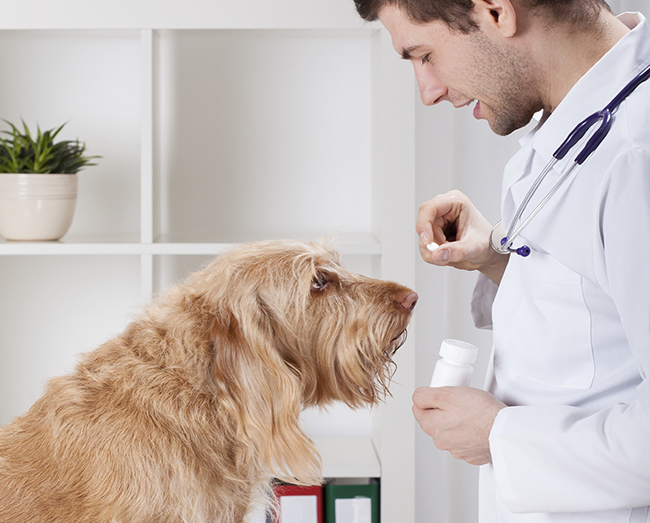
If the dog doesn't respond to provocation, more radical methods should be used. To do this, take a tablet, crush it with available tools, and mix the resulting powder with a small amount of liquid. The resulting suspension is then poured into the animal's mouth using pipettes, syringes, and similar devices. In this case, you don't even need to open the jaws; simply pull back the lips and squirt the solution between the teeth.
Veterinary assistance is rarely sought in this case. However, if your pet is completely resistant to treatment, you'll have to take them to the vet one way or another.
How to properly administer medication to a dog? A veterinarian explains in this video:
Side effects and contraindications
Medications capable of killing parasites to varying degrees are also dangerous for pets. Therefore, be prepared for the animal's body to rebel against such an unexpected invasion and perform unexpected somersaults. You should become slightly concerned if you notice the following signs of poisoning:
- lack of appetite;
- lethargy;
- constipation;
- diarrhea.
You should only sound the alarm if symptoms appear almost immediately after taking the medication and your dog exhibits several of the above symptoms. If this happens, the first step is to help your pet vomit up the remaining pill to prevent further deterioration. Then, you can give your dog activated charcoal or another absorbent; in extreme cases, you can give a laxative to treat constipation.
If first aid is unsuccessful, the dog should be taken to the veterinarian. The vet will prescribe an appropriate IV. In some cases, a blood transfusion may even be necessary, but this is uncommon. Most likely, specialist assistance will be needed if problems with the natural elimination of dead parasites begin. This is because worms sometimes curl up into a ball and do not pass as mucus. In such cases, gastric lavage is necessary.
Successful treatment for worm infestations is characterized by the appearance of pale mucus in the stool. These are actually dead, partially digested worms, and this mucus is normal. Your dog should feel fine. Monitor your pet's well-being closely and be prepared for the most unexpected developments, even if it means seeking professional help.
Dogs are contraindicated to receive deworming tablets under certain conditions:
- lactation period;
- pregnancy of a bitch, especially in the last weeks;
- the animal is weak, sick, after surgery.
Where to buy and how much does it cost?
To understand how much deworming tablets for dogs cost, it's important to understand that the price depends not only on the brand of the medication, which is natural, but also on the reseller. For example, Milbemax can be purchased at one pharmacy for 200 rubles, but at another store, you might easily hear the price of 400 rubles. In fact, the tablets are readily available. Any veterinary pharmacy carries at least several different types. Taking into account the aforementioned tablets, here's a list of approximate prices:
- Milbemax - about 200 rubles.
- Drontal - about 70 rubles per 1 tablet.
- Dirofen - depending on the form of release, 30 - 70 rubles per package.
- Febtal - 30-50 rubles per package.
- Pratel – from 40 rubles per package.
Take care of your dogs and buy them the right deworming tablets.
Read also:


Add a comment